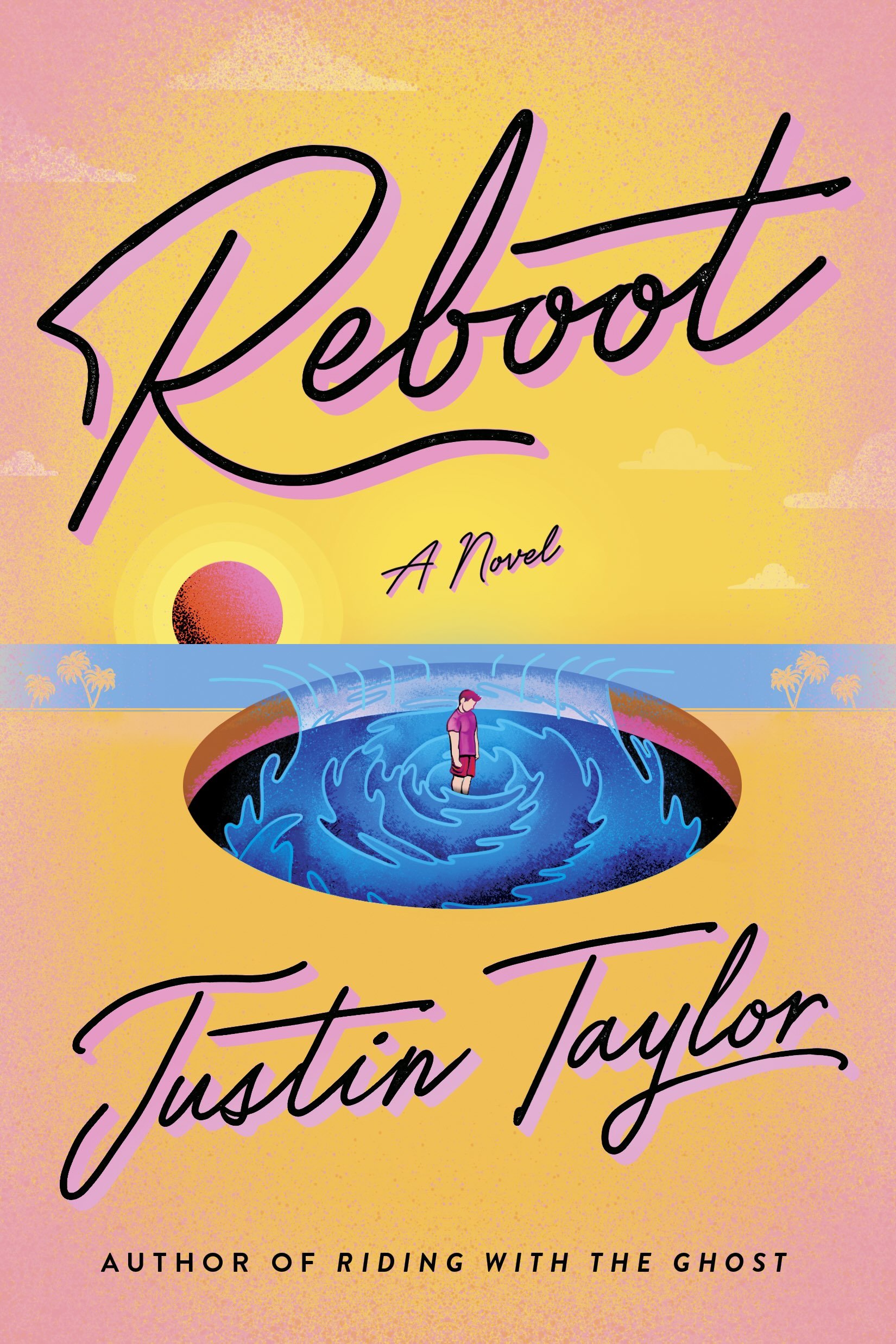
"Reboot" by Mountainview Instructor Justin Taylor due in Spring
A member of our faculty, Justin Taylor, is looking forward to the publication of his new novel, Reboot on April 23, 2024. It is currently available for pre-order at any and all booksellers. Get the full scoop here - https://www.penguinrandomhouse.com/books/723318/reboot-by-justin-taylor/
Justin Taylor is the author of the novels "Reboot" and "The Gospel of Anarchy", the story collections "Flings" and "Everything Here Is the Best Thing Ever", and the memoir "Riding with the Ghost." His work has appeared in publications such as The New Yorker, The Sewanee Review, Bookforum, and Harper's. He lives in Portland, Oregon. Read more of his work at http://www.justindtaylor.net/ and keep up with the latest at https://my19thcentury.substack.com/
Mountainview Alumni Wins OFIC Magazine Novella Contest
We are proud to share that one our alumni, Allison Stalberg, will see her novella, "Adelina and the Bug Parties," published this summer! Allison shared her exciting news with us:
My novella is going to be published this summer because it won a novella contest with OFIC magazine. This novella was worked on with the help of my Mountainview mentors (Jo Knowles, Rachel Glaser, Rebecca Schiff, and Nadia Owusu) and fellow students.
"Adelina and the Bug Parties" is about a fairy that falls in love with a luna moth as they crash bug parties together. It is both dark and whimsical, with readers having to deal with the sad truths of death while also enjoying the parties of hedonistic bugs. I'd say it is kind of like a "Charlotte's Web" for young adults.
This publication does feel full-circle for me, as I won the contest right after I turned in my thesis. OFIC is also not just any publication, but one that glorifies writers that come from fandom and fanfiction, which is where I started my writing career back when I was a teenager.
"Adelina and the Bug Parties" is going to be part of a doubles issue of OFIC magazine. One side will be my novella and the other side will be a sci-fi story from another writer that won the contest. The format will be Tête-bêche. A limited number of physical copies will be available for purchase and/or folks can purchase a digital version when it comes out around June 30th.
About Allison: Allison Stalberg is writer who obtained her MFA in Fiction from Southern New Hampshire University. She is a published author with short fiction and non-fiction stories published in several anthologies and magazines such as Calliope, Altered Reality, and Outposts of Beyond. She is a writer and interviewer for Knee Brace Press, where she talks to authors writing about chronic conditions, disability, mental health, and neurodivergence. As an asexual woman, Allison likes to write stories that stir rebellion, independent thinking, and radical love. Her writing is inspired by nature, insomnia, video games, and the ever consuming dread that comes with a decaying body.
Website: https://allisonstalberg.com/
Instagram and Threads: @mollusk_queen
TikTok: @stalbergwrites
this earth knows no names
the forest’s shifting winds
quiet and then, a raging freeway…
the forest’s shifting winds
quiet and then, a raging freeway
not obnoxious, not as from a city balcony
living, stifled by the constant buzz and blur
it’s really the engines, yes,
but will someone please stop these people
can’t they just be still, shut it off, shut up
these soulless, robotic morons
I’m angry at them, I’m annoyed, I am one of them
the mixed-up man cannot be quiet
all day and all night, they talk and talk
wow, a hurricane!
here comes the rain, here comes the wind
what will WE do!
the eye of the storm rages on
not a thought of you, not of me
we are nothing in its mind’s eye
its body swells, living and breathing
in it’s pure thrashing nature
all the while, high above sea level
the mountainous granite holds firm
the alpine trees start an easy sway
with a familiarity of storms past
the patinaed bells and chimes calls out
“be quiet, be the nothing”
so I sit in stillness, as storm and forest collide
crossed-legged with hips pinned to the earth
Amy Wunders is a Poet and a Potter who plays with word-strings and mud.
The Sea Is Full Tonight
Every evening before I go to bed,
I look at the ocean…
Every evening before I go to bed,
I look at the ocean:
vast, eternal, every
cliche from Matthew Arnold.
If I'd grown up here,
I might be thinking
over that horizon
is Gibraltar, fetched up
at the end of this string
around the globe.
But I think of what's behind me.
What I like is not only
the sea at my doorstep,
but the continent at my back.
Not the world before me
like a land of dreams,
but Topeka far behind,
parched Kansas slumbering,
court squares and teachers’ colleges
baking at the hot center of America –
all that pushed me here,
an animal running from a brush fire,
this beach my last escape.
If one day flames pursue me
to this tidemark, I will walk
past the breakers, out into the deep
and swim toward Africa,
an easy stroke, a dolphin kick.
I am slow but steady, and
I can swim forever,
out to that horizon
and so far beyond.

Sharon Hoffmann | Publications: NYQ, Beloit Poetry Journal (Pushcart nom), & Alice Walker (Harvard University) .
Interview with Author JS Lee
In 2016, after taking a DNA test from one of those large online genealogy companies, I found myself catapulted into my own biological context…
JS Lee in conversation with Rebecca Dragon ‘23
art by js lee

In 2016, after taking a DNA test from one of those large online genealogy companies, I found myself catapulted into my own biological context, something that had been an enigma to me for my entire life. Adopted people, like myself, are often completely in the dark about their origins. Many have never looked into the eyes of someone that they are biologically related to. We are, for all intents and purposes, mysteries even to ourselves. We are state secrets, any salvageable information about our originating identities and families locked away in a courthouse or in the case of much intercountry adoption, lost in a “flood” or a “fire.”
Imagine living your life with only your imagination to fill in your missing gaps or to justify the profound loss that you had to endure to become the legal child of unrelated strangers. Now imagine being told that this loss you suffered doesn’t matter, that all that really matters is that you are where you are now. You are washed clean in the salvific fountain of a legal process called “adoption.” You are made anew by the perceived sacrifice of people who “took you in,” and “loved you as if you were their own.” Adoption is seen as an altruistic good, a win-win situation that gives the “unwanted” value through its process, But it’s not so simple. Especially not for those who have lived their lives through adoption, the adopted person.
When I found my originating family, and was finally able to solve the mystery of my Self, I was catapulted into an experience known among adopted people as “coming out of the fog.” I felt all the more profoundly the complexities of my own experience. It was overwhelming, and I needed camaraderie and understanding that was unavailable even in my closest circles of family and friends. So, I did what many of us do in this modern age. I went online to find other adopted people who I could turn to for mutual support. What I found was an entire community of adopted people who were speaking out loud about the reality of their experiences. Through my relationships with other adopted people, I was given words for unexpressed feelings and thoughts that I had held my entire life, but never had the courage to truly examine.
JS Lee (Jia) was one of the first connections that I made in what is colloquially called “Adoptionland.” We met in a closed adoptee-only group on Facebook where we vented about things that happened in our personal lives, but also about the ignorant and often cruel things that were said and done to adopted people speaking openly and honestly online. Jia immediately struck me as open and kind, thoughtful and empathetic. She is still, to this day, one of my favorite para-social relationships, and these relationships, even though existent only online, are essential for adopted people trying to make sense of how adoption has truly affected them.
Jia was also the first adopted person I had a connection with that was a “real writer,” having published at least one book and several essays/articles. At the time I met her, it had never occurred to me that an adopted person could write about anything related to adoption except what is societally expected of us: that adoption is a blessing, and that adopted people are “chosen” to be “gifts” given to “better people” for a “better life.” To my uninitiated eyes, it seemed inconceivable to memorialize anything outside of that narrative on paper or a social media platform. When you live your life as a “gift” that was given to others, it can create an extra hurdle to recognize and employ your own inherent gifts and talents. I was struck by the bravery that I imagined it took Jia to be able to think, write, and exist outside of this narrative. In this way, Jia was one of my first mentors (whether she knew this or not), and her work inspired me to find and express my own voice, not only in Adoptionland, but beyond its borders into the great wide-open space of the non-adopted and those with no exposure or experience with adoption at all. It is my pleasure to be able to share this interview and expose more people to this talented writer and fellow adopted person.

What is your relationship to adoption?
I’m beginning to realize and accept that all of my identity markers are constant, but dynamic rather than fixed. “Adoptee” has been one of the most in flux. These days, I feel more displaced than adopted. My purchasers have been out of my life for eight years now and I’m in very low contact with their kids, despite my affection for most. Not having a sense of family on either end decenters the sale of my infant body and highlights my solitude. Despite that, I don’t think I can ever let go of my adoptee identity because of how it connects me to so many wonderful community members in the same struggle. I’m proud of how we unite and survive.
What role has writing played in your life? Have you always been a writer, or did writing come from a deeper impulse (like, did you find writing because you needed a place to process or express?)
Both, for sure. I started writing stories, poems, and songs in early childhood before I could spell or scratch out the alphabet properly. Looking back, it’s obvious that I used to write for outside approval. Now we know “people pleasing” is a common adoptee trait out of fear of re-abandonment. But the bulk of what I made, no one ever saw, and it was deeply therapeutic. I honestly don’t think I’d have survived childhood had I not had my creative outlets. Dissociation and the creative flow has kept me alive.
For me, my writing process is erratic. It comes in fits and starts, and I spend much of my time frozen and stuck. When I am frozen and stuck, I will indulge in a bit of self-pity and vaguely self-destructive behaviors until I get sick of myself, then I will force myself to sit and just write something, anything. Often that will open up the gates, then the next step in my process comes: the FLOOD. I have been learning to work with my innate design and flow instead of fighting it, and I think it’s really important that writers work with themselves instead of against themselves. That’s going to look different for everyone. With that in mind, can you describe your writing process? How do you move from idea to page, then from page to finished work? What do you struggle with in this process and how do you push through these struggles to the other side of something?
I’ve never experienced a writing freeze or block until more recently. There are around a hundred pages written for each of the four books I’ve started in the last two years. They’re all currently on hold as I prioritize other things and grow into the person who can give them what they deserve. Usually, once I start writing, I can’t stop. It’s hard for my fingers to keep pace with the flow from my head. I typically write a full first draft within three to twelve months. Sometimes I complete one book and start editing the prior one—which usually takes 1-3x the time as the first draft. I love when it works out that way because it allows a refresh of perspective. With the current four in progress, things have been different, though. I underwent some major life changes two years ago. I disconnected from my partner of nearly fourteen years, moved to a new city alone, and changed my name. All of which thankfully improved my chronic health issues, so I’ve been celebrating this self-reclamation by feeding myself lots of joy. It’s like I have a physical aversion to swimming in my sadness these days. I’ve written so much about my traumas and need a break. I don’t want to live so entangled with them after all the deep inner work I’ve had to do to get here. I know I have plenty more to share so I’m not worried. I’ve taken multiyear breaks and then published four full length books and two kids’ books within the next six, so I trust I’ll know when I’m ready. I was telling someone recently that I don’t let myself force doing what I love because then I’ll associate it negatively.
You and I have known each other since 2017 …you were one of the first adoptees I came into contact with via a small closed group that (thankfully?) no longer exists. Even though some of my foundational relationships were made in there, I think that closed group was mostly used as a base camp for adoptees who were coming to terms with what we were learning about ourselves and our lives as lived through adoption, and then taking that to a public conversation. We would share posts and groups where some heated discussion or argument was happening, or where adoptees were being silenced, and we would suit up and jump in with and for each other (often with harmful or self-injurious outcomes if I am to be honest). I think a lot about how the online landscape for adopted people has morphed and changed in these past few years (in both good and positive ways). Can you tell me a bit about how/when/why you started connecting with other adopted people, and using social media to talk about adoption and its impact on your life more openly? Do you have any thoughts about the growing discourse about adoption – perhaps some observations of where-we-were to where-we-are-now?
My first adoptee friend was also Korean Transracial Intercountry with the same first name as the one I was given. I fictionalized it in my novel “Keurium”. I’m eternally grateful for our time spent together in our early teens and we’re still connected even though we’re not actively in contact much in the present.
Many years later, I kept a blog when visiting Korea in January of 2006. That same year, I received a string of emails from other adopted Koreans around the world who were looking into their histories. We all passed through the same orphanage and my blog was one of the few that came up in the search results. Forming an online community for us meant a lot to me and I viewed us like a family. From there, we found larger Korean Adoptee groups, conferences, and gatherings. That’s when it became clear that beyond our histories and families, we lost our language, homeland, and culture. I think these shared losses and understandings created accelerated bonds—mostly for the better but some for the worse.
In “my” early days of broadly connecting to adoptees, there weren’t many speaking out on the injustices or against public perception. I was thankful to have people like Jae Ran Kim, Jane Jeong Trenka, Deann Borshay Liem, Kevin Vollmers, and others in my peripheral who were more heavily involved. They helped challenge my thinking. From interacting with group posts and comments, I eventually got asked to write pieces for online pubs. This prompted me to learn more about the history. I realized I needed to dive deeper and explore wider. Through writing, we’re called to articulate and inspect, so it helped me untangle a lot. As I expanded my network to domestic adoptees, same race adoptees, former fostered youth, and donor conceived people, I was surprised to see how much trauma we all had in common.
It’s been wonderful yet a little bewildering to see how many are willing to speak out and educate folks today. I’m here for it. Sometimes I think the nature and ease of social media can be overwhelming. Opinions can be rushed and co-opted. At times, it’s like witnessing a competition—which is odd, considering the heavy topics. But, ultimately, it’s valuable for our all-too-silenced population to put ourselves out there and be heard. It’s okay to form and grow our perspectives out loud. Our oppressors certainly do. For us, the process itself is a catalyst for growth—individually and communally. I can’t look at it too closely these days for reasons I shared above, but it’s nice to see progress. It helps knowing others have it covered so we don’t feel guilty for stepping back. We all need rest.

I have read your books Keurium and Everyone Was Falling (as well as some of your personal essays), and clearly adoption and also where adoption intersects with other aspects of your experience such as race and sexuality are outstanding themes. Can you speak about your motivations in writing each of these pieces, and what you hope is conveyed to your reader in each of your books? Or maybe “convey” isn’t a full enough word — maybe what do you hope a reader experiences as they read your work?
Thanks for reading so much of my work. That means a lot to me. As selfish as it sounds, I first write for myself because of a burning need to do so. If no one else reads it, I know it will satisfy something in me. Then I write for my people—the ones who don’t quite fit the cleaner, tidier personas that are more widely represented. I like my main characters to be complex, a little messy and subversive. When someone says it’s the first time they’ve really felt seen and represented, my whole life feels somewhat validated. That’s not because I still need outside validation, but it reinforces that staying alive through my darkest hours benefitted me and someone else, too. My eyes get all teary and my heart feels hugged, but all I can ever say is something trite-sounding like, “That means so much,” which can sound cliché. I’m not too bothered by people who don’t like my work. I don’t believe we should write for the approval of our critics. Nothing’s for everyone and I don’t want to water myself down to be more palatable. I’m sure, from their perspective, their opinions are valid.
You write both non-fiction essay and fiction, I am wondering if you can speak about your relationship with each of these genres? When do you turn to one vs. the other? Once you get me situated in some of the foundational motivations for these works I am going to delve into some themes that I noticed in the two books that I read and pick your brain about them.
I find more freedom in fiction and love the creativity of it. One of the books I mentioned earlier takes place in an alternate plane of existence. With it, I can explore so much more than I could with nonfiction. With nonfiction, I often feel more of an instant catharsis, which is sometimes just what I need. It depends how direct I want and feel I can be. Some think writers hide behind fiction—but in many ways, I feel more exposed with it. Even though things are funneled through characters, I’m still the one writing it. It still came from me.
Everyone Was Falling had some serious plot twists and intrigue, so I am going to be very careful and not spoil any of that. But I think we can talk about how the beginning of this story is an enormous tragedy, a mass shooting that happens at a 20-year reunion for your main character, Lucy. Lucy was adopted from Korea and raised with white parents in all-white town, the only other BIPOC a Black family who had a daughter, Donna who became Lucy’s friend at school. Donna, Lucy, and their friend Christy were the only survivors of the shooting, and each of them have a radically different outcome. Lucy is offered an opportunity to tell the story of the shooting, for a large sum of money. This creates what I see as one of the central conflicts and questions in this book: who has the “right” to tell a story? I think a lot about this question in my own writing as well, and I also bristle when I see someone telling a story that I feel is out of their scope to tell. What are your thoughts about this question?
This is such a complex question and one I’ve wrestled with a lot, given that two of the secondary protagonists had identities that weren’t my own. Because we live in a White dominated society and that’s the “culture” I was steeped in, I wasn’t worried about writing White characters. I spoke with a lot of Black writers in one of my writing groups about my concerns about Donna’s character beforehand and along the way. I actually wrote the whole book in first person with alternating narrators before rewriting it solely from Lucy’s perspective. Despite the consensus that it was fine as it was, it didn’t feel right to me in the end. The rewrite was hard. I had to give up so much insight into Donna and Christy, along with several scenes I really loved, but I think I made the right choice. I hired a Black writer whose work and opinions I respect to decrease any damage I might unknowingly cause otherwise, and she helped put my fears of overstepping or causing harm at ease. The question of who has a right to tell a story became a sort of mirror inside a mirror since I was grappling with it myself.
As hard as it can be to navigate knowing we’ll all misstep sometimes, I’m glad we’re having this discussion. Those with more power and resources cause a lot of injustice to those disempowered, regardless of intentions. Maybe someday I’ll feel I did that with this book.
In the book, there was more of a question of power and profit—two of the main ingredients for exploitation. I don’t want to give anything away, but in general, I do believe they make a difference. I’m of the mind that Asians are in the same fight with Black, Indigenous, Latinx, and other People of Color against white supremacy. I think folks miss the fact that the reason many marginalized characters in the mainstream are written by those with more privilege is because of access and resources. It’s not isolated to networking and publishing, but born from the path that creates it.
Expanding on “who has a right to tell a story,” I want to ask you about the “cost” of telling a story. In Everyone Was Falling, you weigh this cost very carefully for each character as they face the telling of their perspectives of their shared experience of the shooting. “Cost of speaking” is also prevalent in Keurium where the main character literally loses her voice and capacity to speak. Each of your characters has a cost for speaking, whether that cost should rightfully be paid in the name of justice and truth (Christy), or if the cost is unfair and cruel (for Lucy and Donna). How would you characterize your own cost of speaking (writing)? Has that been something you have had to face in your work? How does it show itself, not just to you individually but more generally within the communities you are a part of?
I love that you picked up on this. I was raised in a house that had surveillance cameras and intercom systems all over the house—including the bedrooms. There was no privacy. My diaries were always read, sometimes out loud with disgust. I’d have to endure it in silence, filling with shame. This conditioned me to write to please others. When you’re constantly feeling like a disappointment, approval and praise are like hard drugs and I was addicted. But luckily, in toxic environments, the goal posts are always moving. The more that happened, the more I learned that trying to please others was a losing game. People’s requirements and opinions can and will change. Once I started getting real and honest, I unintentionally fell out of favor with those who needed the comfort of my disillusions. Thankfully, my true self connected me to all the people I love in my life at the present. That’s not to say there’s not still a cost. Things can get heated and tricky sometimes with friends on the same side with varying degrees of nuance, depending on communication styles. And, of course, when speaking from the heart without pandering to the public at large, there will always be those who try to punish you for it. Some people on the internet wield their anger because it’s the only way they can feel any power. It’s pretty sad, but also dangerous. Sometimes you have to privatize or shut down accounts and avoid events. There’s a lot more I want to share about that another day.
Another theme I noticed that was strung throughout both of your books is “identity.” As I personally related to this theme as a fellow adopted person perhaps a more specific and raw way to say it is “who the fuck am I?” Adoptees are raised in a container of external expectations and narratives, and in both of your books you show very clearly how the intersections of race and sexuality also exist in these containers of externally imposed narrative, compounding the complexity of the adoptee experience. You cultivate a palpable tension between the internal world and experience of your characters and the world that these characters must exist in and move through. So much of your action and dialogue are born in that place where the two opposing forces clash. I would love to hear your thoughts on the theme of identity and these internal and external worlds in conflict.
Another great question! That tension between internal and external worlds has been a steady theme in my own life to the point that it’s hard to imagine an existence without that conflict. As a transracially displaced person, growing up Asian in a large, White family and community was nothing short of a mindfuck. How I was said to be seen and perceived never matched what I was picking up from people. And how I felt inside wasn’t reflected in the mirror. The limited media representation we had back then only further reinforced my racial dissociation as the Asians on screen were nothing like me or my “family”. Add to that, I couldn’t help but notice how folks would adapt their baseline treatment, despite us all supposedly being “the same”. I did that, too, for a while. It was incredibly confusing and exhausting trying to figure out how one was supposed to “be” around whom. One could say, “Just be yourself,” which might’ve been fine—but, as you mentioned—I had no idea who that was. Now I know that’s not my fault, but an injustice caused on me. Because of these late discoveries, in many ways, I’m still the same kid at the core. In other ways, I’m finally blooming into the person I was shamed from being.
Lastly, one of the things I most personally related to and caused me to deeply empathize with and relate with Lucy, was her inability to cry. There are many mentions of her holding back, or wondering if something was broken inside of her because she wasn’t having emotional reaction that was expected of her. She hyper vigilantly held herself at bay. I could feel that mounting pressure, that life of holding it in, and when it finally breaks, what a torrential flood that is. Sometimes people say that writing is cathartic. And then, when we write not only for ourselves but for an audience, personal catharsis and craft need to both be present. Do you find that writing is cathartic for you? Does it help you with self-exploration or realization? Can you describe taking the personal nature of writing into craft so that it is written with a reader in mind, and how you try to approach that?
I’ve always led with intuition. For me, it’s all about setting the scene. I think I’m as visual as I am wordy, so I like to close my eyes and imagine it playing out. Sometimes I type with my eyes closed and just write what I see. If it doesn’t fully drop me into the room, I rework it until it does. I try to pay attention to some of the seemingly irrelevant details that can be later referenced. The ones that might make the reader feel more deeply connected to the world I’m creating. I live for that moment when a part of my brain lights up when noticing a familiar detail that’s suddenly seen in a new light.
But, yes, I find writing—and all art—deeply cathartic. It's all a process of self-exploration guiding me to previously buried truths and connecting dots that I'd never have noticed were part of the same whole. For instance, formulating my response to this question, I've just realized that all of my creativity has me constantly moving closer and stepping back throughout the whole process. Closer for examination, and then away to see the big picture and how it all might intersect. I suppose there's a lesson in that, too. Perhaps it's that there's a time and need for both, and the key to a more complete picture lies in our ability to move and shift as we go.
Since a young child growing up in a White family and community, JS LEE has sought refuge through art, music, and storytelling. Through her work, she examines trauma survival, transracial adoption, the ill effects of racial isolation, and intersecting marginalization.
LEE is the author of the novels “Everyone Was Falling”, “Keurium” and “An Ode to the Humans Who’ve Loved and Left Me”, author and illustrator of the latter’s corresponding children’s books “For All the Lives I’ve Loved and Lived” and “For All the Friends I’ve Found”, and the memoir “It Wasn’t Love”. Her essays and op-eds have appeared in Yes! Magazine, Health.com, and more. She currently lives in California.
About the artwork: Minhwa is a Korean traditional art that was meant to be considered low brow and not holding much value because it was painted by "commoners" rather than people of status. I felt it was fitting, as that would've been me had I been kept in Korea. I used expensive gold paint as a rebellion against its "low value" and placed my very spirited 15 year old cat, Phileas, in the picture, climbing a plum tree, since that's the meaning behind the last name "Lee". In Korean folk art, the magpie symbolizes good fortune, prosperity, and a sturdy spirit, and is a common theme. It's titled "Minhwa Inspo #4: Phileas and the Magpie".

Rebecca Peacock Dragon (Mountainview MFA fiction '23) is an unemployed cult leader living in Western MA with her husband and three teenagers. She teaches writing, public speaking, and acting at Franklin Pierce University and works as a freelance editor. She is continuing to work on her collection of short stories that also served as her thesis, "How's the End of the World Going, You Dumb Bitch?" Her essays and op-eds have been published in Selkie Zine, Bennington Banner, and VT DIgger. Much of her work is centered in adoptee advocacy and can be found on her platform Adoption: Myths, Misgivings, and Madness, where she hosts her own writing as well as the works of other adopted and displaced people. She also creates short satirical and informational videos about the adoption industrial complex on her platform Guaranteed Happy Adoptee TM.
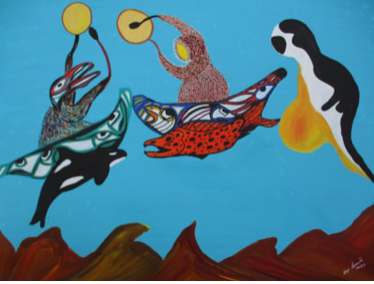
Featured Artwork - October
Check out our latest visual art submissions for October.
Check out our latest visual art submissions for October.
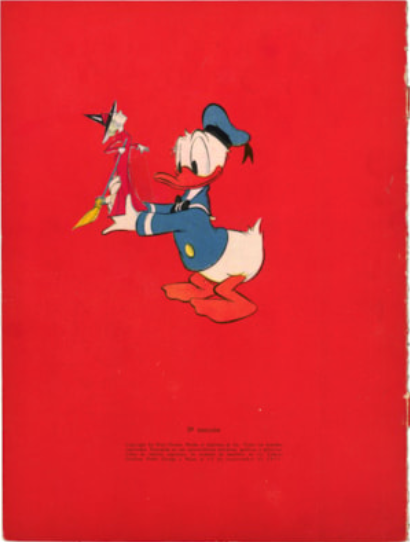
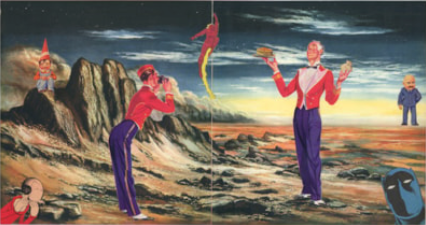
Bio

Brandon Downing is a poet, visual artist and filmmaker, active for the last three decades. His published collections include The Shirt Weapon (2002), Dark Brandon (2005), AT ME (2010) and Mellow Actions (2013). In 2007 he released a feature-length collection of short digital films, Dark Brandon: Eternal Classics, while a monograph of his literary collages from 1996 to 2008, Lake Antiquity, was published by Fence Books in 2010. He's recently completed an inaccurate, sixteen-book translation of Euripides' The Bacchae. Originally from the San Francisco Bay Area, he now lives in New York's Hudson Valley. Instagram: @thebrandondowning
Artist Statement
I've been lucky enough to work across the collage form for more than 25+ years; it remains a core part of my practice as a poet, filmmaker, and, well, shit stirrer. Since the pandemic took hold, the studio time, and the voracious work habits, have only increased. This is to say, I got tons of work. Here are three pieces that I hope give a little look into my practice, and yet can stand alone on their own. Hope you like them. Always happy to share more. With best regards, Brandon Downing, Kinderhook, NY

Bio
Reporter photographic and visual artist, Guilherme Bergamini is Brazilian and graduated in Journalism. For more than two decades, he has developed projects with photography and the various narrative possibilities that art offers. The works of the artist dialogue between memory and social political criticism. He believes in photography as the aesthetic potential and transforming agent of society. Awarded in national and international competitions, Guilherme Bergamini participated in collective exhibitions in 52 countries.
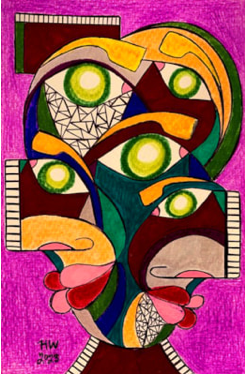
Bio
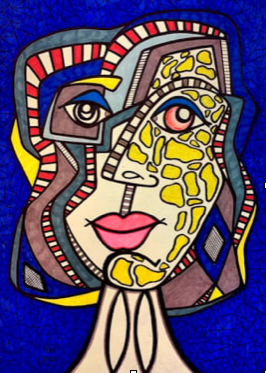
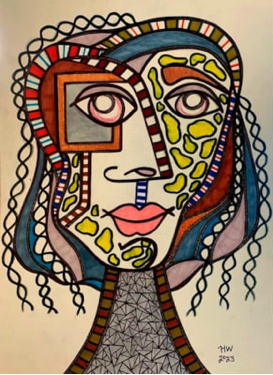
Hanna Marie Dean Wright is a self-taught folk artist residing in Keavy, Kentucky. She uses her experiences from growing up in rural South-Eastern Kentucky, teaching special education classes, and living with obsessive compulsive disorder to inspire her unique works of art. Hanna Wright uses bold lines and bright colors to create abstract figures with relatable and at times deeply emotional expressions. Hanna was born in Barbourville, Kenucky on April 15th, 1993. Hanna graduated from the University of the Cumberlands in 2015 with degrees in Special Education Behavioral Disabilities and Elementary Education.
Artist Statement
“My artwork addresses the mute expression and range of heart-felt emotions experienced by the human race. Art is something people should be able to relate to. Art is a visceral experience that can be accessed by all regardless of race, socioeconomic status, gender, religion, or identity.”
Artist Website: https://www.pinterest.com/hwright4643/artwork-by-hanna-wright-of-keavy-kentucky/
Artist Social Media: Instagram @AppalachianScribble Location: Keavy, Kentucky
Artist Statement

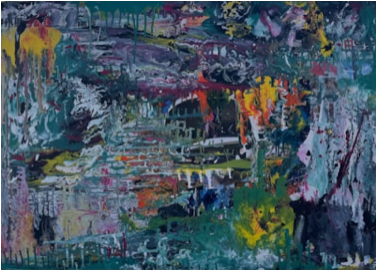
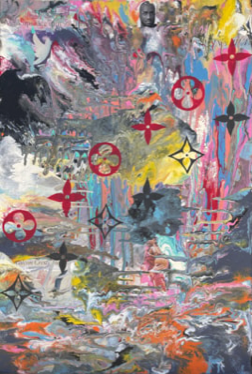
Artisan Crafted Creator, J’Atelier9/J’A9 (@jatelier9) emerged after her Los Angeles based visionary founder, Janine Tang, began her movement towards a circular environment philosophy by sourcing reclaimed materials into her sustainable fine arts. Artisan hand reconstructed, they merge into an insightful tapestry of ethereal, unconventional, whimsical, and sustainability. She experiments with a mixture of flat color palettes, textures, layers, form, and technique. J’A9 translates the interconnectedness of the world through her works by highlighting society’s sensationalism of media, global discourse, planet preservation, glorification of materialism, technological dependence, natural habitat, fashion lifestyle, relatable human experiences, and complex facets of duplicity. IG: @jatelier9
Bio
PUBLICATIONS Quibble Lit Review, Issue 9, 3/2023: https://www.quibblelit.com/let-me-be-frank-with-you-by-jj-brewer Harpur Palate Literary Journal, Volume 21.2, 2/2023: https://harpurpalate.binghamton.edu Blood Orange Review, Vol 15.1, 2/2023: https://bloodorangereview.com/artists/j-atelier9 Audience Askew Literary Journal, Volume 1, Issue 3, 1/2023: https://audienceaskew.com Create Magazine Exclusive Interview, 10/2022: https://www.createmagazine.com/blog/j-atelier9-and-the-circular-movement-in-art EXHIBITIONS 22nd Japan International Exhibition, Tokyo Metropolitan Art Museum, 6/2023 J'ATELIER9 Art Pop Up Experience (Solo Exhibition), Vives Experience, 2/2023 Centered on the Center, Huntington Beach Art Center, 1/2023 J‘Atelier9 Art Pop Up (Solo Exhibition), Vives Experience, 10/2022 SeeMe exhibit & catalog, Sasse Art Museum, 8/2022: https://view.publitas.com/inland-empire-museum-of-art/see-me/page/114-115 ACCOLADES ZO Magazine's Touch of Blue Expo - Selected as Top Finalist Internationally, 1/2023: https://zomagazine.com/blue-expo-final-judging
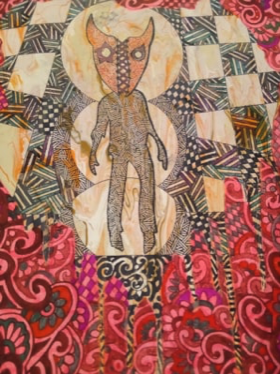
Bio
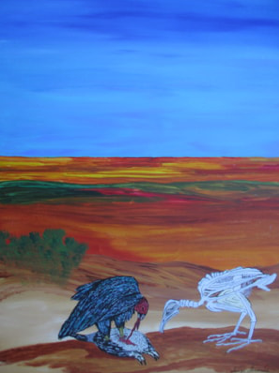
Beat poet and mixed media artist from Central Kentucky. This is an 11 x 14" acrylic with pen and ink.
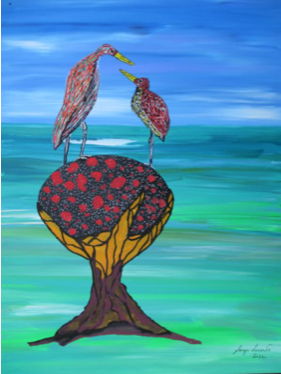
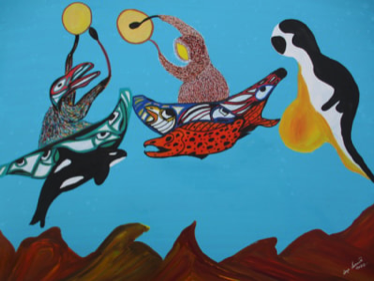
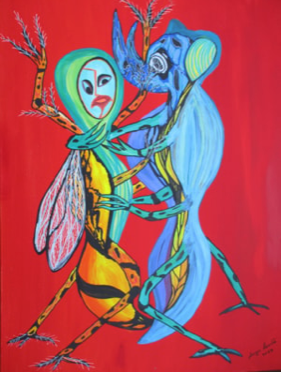
Bio

Serge Lecomte was born in Belgium. He came to the States where he spent his teens in Brooklyn. After graduation, he joined the Medical Corps in the Air Force. He earned a Ph.D. from Vanderbilt University in Russian Literature. He worked as a Green Beret language instructor at Fort Bragg, NC from 1975-78. In 1988 he received a B.A. from the University of Alaska Fairbanks in Spanish Literature. He worked as a language teacher at the University of Alaska (1978-1997). He worked as a house builder, pipe-fitter, orderly in a hospital, gardener, landscaper, driller for an assaying company, bartender.
Artist Statement
I began my life as a writer, publishing numerous poetry collections and graduating to novels and plays and now paintings. My artwork could be described as somewhat surreal. Crossed realities usually yield amazing and sometimes shocking results. I would describe my art as eclectic. The natural world is in constant flux and so animals and plants mutate to create a surreal tapestry. Nothing is ever as it is “supposed to be.” The images are a blend of the natural world and imaginary creatures.
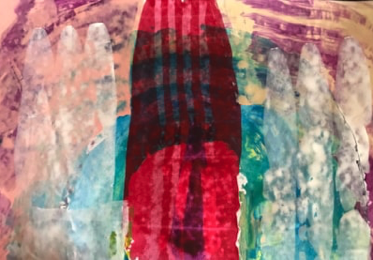

Bio
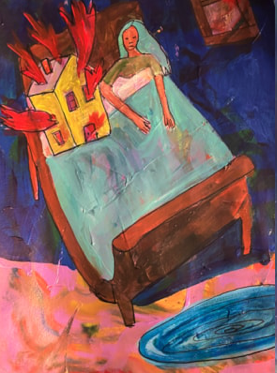
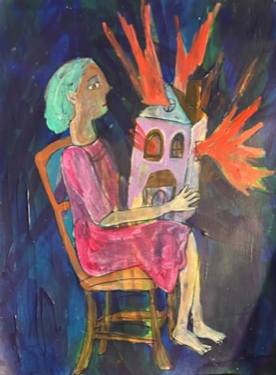
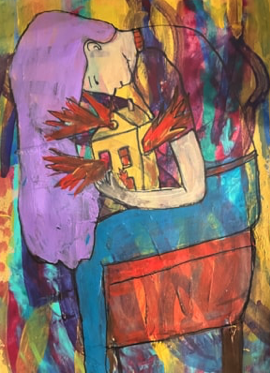
Rachel Coyne is a writer and painter from Lindstrom, Minnesota.
Assignment Podcast: Jo Knowles on Banned Books
Esteemed Mountainview faculty member and award-winning young adult/middle grade author Jo Knowles joins the podcast to discuss the experience of having books banned and the detrimental impact censorship is having on youth.
Esteemed Mountainview faculty member and award-winning young adult/middle grade author Jo Knowles joins the podcast to discuss the experience of having books banned and the detrimental impact censorship is having on youth. She also touches on getting her start in writing and her latest venture, R(ev)ise and Shine.
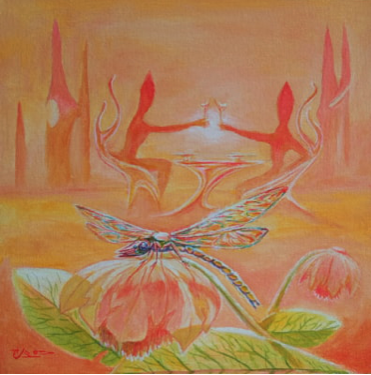
Featured Artwork - September
Check out a selection of visual art submissions for the month of September.
Check out a selection of visual art submissions for the month of September.
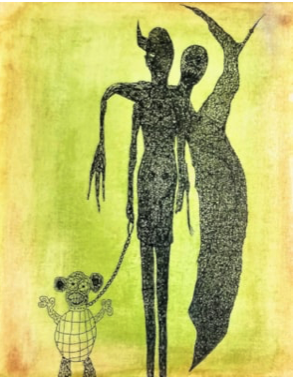
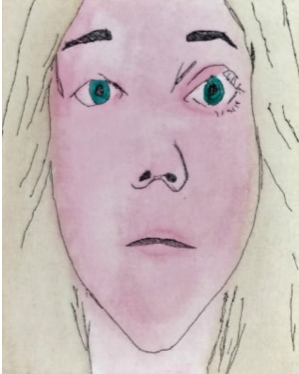
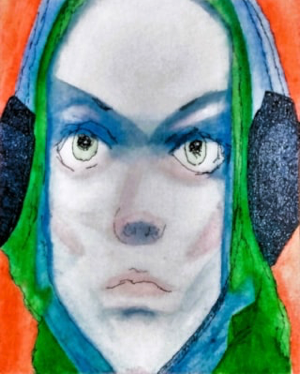

Badfuta is a self-taught trans artist residing in the United States. She is obsessed with Locra's conception of duende and strives to deliver work that feels organic. You can follow and contact her at https://twitter.com/badfuta_art
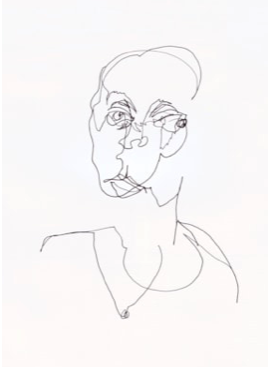
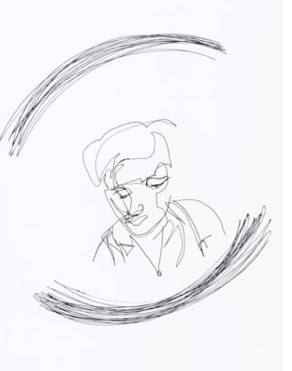
Bio

Emily Rankin was born in Riverside, California and attended university in Texas, where she received a BFA in 2011. Her body of work deals with the tangles of human emotion and understanding, the intuitive messages of dreaming and subconsious exploration. Her work has appeared in such publications as Gasher, Raw Art Review, Meat for Tea, Landlocked, and Rattle. She's based in New Mexico. eerankinart.com
Artist Statement
These pieces make up part of an ongoing series, Disintegral, which focuses on the alienating effects of dissociative disorders, in which the sufferer feels fragmented, solipsistic, and unreal. Disintegral seeks to capture these fragmentary feelings through a series of contour line self portraits, created with ink.
Bio
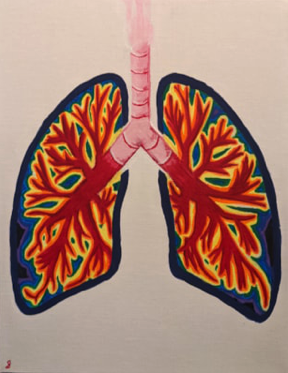
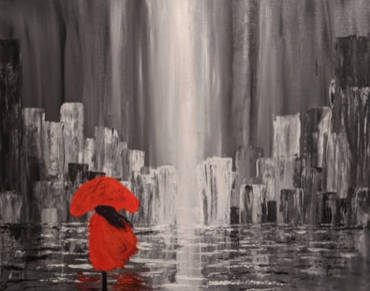
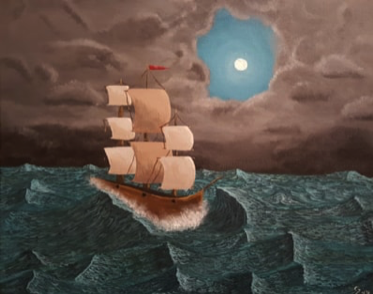
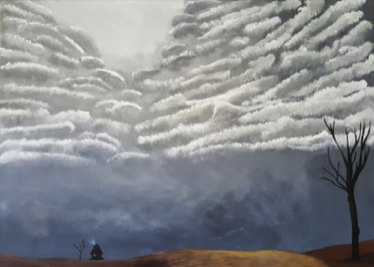
Scott Goldsteins first experiences as an artist was when he went to a painting class, and after that, dove right in and have been an avid painter since. Scott has used painting as a stress relief and mental break from the hectic life of a currently practicing Emergency Physician for the last 20 years. He has went on to study through practical hands-on experience, learning through trial and error and family/friend commissions. He has been published in and have been on the cover of numerous outlets. He primarily work with acrylics on canvas and experiment with coffee on paper.
Artist Statement
The medical themed pieces come from a life of working in the Emergency Department. Painting is a stress relief for me and the enjoyment others get from seeing them. It has taken me years to find an outlet and let my brain relax and deal with the stressors of life. When I paint, my brain “switches sides” and allows me to positively dissociate, leading me to relax while painting. It is therapeutic and relaxing in the moment and then later on, when others experience the finished piece, it's an added bolus of enjoyment.
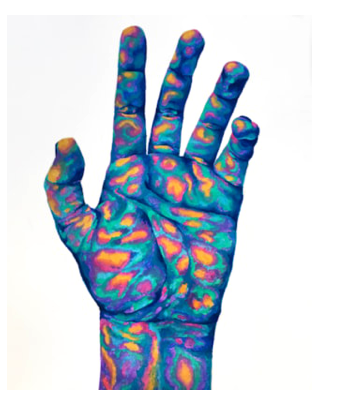
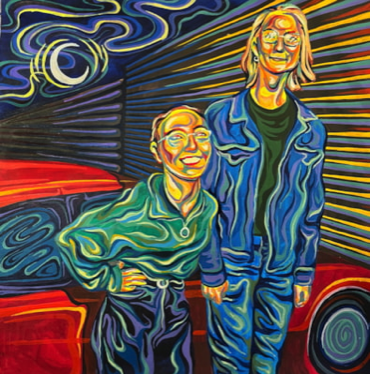
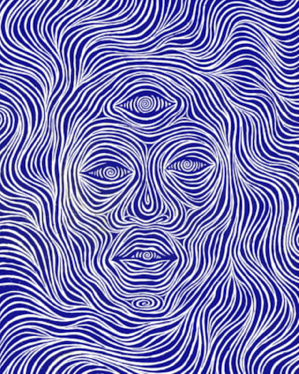
Working to express sound, movement, and collective energy, Molly Klinger’s paintings often explore repetitive lines and distinct colors. A pervasive theme of her work is the exaggeration or alteration of colors as they would commonly appear. Molly is an 18-year old artist born and raised in Moscow, Idaho. instagram handle: @molly.roan
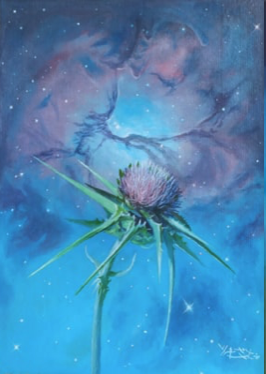
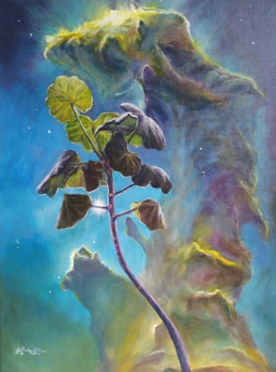
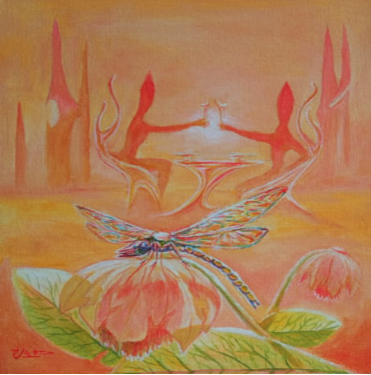

In 2008 Anton Amit graduated from college in Yenakiyevo (Ukraine) with a degree in design and worked as a sculptor and artist in a private company. In 2022 moved to Finland escaping from war in Ukraine. He had 4 exhibitions in Jyvaskyla region ( 2022) in collaboration with his wife, who is also an artist.
Featured Artwork - August
A selection of artistic submissions for the month of August.
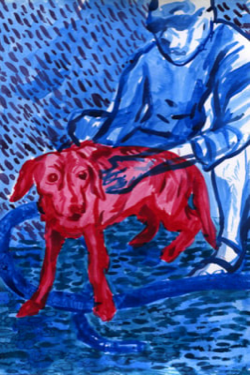
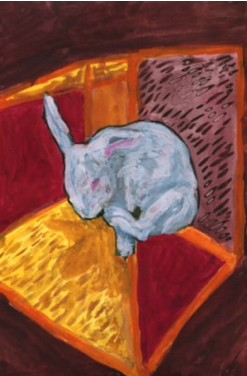
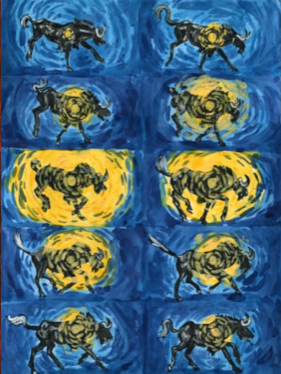
Coyote Jacobs was born as a large insect under a rock but through a series of increasingly unfortunate events now has to live life as a human man. He forgets when he became an artist but it’s the main thing he does. His work draws primarily from his experiences with non-human animals, specifically those rescued from slaughterhouses and other places of exploitation. Within his work, he hopes to create uneasiness with the assumed entitlement over animal lives. He fosters bunny rabbits and is friends with many chickens. Instagram: Coyote_Illustration
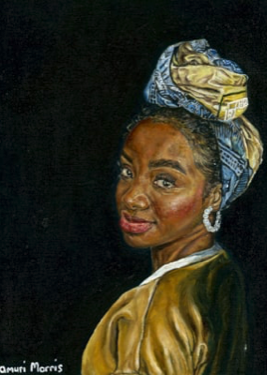
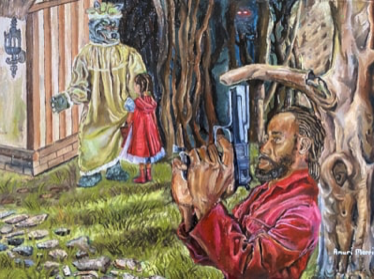
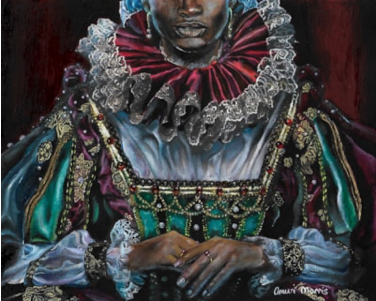

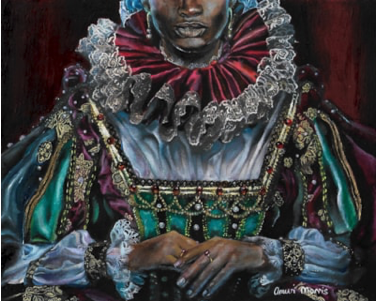
My name is Amuri Morris and I’m an artist based in Richmond, Va. I recently graduated from painting/ printmaking and business at Virginia Commonwealth University. Prior to this, I studied art at the Center for the Arts at Henrico High School. Throughout the years I have acquired several artistic accolades. I aim to promote diversity in art canon, specifically focusing on the black experience. One of my goals is to promote community engagement in the arts and better the community with my talent.
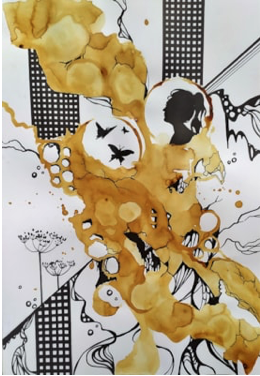
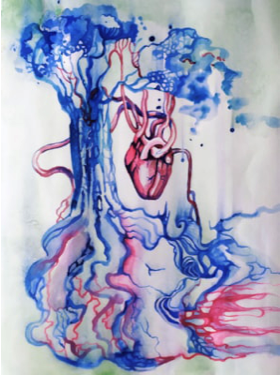
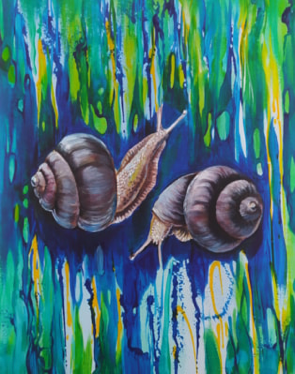

Nataliia Burmaka graduated from Boris Danchenko’s National Studio of Fine Arts (Sumy, Ukraine) in 1999 and had been working as an artist designer from 1999 till 2005. Later she made illustrations for books and worked together with her husband creating murals (private orders). She moved to Finland in 2022, escaping from war in Ukraine. She took part in 4 two-person exhibitions in Finland.
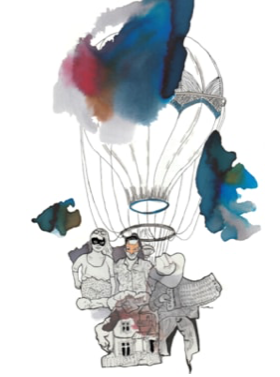
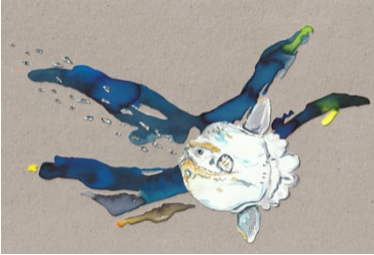
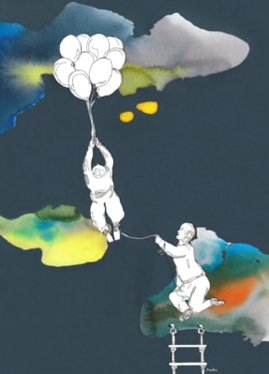
Bio
Mirka Walter is an autodidact visual artist from Cologne, Germany. It was here where Mirka got first in touch with surrealism, as Max Ernst was born in Brühl, a small city close to Cologne. But what especially has been influencing the artist’s work and worldview is the feminist surrealism by artists such as Leonora Carrington and Remedios Varo. Publications Exposition Review (planned 2023), Changeling Annual (planned, 2023), Apricity Press (planned, 2023), The Bayou Review (planned, 2023), Spoonie Press (planned, 2023), Wildflower Press (2023), Artist Talk Magazine (2022)
Artist Statement
What Mirka wants to capture is the beauty, banality and brutality of the everyday, the human body in motion as well as a surreal and fantastic representation of the natural world. The artist’s favorite materials are watercolor in all its expressions and ink. The artist also holds a great love for collage and papercut artwork.


Bio
Noē Piña, was born in Los Angeles, CA as a first generation American. He grew up traveling throughout Mexico and in those travels visiting museums, galleries, and cultural institutes. He studied at The Los Angeles Music & Art School, Plaza de La Raza, Instituto Cultural Cabañas, Guadalajara, Mexico, Cal State LA, and Otis College of Art and Design, where he received a Bachelor of Fine Arts.
Artist Statement
Noé Piña is a mixed media and installation artist in Los Angeles, CA. His work is inspired by the concept of balance, of the counterpoise. He works with found materials used in construction, using terracotta bricks, nails, and wood fragments to create sculptures and installations that address the complexities of maintaining balance, from personal to social to economic. Noé explores the fragility, the precariousness of things, nature, and systems and how the forces of pressure and stress remain in or produce balance. Noé's installations display an environment that is at once an environment of graceful balance and crude counterbalance.

Customer Service Poetry Form
Please rank: 1) Very Dissatisfied…

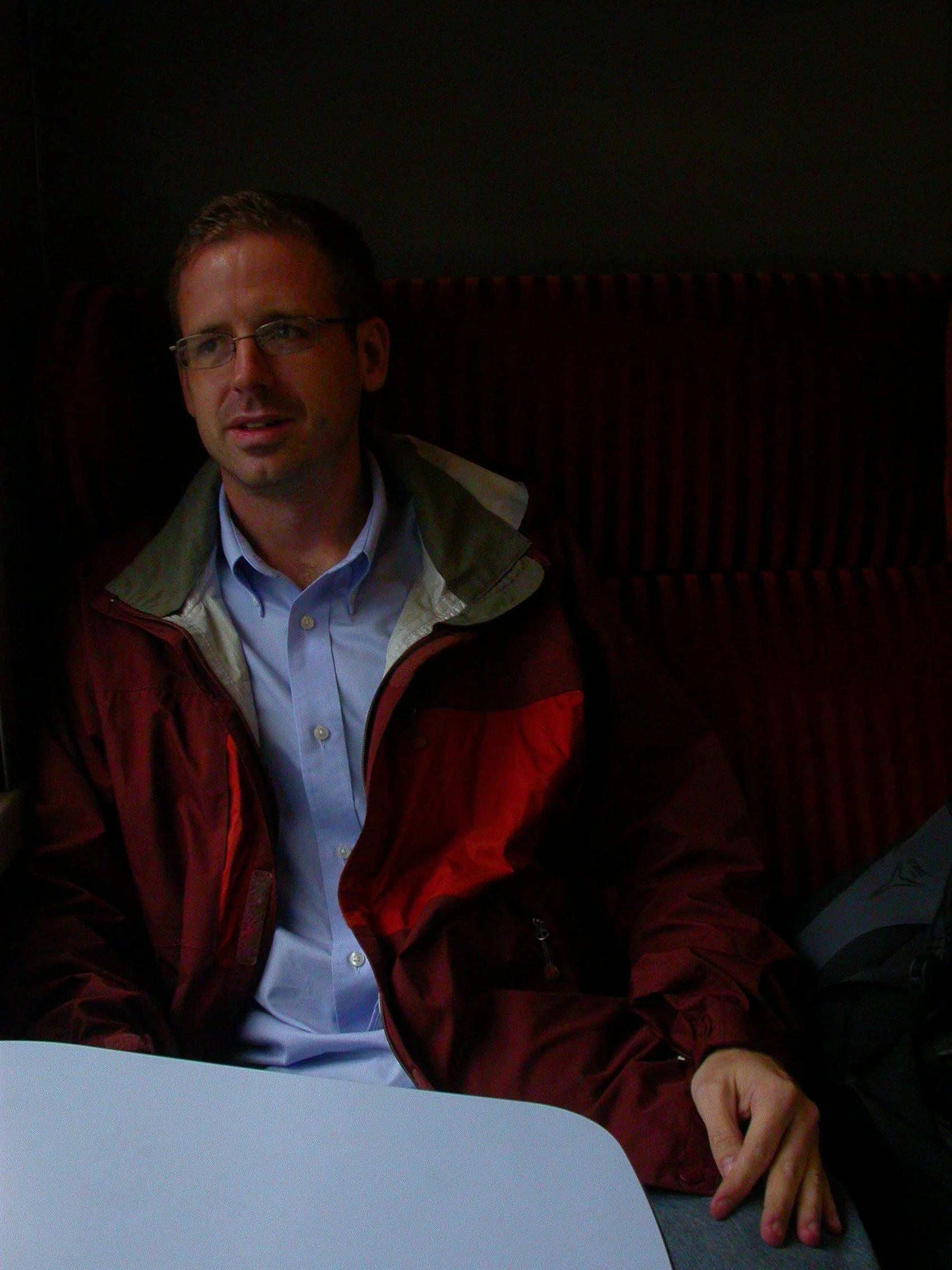
Laine Derr holds an MFA from Northern Arizona University and has published interviews with Carl Phillips, Ross Gay, Ted Kooser, and Robert Pinsky. Recent work has appeared or is forthcoming from J Journal, Full Bleed + The Phillips Collection, ZYZZYVA, Portland Review, Prairie Schooner, and elsewhere.
Two Poems by Kenneth Pobo
At the combination gas station and quick food store…
SECOND IN LINE
At the combination gas station
and quick food store,
a man puts his credit card
in the machine that kisses it
before rejecting it. The man
says he has no other way
to pay. The credit card knows
he’s lying. The flourescent
lights think so too. The clerk
asks how will he return the gas?
I’m second in line. I hold
a doughnut and the local paper.
The woman in front of me
has two bottles of milk. We
are both impatient,
but our stone faces give
nothing away. The man says
he’s sorry to an officer.
A Buick drives right
through the sun’s open mouth
and melts.
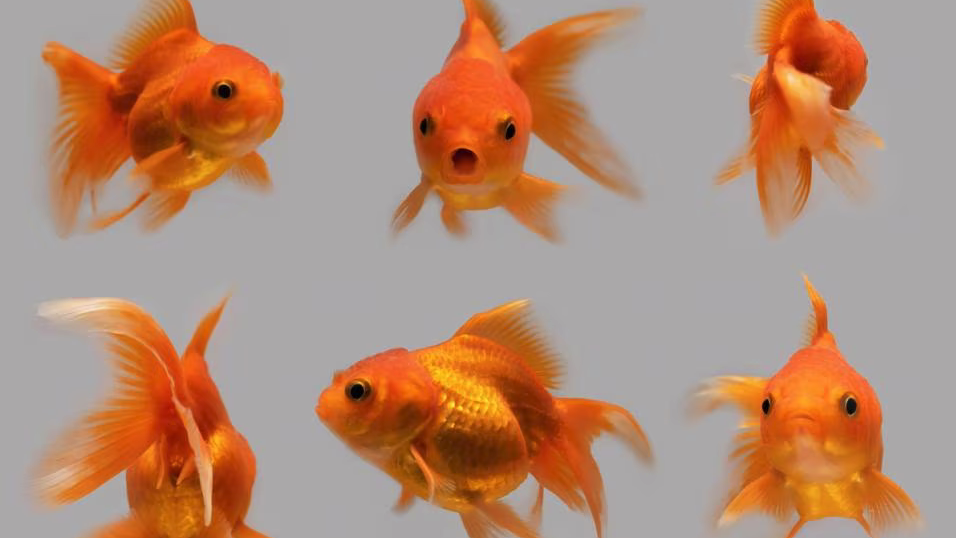
GOLDFISH CASTLE
Again I dream
that I’m a goldfish
swimming in and out
of a glass castle
as the glass castle
swims in and out of me.
A boy comes by
to feed us flakes
that taste like candy
moonlight.
I do
and don’t want to
wake up. The water
feels like a book, print
made of ripples. But
I must face the day,
a lightning spike
in a shoe box.

Kenneth Pobo has a new chapbook forthcoming from Wolfson Press called Raylene And Skip. His work has appeared in North Dakota Quarterly, Nimrod, Mudfish, South Florida Poetry Journal, and elsewhere.
My Three Weeks In The Red Room
It seemed like a good idea at the time.
A. Joni
It seemed like a good idea at the time. I was an invulnerable seventeen-year-old. What could possibly go wrong? The plan was solid: Joni Mitchell was playing at Yale, an easy 45-minute drive. Court and Spark had just been released and I really wanted to see this stuff live. (Footnote: her best album, by my reckoning).
The flaw in the plan was one that has brought down everyone from Nazis (Stalingrad) to first graders (rain on field day): the weather; specifically, sleet. In Connecticut, in 1974, there was plenty, and it was in especially abundant supply in New Haven, during the evening of February 2, 1974. I was wearing only jeans, a shirt, and a corduroy sport jacket, because, um, fashion would not yield to trivia like 34-degree darkness and what the weather guys like to call
“mixed precipitation.”
I also had not anticipated that we would be standing in line for over 2 hours. I remember talking to people in line that night. “If Joni knew that we were standing out here in the sleet, she’d let us in.” Right. Like Joni Mitchell gave a shit. Result: transcendent show on the one hand; strep throat on the other. And that began my time in the Red Room.
The Red Room was a bizarre anomaly. Our house had been decorated to within an inch of its life by my mom. Every room had scrupulously chosen wallpaper, furniture, and carpeting, except the Red Room. The Red Room was the smallest bedroom in the 5-bedroom house. It was also called, in the parlance of the day, the “maid’s room,” because we had a never-ending succession of live-in housekeepers (in the parlance of our day).
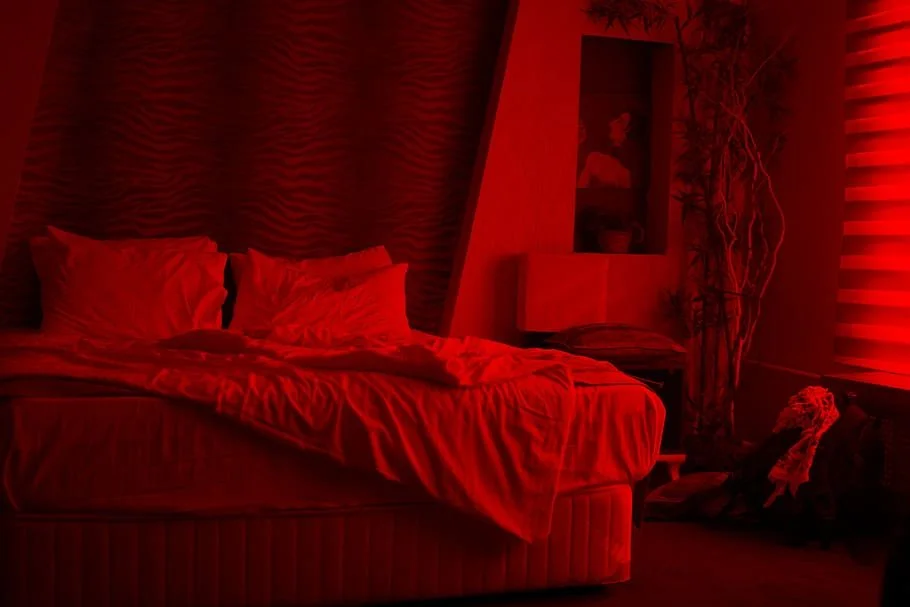
We called it the Red Room because it had a deep scarlet, fuzzy carpet, that was the color of new blood mixed with old blood and matched absolutely nothing else in the house. It’s as if my mom had spent weeks with decorators, painters and designers, and when the time came to do that room, she ran out of steam and just said, “fuck it”; closed her eyes, and pointed to a carpet sample held in front of her by an unscrupulous carpet salesman looking to dump a remnant. The result: a room with disturbing carpet, stark old furniture (you know, for the maids) and one thing that my bedroom across the hall sorely lacked: the sun.
My own bedroom faced north. It was cold and sorta dark. So, when I scored my strep throat, and was out of school for almost 3 weeks, I decided to move across the hall into the Red Room. It was warm during the day. It was bright. Weirdly, nobody in the family seemed to notice that suddenly, I had taken up residence there. We no longer had live-in help, so the room was vacant. And some of the best nights in my life were spent there.
Here’s what sometimes happens to me: when I’m sick, or on vacation, my internal clock gets all screwed up. I’ll wind up staying up until all hours. The strep made it difficult to swallow, and so I had a tough time sleeping. For late-night entertainment, I took to the airwaves. Of course, this was pre-internet, and everything ever written, recorded, painted or created was not available on instantaneous demand. Instead, at 12:30 a.m., all that TV had to offer were test patterns (remember those?). So, I tried the radio, and that was when it all began.
B. Jean
There is a romance and a mystery to the radio that is, I am afraid, something that our kids will never experience, because the Internet has rendered distance and geography irrelevant to what you can know and experience. A YouTube/Tik-Tok video might as well be posted from next door; from Terre Haute; or from Mumbai, for all it matters. No longer is the availability of information a function of where you live.
We have traded the thrill of the hunt for the certainty and breadth of result. In 1974 New England, though, the world was a much narrower place. AM radio, at night, would snare faraway places. How exotic to hear local advertisements for stores in Cleveland that I would never see, or to learn about people in Buffalo that I would never meet! But what made my time in the Red Room memorable to me was what I found on FM radio: stories. On WGBH, in Boston.
WGBH is a public radio station. I was able, by constant tweaking of my analog dial (sigh), to listen, very late at night, at a time when they would broadcast stories. I felt a bit late to the party. Late at night, they were broadcasting Jean Shepherd. He’s best known for the movie “A Christmas Story.” (“You’ll shoot your eye out”). There was no introduction; no context. Instead, here was this gruff but loquacious guy telling stories of growing up in the 20’s
in the Midwest, talking about his friends as though I were expected to know who they were. Soon enough, though, I caught on. The stories were hilarious, first person and told like we were having a beer together. I was hooked. One of my enduring memories is falling asleep to Jean Shepherd stories.
As if that weren’t great enough, WGBH started to broadcast chapters of “The Hobbit”, read aloud as a sort of break between chapters of Jean Shepherd. The whole house was asleep, hushed and unaware of the pictures being painted just down the hall. It was the most silent of rebellions.
In the film “Inception”, we learn that one of the characteristics of a dream is that you aren’t aware of the dream beginning. My 3 weeks in the Red Room are like that in reverse: I don’t exactly remember it ending. When did I move back into my room? When did I stop listening to stories in the dark? I’m not sure. Life went on. I got better, went back to school, and resumed my normal life in my own room, in the front of the house. Because my sleep patterns righted themselves, no longer was I awake at the wee small hours to hear this stuff. And, to be honest, it felt that my auditory late-night adventures were of a piece of the Red Room, and needed to be left behind once normalcy re-emerged and I rejoined the land of the living.
But I never got over listening to stories in the dark, broadcast by guys from far away. Now, it’s podcasts that have filled the breach. And though, sure, we all love to Google stuff, I cannot help but feel that something has been lost. Back then, there was the thrill of finding something I wasn’t exactly meant to find, but which is all too easily found today.
There was the slightest twist of a dial. There was the dim green glow of my receiver. And there was the world, that, for 3 weeks, inhabited the Red Room every night.

Peter Rustin and his wife Leslie recently moved from Los Angeles to Peter’s native Connecticut, with their three rather intelligent cats. Peter is an attorney practicing remotely with his firm in Los Angeles. He plays guitar badly and drums decently. His work has been published in the Arboreal Literary Journal.
Pale
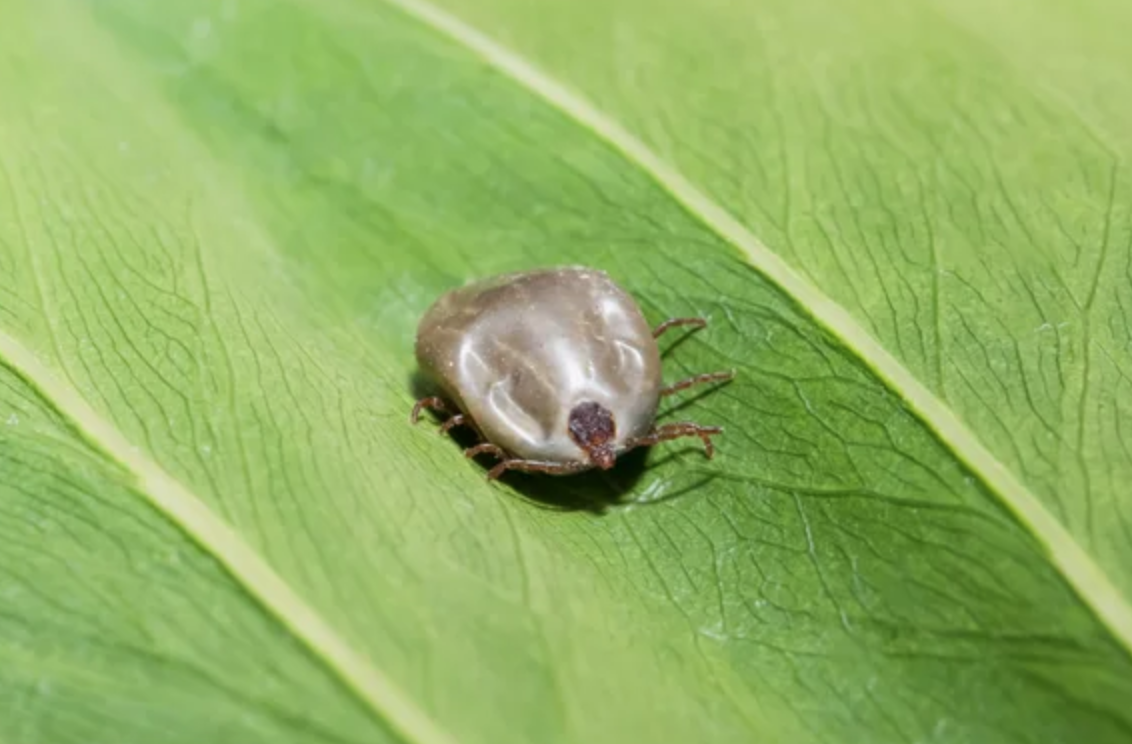
The tick’s white body wore an odd pattern of black splotches.
The tick’s white body wore an odd pattern of black splotches. An irregular form—oval like an egg, but pulled out of shape in two or three places—took up the center. Much smaller splatters, like ink shaken from a fountain pen, came close to being perfect circles.
Its arms dug into the skin of my white, soft stomach. Other people call them legs, but the grip demonstrated the will of hands. The tick was sucking my blood in contact as full as a baby latched on to a breast. The hypostome, the mouth with spears, had unsheathed from the jaws.
I pulled, once, and failed. I moved my middle finger and my thumb underneath the flattened body and pinched, my forefinger guiding the detachment, the lift up and away. I clamped my fingers tighter. I hustled from my bed into the bathroom, positioning my hand underneath the spigot and then the water. I released the pinch, and saw the tick still there, on my finger pad, for an instant, and then it was gone, into the flow, into the funnel descending the drain. I kept the water running. The tick would not find its way back up the pipe.
I remembered ordering in a bagel shop and afterwards, as I toted my brown paper bag, finding a woman I knew and her toddler, a boy in a high chair, his face smeared with cream cheese and the sticky residue of an earlier meal. I sat down with them and plucked out a whole wheat bagel from the bag, and then the toddler was leaning over, and he was grasping the ring of the bagel. I thought that it would be no problem to get the bagel away from him, and I tugged. I tugged and he tugged and he was winning. I could feel his strength through the bread, an iron leverage. The bagel was getting closer to him, and I yanked harder, and the bagel was coming closer to his mouth and his mouth was coming closer to the bagel. He bit. There was now saliva coating the bagel. I let go.
Another time, in another state, Indiana, I was a visitor to a home in the woods, a house with opium poppies in the garden and a fawn in the outdoor kitchen. I asked if I could take a baby bottle of milk or formula from my hostess and feed the orphaned fawn. She passed me the liquid and the fawn came next to me and sucked. The sucking was urgent and I clutched the bottle with both hands to keep it from falling. I had expected gentle nuzzling and big eyes and a tender feeding. The fawn, like the toddler, was fierce in his hunger.
In another season, I heard that the fawn grew too comfortable with people and their cars and roads. He was released to be with his own kind, but he kept coming back to the house. He was hit by a car on the nearby dirt road. He died.
Years later, I would learn that the young man who was once that toddler had a genetic defect. That rare defect limited his ability to take care of himself.
The fawn and the toddler had come from fierce beginnings. I had felt those beginnings. The fawn and the toddler launched by striving for their lives.
The tick left a red mark that disappeared within a June day or so. After the mark healed, a juvenile spider, as round as my scarlet seed beads, as grey-white as a faded pearl, crawled up my shirt. It displayed the same pattern as the tick.
I flicked the spider off me.
Within seconds, it was back, this time releasing a thread from its body. I picked up the thread and swung the spider to the floor. Then I turned on my computer. The tiny spider emerged from a crevasse between the keys.
It was not a second or a third spider, but the original one, a volleyball on a tether, swinging back to me each time I forced it away.
Leaving the computer, the spider skimmed my body, crawling fast.
I had to remind myself: Neither the toddler, the fawn, nor the tick had cared for my welfare. This spider held the same indifference, but while I had killed the tick, or thought I had, I was not going to kill the spider. I left spiders and their webs to collect in corners, emblems of time weaving for my benefit.
However, I had been sickened by a spider once. It had left two bite marks side-by-side behind my ear, and I had become delirious and sick for a day, poison in the liver, poison in my entrails. My digestion had been ruined for months.
My doctor and I discussed black widows; I had not seen the offender, but my superstitions awoke. There was a recent widow at work, human, who had sabotaged me, in secret, in after-sunset conversations with my employers. When she spoke at meetings, my lower belly ached. Her eyes shifted in their sockets when she was around me, moving left, right, left, right spasmodically, as if they were pinpointing a place to strike or a way to exit.
I offered a bagel, blood, milk, and an inflammation site. My sweat brought gnats.
In July, I entered, below vines. In the 18th Century quarry, a clearing nestled within a bowl of a rocks, light orange chanterelles ringed the northwestern side. The fan-shaped mushrooms, gilled and scalloped, had also emerged in the middle of the clearing, next to a cairn of greenstone.
Chanterelles are mycorrhizal fungi that tend to appear in July. “Mycorrhizal” means that they get their food from trees that use photosynthesis, growing in moist conditions near poplars. Here in the quarry there were tulip poplars and sycamores. The tallest sycamore had been axed down at one time; two trunks had grown from the stump, joined at the bottom.
I went first to the rim of chanterelles, and then to the cairn. Beside the chanterelles at the cairn, two Indian pipes arose—ghost plants. I had never seen either chanterelles or ghost plants in this place before. In fact, I had only seen ghost plants twice in my life. They need exact conditions to grow.
Ghost plants, or Monotropa uniflora, do not go through photosynthesis. They use the nutrients of mycorrhizal fungi attached to trees, and so it was likely that the orange chanterelles were feeding the white ghost plant under the ground. The ghost plant, having no chlorophyll, is pale and translucent. Its flower droops into the shape of an Indian peace pipe, thus its other name, “Indian pipe.” It is also called the corpse plant. When touched by people, the stem, leaves, and flower turn black, resembling rotten flesh.
Emily Dickinson placed an embossed illustration of ghost plants on her first book of poetry. Perhaps she identified with them, by nature sequestered and untouched.
Along the stalk, the leaves were shaped like peeling skin or shavings of parmesan. Black specks dotted the plant, and faint shades of pink. I took a twig to move the flower back to peer inside. Afraid to damage the flower, I didn’t see much.
The next day I returned with three teachers and ten second and third-grade children. The chanterelles were broken from their stems—all of them. The Indian pipe flowers had disappeared, though their inner stamen and one pistil had fallen as disks to the ground. One stalk was still planted in the earth; the other lay nearby. Both were blackened.
“I brought children here, yesterday afternoon,” a teacher said, “and to tell you the truth, I wasn’t paying attention to what they were walking on. They went a bit wild, searching for strips of bark.” He picked up the disk-shaped stigma. The yellow-tipped stamen stood undamaged. I peered into the circle.
It occurred to me that an animal might have trampled the mushrooms and the flowers, sniffing for food, but then I thought, No. An animal wouldn’t have torn every mushroom, each flower, and left eating nothing. Chanterelles were edible, delicious even, for humans and for woodland animals such as deer and squirrels. Even the eerie ghost plant wasn’t toxic. Traditionally, it was used as a nerve medicine.
I put the thin, broken stem of the Indian pipe into a sleeve of my backpack. Alone, I hiked to a new location and buried it at the foot of a giant sycamore tree. The ghost plant, a corpse, might resurrect there, a seed perhaps freed, fallen into the scales of its leaves. Pale parasite, you need peace and fungi.

Alexandria Searls runs an environmental education center in Virginia. She writes about human interactions with plants and insects, and her work has recently been published in "Progenitor Art and Literary Journal" and in "Cagibi."
Between Two Points: The Road to Chautauqua
A tight winding route gripped massive liquid bodies to my path. I gave no thought to the path.
A tight winding route gripped massive liquid bodies to my path. I gave no thought to the path. This voyage was just work, a meeting to gather in the flesh, the hum of the quotidian a familiar drone modulated to a slightly altered frequency.
Toronto to Pennsylvania, from the north of Lake Ontario to the south of Lake Erie. Only vague awareness of arrivals and departures with a prescribed destination into the machine and instruction to Go There. No consideration to all that may be between two points. Technology would program the path, the music, leaving only the path of time yet necessary to bring me to Erie.
Tech can provide the route, but chance is the superior tour guide. It likewise requires little effort and does a better job of presenting the path than concentrated effort. The one need is to be open to be led, and to really see what unfolds in front of you. That is the hard part, to just let go. Open eyes and open heart, looking for truth and accepting every shard of beauty that comes your way.
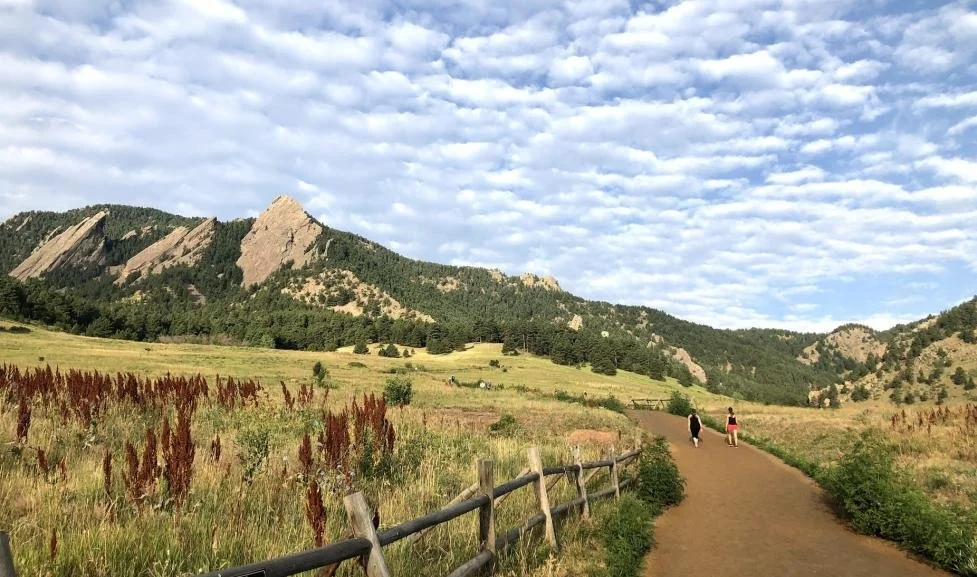
Between departure and destination existed the New York of my travels. The north-west: a New York that often goes unconsidered, outweighed by the gravity and noise of the east. Trees and rolling hills and vistas offer the calm of nature, peace of space, and shift entrenched burdens and niggly details that take territory that is not theirs despite the fervour of their claims.
This was the prelude to chance’s programme. The pleasure of nature’s dominance, its insistence with every portion of road passing. The duration a meditation, visual repetition, a chant of nature, persistence of the most gentle sort. Little sign of anything beyond, until there was, just one: the sign to Chautauqua.
--
Chautauqua. My heart boomed and crumbled at the sight of this one word, of this one place, that dredged back to when summer’s event too horrible and too long feared came to be. It was by reason of this happening that Chautauqua is a name I learned, for all the most wrong and too terrible reasons.
Those reasons being that a man wrote a book and another man said he should die. Then a boy, ever so many years later put a knife into the first man many many times, despite having been born ever so many years past the time that the second main had rattled off his death wish for another, before winning the lottery of fortune and dying by the hand of nature in old age, leaving incitements to any hand of violence to usurp nature’s authority on an author’s days and through a coup of hatred deprive him of life, and us of him.
I regret that this is how I know the name of this place, that I know Chautauqua first as the location where Salman Rushdie was brutally attacked. Despite it having history and purpose worthy of knowing that precedes, and will succeed this.
Though when news of the attack came to be I did not think of the place. Indeed, I thought nothing. Only felt. A boulder of sorrow, rushes of anger at the needlessness and injustice, undercurrents of disappointment that a fellow human would choose this act. And a fervent hope that Mr. Rushdie would survive and thrive.
One thought surged forward now, as this one green panel juxtaposed itself among the repetition of trees to introduce violence onto the placid scene and perforate this insistent, sustained beauty. The one thought was simple. Simple, but not easy. Only this: how could he have done it?
At all, but especially here, in the continued rolling ease of nature. I experienced the sloughing off of rough edges with every mile, easing into softness as the path opened and eased before me. He would have travelled these same roads, looked upon this with his eyes, would have passed this time in the same way. Like any other being he must have had thoughts, and reflections, and musings as time and space passed. We can surmise what those were. We can likely make relatively accurate guesses based upon his actions. What blocks me from understanding is why the softness of nature did not act upon the stone within to erode it gently into something more malleable and tender.
Are we really that different, or is our humanity not as universal as we sometimes hope it to be. We do all struggle and our struggles my hold variance, but surely the spectrum is shared and commonalities abound to allow for connection, sometimes even understanding. Kindness to life, and self, and other can sometimes be difficult – very difficult, even. Sometimes we carry stones in our heart that weigh it down and keep kindnesses from rising to meet us. But paths can bring beauty into our personal orbit to dissolve stones away and reveal spaces for that which is the best of us and the greatest in us. For this, sometimes we need to stop along the road and meander down the unexpected sign and pause.
So I took a that small detour to Chautauqua. I wanted to fully follow the same physical path as the boy, to try to understand how the path of intention could diverge so drastically. Or at least to explore that piece I am missing that keeps me from understanding. And, merely to offer homage in my own way. Something in my power and before me to do that is symbolic for a strange circumstance when I would have liked to have done anything of consequence that was concrete and meaningful but had no such option before me. But symbols are important too, we should not discount them. They are our guideposts after all and will take us to the places we need to go, just as the unanticipated sign to Chautauqua brought me here.
--
With respect and a snippet of artifice, the only mention I offered to Chautauquans when they greeted me with such warmth as to inquire as to the reason for my visit was curiosity. Simple desire to see the place. I took care to express to these lovely people that beauty and reputation drew me here. Indeed, that was a part. Though it was the balance of this, and the violence, and the space in between of the strange story how these two coexist here, or anywhere that was the intention I wished not to reveal.
The motive was not artifice, but to give any shield I had to offer from having this association thrust upon this place, these people. Mr. Rushdie never sought to be known for all that has been foisted upon him. It must be more than annoying that often his existence and contributions as a writer are ousted from the foreground. I imagine the residents of Chautauqua must too, resist the existence of a place that was created with such love and intentionality being eclipsed by an interloper’s act of violence.
The great thing about seeking anything is that you are never quite sure of what you will find. To stumble upon serenity is often a revelation. The occasional circumstance may bring it to our being for a moment or for a time. In our striving, we may be duped by the simulacra that we hold dear, or cling to out of necessity, and only realize once we hit upon the purity of the real thing that truly we held nothing at all. Serenity, every so often a place, gives us opportunity to bathe in our being and breathe our existence fully, without the drudge and grind that toils upon us so persistently.
This is Chautauqua. Serenity, but serenity with intention. The feeling of the place is the overriding feature, before structures, before ornamentation. These exist secondary to deep layers of quiet, nestled by the blooms of nature that flourish the viridity of air, to propagate the scent of verdure and to blanket the assemblage completely. The sounds is a quiet of many layers, the breeze soft, the air gentle, the calm permeating without insistence.
I stood and looked at trees. Friggin’ bucolic is the description that comes to mind. I don’t think I could be angry here if I tried. Not on my worst day, not in my worst moment, not as my worst self of with all the darkest parts magnified and put on display. Not just me – anyone, how could anyone be here and not experience peace. We may not speak of our anger as we speak of our love, but it is a constituent ingredient of our human existence all the same, and just as universal.
I carry it and so do you. Understanding this is part of understanding what it is to be human, but it gets me no nearer to understanding the impetus to violence. Not for any reason, not for any idea, and certainly not for a bad idea and hateful intention. Not for destruction of a force of creation. Not for the lack of humility, the absence of consideration that perhaps despite our deepest held conviction, perhaps there are pieces we do not know or understand. Not for the big reasons of simple humanity, or the simple reasons of simply having better things to do with your time. Maybe, after all, anger is not the root of violence, and it is something else entirely. Whatever that something else is, is far beyond my understanding.
I wandered further. Leaves crunched. The season had changed since that August day when these same leaves would have been lush in a canopy above before enveloping the path with crisp cover below. My feeling was the same, and so remained the same as the years passed and would remain as the seasons continued to cycle. Nature shifts, but truth is constant, and constant is this: that it matters, it matters so much, it mattered then and it matters now and it always did and always will.
When it came, on a Valentine’s Day in 1989, I was in my youth and that pronouncement on the life of Salman Rushdie somehow shook me. Though I could feel that what was happening was so important I did not understand. I watched, and listened, and I thought understanding would come with any wisdom that experience may bestow upon me. But the more I seek the less I understand why, those doing the pronouncing could feel such certainty. That for any reason at all, or for any reason specifically, like a passage in a book they had not read and would likely not have understood had they dared to enter the world of ideas and challenge themselves with the most basic act of human curiosity, that the arrogance of certitude could lead to even the thought of a violence on a man and violation of a human ideal of expression.
It is quiet on the stage. I am rather taken aback that I am here. It was a surprise to end up in Chautauqua; even more unanticipated that I would be able to walk onto the stage, to look out to the audience of no one, to stand in that spot where it happened. If it could happen here, it could happen anywhere. Good people overtook the attacked. How did the feeling of this place not overtake him first to introduce softness into his heart and slough away the hardness of his actions?
If I repeat myself, it is because I cannot let go of this idea. There is something important here.
Critically, all this it goes beyond expression of a view – which is of itself abhorrent. The threat was always real. These people do not operate in metaphor or symbolism. That takes too much effort and the hassle of nuance and higher-level cognition. And now, they have put their knife into him. Sure, it was one of the fanged mass who did the act and the perpetrator has been named and charged and will be held to account, as much as once can for such a crime.
But the ground was laid by others who whipped up a frenzy based upon man-made realities of religion and identity - as though these concepts justify putting a real knife into a real man. Or justify upending his life. Or indeed, taking any of our airtime away from creation for their nonsense. Will they be held to account? Of course, they will not. Not fully. Not properly. Not as they should.
The very concept of literature is not understood by these wretches – not the way we understand it. Nor the concept of art, artistry, creation, exploration. Visit the homes of these cretins and look for a shelf of books. You will not find it. Look in general for books. You will not find them. You will find one, couched in the argument that one is enough. Never understanding those of us who, if we do not ourselves engage in the activity of creation, admire those who do and benefit from it so richly. We are a disparate bunch, but a bunch likely to agree as a whole that if you don’t have too many books, you don’t have enough. If you have only ever read one book, you do not know the value of another.
In Chautauqua, they value books. The tiny place has trees, and cafes, and bookshops. And they explore art, and ideas, and an intentional way to live as community. They have messages on posts in front of their homes that say May Peace Prevail on Earth, in English and in many languages. They have a fountain in the square with a monument to honour music, art, knowledge, and religion. And they invite authors to speak so that they might listen. There are lessons in this, foremost among them that this way is possible if only we choose it. We build our lives with our own hands, what and how we build is up to us.
--
Did my travels or diversion or rambling musings at all give me peace or resolution? No. Not at all. Not to the question of why. Not to the question of how it is possible for this hatred and destruction to exist when confronted by the continuous insistence of love, and beauty, and creation, and all the possibilities of all that is and could be.
It did provide confirmation of what I already knew, what most of us already know, that we need to keep confirming and keep remembering, and perhaps commit to knowing and living more deeply still. That to be in this world fully it is not to destroy but to build, and build with love and brilliance and courage and an insistence that we will not relinquish all that we hold so dear, like art in all its forms – not only but especially when it shakes us. After all that is what it is for. We should expect and even demand to be shaken every once in a while.
But on universal principles we stand firm, unshaken. On truth, we will name things for what they are; on what is right we are enduring; on what we hold dear our devotion remains ever pure.
We seek no fight but if the fight comes to our door, the battle is ours for as long as is necessary. But that is the point: none of this had to happen. It is only because this is so terribly serious that we forget that this is an unnecessary circumstance created by silly people long ago. An edict that rightfully should have been dismissed by all for the piffle that it was and is, with the only response a rejection of any effort to diminish those universals that are indisputable and cherished, revered.
An issue that should have been quickly dealt with and forgotten was not, and it comes raging back. Or rather, we have horrifically been reminded in the most terrible that it never left. We have been living with it all this time. We knew it was there. As it appeared quietened, did we quieten too? Did we accept it as white noise in the background, too easily forgotten Regardless, it is loud now, and we need to be as loud as was always necessary.
Our peace can be forceful. Our love can be imbued with power. Our creativity can conquer any force that may seek to impede us; our vision can be our guide. Art and beauty will be our fortress and armour and provide sanctuary for all that we hold dear.
Vow to make some noise.
Basia Puszkar is a writer and international relations specialist based in Toronto, Canada. Basia has been published in national Canadian publications on political theory and culture, and internationally on matters of political philosophy. Basia is also a poet and lover of music, literature, and the arts.
@basiapuszkar
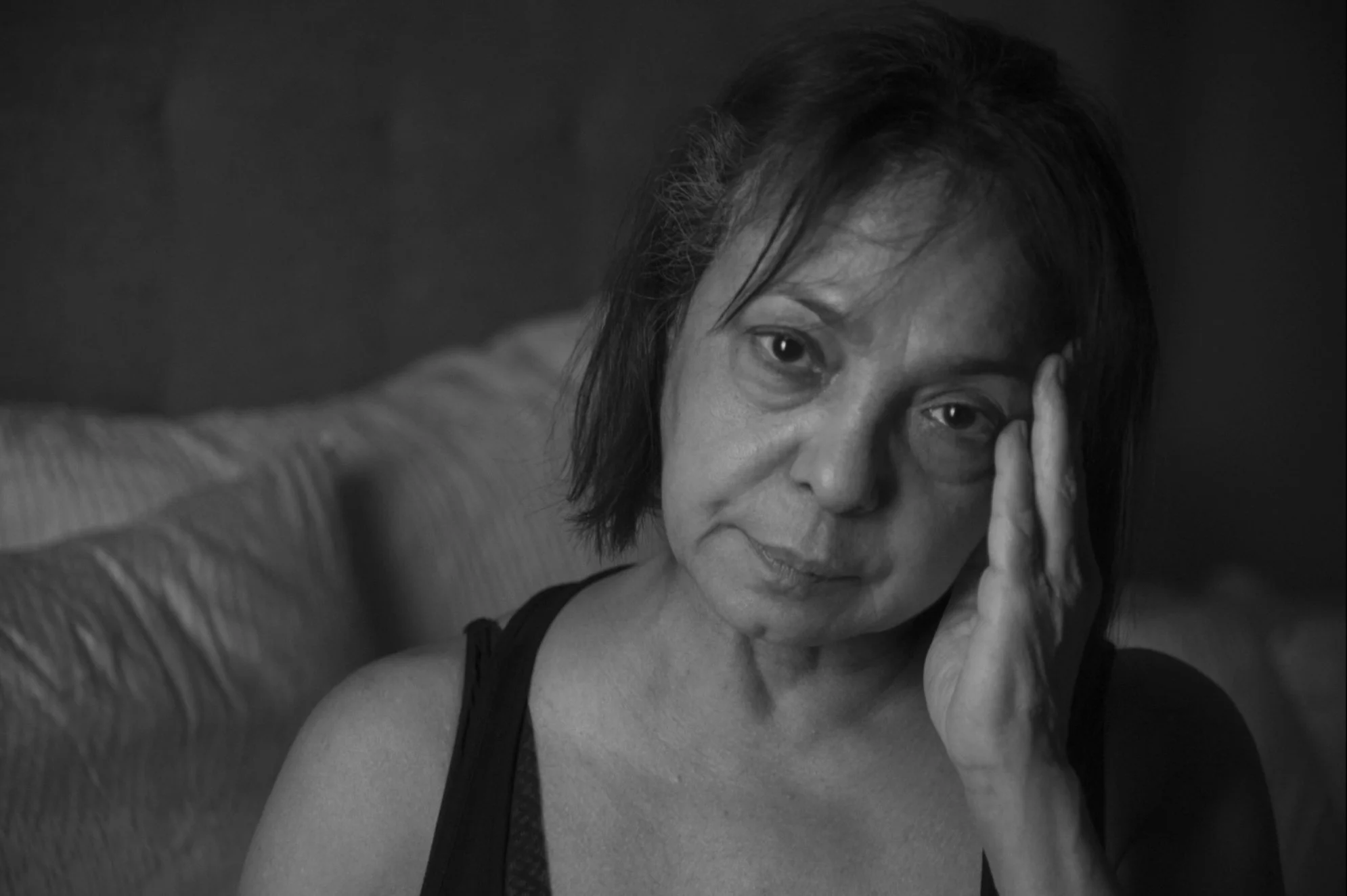
Through Mami’s Eyes
Through Mami’s Eyes is a visual diary of my mother’s days of wellness and illness during the Covid-19 pandemic.
Through Mami’s Eyes is a visual diary of my mother’s days of wellness and illness during the Covid-19 pandemic. NY was in a dark place and wanted to share her journey through moments of despair, pain, and hope, finding light through the darkness. She documented physical moments and day-to-day tasks. The key themes in this work are solitude, uncertainty, and fear. I feared my mother dying, like so many others we lost daily during Covid. The images will live forever. The difficult times she lived will remind me of the strong threads that run through the women of my family.

Gabrielle Ghzala LaGuerre was born in NYC and was raised in a multi-ethnic home. She is a photo-based artist whose work explores people in their natural environments with a commitment to social justice. Growing up, she loved to hear stories, and experiences of people around the world from her grandparents and indigenous storytellers. She traveled extensively with her parents and developed an interest in the visual stories of the people she met and the places she saw. With her lens, she tries to make narrative images that capture moments in time and conveys a message. Instagram Glaguerephotography