
Fourth of July 2022 in a Red State
Fill Ted’s food and water bowls. Pour a glass of white wine…
Fill Ted’s food and water bowls. Pour a glass of white wine.
Turn the bath spout. Shower while the tub fills
to avoid sitting in your own filth. Open the blinds,
turn off the overhead lights. Notice the setting sun,
the first night color has intermediated the dimming darkness
of sunsetless nights in weeks. Step into the tub. Turn on
the jets. Pinch the layer of fat atop your hips.
Remember how he, and others before him, gripped
your hip bones like handlebars, like he wanted to rip
them clean off, but settled for the bruises,
for the proof. Look at your stomach; trace the area
where your uterus lies underneath. Wonder
what you would do if there was a fetus in there.
What you could do. Watch the fireworks.
out the window. Think about how one is necessary
in your future home. Notice the visibility,
the comparative whiteness, of your boobs,
bobbing like apples, to be consumed by anyone
who wants them. Try aimlessly to push them
underneath, out of the cold air, again and again,
until you make a game of it like they are toys.
(In a way they are but you are not the main player.)
Take a deep breath followed by a sip of wine.
Drift off. Awake shivering when Ted knocks
over the glass. Jump up, unplug the drain.
Dripping on the tile, wrap the too-large
pink robe around your body. Use it
to mop the wine, grateful you didn’t choose red.
Dry, moisturize. Let Ted out to pee.
Pour a new glass. Write this poem.
Libby Gerdes is an emerging writer living in rural Kentucky. She graduated from Murray State University with a BS in Professional Writing and a BFA in Creative Writing in 2023.
Facial Recognition
It’s Tuesday afternoon and I’m already behind. I’ve snoozed the calendar alert for “complete Unlock Success Report by end of day'' fourteen times already…
It’s Tuesday afternoon and I’m already behind. I’ve snoozed the calendar alert for “complete Unlock Success Report by end of day'' fourteen times already, but rather than finish the tasks for the USR — to verify the face-recognition algorithm and manually unlock three random phones per day — I’ve spent the day coding. Rush blares through my headphones to drown out whatever upbeat Bollywood crap my officemate, Vikranth, is singing along to.
If I snooze any more, I’ll miss today’s deadline, and our manager, Stephen, will summon a Corporate Compliance bot to hand me a pink slip and take my badge. I’ve seen it happen. I’ll never forget the humiliation on the engineer’s face when he was escorted out by the waist-high robot. As he walked toward the exit, the engineer’s expression turned to fear at what I assumed was the realization that he’d be out a six-figure tech salary. The CC bot deposited the engineer onto the piss-damp street in front of our San Francisco building before returning to its corner office at the end of our hall, where twenty such bots wait until they’re summoned. I can admit now that I was initially against the project on ethical grounds — we’re unlocking phones without our users’ consent — and I considered raising my objections to Stephen, but then our stock price went up, increasing my salary by fifteen percent. Can you blame me for staying quiet?
I open the USR portal in a new browser and hit ACCEPT to authenticate the phone for User1. I’ve only just started, and I still have two more to go before the day’s end. I don’t know it yet, but I’ll see a CC bot later today, despite my best efforts.
Vikranth swivels his chair to face me. Our desks face opposite walls of a small office. He’s wearing a blue button-down dress shirt, starched and wrinkle-free, tucked smartly into a pair of gray slacks. My own white T-shirt is two sizes too big and has a yellow smudge on the shoulder from using it as a napkin today at lunch. We’re both Level 5 senior software engineers, but only Vikranth dresses like he makes the salary. And kind of in an annoying way, if I’m being honest. As a class, engineers, almost by definition, don’t dress up for work, but good luck convincing Vikranth of that.
I roll my chair in front of my monitor, keeping my back turned to Vikranth, who taps me on the shoulder and says, “Hey, Samir. How’s it going, buddy?”
“Hey, Vikranth,” I say evenly, my eyes still on the screen.
He doesn’t take the hint and keeps talking. “Samir, why are you shadowing in the USR? Just move on to the next user. You’re going to get caught.”
I minimize the USR window and point to my now-empty screen. “I’m done. See?”
Over the last month, I’d developed a compulsion to shadow, to spy on users after unlocking their phones. Shadowing is forbidden, for obvious reasons, but the illicit joy of stalking someone on their device when they think no one is watching is too great a temptation. Vikranth wouldn’t understand. His love for rules is too fervent to allow for any slip. I started shadowing after our co-worker, Will, told me it was possible, that everyone he knew did it, and no one had been caught. Will has this soft, chestnut hair that flops across his forehead in a casual way that makes the few women we have on our team silently stare whenever he walks by, something I’ve never experienced. When Will told me about shadowing, I figured I’d give it a try. The first time I shadowed, I watched a twenty-something white guy swipe left on a series of homely women in a dating app, stopping only when he reached a picture of a voluptuous blonde in a bikini. It was mesmerizing to live through the clicks and swipes of others, and now it’s become the part of the day I look forward to most.
“It’s impossible to get caught shadowing,” I remind Vikranth. Once the phone is unlocked for the correct user, you can follow them around anonymously because of the slapdash way the USR system was built. I don’t say this out loud, but frankly, Vikranth is the weird one for not shadowing. People might like him more if he loosened up a bit, broke an unenforced rule, unbuttoned his collar. Unlike Vikranth, who’s from India, I was born in the US. My parents moved to Houston from Chennai in the late 1970s, so I know American culture.
“Look,” he says, voice dropping to a whisper. “You need to stop shadowing. I see you do it every day.” He’s not wrong, but what’s concerning is that he noticed at all. I’m nervous about what he’ll do with this information.
“Stop freaking out,” I say, dismissing his anxiety. “Literally everyone does it.”
“No, the white engineers do it. You’re so obsessed with being one, you can’t even see it.” “Obsessed? With being white?” I’m upset at his accusation. I know he’s insinuating that I’m rejecting my Indian heritage. I was raised here, dammit. Of course I prefer Rush over Bollywood and know not to starch my shirts.
He looks hurt by my harshness. “All it took was Will, one white guy, telling you to do something. I see what you shadow. White people, white culture. It’s like a drug. You’re even straightening your hair.” His voice softens. “Buddy, I don’t want you to get in trouble. If Stephen finds out...”
“Stephen. Better. Not. Find. Out,” I interrupt, like it’s a threat. “And I’m not obsessed with white people. I shadow them because it’s ironic,” I say, cringing at how defensive I sound.
Vikranth sighs, frustrated to be making a point that I’m not grokking. “I’m not gonna tell Stephen anything.” He gets up and leaves our office.
#
I maximize the window and am now observing User1 through the USR portal as she opens up her YouTube channel to look at analytics and view counts for recent video uploads. From a quick scan of the thumbnails, it looks like User1 makes videos of herself singing original music. She’s probably over fifty, wearing red flannel pajamas and no makeup. She clicks “play” on a video, and I watch as she launches into a haunting melody about love and stubbornness. For a moment, I get lost in the sweetness of her pure, dreamy voice. She’s singing in English, but with a beautiful Spanish accent. In the song, she pleads for her love to open their heart and give her another chance. She sings of hope and healing and the rawness of lost love, and she sings with the vulnerability of someone who has endured a deep and profound loss but who seeks redemption and understanding and—wait a second, this is an Adele song. To be fair, it’s not exactly the same as Adele’s song, but I can tell that the original is more than just a source of inspiration. User1 expands the comment section below her video and reads the accusatory rants from rabid Adele fans yelling at her. Um, enough. You’re no Adele! Would be better if you could actually speak English!!! The blowback is unnecessarily cruel. From what I see, she’s just trying to follow Adele’s formula for success, moving music, relatable themes, powerhouse voice. She’s following the script closely, but she doesn’t account for her Spanish accent and her unglamorous clothing. User1 ends up looking like an off-brand imitation of the original, a sort of Kirkland vodka of pop music.
It’s the same with Vikranth, I see now, this notion that following a formula is a means to success. But what he doesn’t understand is that none of this will help him fit in socially. His collared shirt may seem like the ideal corporate uniform, but when you add in his strong Indian accent and distinctly un-American mannerisms like calling people “buddy,” you get a confusing mashup. In trying desperately to fit in with the crowd, Vikranth can’t help but stick out. He needs someone’s assistance to assimilate. I can be that someone. Vikranth will see my gesture as a way of reaching out. He’ll think we’re truly friends, and my performance will be so convincing that maybe we will be. I need Vikranth on my side so he doesn’t narc on my shadowing. Being his guide will allow me to keep a close eye on him. I remind myself to act generous, and to coach him on things like what to wear. If I can successfully get Vikranth on my side, I’ll be safe, and he’ll be better for it. It’s good for both of us. I load phone two into the USR portal and wait for him to return.
#
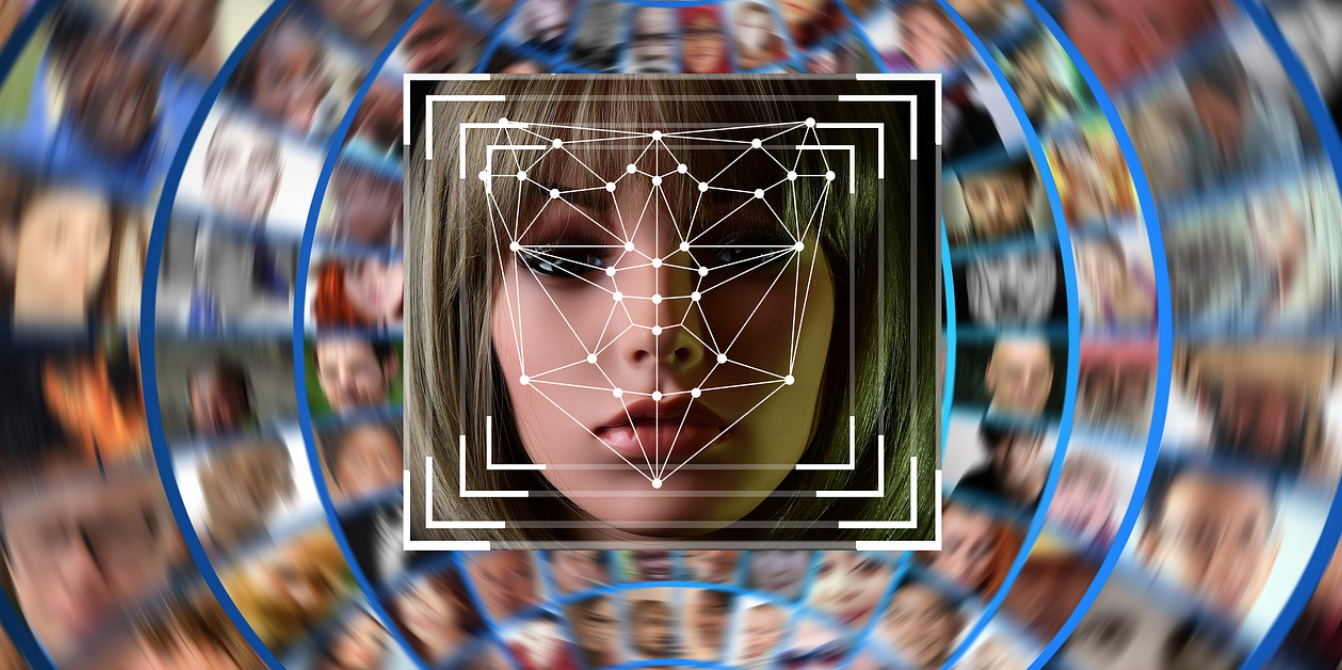
The USR project was Stephen’s brainchild, a way for him to improve metrics for our facialrecognition software and minimize bad press. Early facial recognition technology used to unlock devices was accurate, but bad actors developed methods to trick the algorithm into authenticating the wrong person, resulting in waves of identity theft and terrible PR for companies like ours. Stephen’s plan was elegant in its simplicity. Authentication of three phones required only ten minutes of an engineer’s time to manually determine the accuracy of the automated face-recognition algorithm. The task was lightweight enough that it shouldn’t eat into our other job responsibilities. But when you add in the time I shadow users on their unlocked devices, I bet I spend about three hours a day on the USR task. I’ve successfully unlocked the phone for User2, and I’m shadowing her as she takes selfies. Vikranth comes back, licking pistachio ice cream from a waffle cone embossed with our company’s logo.
User2 navigates to Instagram, and I gather from her profile that her name is Audrey. The portal doesn’t reveal any personally identifying information, and I can’t go anywhere she doesn't go. But if she navigates somewhere on the device where her name, bank details, and nude pics are revealed, well, it wouldn’t be my fault. I can only observe as she leads, like a passenger in a car. Audrey spends five minutes editing a selfie using one of those apps that makes cheeks plumper and eyes bigger. She posts the edited picture with the caption “woke up like this.”
Audrey’s unnaturally-large, gray eyes resemble an anime character now. She was pretty enough before, but I note how much her beauty grows after the editing. Glassy, poreless skin, caramel-highlights in her hair. The likes and comments start flooding in: Fire! Good morning QUEEN! Audrey’s post reminds me that it’s possible to give yourself a makeover to earn likes in real life, too. I look over and see Vikranth’s tongue licking a long trail of ice cream from his forearm all the way to his wrist. I wince at the thought of rehabilitating this guy.
“Take this,” I say and hand him a napkin.
Vikranth narrows his eyes. “Is this, what’s it called...a microaggression?”
“No way,” I reply, looking at him with a pained expression that I hope he buys. “I’m only
trying to help you fit in. Honest. Engineers don’t wear button-downs, and we don’t call people buddy. You’re my desi brother!” I slap him on the back jovially for good measure. “I get what you were saying before. We gotta look out for each other.” I smile.
Vikranth looks touched, but before I can continue, Stephen pokes his head into our doorway. I minimize my window again. At twenty-five, Stephen is the youngest manager here. He graduated college at nineteen and founded a massively successful startup that created dashboards of metrics for companies that manage large amounts of data. His thick blonde hair curls softly at the nape of his neck. I look down, satisfied to see we’re both wearing the same shoes and overpriced jeans.
“Vikranth! Samir!” He studies the calendar app on his phone. “Can one of you remind me who my one-on-one is with today?” He’s got the information open on his calendar, but he always forgets our names and can’t tell us apart. Vikranth thinks he’s forgetful. I think he’s racist.
“With me,” I reply, hiding my annoyance. This is the tenth time I’ve had to introduce myself to my own manager.
“With you...Samir,” Stephen says. I see his eyes dart back and forth between my face and my name on his calendar. He’s trying to commit my image to his memory, though I suspect it will vanish soon. He retreats toward his office. I maximize the Audrey window and watch her scroll through makeup tutorials on TikTok. Vikranth glances at my screen but says nothing, to my relief. If he’s not calling out my shadowing, that means my plan is working.
“Hey, brother,” Vikranth says, smiling. “Do you think Stephen has that disease Brad Pitt has? Prosopagnosia?” I clear my throat to muffle a laugh. I’d heard of this neurological condition before. It’s where the brain is unable to recognize known faces.
“It’s an interesting theory,” I say, nodding my head in mock consideration.
“It’s my only explanation for why he can’t remember our names. Face blindness.”
“You make a great point,” I say. Audrey is about to record a video, presumably to post on
TikTok, and I don’t want to be distracted by Vikranth’s presence. “Hey, you wanna ask around, see what other people think? If we know the real story, we could help him.”
Vikranth runs off like an excited puppy. I go back to Audrey. She hits record and starts dancing to a popular hip-hop song. Her arms pump up and down in tight fists. She swivels her butt from side to side, peeking at the camera flirtatiously when her butt bounces. I’m entranced by the way she moves. She pulls a boy who was sitting outside the camera’s frame into her routine, and I watch as he plants a kiss on her cheek on the last beat of the song. It’s cute, bound to get thousands of views. She stops recording, but I continue observing. The USR can access the camera and mic even when they’re not on. Audrey pushes the boy off her and berates him for his sloppy dancing and wet kiss. I’m caught off guard at how quickly she’s turned on the guy she seemed infatuated with when the cameras were rolling. But I’m not shocked. I know that Audrey, like everyone in the world, is capable of putting on an act for her own self-interests.
#
There are two hours left in the day, and I’m nearly caught up. I’ll easily finish on time. I load the last phone into the USR and watch as User3 attempts to unlock a device that I can tell isn’t theirs. Unlocking a phone with facial recognition is fairly seamless from the user’s perspective. You just look at it, and it opens. But in the background, the thousands of dots mapped to User3’s face are being compared to a reference pattern. In the USR portal I can see how far off User3’s face mapping is from the reference, and I watch as the algorithm does its job correctly and locks out the imposter. I can see User3’s face side-by-side with the reference image. The two are nothing alike. User3 has black hair and brown skin, wide-set eyes, and a smooth, round face. RealUser is a 50-something white dude.
I picture User3’s desperation to gain access to the phone, but what he’s attempting is silly, and has no shot of success. He could never in a million years pass for a white man. I wonder if this is how Vikranth sees me. A tryhard who goes to extreme lengths to be something that will always be out of reach. The key difference between me and User3 is that I’m aware of and complicit in my own whitewashing. User3 likely doesn’t know who he’s trying to impersonate.
Who are you? The screen flashes this confrontational message when a user’s face is declined. User3 enters a 6-digit passcode to bypass facial recognition.
Who are you? User3 tries a different passcode.
Who are you? One try left. User3 enters part of their next passcode attempt, but stops before hitting the last digit. I imagine him searching through other objects belonging to RealUser that might be nearby—a wallet, backpack, or diary—something that would reveal a birthday or anniversary or other numerical string of personal significance. Passcodes are almost never random. The USR portal nudges me to hit REJECT, to put an end to this sham and lock out User3 for good. Just as I’m about to deny User3, Stephen comes by again, this time carrying a clipboard with an illustration of our office plan.
“Hey...you,” he yells in my direction. “We’re moving hallways to make room for more engineers. I need to confirm who sits where. You share an office with Samir, right?”
“I am Samir,” I say coolly.
“Right! Of course, my bad,” he laughs and walks away without an apology.
Fucking again, seriously? Twice in one day is a record, even for Stephen. The USR portal nudges me to make a decision about User3. Accept or reject. I reflect on Vikranth’s accusation, that I was rejecting my culture and obsessed with whiteness. I finally get his point. Everything I’m doing —the way I dress and speak, my hair — it doesn't matter. I will never be accepted by Stephen. I’ll always be a random brown person he can never identify. I act swiftly and against my better judgment, overriding the algorithm’s decision and unlocking the device for User3. This is a fireable offense, but there’s an unexpected thrill in my noncompliance, in knowing that what I’d done could ruin the RealUser’s life. There’s also this rush in hitting ACCEPT in the USR portal, in helping User3 gain acceptance in a way I never could.
User3 proceeds to the Gmail app, searches for “credit card number” and “passwords,” and finds multiple emails with account information for Citicard and Bank of America. I feel a surge of adrenaline as User3 navigates to the Target app, where they change the delivery location to their home address. As they fill their cart with TVs, a Nintendo Switch, and paper towels, I start coming down from my high, suddenly horrified by what I’ve done.
I remember what Stephen said during the launch meeting of the USR project. If you accidentally let in an imposter, you can fix your error, as long as you do it within two minutes. I refresh the USR portal and hit REJECT for User3, but it’s too late. The system won’t allow it. I lingered too long. I can only shadow in horror as User3 searches for and finds RealUser’s social security number. The adrenaline rush I felt earlier gives way to guilt at the chaos I’ve created for RealUser, and the recognition that I’ll be fired soon.
What happens next? The USR portal will alert Stephen that a phone was incorrectly unlocked, and that the mistake wasn’t corrected, but not who was responsible. It’s one of the many flaws of the program, but his workaround is straightforward. Either I come clean on my own, or Stephen will call a team meeting to smoke me out in front of everyone. I could confess and explain that it was a misclick. Maybe he’ll recognize my integrity and spare me. I could offer to fix some of the haphazard features in the USR portal. That would make him look good in front of executives, and I might get promoted. There’s a way I could come out ahead in all this. I know what I have to do.
#
Stephen’s USR portal is open to the dashboard page when I enter his office. He’s standing at his desk. His portal is different from mine. Instead of users and phones, Stephen’s view shows a giant spreadsheet with totals representing business-critical data. He can manipulate the information to see productivity stats, error rates, and success metrics for the entire USR program. This must be the data he uses to justify the USR to leadership, to prove that the violation of our customers’ privacy is worth it. A cell flashes red on his screen, indicating my error, I presume.
“Stephen,” I say quietly, trying to get his attention. I’d prepared my confession speech on the walk over, complete with a soft suggestion for a promotion, but Stephen looks angry. I’ll need to tread carefully. He is preoccupied with the red cell. He manipulates the screen with his right hand, opening and closing a chart displaying error rates to see if the mistake is real.
“Hang on,” he snaps back, without looking at me. His right hand throws open five more charts in rapid succession, each one confirming what he already knows.
“Stephen, it was me,” I confess. “I...I unlocked the phone for the wrong user.”
“It was you?” He turns to face me, cheeks red with rage. “Why would you do that?” I’m actually more ashamed than I expected to be. Internally, I vow to never do anything
like this again, though even as I’m making the vow, I’m wondering whether I’ll keep it. To Stephen I say, “I’m so sorry. It was an accident.”
Before I have the chance to explain, Stephen opens the CC bot portal to fire me. He’s on the order screen now, filling in fields to summon a bot with the ease of buying a sweater online. I need to pivot, to find some other way out of this mess, but Stephen’s outrage is propelling him faster than I can process.
“Name?” he asks without looking at me. My mind goes blank.
“What is your name?” he demands. I say nothing. My lips refuse to part. This is the third time today Stephen has forgotten my name. Vikranth may have been right about my obsession with whiteness, but I was right about Stephen being a racist.
“Vikranth Iyer,” I say. I speak the words with the ease of someone well practiced in deceit. I’d walked into Stephen’s office with the intention of confessing, but he’d offered me a narrow opening in which to slither in, so what choice did I have? In all honesty, I believe I’ve done what anyone in my position would do, if given the opportunity to sink or swim. Even so, my inner voice acknowledges that Vikranth doesn’t deserve what I’ve done to him. And yet, even though I don’t mean to be callous, this is business. This is the American way. He will understand this when he’s lived here long enough, when he’s loosened up a bit. I don’t owe him anything just because we’re both of Indian descent. We are simply co-workers, a tenuous social link unencumbered by the debt of true friendship.
Before I turn to leave Stephen’s office, our eyes meet again, and for a second I see the briefest flash of recognition in his gaze, as if he knows who I really am. Of course it would be my luck that Stephen would finally recognize me after ten months of confusing me for Vikranth. Today of all days. But the spark in his eyes retreats, and I’m safe.
#
I walk down the hall toward my office. At that moment, the CC bot comes whirling over and brakes in front of Vikranth. His eyes dart anxiously from the CC bot to me. The bot extends its arms and spins Vikranth’s chair so they’re face-to-bot-face. Vikranth Iyer, it announces. The bot’s arms clutch the shoulders of Vikranth’s collared shirt. I regard the CC bot with admiration for correctly identifying Vikranth. This inhuman machine, a jumble of metal and sensors, has accomplished what even our own manager could not. It is soulless and obedient, devoid of emotions, and single-minded in following its given commands to the letter. It will never be fooled into thinking it’s one of the guys, will never assimilate or fit in with us humans. That’s not what it desires because it has no desires. I’m suddenly jealous of this bot with no feelings that can be hurt, no race that can be targeted, no identity that can be diminished.
Vikranth stands up from his chair in a panic. “Are you firing me?” he says to the bot. He turns to me. “Is this thing firing me?”
“Dude, I have no idea,” I say gently, not wanting to add to his agitation. I feel guilty about the situation, but I also want this to be over quickly. There is still a non-zero probability that I could be fired instead of him. I will be safe only after Vikranth is out because even if Stephen later learns what I've done, his ego will prevent him from admitting to an error. It will be best if I don’t draw attention to myself.
Vikranth’s left hand palms his forehead. “This must be some kind of mistake!” He’s right, of course, but the CC bot can’t process dissent, so it carries on, stripping Vikranth’s badge and assembling a box for his personal effects. The bot scans the room and retrieves a fake potted succulent and a small sandalwood bobblehead of Ganesha, depositing both into the box. “I know you did something to get me into trouble. You’re a traitor to your people, man. What’s wrong with you?” Vikranth turns to me, bot arm still secured around his wrist.
I’m stunned into silence. It’s one thing to accuse me of rejecting my culture, but another to suggest I’d sell out my people. But that’s exactly what I’ve done. I’m both selfish and a backstabber. The noise attracts the attention of the people in our hallway, who emerge from their offices to rubberneck at the commotion. I can sense Vikranth’s reluctance to make a scene. That isn’t what obedient people do. They comply in silence even when they know they’re being wronged, making themselves easy targets for assholes like me. The CC bot leads Vikranth down the hall. I follow them at a safe distance, in case the CC bot suddenly redirects its focus to me. I watch as Vikranth is led outside and released. His shirt has come untucked, his perfectly pressed collar undone. He walks right up to the building and smushes his nose against the glass, making a visor out of his right hand to block out the sun. Even so, I know he can’t see me, though my face is inches from his. I am as invisible to Vikranth now as I’ve always been to Stephen.
#
Vikranth will walk away from here today and tell his family exactly what happened, how he was fired from this job without reason. But his immigrant resilience precludes him from wallowing, so he’ll dust himself off, and in a few months, land his next American dream job as a senior software engineer at a social media company. Stephen will dissolve the USR program and reboot it as USR 2.0, this time with more safeguards to prevent accidental unlocks for the wrong user. I will advocate to retain the technical framework that allows me to shadow, on the grounds that it would be valuable to the entire company to have more data on our users, not less. Stephen will applaud my suggestion and say,“Great sense of initiative, Jameel,” though he will look at me later that same day with a puzzled expression and ask, “Didn’t I just fire you?”
#
Twelve years from now, Vikranth will fail to recognize me when we are both having dinner on a Friday night with our wives, eating in the same Chinese hot pot restaurant in the Inner Sunset, a few tables apart. My hair is almost completely straight, longer and shaggier, and I’ve streaked it blonde. I’ve packed on about twenty-five pounds.
“Hey, Vikranth!” I’ll say, going over to his table. “It’s Samir. We shared an office over a decade ago, remember? How have you been, buddy?” The passing of time has given me the unearned confidence that he will definitely want to talk to me. It’s been so long. We’re older now. All is forgiven.
His head will tilt when I use his pet name, but he won’t seem to recognize me. “Man, that was so long ago,” he’ll say. “What was your name again?”
I will repeat my name and a few descriptors about our office to jog his memory. And even though he doesn’t show a spark of remembrance, that won’t stop me from the verbal diarrhea I will spew, like an anxious criminal relieved to be confessing. But I won’t actually confess anything, I will instead tell him how I bought a new house in Burlingame and take a commuter shuttle to work. The monologue will make me feel good about myself, about how much I’ve grown since the incident.
“I’m happy for you,” Vikranth will say, and it will be the last thing he says to me because I will never see him again.
He and his wife will grab their leftovers and leave, and because I’ll hear him mumble “USR portal” under his breath, I’ll know he really did recognize me. As Vikranth walks to his Porsche in the parking lot behind the restaurant, I will wonder if he’s more successful than I am. If, in deceiving Stephen and keeping my job, I’d set Vikranth’s success into motion instead of mine, by mistake. If I’d allowed myself to be fired maybe I would be the one driving the Porsche. But what will stick with me most from that evening is the T-shirt Vikranth will be wearing. I’ll wonder if he wore it to work that day instead of a starched-collar shirt, and if he remembers that I was the one who taught him to do that.

Prabha Kannan is a writer based in the Bay Area. Her writing has been published in The New Yorker, Stanford University's Artificial Intelligence Institute, and VentureBeat. She was long listed for The Masters Review 2023 Winter Fiction Prize. She also served as the head writer for Siri, Apple's A.I. assistant.
I Haven't Slept in Two Weeks
Counting sheep makes me itchy, so I’ve begun devising scenarios in which all the people I’ve ever met meet at the old racetrack to lay down twenties in the name of one greyhound or another. T
3 May 2023, 3:37 am
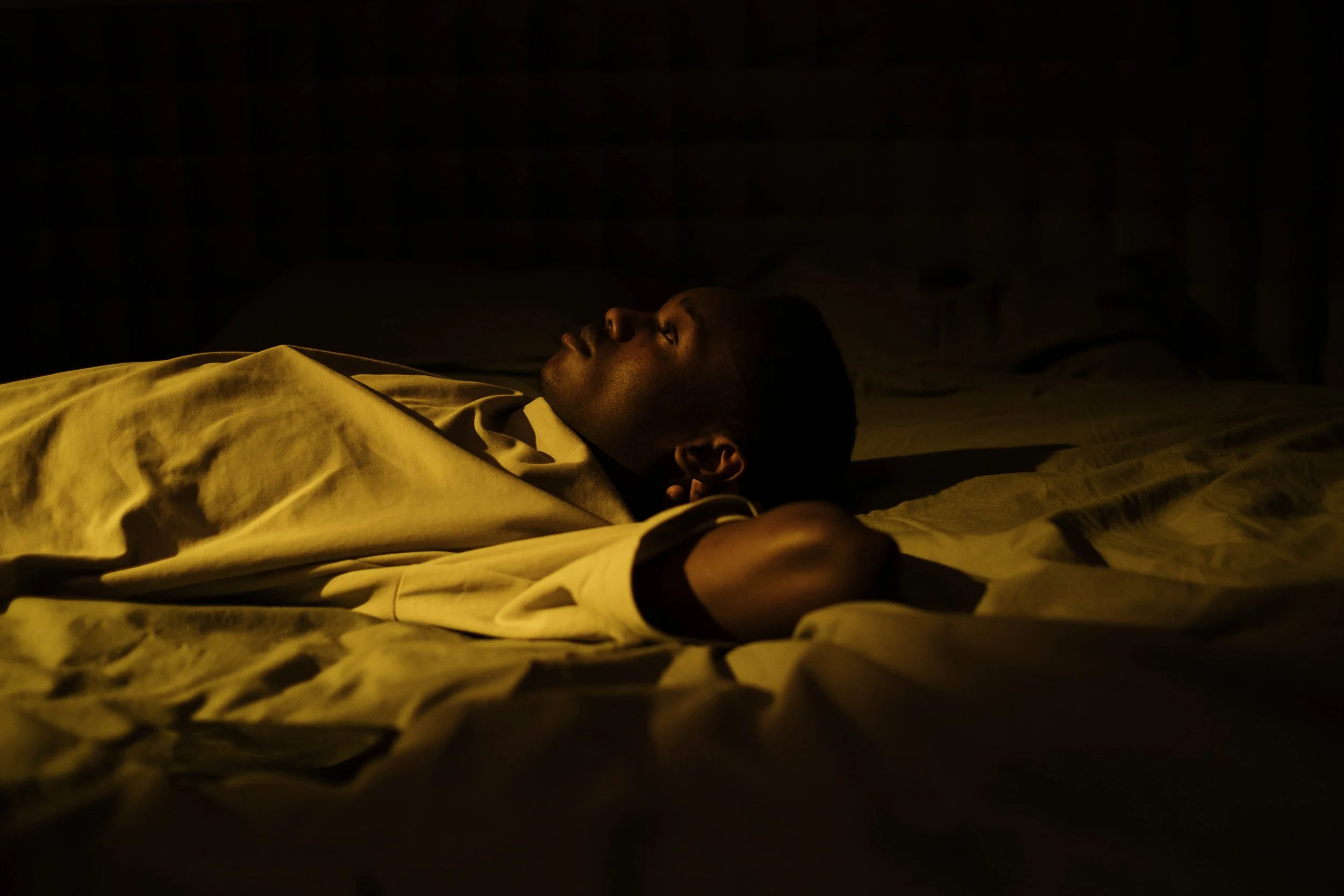
Counting sheep makes me itchy, so I’ve begun devising scenarios in which all the people I’ve ever met meet at the old racetrack to lay down twenties in the name of one greyhound or another. The races only last a couple of minutes each, and my high school track coach is always the biggest winner. This might seem odd, but you must remember I haven’t slept in two weeks.
I give interviews to big magazines in the early hours of the morning. No, Vogue, I don’t collect anything. GQ, my prized possessions are my teeth. My biggest regret is not telling her I loved her before she overdosed. Yes, I know it wouldn’t have changed a thing. I am a Libra, People; how’d you know? No, Rolling Stone, I haven’t slept in two weeks; thanks for asking.
I ask a lot of pretty imaginary women out on dates, and they always accept. I’m so charismatic. I’m three inches taller than I am. We meet at the dive bar or arcade, and as they try not to impale people with pool sticks or elbow me on the backswing of the punching machine, I try my hardest to stay present. They suggest I get more sleep, and I ask them if they’ve ever had insomnia. I ask if they know I’m trying. I tell them I haven’t slept in three weeks. They get too drunk, and I have to drive them home.
I spend a paycheck on blackout curtains and eye masks and air purifiers and white noise machines and melatonin. My therapist tells me I need to learn how to breathe. She tells me I’m getting myself riled up. She says it’s like when you throw a dog a tennis ball once and then try to walk away. I ask her how she expects me to calm down when I haven’t slept in four weeks. She says it’s a matter of harnessing the right energy. She lights incense and takes my credit card.
Sometimes I think what I need is a reset, so I get up and pace the length of my apartment. In the living room in the dark, I study the pictures on the mantel. What a beautiful family you have, I say, and then turn my attention to look at the host in the mirror. How’s your grandmother? I ask. Dead, I say. Haha. We both laugh. I laugh. Well, at least someone’s sleeping. Haha. Have you heard I haven’t slept in five weeks? I adjust a throw pillow and pad back to my cave.
I begin to find myself drifting in inappropriate places. At my desk, in traffic, waiting in lines. I begin to realize it doesn’t make much difference at all. I can do eight hours of work in two and then study the gray of my cubicle walls for six. I have no pictures tacked up. I have no plants. I haven’t slept in six weeks. I close my eyes and listen to Jim from accounting talk about the designer pendulums on his desk. Look, this one is made of rocks from Vernazza! I turn to look at the rocks and then remember I’m on the other side of the office and trapped in my enclosure, and I think I tweak my neck. I lay my head down on my keyboard. I doze for a couple of minutes until I feel a tapping on my shoulder and hear someone asking for the expense reports. I was done with them before 9:30 in the morning. Whoever it is tells me I should be careful sleeping on company time. I mumble that I haven’t slept in seven weeks.
I start riding the bus. I’m afraid of becoming one of those people who think they’re in reverse and drive through a Starbucks. I wouldn’t mind hitting a tree or drifting off the Zakim or the Tobin, but I don’t want to hurt anyone else. Other people sleep; other people deserve to live. I watch old women with shopping bags and laundry baskets struggle up the bus steps. I forget to help them. They have the same scent my aunt had in the six months before her heart stopped on a warm October afternoon. I ask the women if they’re afraid. They move away from me and get off at the next stop. I stand on the seat and purse my lips so they fit in the crack of the window. I’m sorry! I yell as the bus drives away. I haven’t slept in eight weeks. The driver threatens to kick me off. I say oh no, sir. Just one more stop. When I disembark, I tell him I haven’t slept in nine weeks. On the sidewalk, I realize I forgot to thank him, but I’m already standing in the bus’ exhaust fumes and a rainbow puddle.
I often give up around four o’clock in the morning. I make a cup of coffee and decide to cook my dinner for the week. I season the chicken and place it in the oven to bake and don’t realize until I smell smoke that the chicken is actually a moldy sponge. I shut off the oven and throw the whole 9x13 out my living room window. The oven’s knobs wink deviously at me. I tell it to cut me some slack; I haven’t slept in ten weeks.
Afraid of the oven, I decide I’ll finally learn how to play the keyboard that’s been tucked under my bed for three years. I think I teach myself one chord before my neighbor starts banging on the door. He keeps knocking, and I doze a little. I come to and watch as a piece of paper slips under the door. It says the sponge dish killed a raccoon when it landed. I didn’t even hear a screech. I stick my head out into the crisp, pre-sunrise air and see the guts in the parking space. I think about following the dish out the window with a perfect swan dive. One nocturnal mammal casualty is enough for a single morning. I write, “I haven’t slept in eleven weeks,” on the other side of the paper and slide it back into the hallway. I stand at the peephole for three hours.
All the people I’ve ever met stage an intervention at my apartment. There’s a charcuterie board on the table, and all my throw pillows are on the floor. They collectively take a step forward, and I crouch into a defensive position. They say they’re worried about me. They say I’m becoming increasingly erratic. I say that I haven’t slept in twelve weeks and kick my shoes off so they hit the wall. Some of the paint chips. The landline starts ringing. They answer and hang up before saying anything. It’s only ever telemarketers anyway. They pull a bag of powder from their pocket. I ask what it is. They say it’s a mixture: Ambien, Xanax, Valium, Lunesta. They hand me a glass of red wine and tell me to snort the powder. I ask them to pick a greyhound each and then make a quick break for the door.
E.C. Gannon was born in Boston and grew up in New Hampshire. She is now a student of English and political science at Florida State University. Her work has previously appeared in The Kudzu Review and Oddball Magazine.
The Dentist
It may seem a tale told
among old wives


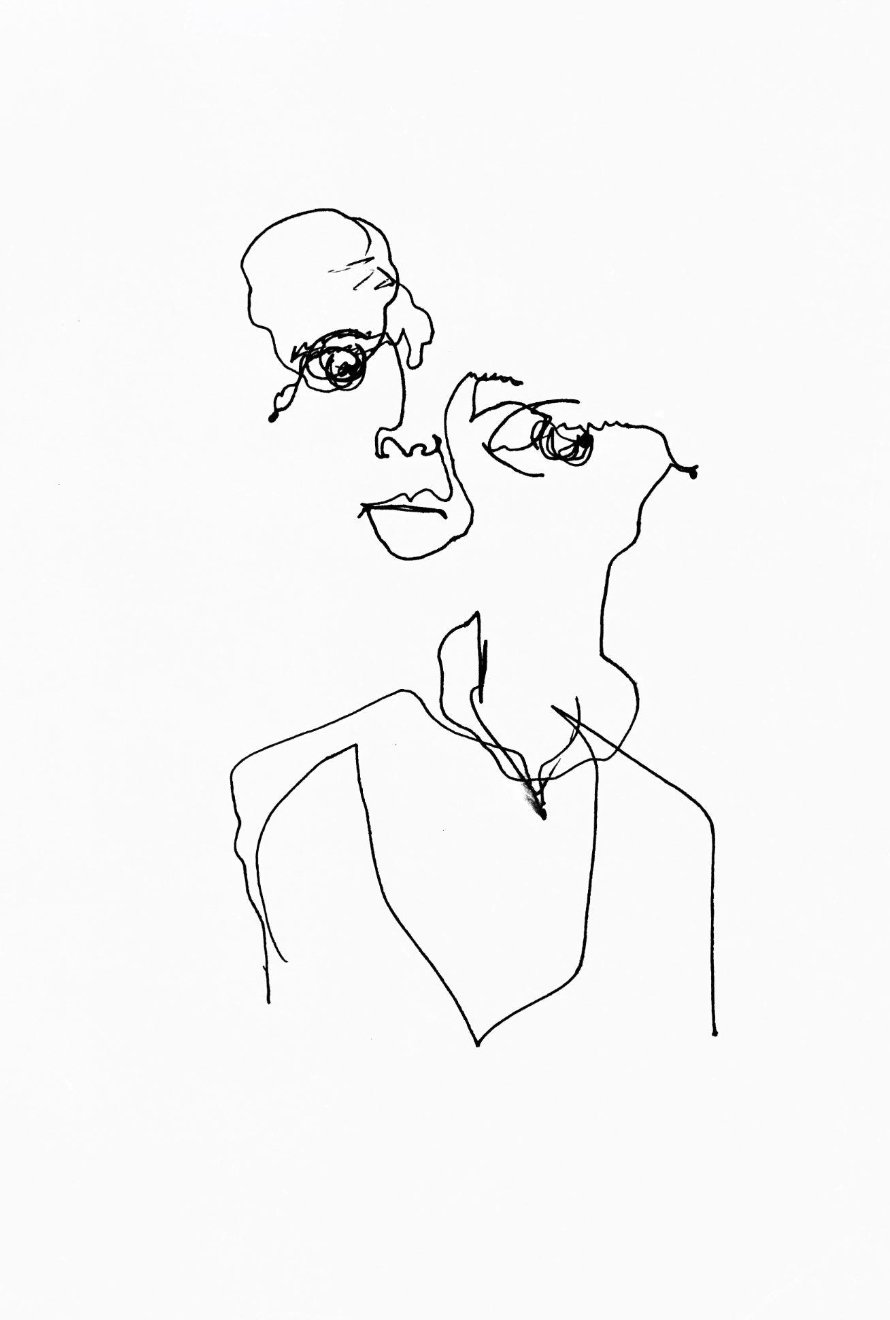
Words by John Peter Beck | Images by Emily Rankin
It may seem a tale told
among old wives
or a popular torturing
of the statistic,
but I lost
two classmates
to suicide, no chance
at redemption,
perhaps a joint
dental practice in hell.
I am sure they felt alone,
more alone
than anyone should feel.
St. Apollonia, your tormentors
broke your teeth
daring you to pray
to a merciful God
with your shattered mouth.
You are the patron
of all dentists.
I think of your pain,
each time I work to set right
a crooked smile.
I hope you hold
my classmates of decades ago
in your saintly prayers, reach out
to them in their torment which came
after they sought an end
to torment, bring them
any cool, comforting touch,
whatever saving grace
that heaven may allow.

John Peter Beck is a professor in the labor education program at Michigan State University where he co-directs a program that focuses on labor history and the culture of the workplace, Our Daily Work/Our Daily Lives. His poetry has been published in a number of journals including The Seattle Review, Another Chicago Magazine, The Louisville Review and Passages North among others.
Emily Rankin was born in Riverside, California and attended university in Texas, where she received a BFA in 2011. Her body of work deals with the tangles of human emotion and understanding, the intuitive messages of dreaming and subconsious exploration. Her work has appeared in such publications as Gasher, Raw Art Review, Meat for Tea, Landlocked, and Rattle. She's based in New Mexico. eerankinart.com
Pretty Boy: A Trans Love Letter
In a hurricane
I kiss him

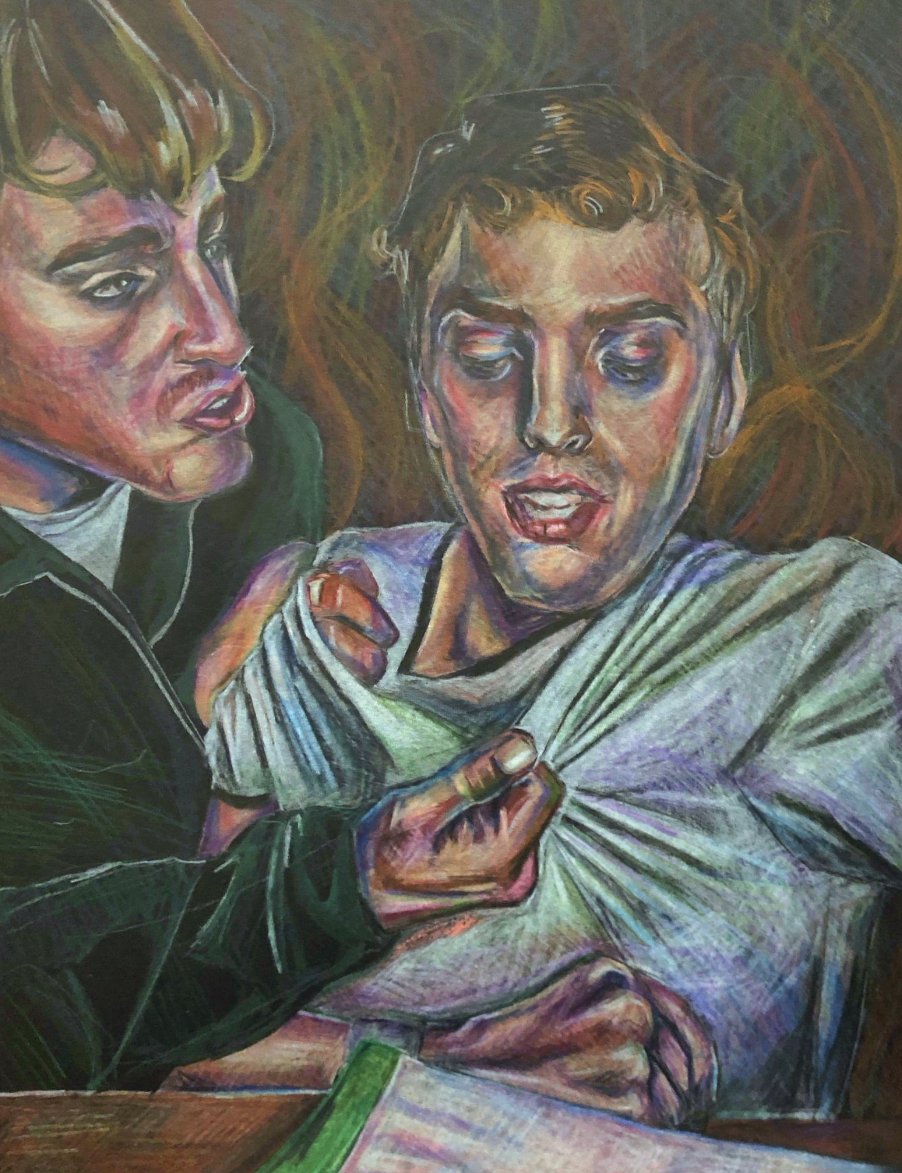
Words by Ash Brooks | Pictures by Ethan Lee
In a hurricane

I kiss him
Shaking
With the world around us
Screaming at us to stop
But I crave the ecstasy
The pheromones
The deviant sweat
The hair that screams rebellion
I need to kiss your tears
Your scars
Your needles
Your bandages
I want to lay in bed with you
Swirling in our dysphoria
Our fear of ourselves
Our wet dreams of suicide
I lust to see my makeup
Smeared on your arm
Your face
The soft, warm area below your belt
Without you asking me to wipe off my mask
My drag—
The “T4T” tattoo on my heart
Could I be more obvious?
But I’m not sure if you need me.
Am I boy enough for you?
I’m afraid I’m not enough of anything.
Will you call me your “pretty boy” without gagging?
Your boyfriend?
Your husband?
Your soulmate?
Or am I just a thing of convenient intimacy?
In the midst of the writhing
Do you see a woman
When you take off my clothes?
With “fuck me here XOXO”
written on my thigh?
Would you still think I’m sexy
If my voice doesn't get any deeper?
If my chest doesn't get any flatter?
If I don't correct my parents when they call me
Their “baby girl?”
I should just fucking commit—
Make it easier for everyone
To decide on why they want to fuck me
Saving them a crisis of sexuality
But I’m sick of just fucking.
Subjecting myself to men who love women
Dead end, ending dead—
Longing for men who love men
Euphoric love, dysphoric life—
I’m trans enough for you to tolerate
But am I trans enough for you
To love?
So where do I go from here?

Ash Brooks (they/he, right) is a trans and genderqueer poet, film scholar, and traveler. They graduated from Mercer University in 2023 and work as a freelance copy editor and writer. They also have an uncontainable love for humans and life. Their favorite poet is TC Tolbert, who inspired them to pursue being a published trans poet. In 2023, they were published for their photography in their university literary magazine, The Dulcimer. They are also a published journalist in their university newspaper, The Cluster. IG: _ashhh_b
Ethan Lee is a student and amateur artist who enjoys creating colorful, vibrant artworks. He has previously been featured by NextShark and Variant Literature, among other publications.
Tuesday Evenings on the Stoop
october again.
dying things breathe and
beetles breed on my windowsill…


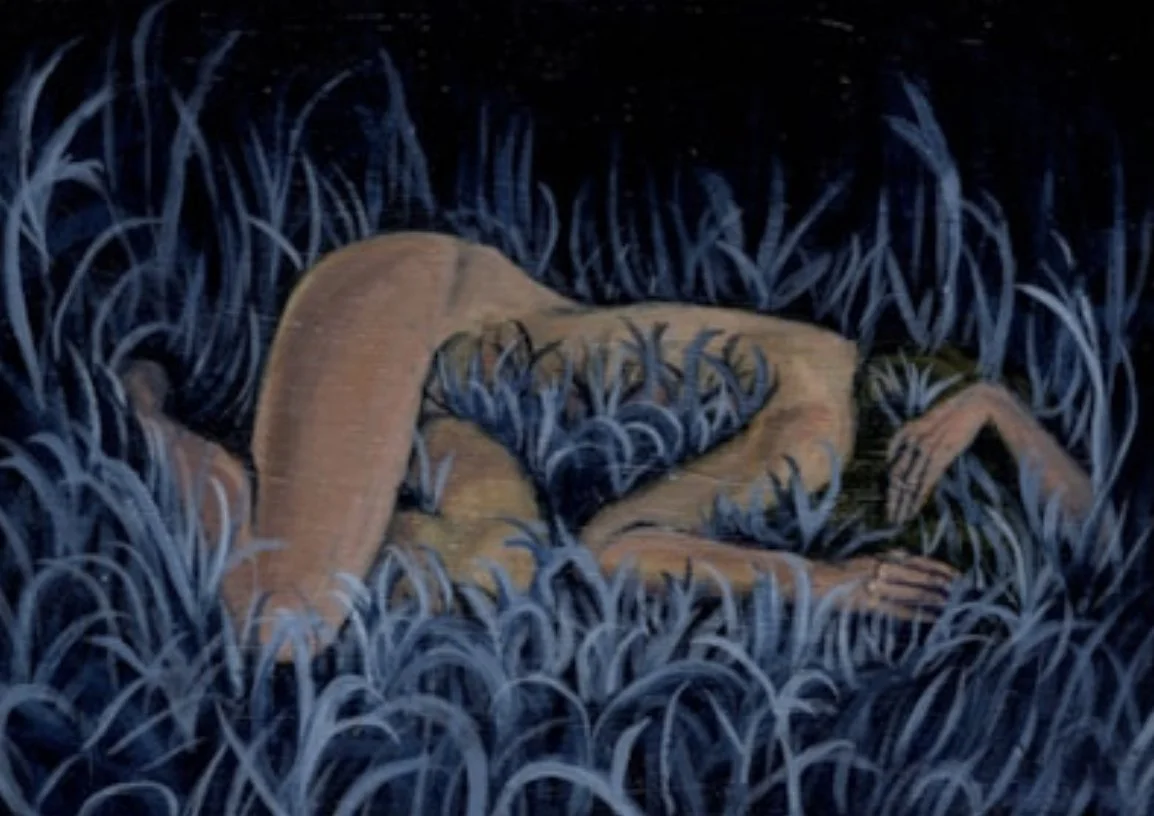
Words by Skylar Miklus | Pictures by Larissa Monique Hauck
october again.
dying things breathe and
beetles breed on my windowsill.
i forage mushrooms. i hate
the taste but i love their gills:
white fans that scream
STAY OUT.
they’re mouthless but they open wide.
i don’t think of my body when i think of dead leaves. i don’t regret desire when i see decay.

Skylar Miklus (author, right) is a poet and bookseller living in White River Junction, Vermont. They obtained their B.A. in Philosophy from Dartmouth College and are pursuing their Writing MFA at the University of New Hampshire. Their poems have appeared in Defunct Magazine and You Might Need to Hear This Magazine. You can connect with them on Instagram at @skymiklus.
Larissa Monique Hauck is a queer visual artist who graduated from the Alberta University of the Arts in 2014, where she received a BFA with Distinction. She has been selected for inclusion in events such as Nextfest 2018 (Edmonton, AB), Nuit Rose 2016 (Toronto, ON), and the 9th Annual New York City Poetry Festival 2019 (New York, US). Her drawings and paintings have also been featured in publications such as Creative Quarterly (US), Wotisart Magazine (UK), Minerva Rising (US), and more. @larissamoniqueart
Images: Breathe, Fantasies
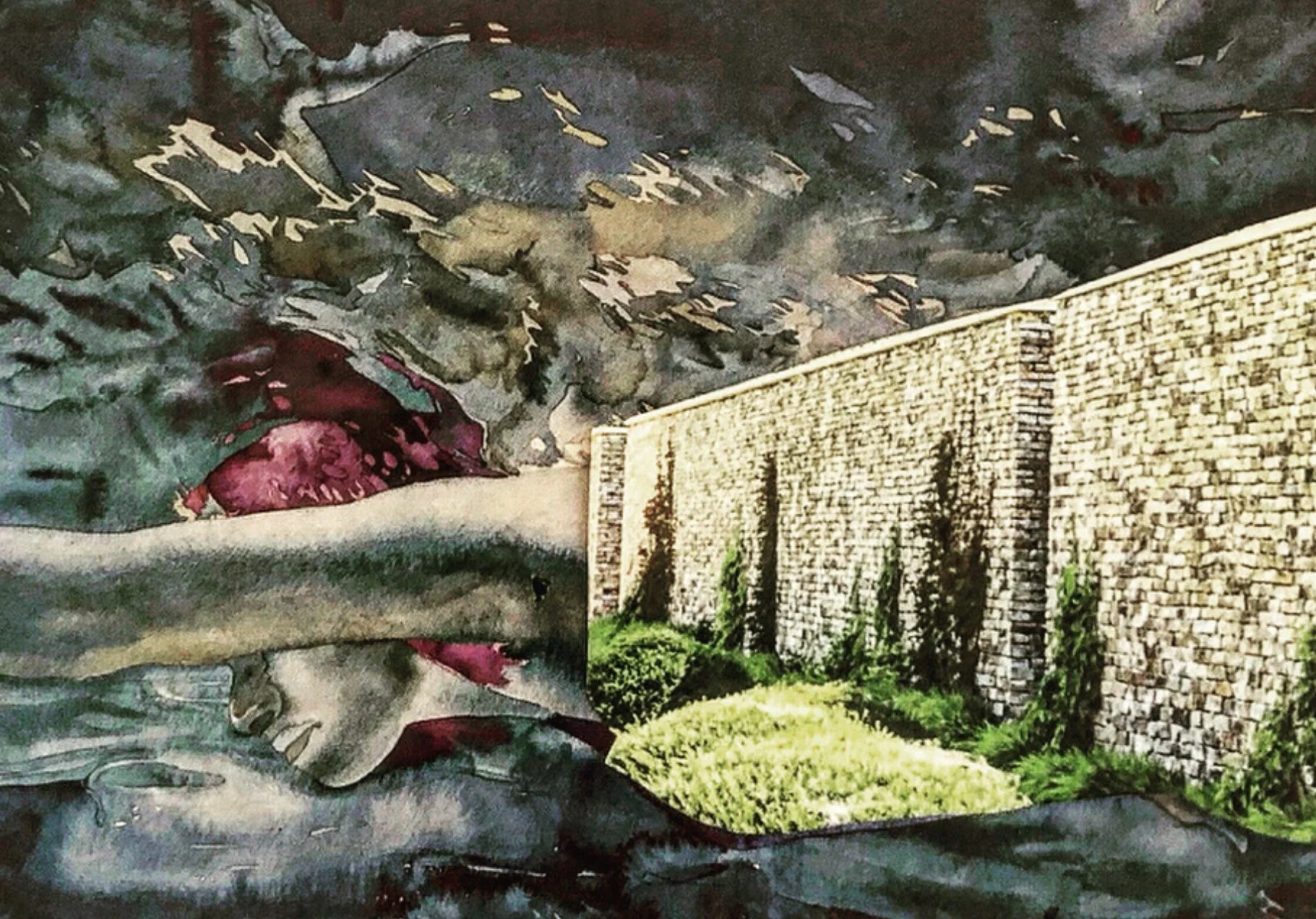
“I’m Afraid I Died Last Thursday”
Time tells no tales at times like these
It lingers like a vulture…

Words by David Bolotin | Pictures by Robin Echo Young
Time tells no tales at times like these
It lingers like a vulture,
among these grayed-out walls,
It lingers, knowing I’m mere prey
The cellar door glares,
pleading for me to take the padlock off of it,
but the quiet tells me all I need to know,
there is
nothing beyond—
nothing of mine
One way or another,
Desperateness seems to kill
both men like me
wandering victims of war
and the long forgotten idea of
hope
Those laughs I hear upstairs are not mine,
not ours, not anyone’s who can be trusted
The only cards dealt below the cellar door
are mine, and I’ve
never been one for
luck, nor roulette
But my child,
Dolores
if your sorrow is reading this
if your lips haven’t partched yet
if the men upstairs haven’t decided they are bored
if they haven’t grown tired of waiting for you to play
your move into their trap
and if I haven’t returned by dawn—I’m afraid, I died last Thursday
Though, I suppose,
even if I’m still here,
just contemplating about the idea
that I could have possibly stepped
outside
means I was never truly here
already gone weeks ago

David Bolotin is a high schooler, currently 16, who was born and raised in Chicago, IL. His family comes from Belarus, but immigrated to the United States in the early 2000s–where he was born and quickly found a passion for writing and poetry. He typically focuses on themes of triumph and nature while exploring our past and what makes us human. At the current moment, he has not been published elsewhere.
Based in Borrego Springs, California Robin Echo Young works in mixed media focusing mostly on collage and contemporary art making. Using magazine clippings, masking tape, wallpaper, jewelry, etc allows her to develop deep into the whimsical and intuitive. Repurposing a variety of materials into lighthearted and sometimes disquieting messages, Robin's artistic universe is strange, funky, and sometimes perverse. She lives in the California desert with her creative husband John and lazy dog, Comet.
Florets
Kiss me til there's nothing…

Words by Marceline (Marcyn) Cassiopeia Campbell-Ogbunezu | Pictures by Sujash Purna
Kiss me til there's nothing
It isn't a distraction, for every touch of your lips I undertake with intention
There's no sallow earth to kick underneath
No kitten sleeping on the curve of the wheel
The florets grow in patches, spring is taking its time
And that's alright, I've learned to wait
But when I lay in the grass, littered with dead leaves, residue of the seasons before
The Conneticut river pulsing with life mere feet away
Twangy folk music filling my ears
The wind shows me it's alive now and again
Tousling the pages of my book, and the scarf tied to my hair
There's so much to see here, so much to see
And I've got nowhere I'm rushing to be

Marceline (Marcyn) Cassiopeia Campbell-Ogbunezu (author, right) is a 20 year old transgender woman who lives at the crossroads of multiple intersections. She is a plus-sized neurodivergent Nigerian trans woman who is currently living in Middletown, Connecticut. She was born in Anambra State, Nigeria, and emigrated to the United States with her mother when she was 7. She grew up in Baltimore, Maryland both in the county and the city. She was a big bookworm and fell in love with poetry and art in middle school, writing her first poem, “The Ballad of Ricardo” a love poem dedicated to her first ever crush, when she was in 7th grade. Her passion only expanded as she got into high school, and by senior year had been published in many journals, including The Periphery, Adroit, Havik Poetry, and the Adirondack Center for Writing. She was accepted to Manhattan College on a dean’s scholarship and spent a semester there, getting a poem published in her mentor/speech teacher’s bi-annual journal before leaving due to financial cost and moving to Brooklyn where she spent nearly a year. She has dealt with racism, transphobia, addiction, homelessness, fatphobia, and has been at multiple points in her life plagued by severe mental health issues, but still the fire in her burns bright. She dreams to one day be considered as one of the great American poets, and after spending most of 2022 in recovery and pushing poetry to the back-burner, she has emerged into 2023 with a renewed vigor and a passion like no other and is hell-bent on making her
Sujash Purna is a Bangladeshi poet and photographer based in Madison, Wisconsin. He is the author of "Epidemic of Nostalgia'' (Finishing Line Press), “In Love with the Broken” (Bottlecap Press) and “Azans for the Infidel” (Mouthfeel Press). His poetry appeared in South Carolina Review, Hawai`i Pacific Review, Kansas City Voices, Poetry Salzburg Review, Gutter, Stonecoast Review, and others. His photography can be found on Instagram @poeticnomadic.
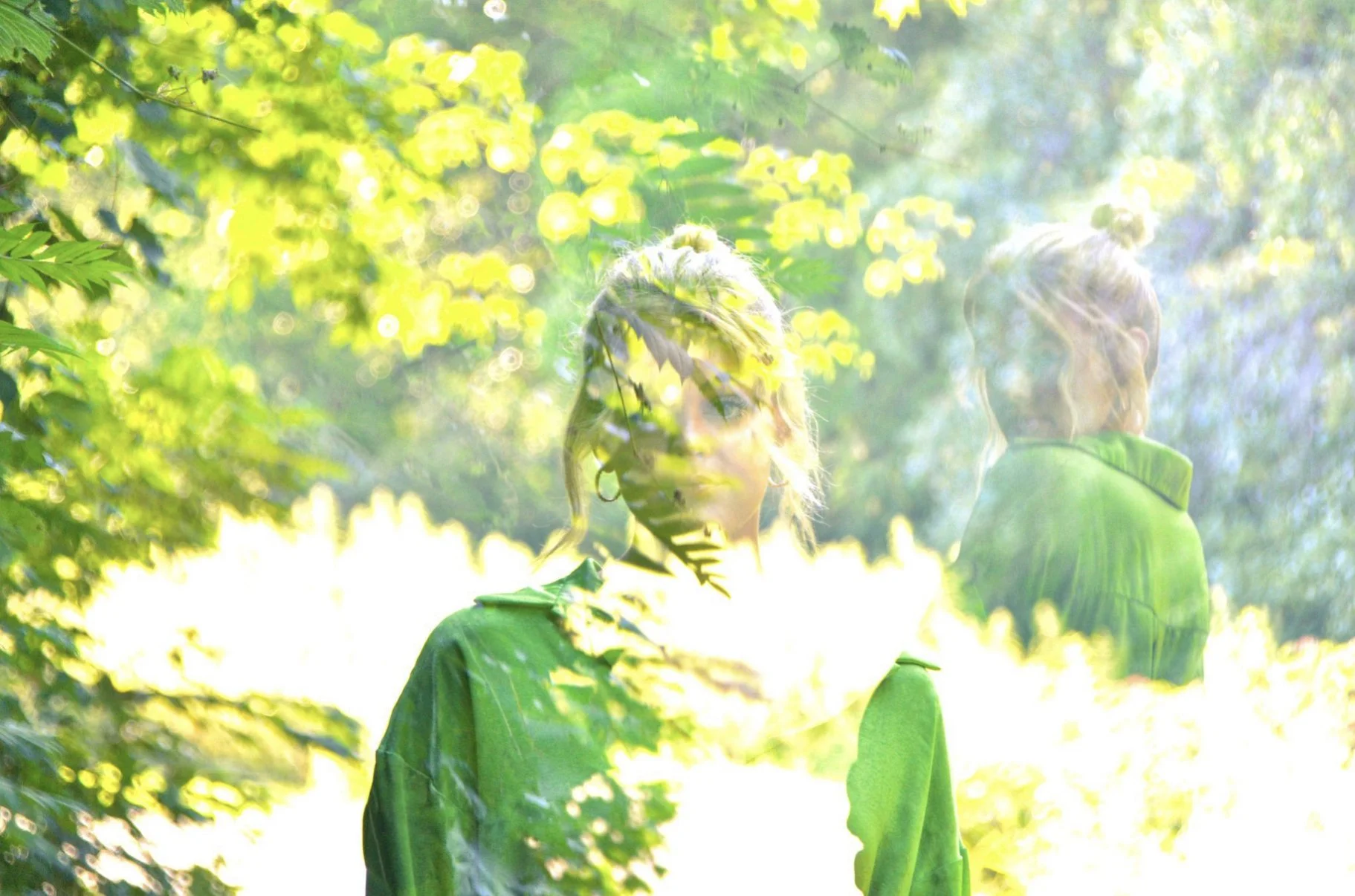
Photo: Photosynthetic Memory | Model: Lydia Brekken (IG: deebrekken)
A Night in Nanjing
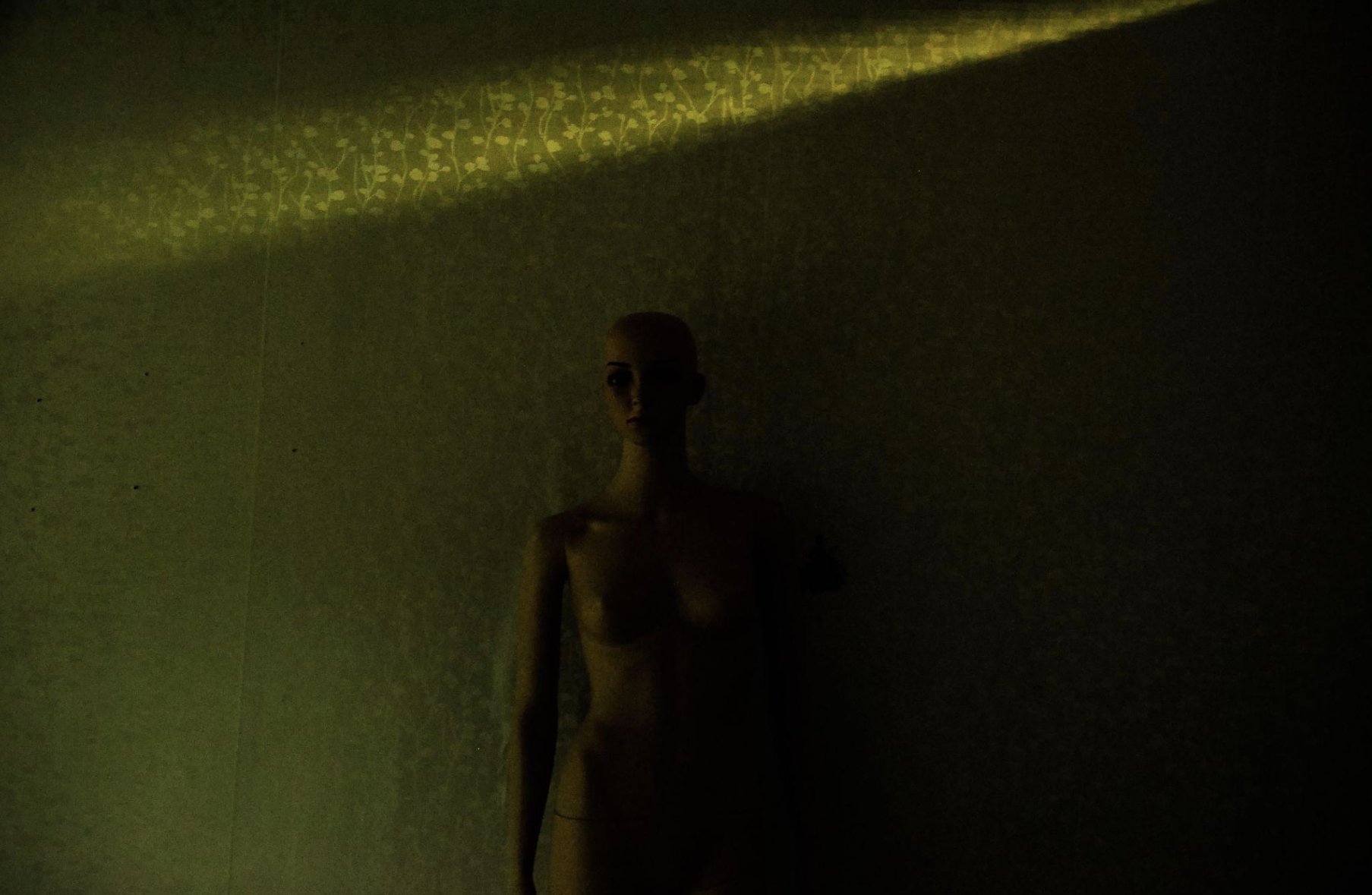
Images by Ying Zhao.


Ying Zhao is a writer and photographer. Her photography series "Silence" has been exhibited at the Belt and Road Traditional Art Exhibition. Her work "Mount Chimborzo" can be found in the Upper Mississippi Harvest Literary and Arts Journal, and her work "Encounter-Intruder" has been accepted at the Santa Clara Review. She is currently writing a collection of mystery short stories.
Images: A Night in Nanjing #2, A Night In Nanjing #3
A Regular Workday
The day Mom died was a regular workday for me. I was planning to visit her after work. I tried calling her in the afternoon, but she didn’t answer.
The day Mom died was a regular workday for me. I was planning to visit her after work. I tried calling her in the afternoon, but she didn’t answer. I found it a little odd, but not enough to be concerned about. After work, I got in my truck and called again; still no answer. Now I knew something was off.
No. That’s not true. I knew she was dead. I just didn’t want to admit it to myself.
Over the last ten years of her life, my mother experienced several heart attacks. The last one had been massive, and the emergency room doctor had said the next one would kill her.
After several attempts at calling my mother’s apartment, I called the office of the senior apartment building where she lived. I asked the woman who answered the phone to check on her. I felt sorry for that woman because I was putting on her a job I was afraid to do myself. I had a key; I could have entered the apartment and found her. I didn’t want to see her like that; I knew I wasn’t strong enough.
When the caretaker called me back, I apologized profusely for putting her through that experience. She was shaken; I heard it in her voice. She had never seen a dead body before. She asked me who she should call. I knew she meant what funeral home she could contact, so I told her. I was still driving. I pulled over to the side of the road for a couple of minutes to collect myself.
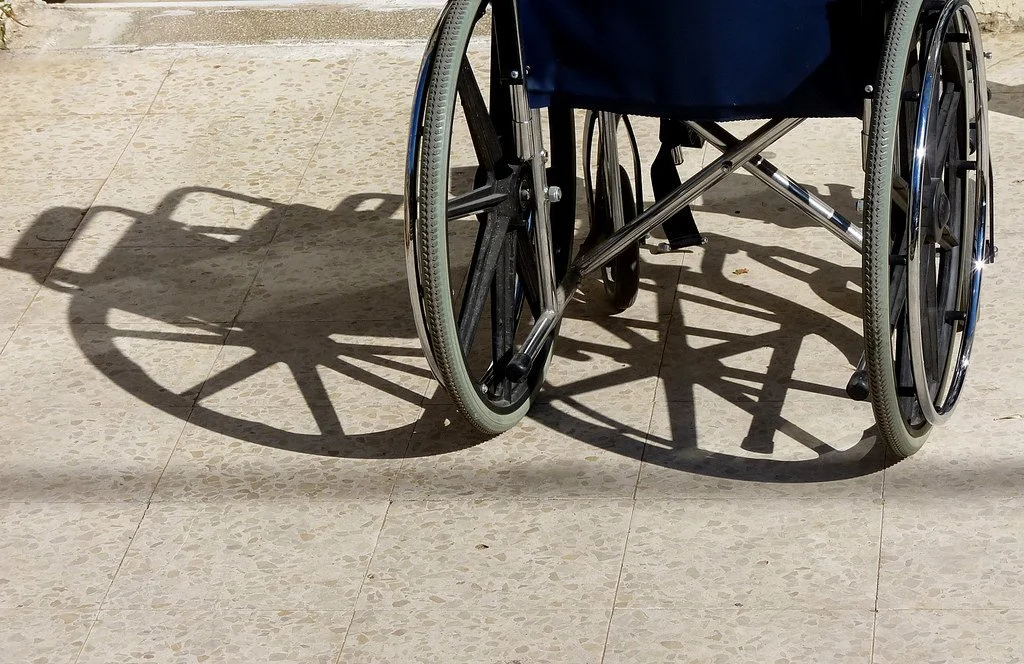
The details of my dream from the night before flooded me as I sat there. In my dream, I walked into Mom’s apartment, calling her name. I saw her when I rounded the corner from the hallway into the kitchen. The wheelchair was on its side. My mother was on the floor, lying halfway under the table, the bruising already forming on her face.
Why had I not remembered before that moment? Chills ran through my body as I sat there in my truck. I’d had experiences with visions and dreams before, but never about someone I loved. I hadn’t cried until that moment.
When my sister, Kat, and I met with the coroner a few hours later, she asked him when he thought our mother might have passed. I knew the answer and said it aloud, “two AM.” He told me that was a good guess, but I hadn’t guessed.
My mother knew she was going to die that night. She played cards with other residents and told them. Her building was across the street from the funeral home where she’d already made arrangements. She told her friends that was where she would be the next day. They didn’t believe her, of course. But when my sisters and I went to her apartment to go through her things, one of them told us. My sisters doubted his word, but I never have.
My relationship with my mother had been strained at times, but it was solid later in her life. I loved her dearly. Like me, Mom was psychic, and at her funeral, she acted through me to help keep Lin and Kat strong. Lin especially was falling apart. Although much younger, I became the big sister that day.
My husband, of course, failed me. People kept saying, “Where’s your husband? He should be here.” I should have answered, “He’s somewhere getting drunk,” but instead, I said, “He’s getting his kids,” as a good wife should. He arrived late, obviously due to drinking, but not drunk enough to throw his ass out. He had two of his children with him, for which I was grateful.
I was able to be strong as I had to be throughout that ordeal. The funeral, the burial, the dinner. The estranged family that crawls out of the woodwork when someone dies. But then, when I got home, I fell apart. I don’t remember much about the following week; it’s lost to me. The only thing I remember clearly is sobbing in my husband, Bill’s arms.
That was September 1998, and I had never missed a holiday with my mother. The upcoming holiday was Thanksgiving. I was still depressed and lonely for her. I couldn’t bear to have Bill’s children or anyone else around and pretend to have a normal holiday experience. I had to get away.
The weather was mild that year. Even though I disliked sleeping in a tent, I insisted on going camping and sleeping in our truck the night before Thanksgiving. Back then, I was on my way to being a vegetarian. I had stopped eating beef and pork and hadn’t had poultry for several months. Bill took turkey legs and his charcoal grill. The campgrounds at the state parks were still open because it was so warm, but there were only a few other campers besides us. He put hickory chips in with the charcoal, and when the smell of the turkey legs wafted over the grounds, the other campers came wandering over, curious to find out who was cooking and how he was creating that wonderful aroma. That was the last time I ate poultry; as usual, they were delicious. Turkey legs and Jack Daniels made a great Thanksgiving dinner.
I have had a tough time with holidays ever since my mother died, and it’s been over twenty years. My daughter had difficulty every Mother’s Day trying to engage me in some kind of activity for a long time. She gave me choices that I had no heart to make. Finally, through tears, I explained to her that she would have to decide how to spend Mother’s Day because I could not. She said she understood, but it hurt her because I was her mother. Thankfully, I have (mostly) worked through that.
As I write this, I think about all the holidays without my mother and remember that first one going camping with Bill. But I also remember all the holidays I spent with my mother. Even though I always brought her to my house or went to see her, she never seemed truly happy. I believe it was because she always missed her mother. I’m not truly happy on holidays either. I have never been. What is it that makes me this way?
Many people have problems around the holidays. I find myself pretending more often than not, pretending to be happy, pretending that I’m having a good time. I believe I pretend for my daughter’s sake. I wonder if my daughter does that. I don’t think my mother ever did.
Mona Mehas (she/her) writes about growing up poor, accumulating grief, and the climate from the perspective of a retired, disabled teacher in Indiana. Her work has appeared in over forty journals, anthologies, and online museums. Mona's pamphlet, 'Questions I Didn't Know I'd Asked,' is available from LJMcD Communications. She is a Trekkie and enjoys watching Star Trek shows and movies in chronological order. Follow Mona on Twitter @Patienc77732097 and linktr.ee/monaiv.

A Thought Arose
I only found out about my mother’s online boyfriend when I looked over her shoulder as she sat at the desktop in the kitchen.
I only found out about my mother’s online boyfriend when I looked over her shoulder as she sat at the desktop in the kitchen. Up until that point, she’d been a perfect mother. She’d always put a Stouffer’s lasagna in the oven without me having to ask. She’d never gone anywhere without first announcing to me where she was going. We’d been sharing an apartment since I graduated high school.
That winter, I was seeing a girl who rarely left her cockroach-infested apartment. She lived in the basement, the slit-like windows crusted over with rock salt. When I opened the door, she beamed at me from the cocoon of her bed. There was always a glass filmed with dust on the table, and I liked to think that she forgot to drink water altogether between my visits, that only my presence reminded her of this primal need.
She liked for me to do all sorts of things to her—rip her clothes, make her cry, smother her face with a pillow. Sometimes I hesitated when she asked, but I always did it, so I guess I had to like it on some level. Afterwards she was happy and grateful, which put me in a good mood because it led me to think that no one had done these things for her before.
I was twenty-five, lean, and having lots of thoughts all the time. I wished I could hook a device up to my temples that would print them out so I could read them again later. I wished I could publish them as a book.
My father left when I was fourteen. He didn’t gamble or drink or beat us, so I assumed that it was me. I knew this wasn’t necessarily the truth, but it was what I believed, and it became easier to believe the longer I believed it. I’d been on an anxious campaign of redemption ever since, vowing to keep my mother and I safe from bad men. I was the new patriarch of the family. I would protect us with my hypervigilance.
What made me angry about the boyfriend was that I couldn’t understand why my mother hadn’t told me. Didn’t she care what I thought? I couldn’t fathom the sorts of things they might talk about. My mother inhabited a world of frozen lasagnas she cooked for us and PBS specials she taped for us to watch while we ate.
I waited for my mother to leave the room, then logged into her account. His name was Hector. He lived in our city. Her last email to him was about breathing techniques.
I forgot about Hector for a while. I spent hours in my room listening to concertos and writing my thoughts in a leather notebook. I went to Renée’s and ate Hamburger Helper. When she asked me to choke her, I thought about the glove on the Hamburger Helper box.
It was easy for Hector not to exist. I had never met him before.
But when I came home, my mother was laughing into the phone. She sat on the counter, her bare feet swinging. I felt like I’d been jarred back into consciousness, which upset me. I didn’t like the idea that consciousness was something I could lose.
I banged around in the silverware drawer. I slapped a pot on the stove and started boiling nothing, then turned on an egg timer. She didn’t seem to notice any of this.
I realized she was eating from a carton of pistachio ice cream. “Where’d you get that?” I said.
She covered the receiver. “The store.”
I left. I walked into the city. I imagined that every person I passed either was Hector picturing my mother naked or someone who knew more about Hector than I did. My face burned despite the cold.
As if on cue, a man stopped me. “Are you okay?” he said.
“Do you know a man named Hector?”
The man scratched his dandruffed hair. “Sure. One works for the post office.”
I couldn’t believe what was happening at first. I’d passed the post office a few blocks before. My stomach tightened. “What’s he like?”
The man laughed. “Bit of a weirdo.”
There was the possibility that this man was wrong, that Hector did not work for the post office, and that he was not strange. But there was an equal possibility that the man was correct, and I believed the latter, since I’d already had a premonition that something awful was happening behind my back. Hadn’t my stomach tightened?
When I returned home, I was even angrier, and my mother was still on the phone with Hector. She didn’t hear me come in, and I listened from the hall. He was now on speaker. They were still talking about breathing techniques, but this new conversation was tinged with lewdness and malice.
“You can’t get too excited,” my mother said. “It’s possible to over-enlarge the diaphragm.”
“Well,” Hector said. He laughed. “You always excite me.”
I felt lightheaded. After my father left, my mother told me that he had seen prostitutes throughout their marriage. Was Hector perverted too?
“Don’t forget that we have lunch tomorrow with Renée!” I shouted.
“I don’t know if that will work for me,” she said.
“It’s a family lunch! Family only!”
I realized with a sear in my gut that if I didn’t take action, Hector would become my stepfather. I couldn’t let that happen.
I knew my mother kept a gun in her nightstand. I didn’t like this. “What if the intruder comes into my room first and kills me?” I’d said once. “Then what would you do?”
“Stop watching so much TV,” she’d said.
I crept into my mother’s room, took the pistol from her nightstand, and put it in mine. I needed to be prepared. I was unsure what anyone was capable of.
I drove us to Buca di Beppo. Renée sat in the front with me. My mother sat in the back. I could see her tapping on her cell phone in the rearview mirror.
It was eleven on a Tuesday, so they were able to seat us in the Pope Room. As soon as we sat down, I smoothed my napkin over the seat of my ironed khakis.
My mother had chosen to wear her hair in an ugly wet bun. “May I have a Shirley Temple?” she asked the hostess who’d seated us.
“Mother,” I said. “She’s not our waitress. She’s only the hostess.” I smiled at the hostess, shaking my head.
A pad of paper and a pen had appeared in the hostess’s hands as if out of thin air. “Actually, I’ll be taking your drinks too.”
I coughed and tried to make eye contact with Renée, but she was staring at the bust of Benedict XVI at the center of the table.
After I ordered us three lasagnas, I took my mother’s hand, then Renée’s. “My girls,” I said. “It’s so nice to be here with only my girls.” I was having wonderful imaginings that involved homemade jam and picnics, clean linen and snow days. “I think that family is the most important aspect of life.”
“The Puritans didn’t,” my mother said. She let go of my hand, and it flopped onto the red and white checkered tablecloth. “They decided their mothers and wives were witches, then strung them up in front of everyone.”
“Where’d you hear that?” I said.
“They did a special on PBS about it. It came on after you went to bed.”
“Maybe I should watch it,” I said.
She sipped her Shirley Temple. “I don’t think you’d like it.”
I laughed and poked Renée. She was folding her straw wrapper into a worm-like shape. “Then why’d you bring it up?” I asked.
“I thought Renée might like to hear about it.”
Renée looked up.
“Renée doesn’t care about the Puritans,” I said.
“How do you know that?” Renée said.
I didn’t know what my mother was trying to prove, but it didn’t make any sense, and the fact that it didn’t make any sense made me angry. Why ruin our lunch at Buca di Beppo? The way she’d been acting since she met Hector (if she’d ever even met him in person) was bizarre.
Then she pulled out her phone, and I could hear my heartbeat in my ears.
“What is wrong with you?” I said. “Can’t you see how rude you’re being?”
“I just need to send a text.”
“Why can’t you be more like Renée?” I shouted. “Renée is always polite to me. Her behavior is pristine.”
The hostess set down our giant pans of lasagna and scampered away. My mother picked up her purse. She smiled at Renée and winked. “If you’ll excuse me,” she said. She stood and started for the restroom.
“Sit down and eat your lasagna,” I said.
She ignored me.
I could’ve screamed. I didn’t understand why any of this was happening. It was like someone kept knocking over my chess pieces.
That’s when a thought arose in my head that hadn’t before: Hector was influencing my mother to act like this. If my mother was consorting with Hector, a strange and malicious character, then she was also strange and malicious. She was also a threat. And if Hector was strange and malicious and a pervert, he was like my father.
Then I became confused. Being his son, was I similar to my father? My mind flashed to different scenes with Renée—me grabbing her and holding her down in various positions. By that logic, was I like Hector too?
My hands shaking, I turned to Renée. I decided that God had made her just for me. She was perfect, and we would spend the rest of our lives together.
I leaned over and kissed her right on the mouth.
When we got home, I shoved some clothes in a bag and went to Renée’s. I spent the next few days in a gentle girlfriend haze. We propped our arms up with pillows and played rummy. I talked about the book I wanted to write (By that point, I’d decided it would examine the metaphorical similarities between tennis and Catholicism). Renée listened intently, nodding when it was appropriate. She didn’t say much, but it didn’t bother me. I pretended she was on vocal rest.
At one point, I fell asleep and had a dream that Hector had stuffed my mother in a closet. He held the doorknob as she shook it from the other side and sobbed. His post office uniform was damp with her tears.
He turned to me. “Let’s get some ice cream,” he said. “Pistachio?”
Then his face melted off.
I woke up because Renée was shaking me.
“Why are you touching me?” I said. “I was having a prophetic dream.” I was cold all over, and my mind pulsed. What could it mean? Was Hector getting off on my mother’s suffering?
“I want to watch a film I bought,” Renée said.
The post office uniform corroborated what the man on the street had said. But what about the pistachio ice cream? Was that just another sign that I was on the right track? I needed to take some notes. “Can you get me paper?”
“It’s directed by Jacque Lemaire. We did a unit on him in my film class.”
“Hey,” I said. “I’m talking to you.”
“It’s called Pomme de Terre,” she said, brandishing the disc at me.
“Will you shut up? The doctor told you to be quiet.”
We stared at each other for a moment. I began to feel that I was in hell.
“I’ve never heard of this fucking movie,” I said.
She laughed, a tinkling, dove-like sound. “You wouldn’t have. It’s very niche.”
I threw off the hospital-like blanket and stood up. “Do you think this makes you sound smart or something?” I shouted.
She didn’t seem shocked by my words. Her face had the same wiped quality as my mother’s, which made me even more upset. She turned her shoulders away from me and gazed up at the window. What she could possibly be seeing through the grime was beyond me.
“Hello?” I said.
I realized she’d put earbuds in. If I listened carefully, I could hear metal lyrics about dragons and swords.
I cried out.
She did not react.
I stomped off to the bathroom and locked the door. I counted out a minute. She did not come check on me. French music began to drift under the door.
I got on my knees and looked through the keyhole. Renée was propped against the headboard, her eyes fixed on the TV. Her shoulders, usually frail, looked hearty from this angle. When I pictured her face, it was always solemn and drawn, but now she was smiling softly. Something funny happened, and she laughed.
Terrified, I opened the bathroom window and climbed out into the snow.
I walked quickly towards home. When that wasn’t enough, I began to run. I’d been wrong about Renée even though I’d felt so strongly that we were meant to be together. We had no business getting married. I’d known her for only two months. In fact, I found many aspects of her person repellent, like her greasy bangs and her monkeyish arms.
How had I convinced myself that she would be my wife?
Now that Hector’s perversion had been confirmed, he was even more like my father. My gut wrenched. Following that logic, I was more like Hector as well. Was I just as bad? I had evidence to prove that I wasn’t: I wanted to protect my mother, I hated my father, I had never seen a prostitute. But there were all the ambiguities I couldn’t tally on that side—the good side—or on any side at all. It was true that I still missed my father, and it was true that I got a thrill out of hitting Renée in a sexual setting. Why had I put the gun in my nightstand if I didn’t intend to hurt someone?
Once the thought that I was bad had entered my mind, it wouldn’t leave. It bit down and nursed. I felt more and more like I would begin to cry.
Downtown, I passed an electronics store. A man carrying a TV burst out and began running in the opposite direction I was. He was wearing bright blue sneakers.
A police officer stopped me. “Have you seen a man carrying a TV?” he asked.
I nodded.
He pulled out a pen and a notebook. “What did he look like?”
I opened my mouth to say he was wearing blue sneakers, then closed it. How could I be sure? It was an odd color for a shoe. It could’ve been a trick of the light or my eyes. But what if the sneakers really had been blue? This was even more terrifying to me. If my first thought about the shoes had been correct, then nothing stopped me from being a bad person. “He was wearing green sneakers,” I said.
The police officer nodded and wrote, and I felt that what I’d said was still not quite right, so I began to run again, fearful he would track me down and arrest me for lying once he found the man.
Every intake of breath made my lungs ache.
When I opened the front door, my mother was watching the news. A story about a local child molester was on. I was bombarded by thoughts. What if, deep down, I was a pedophile? If I was capable of hurting Renée, was I capable of hurting a child? My mouth filled with saliva like I was going to vomit, and I sank to the ground.
“Are you okay?” my mother asked.
A toilet flushed. My head snapped up. “Who’s here?”
“I think you know who’s here,” she said quietly.
Hector walked in, retucking his shirt. “Hello there,” he said, and it seemed as if it were an invitation.
I leapt to my feet. “Stay back!”
“What is going on?” my mother said.
I began to pace. “I know what kinds of things you think about all day at the post office. You are not welcome in this family.” My imaginings flashed by, blurring my actual vision: Hector shoving my mother, threatening her with disgusting sexual acts. Hector being arrested as the child molester.
“The post office?” my mother said.
And here was my once-perfect mother allowing our home to be tainted with evil. I rushed to her and shook her back and forth. I slapped her like I sometimes slapped Renée.
Then her eyes rested on me. They were just my mother’s eyes.
I have never been more afraid.
I ran to my bedroom and threw open the drawer of the nightstand. The gun was loaded, another sign. I pointed it at my forehead. I was a child molester and an abuser, and I needed to end my life.
“Neal?” my mother called. “Please let us come in there.”
“Go away,” I said, my limbs rippling with shame. My face and neck and chest were wet.
My mother and Hector reached the doorway. My mother began to sob. Hector spoke softly. I realized he was giving me directions for how to put the gun down.
I thought about Hector. I thought: mother-hitter, child molester, pervert. I pointed the gun at Hector.
I thought about myself. I thought: failure, pedophile, scum. I pointed the gun at my forehead.
I went on like this, swinging the gun back and forth, for a long time. It would only occur to me later that I’d already been doing this for years.

Emma Estridge is a writer from South Carolina who attends Wofford College. Her work has been featured in So to Speak, The Interlochen Review, and Unfortunately, Literary Magazine.
Alumni Spotlight: Mating Call by James Morena
Reggie again peeked at his crisp clothes. He knew they would soon start to wrinkle, wick perspiration, soak in embarrassing crevices.
Reggie again peeked at his crisp clothes. He knew they would soon start to wrinkle, wick perspiration, soak in embarrassing crevices. The sun blazed through the ancient aspens. No wind circulated. Reggie hoped his hiking fit didn’t look too much like a Patagonia, J. Crew, or REI commercial. Should I have chosen a different ball cap, button up, ventilated trouser? Should I have carried a lighter, less back drenching, pack? He thought. Reggie wanted to make a good first impression.
This is silly, he said. It’s never going to work.
He laughed at the idea of a mating call. He didn’t want their meetup to be seen as sexual, intentional. He wanted their first connect to be organic, a way to foster a lasting, genuine relationship. Reggie enjoyed the idea of them cooking side by side, of foraging for wild onions and fallen pine nuts and unfamiliar tubers. He wanted to bring home wild game - skunk, wolverine, lynx - then play Chopped with these wondrous ingredients. If only Ted Allen could actually be there, Reggie thought. He smiled at the idea of forest to table. He pulled down his creeping plaid shirt. He removed a wet leaf from the sole of his Merrell boots.
Reggie’s bluetooth speaker blared Keith Sweat: teasing and pleasing and needing. The Facebook group had swore this was the correct song. The one that had lured it before. Reggie snickered as he mumbled along about being loved by him. He knew he wasn’t the greatest lover or the most attentive person, but he was willing to try. To go all in. He no longer wanted two-year stints. He no longer wanted to awkwardly return toothbrushes, travel mugs, or favorite books. Reggie was no longer afraid of commitment, and he hoped it was too.
“Cuz I won’t bite,” Reggie shout-sang then listened as his words echoed within the trees.
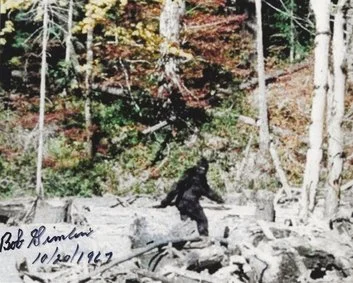
Reggie had stumbled across the Sasquatch Love Facebook group. It was three in the morning. He had been struggling with sleep. It had been eight months since he and his ex broke up. They drifted apart. She had enjoyed visiting and having drinks with friends. He liked staying home, trying new recipes, tasting new wines. They both participated in each other's events but they just weren’t meant for each other. No spark kindled. Reggie had thought the social group was about a person’s love for the mythical creature: it’s ten foot height; it’s ape-like features; it’s dark-reddish hair. Instead, the group focused on finding true love with Sasquatch, comments stated:
I heard Sasquatch is a fabulous listener
I heard it’s the best chef
I heard it will take you to the most beautiful cliffs to spy Orion
I heard it’s a beast on the trail, but as gentle as a snail
Reggie hadn’t believed it: Sasquatch’s love. There’s no such thing, Reggie said to his computer months later, after having wormholed the internet. Then there was this woman. She described in poetic detail the tenderness of Sasquatch’s big, calloused paws. She wrote about combing and braiding and feathering its hair. She talked about being bridle-carried through the woods and picking dandelions and scavenging Chanterelles. But, she mentioned that Sasquatch suffered from social anxiety disorder, which was the reason their relationship failed: She wanted to live in the city, and Sasquatch might have had agoraphobia.
Reggie’s heart had seemed to stop from that news. Tears tumbled. His lungs momentarily collapsed. Poor thing, he thought. For weeks Sasquatch loped through his mind, when crossing the street, raking leaves, taking a bubble bath. The idea of him and Sasquatch, Reggie wondered. The idea of them homesteading. Building a log cabin with a river-stone chimney. Pineneedle-smoking salmon and trout with wild rosemary and a side of sauteed stinging nettles. Reggie craved Sasquatch’s strong grip massaging his tired calves. Reggie imagined Sasquatch’s furry face nuzzling his neck. I will be the small spoon, Reggie had said as he packed his sleeping bag, instant coffee, sunscreen.
Keith Sweat continued to seduce the countryside. Reggie’s clothes had soaked through. His feet ached. Altitude sickness may have been setting in. What am I doing? Reggie said. This is stupid. Reggie shook his head. Would Sasquatch like his personality? Would Sasquatch be okay with his dry skin and extra weight and use of Tom’s All Natural deodorant that doesn’t cover up his body odor?
Reggie turned off the music.
No one likes me, Reggie yelled. No one wants me.
Reggie took off his pack. He tossed it against a tree. He snatched his ball cap from his head, slung it into a bush.
I want someone to kiss me all over, Reggie shouted. I want someone to place me above them.
Reggie closed his eyes. He wrapped his arms around himself. He stepped from side to side. He slowly turned in tight circles. The sun haloed his body. A breeze carried a musky smell. Reggie knew that could not be Sasquatch because the woman had written that Sasquatch smelled sweet and floral at the same time. That Sasquatch loved Lavender and Dwarf Irises and Stokes’ Asters and other purple flowers that would never allow for it to smell acrid. Purple was Reggie’s favorite color.
A cracked stick startled him. Reggie ceased his dancing. He twisted around, eyes searching, hair mussed. He believed he saw fur. Something moving over a ridge.
Nobody baby, Reggie began to sing. He took out his phone, hit play on his music app.
Reggie’s peripheral vision detected movement. He locked his eyes on something. Reggie grinned. He opened his arms wide. He sang full throat. His hips swayed. Keith Sweat’s voice tickled his ears. He envisioned a young Sweat’s penetrating stare, thin mustache, crooked smile.
Don’t be afraid, Reggie whispered.
The sound of foot pounds came closer. He heard grunts. Huffing. Reggie closed his eyes. A shadow swallowed him. Gave him chills. Keith Sweat bellowed Sasquatch’s mating call, while Reggie danced and danced and danced, waiting for that powerful embrace.
James Morena earned his MFA in Fiction at Mountain View Grand in Southern New Hampshire. His writing has been or soon to be published in StoryQuarterly, storySouth, Defunkt Magazine, Litro Magazine, The Citron Review, Pithead Chapel, Rio Grande Review and others. He has been nominated for The Pushcart Prize.
Outside Your Door
Because it seems he stops for some,
and dirt to dust will fade to bone…
Outside Your Door
For Bridget Blessing, in memory of Johnathan Blessing
Because it seems he stops for some,
and dirt to dust will fade to bone,
I find it necessary to remind you–
That flowers grow down,
with roots deep somber.
A job suited for this Earth.
For tangled webs do rise with tides
and show themselves in shadows,
But glisten still will dew drops new–
and jet planes overhead.
He knocks on doors in night’s
stillness, seeking the seekers
whose promises kiss alone.
He can’t burn those made of fire,
those with unquiet minds,
hearts of iron.
He won’t see his own footsteps
because you carried him,
flesh cradle in all.
Ariana Moulton is a 3rd grade teacher and writer living in Chicago with her two daughters and husband. She grew up in Cornwall, Vermont, attended Bates College and has her master’s from Columbia College. She is inspired by nature, politics, Chicago, and the people and landscapes of Vermont. Her writing appears in Verity LA, Poet’s Choice, Lucky Jefferson, Poem Village, and What Rough Beast Covid 19 Edition. “Tracing the Curve” is her first collection, Atmosphere Press.

Nana Was An Economist
My grandmother was the neighborhood
candy lady – which means I come from
a long line of black entrepreneurs…
My grandmother was the neighborhood
candy lady – which means I come from
a long line of black entrepreneurs who
probably sold off hog maws and loosies,
and hell, even DVDs in parking lots
because someone had to be the one
to want to reach for greater.
That Shirley, the first plug to many,
had everything: snowballs, Cheetos, onion
pickles- you know, all the hood snacks beloved
this side of Park Heights- and never once ran out.
She was the reason why corner boys and salons
stayed in business, because she understood Reaganomics
before anyone else, she was the reason why
little brown kids knew to come in
when the streetlights came on, for there was a place
where someone was always looking for them,
while there was never a sign on the door, she and Jesus
were always open to feeding the multitude.
Every time I’d visit, she’d give me
a dollar hungry from her bra and let me
pick a candy from her catalogue of
life’s work, how brave she was to me
to make so little feel like infinitely more.
Nana, like all praying grandmothers,
was an economist, she taught
me how to answer “not home”
the Wheel of Fortune hours the landlord came
knocking from his corners, taught me when
to play the numbers (on the first and fifteenth of course)
and who to save the big piece of chicken for,
taught me how to break and barter,
give and stave off, showed me how to be
a mother and be just enough for everybody else.

Triston Dabney is a graduate Oprah Winfrey scholar currently pursuing a career in higher education. He has been published 8 times in the past two years. He hopes to publish a collection of poems and attend an MFA program in the near future.
Social media- Tristandbelieve
Through the Plaster Floor | Boredom Is Becoming
A selection of poems by Isabella McKenzie-Sanchez.
Through the Plaster Floor
Boredom is becoming
Distr(active)
even
the
clear
-est
path
ways
crumble into hot fruit topping
Pre(Fix)
At night I am Conquered by fear
I am not Consoled by pale moon, or whir of sleeping city
I am not Convinced by Sunshine on Sunday
Not fooled by Conjunctions of orange and white
Conspiring to promise light and then set into darkness, I Cry
Condolences to nations lay awake
Confident that they too
Cry for me
As I Contribute tears to sight of plaster ceiling
Concluding to soak myself and
Convince myself it’s raining
I hold precious Contraband and treasure the danger of who I am
When all is Concealed and wonder if I was
Confined to four walls would I
Continue having to
Con myself to sleep or has the (all too much) been a
home-grown Concept
Impound
In the moments that take me through a plaster floor that
I thought was solid
I trap myself
In the shipping box that goes nowhere
In a hollow room full of rubble
I roll like a silver tape spinning
In a square cassette box
I spin and play and sing whilst every
Inch of space closes but st-
Ill
I stretch, spending myself until
I snap, but
I could never reach the corners
I could never slow my spin at the sides

I (Isabella McKenzie-Sanchez) am a 21 year old female writer that has recently been focusing on my experience being diagnosed with ADHD as an adult. I found through poetry I was able to organise and reflect on how I thought and felt about things, particularly through utilising procedural poetry. I then realised that whilst I was utilising poetry to punctuate my own thoughts, the way creativity functions within procedure is a brilliant metaphor for how neurodivergent people function within the world. This collection was written during the process of my diagnosis, they all utilise procedure 'rule before content' but have different rules.