FACULTY SPOTLIGHT: Richard Adams Carey

Richard Adams Carey, or “Rick,” as we call him, is located in a town that is sandwiched between The Lakes Region and the White Mountains, which is probably where it got its name: Sandwich, NH. Because this interview was conducted bicoastal, me in Los Angeles, CA, and Rick in Sandwich, I imagine him sitting at his desk, allowing me to interrupt his “stubborn, maybe-it’ll-never-pan-out short story”—his words not mine—to answer questions for Assignment about his books, his writing and editing process, and more.
—Jemiscoe Chambers-Black
Jem: Rick, you write both non-fiction and fiction. Is there a different writing process for writing each?
Rick: Not so much a different process as a different feel in the pit of the stomach. Nonfiction is always preceded by research into lives or subject matter where I know story material exists. In drafting I might have trouble finding the right way to tell the story, but I’ll know there’s a way—if not Plan A, then Plan B. In fiction, I’ll start with a character or situation and hope that these lead into a sequence of plausible events and a real story—with no guarantee that they really will, and it’s always a more tortuous first-draft process than in nonfiction. I think nonfiction is like jumping out of a plane knowing that somehow, sooner or later, your parachute will open; no such assurance in fiction.
Jem: To those of us students that have worked with you, you are known as a polishing technician. Do you edit chapter by chapter or write a large chunk before you start editing?
Rick: As people who have taken my revision workshop know, Kent Haruf is my hero. The author of “Plainsong” and other novels would sit at a manual typewriter with a stocking cap pulled down to his chin and type without peeking until he had reached the end of the story. Only then would he revise. Me, I can’t abide not seeing the words, and since I can see ’em, I can’t help fiddling with ’em as I go along. Which is too bad, because I can’t fiddle with real purpose and precision until I reach some version of the ending. So I try to write as much as I can before editing, but never write as much as I should. And that’s because first drafts are sheer drudgery for me. It’s only in editing and revising—when you know what the story is, beginning to end, and what it needs to shine brighter—that the glory is within reach.
Jem: This may seem random, but you lived a pretty nomadic life for a while. Also, worked a multitude of jobs. Did this have an effect on your writing, do you think?
Rick: I guess I have lived in a bunch of different places and done a bunch of different things—and sometimes I think that still wasn’t enough, because first-hand experience of any sort is so important in what a writer brings to the desk. On the other hand, you can’t go everywhere and try everything; duration and depth and commitment matter a lot as well in anyone’s experience of a given place or a certain relationship. It comes down to the right sort of balance, perhaps, given your subject matter. Some of us need to and should sail the world for material. But Emily Dickinson did just fine sailing around her room.
Jem: When you were contracted to write Raven’s Children, Against the Tide, and The Philosopher Fish, I’m imagining rough waters, rougher terrain, and deadly missions in pursuit of season hunting, fishing, and tracking the sturgeon and their mysterious golden eggs. Am I being too dramatic here? Since they were contract jobs, how long did you get to live the experiences and then write?
Rick: I think each of those books involved two-year contracts—so a year for the research, a year for the manuscript. And no, you’re not being too dramatic. Okay, “deadly missions” would be hyperbole, but in extreme environments you do gamble sometimes on the weather, and if your research touches on criminal activity, you do roll the dice on people sometimes. There were times when I got nervous, but only a few occasions when circumstances got more or less harrowing. In each case it ended well, so all’s well, and I so treasure the people I met and all that I experienced in doing those books.
Jem: You’ve written many things, but I wanted to ask you some questions about your book, In the Evil Day: Violence Comes to a Small Town. This book is a piece of narrative non-fiction, and spans twenty-five years, recounting the lives of the citizens in Colebrook, NH (and the towns surrounding it) that led up to August 19, 1997, when Carl Drega shot and killed four people. What made you want to write about this day?
Rick: After three books that required lots of travel and absences from home, I was ready for subject matter that was more local and also different from what I’d previously done. And with that incident, I was beguiled by the setting (the North Country’s a special sort of place), the intriguing people involved, and the rich narrative contours of all that happened that day, the intricate chain of events.

Jem: Before writing this book, did you know how you were going to do that? Specifically, did you know that you wanted to show each person’s story: who they were, snapshots of their families, and past? If so, did you do this on purpose or did it show up organically?
Rick: I knew that in narratives of almost all mass-shooting incidents, the killer becomes the star of the story while the multitudinous victims are consigned to relative anonymity. Here, however, the killings were not random—each victim was targeted because of who he or she was—and there were only four of them. So I saw that this as a story in which, uniquely, each of the victims could share equal billing with the killer. With that sort of broad and mindfully balanced canvas in mind, I did indeed approach the story in the way you describe.
Jem: I have to agree that this worked because it showed how very connected this small town and the neighboring towns were, how even Carl Drega himself crossed paths with John Harrigan’s father. Were you at all surprised with this?
Rick: Drega did indeed cross paths with Fred Harrigan, but with hardly anyone else in the area outside of local government, the courts, and law enforcement. So as I got to know the North Country better, I found myself surprised in two different ways: first, that cranky loners such as Drega could be invisible to such an extent, more so than our obstreperous odd ducks in the rest of the state; and second, that for those not wanting to live under the radar, there were hardly any degrees of separation in these small and remote communities, that the connections are so very tight and intimate. This, of course, only aggravates the harm wrought by a mass shooting.
Jem: After reading your book, I know, because you point this out in your preface that you ran into several contradictory pieces of evidence. How did you combat that in your writing?
Rick: The narratives in my first three books were built out of a combination of the historical record and my first-hand experiences as I described unfolding events. In this book, where the event was already part of history, it was my task to fill in the gaps in the record by cross-referencing documents and interviewing witnesses. And because of the conflicts and contradictions I sometimes found, I learned what probably any historian knows—that writing history is a bit like sausage-making. You try to find evidence to resolve those conflicts. Absent that and needing to connect some dots, you go with what in your judgment seems more plausible, and you hope your biases aren’t distorting that.
Jem: What advice would you lend to any student or fellow writer when they meet this type of researching issue?
Rick: Enlist your subjects as proofreaders of your copy. Sometimes this is what provided the tie-breaker in regard to conflicting testimony. Much more often, though, it saved me from the sort of mistakes and misinterpretations all humans are prone to. The sausage could have been a lot funkier than it is.
Jem: When do you say enough is enough with research, and decide just to write?
Rick: With my first three books, I packed as much research as I could into a year, and then had a year just to write to hit my deadline. So it was decided for me, built into the contracts. With “In the Evil Day,” I had no deadline, since I was writing that book on spec. In a way, it was good to have no deadline. I had time to slowly build trust in the community and then to follow every lead. But the downside of that involved the sheer number of leads—it was such a complex event, with so many people involved, that I could have gone on interviewing forever. Earl Bunnell, the father of one of the victims, was the godfather of the whole project, and I very much wanted him to hold the finished book in his hands. When he died in 2011, that prompted me to finally pull the plug on the research and go with what I had. Even so, it was another four years until publication. All told, I devoted thirteen years to that book. That still astonishes me.
Jem: In your writing, it would seem, in my opinion, that you combine a fluidity of prose and a journalistic narrating style. Again, I wonder if this was done on purpose or if this came out organically?
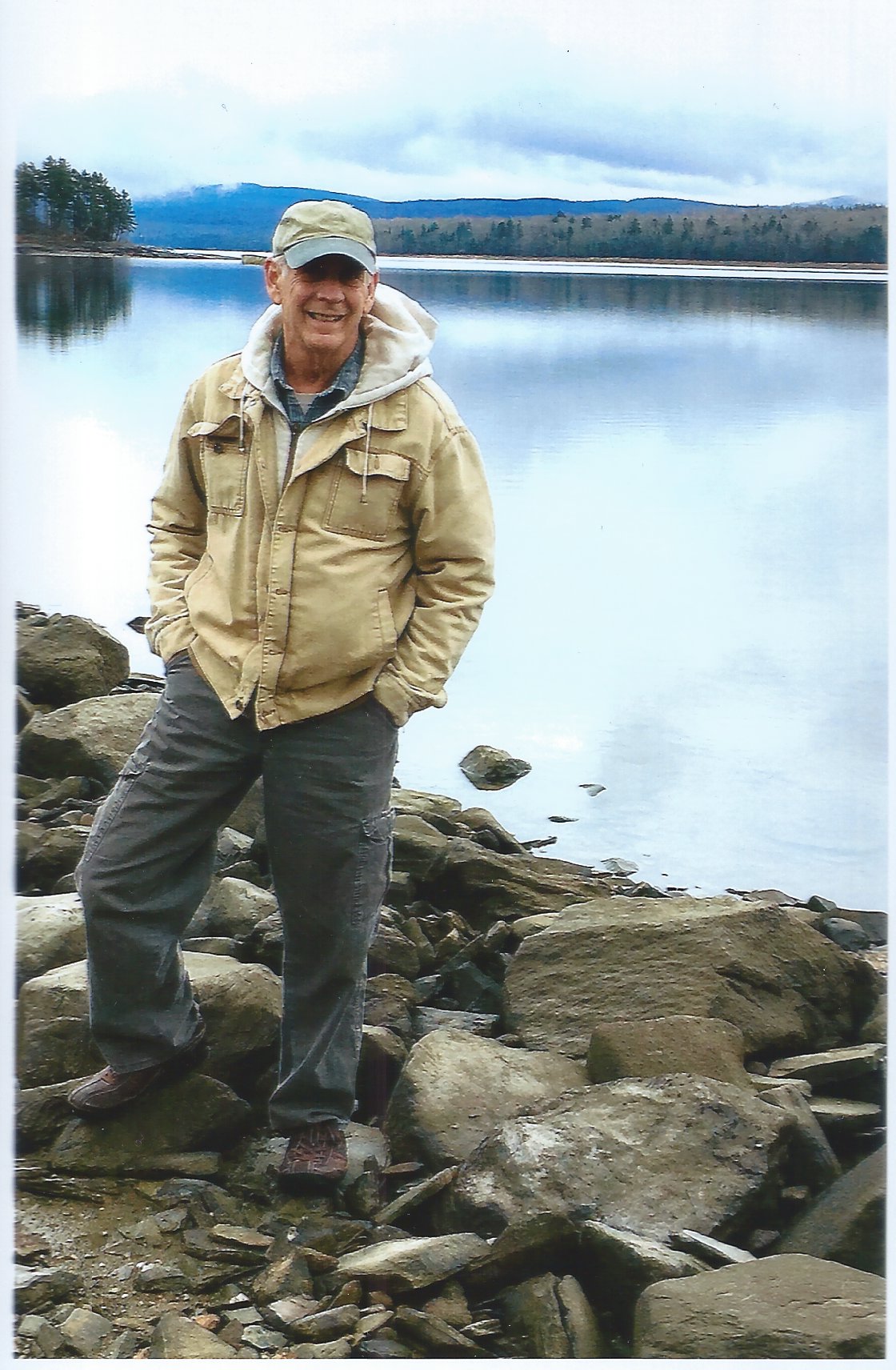
Photo credit: Susan Carey
Rick: Well, I guess it came about commercially. I began as a bad poet and always feeling guilty (in reference to my wife) about the amount of solitude that my writing required. I found I could assuage that guilt, though, if at least I earned some money. So I began by publishing humor, essays, and journalism in newsstand magazines. The twig just got bent that way, and it stayed like that as I began working on more ambitious stuff.
Jem: Well, it seems that your creative intent, commercial or not, has become even larger since I’ve heard talks of a movie option for In the Evil Day: Violence Comes to a Small Town. Can you tell me a little about that?
Rick: Island Pictures is a London-based studio that does the “Doc Martin” series on PBS and also does book-to-film adaptations. They’re thinking in terms of perhaps a feature film or perhaps a TV miniseries. Of course most of the time nothing at all gets done with a film option, but I’m optimistic about this one because the studio co-head and a producer have come to America and traveled up to Colebrook with me to meet John Harrigan and some of the other important people in the story. In December we’ll do it again to meet still others. They want to honor the tone and spirit of the book, and Jeezum, they know it backwards and sideways—better than I do at this point.
Jem: Okay, one last question; I promise. Rick, I wonder, when you first started out as a writer, did you see yourself one day becoming a teacher, a mentor, helping students master what you have mastered yourself?
Rick: Wow, I sure didn’t—because writing a good piece is so hard by itself, and then finding an audience even harder. I’ve had more good breaks than bad, but it’s still really, really hard to write a good story, whether fiction or nonfiction, and I feel like I’m even yet on the learning curve. Teaching in itself is a way of moving up that curve, though. I love working with people I like on behalf of a pursuit that I love, and there’s no doubt it’s made me a better, more intentional writer.
Jemiscoe Chambers-Black is a current degree candidate at The Mountainview Low Residency MFA in Fiction and Nonfiction.
Faculty Pick

Arctic Dreams: Imagination and Desire in a Northern Landscape by Barry Lopez
Richard Adams Carey - There are books that you enjoy and admire, and then books that you so enjoy and admire that you take them into your bones, and their phrases and themes become part of your own DNA as a writer and storyteller.
Such a book for me was Barry Lopez’s “Arctic Dreams: Imagination and Desire in a Northern Landscape.” Published in 1986, the work is a steaming broth of travel, history, folklore, ecology, and philosophy, its subject matter a part of the world as big as China, no more populous than Seattle, and as remote to most of us as the moon.
The impressions of European, Russian, and American explorers in the Arctic are quoted liberally, but Lopez—radically for that time—gave equal or greater weight to the oral histories and belief systems of the Inuit and Yupik peoples he moved among. He is particularly eloquent on what Western explorers called “the native eye,” that nearly occult sensitivity to the nuances of sky, water, landscape, and wildlife behavior that has been lost to Westerners since, more or less, the Agricultural Revolution.
Lopez’s knowledge of and respect for that other mode of being and this other-worldly geography was rocket fuel for me as I researched and wrote my first book, “Raven’s Children,” about the life and struggles of an Alaskan Yupik family. Lopez’s empathy for all things human, along with the grace and precision of his language, inspire me to this day.
RESIDENCY RECOLLECTIONS

There are no days more full than those we go back to. ― Colum McCann
Jemiscoe Chambers-Black—For many of us, the week-long residency at the Mountain View Grand Hotel in Whitefield, NH is something that we cherish. It’s a magical place, a retreat, where like-minds enjoy being away from the pressures of adulting, and rather, focus on nothing but their stories. Because we feel so strongly about our time together, we here at Assignment decided to ask some of the current MFA Candidates, the alumni and faculty what they missed, learned and loved about past residencies.
After attending three residencies, I can say with certainty that what I’ll miss most after my fourth residency week in January are the people. I’ll miss leaving the rest of the world behind to spend a week in the company of writers, people who intrinsically understand the challenges and rewards of practicing the craft of writing. I’ll miss the opportunity to dig deep into short stories in morning workshops. I’ll miss the chance to learn together from visiting agents and editors. I’ll miss the student and faculty readings. I’ll miss it all, but the community fostered by the staff and faculty—and my fellow learners—rests at the heart of what I love most about residency. ~ Margaret McNelis
My favorite moment of every residency is the Friday night slideshow. I’m always touched by the photos of students learning, writing, sharing, and enjoying each other’s company. The thoughtfulness and joy on everyone’s faces reflect the magic of residency. You can see the shift in photos taken early on in the week, to those taken toward the end. Friendships have been made. Confidences have grown. Dreams have been born. And cohort bonds have all become stronger. Plus, there’s always at least one cute alpaca pic. ~ Jo Knowles, Faculty
My family called my first week of residency, worried I’d careened off a mountain on my drive up after they didn’t hear from me for days. I told them I’d found my people. I couldn’t remember going to any other gathering where everyone else was just as passionate about the same thing as me. It just felt right. ~ Eric Beebe
The Mountain View is dead quiet at 4am. We walk the silent halls, my coffee cup is stained purple with red wine and his smells of cinnamon whiskey. We pause in front of a painting of hunting dogs.
“It’s weird how every floor has the same pictures,” I say.
“They’re not exactly the same,” he says. “The painting on the second floor has twelve dogs. This one has eleven.”
We rush down the stairs.
“See," I say, not sure if I'm victorious or disappointed. "Eleven." ~ Sarah Foil
When I think about the four residencies I attended, the thing that sticks out most vividly is the mornings: 28 in total. Leaning over to the personal-size coffee maker (that I brought to every Residency) on the nightstand, flicking it on, and slowly coming to and watching the light slink across the walls and ceiling while my favorite coffee from home-brewed, making my room smell like morning. Then, sipping the dark roast with a billow of half and half, gazing out the windows at the sunshine-yellow clapboards of the Mountain View Grand, and around the room, which I set up just how I like it, reviewing the day’s schedule. Each morning, the cusp of bringing new learning into my mind and spirit. Each morning, looking forward to strengthening friendships with other writers. Each morning, giving myself permission to take my writing as seriously as everyone else already did. ~ Shawna-Lee I. Perrin
My favorite memories from Residency all center on how we, as colleagues, pushed one another to continuously perfect our writing and to hone our work into stories that deserved to be read. One semester, after having my piece workshopped, a colleague approached me for a personal discussion of the work.
“How do you come up with such creepy material?” she asked.
“I have no idea,” I said. “But I’m glad it made you feel creeped out. It was supposed to.”
“I was creeped out,” she said, “but it was the wrong kind of creeped out. It was the I-don’t-want-to-read-this-anymore creeped out, not the wow-this-is-wrong-that-I-enjoy-this-stuff kind of creeped out. If you want to hold your readers’ attention, work on making your material more subtle and more complex.”
Every word I’ve written in the almost two years since have been filtered through this piece of advice. ~ John Will
One special pleasure was the peer workshop group I shared with Lydia Peele. It was a mix of nice personalities and uniformly strong manuscripts. All such workshops provide to their leaders a mix of don't-do-that and yes-do-this in the storytelling, and it was great fun, over and over again, to find so many beguiling examples of yes-do-this. ~ Richard Adam Carey, Faculty
I call the top moments in my life: "Patronus moments." It's lame and nerdy as hell, but I think of them whenever I'm really sad and I need the extra boost of remembering a better time. Expecto Patronum is actually Latin for "bring out my protector," so it felt appropriate both for me and the other characters in the Harry Potter universe. These moments include bid day in my sorority, when I got my littles, my time in Budapest, the Twenty One Pilots concert, Leadershape, and now: residency.
I'd cried for an hour when I first got the letter from Lisa telling me that I'd been accepted into the program. I don't have the words to explain the amount of shock and gratitude I felt, but I knew it was one of those rare moments where I'd get a taste of what it means to finish first. Residency exceeded any possible expectations I could've dreamed of and more. I'm surrounded by a group of wonderful, inspiring, dynamic people who all share a love of what matters most to me: writing. It's such a wonderful program, and I couldn't possibly praise it enough. At least I'll have the next two years to try. ~ Morgan Green
Every time I return home from a residency, I miss that insular feeling of being holed up 24/7 with other writers and lovers of books. I relish forgetting about the rest of the world, even as we think and write about our concerns for its fate. I love the deep immersion, the thinking and talking only about our craft. What a gift that is. And really, now that I've experienced it first as a student, then as faculty, I can say it is a necessity. ~ Amy Irvine, Faculty
Strangely, what I liked most and what I liked least about Residency are the same thing: Peer Review. It was painful. Being the newest of the bunch, I was scheduled at the end of the week, so I could get acclimated before entering “the box.” I’d come to the program because I needed help with my writing; I was stuck, but couldn’t figure out why. As I participated in my classmate’s peer reviews, something in my mind began to gel until I realized what I was stuck on. I write a great nonfiction landscape, but it’s just that—a landscape. It’s sterile and devoid of emotion because even though I’m in the story, I’m absent. I write around me rather than in me. When my turn in “the box” came, my mentors and peers were wonderful, and the overall theme was that my story was missing in my writing. I realized that either I needed to open up and expose myself and my family, or I needed to switch to fiction. I was overwhelmed with the fear of being vulnerable. When I came out of “the box,” I didn’t think anyone was more surprised than me when I started crying and couldn’t stop. It was a painful experience, but it was also a week of growth and insight. And as scary as it is, I’m sticking with nonfiction. ~ Debi St. Jeor
Faculty Picks: Thrasher and Silber

Richard Adams Carey-- Sometimes a book comes way out of nowhere to knock you breathless. This is what I wrote in the annotated bibliography accompanying my first book, Raven’s Children: “A harrowing memoir by an Inupiaq Eskimo who is an alcoholic is to be found in Anthony Apakark Thrasher’s Thrasher: Skid Row Eskimo (Toronto: Griffin House, 1976).”
I found it somewhere on a bookstore’s table of publishers’ remainders. I was then still in the process of writing about a Yupik Eskimo family under siege from alcoholism, and I took a four-dollar chance on this obscure memoir of a solitary life eclipsed by the bottle.
But what a life and what a story. One of 21 children raised in a caribou-skin tent in the Canadian Arctic village of Tuktoyaktuk, and taken in 1943 at age six to a distant Catholic boarding school, Tony Thrasher was among those generations of Native American children whose original sin was their language, their culture, their parentage, their skin color.
No, this is not the inspirational story of someone who finds a way to rise above abuse and mistreatment. Instead Thrasher wanders through Canada from job to job, from woman to woman, frequently drunk. He was convicted of murdering a man in an alcoholic blackout and imprisoned for seven years. The story ends with Thrasher heading back to prison, this one for the criminally insane. There he disappears from history.
But his memoir crackles with storytelling verve, its byways lit by dream sequences, folktales, childhood memories, ancestral myths, as befits a man fathered by a shaman.
The two white reporters who helped assemble this manuscript were skeptical of some of Thrasher’s personal stories. But the tales and their evocative details all could be verified. “Right down to the name of the aircraft which is in Thrasher’s script but not in Jane’s ‘All the World’s Aircraft,’” they wrote. “De Havilland said there had been such a plane, just one, and that it had operated where and when Thrasher had specified.”
This really is Thrasher’s story, not theirs, dredged honestly from hell, and it’s both terrible and beautiful.
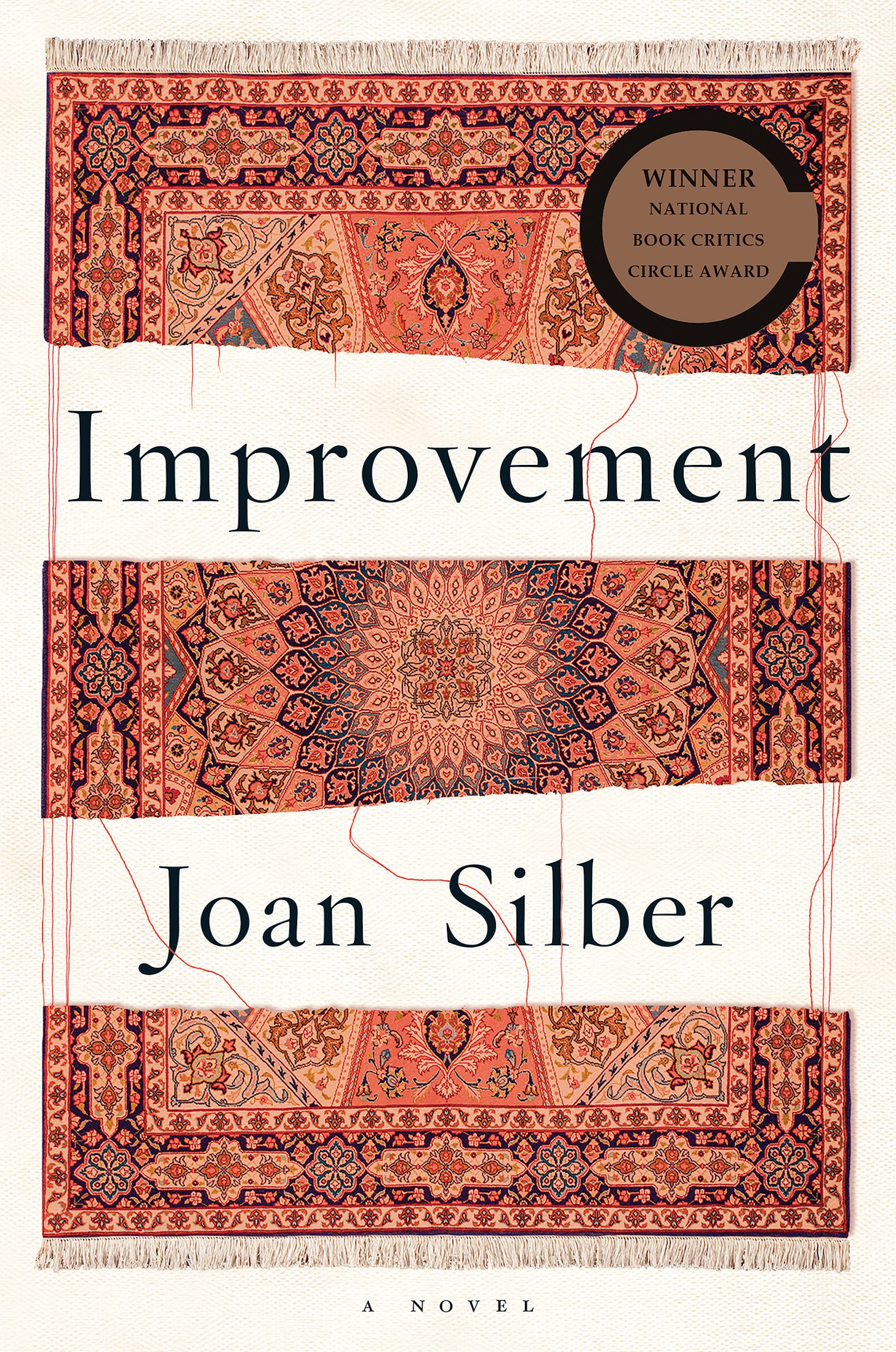
Katherine Towler-- Joan Silber’s Improvement, her eighth book, won the 2018 Pen/Faulkner Award in Fiction and the National Book Critics Circle Award in Fiction. The fact that these accolades have come when Silber is 72, after years of steadily working and publishing and being known by a small band of followers, many of them fellow writers, is something to celebrate.
Silber has created a unique hybrid in this book that is equal parts novel and linked story collection. Her focus moves from a single mother living with her young son in Harlem to the woman's ex-boyfriend and his involvement in a scheme to make money by smuggling cigarettes across state lines. Improvement initially appears to be a composite portrait of a close circle of characters living in Harlem, but then it moves farther afield, to Turkey and Europe, and jumps back in time forty years. Only a thin thread at first connects these narratives. As the chapters unfold, however, a large canvas becomes apparent, with a series of startling links revealed. Silber creates a sweeping narrative that is rooted in small moments and a close rendering of character. She accomplishes this feat of storytelling by allowing one character’s story to rest beside another’s without commentary or overt nods to their connections.
Her natural, easy style makes a highly plotted book feel completely unforced. Silber renders her characters with a light but deft touch and a bemused distance. Her quick insights into their inner states come as moments of divine revelation, but just as quickly, she’s back to the business of daily life. Silber’s nimble handling of both structure and character, and her wonderfully wry and effortless voice, make this book a pleasure to read and one to study for its masterful technique.
Faculty Picks: Johnson, Stegner, Welty
Benjamin Nugent--In “Strangler Bob,” the short story by Denis Johnson published in this week’s New Yorker, you find Johnson trotting out his courtly mode. It’s kind of Blanche DuBois cum Bertie Wooster, but he metes it out in such small doses that it never feels like camp. He uses it in “Dirty Wedding,” when the narrator laments, “These days had reduced us to the Rebel Motel.” Also in “Two Men,” when the narrator bemoans the break-up of his gang: “Later on one of them got hurt when we were burglarizing a pharmacy, and the other two of us dropped him bleeding at the back entrance of the hospital and he was arrested and all the bonds were dissolved.”
In “Strangler Bob,” which takes place in jail, the narrator, Dink, says of a fellow inmate: “This time he’d been arrested for giving a man some well-deserved punishment in the dining area of the Howard Johnson’s, which he described as the wrong kind of restaurant for that.” Dink deems a prisoner who shares a low-grade hallucinogen “most generous.”
Joining Dink in Johnson County’s facility is Dundun, who also features in Johnson’s older story “Dundun.” Dink describes him thus: “Dundun’s mental space, customarily empty, had been invaded by an animal spirit.” Imagine if Johnson had gotten self-conscious and replaced the elegant “customarily” with plain old “usually.” The paragraph would have been mauled.
It’s a classic Mark Twain move, to write of coarse individuals as if they rated great tact. But see also Marilynne Robinson’s Housekeeping, where the narrator says, “The people of Fingerbone and its environs were very much given to murder.”

Richard Adams Carey--"In this not-quite-quiet darkness, while the diesel breaks its heart more and more faintly on the mountain grade, I lie wondering if I am man enough to be a bigger man than my grandfather."
Those are the wrenching last words of Wallace Stegner’s 1972 novel Angle of Repose. The narrator is Lyman Ward, an aging historian, divorcee, and wheelchair-bound amputee. His grandfather was Oliver Ward, a brilliant engineer who took his cultivated, Eastern-educated wife Susan from mining town to hardscrabble mining town throughout the West at the end of the 19th century.
Lyman is devoting his retirement to writing the biography of his grandmother, an artist and illustrator, and of her loving, strenuous marriage—a union blighted by tragedy and recrimination in its final decades. Lyman has recriminations himself against his former wife, now abandoned by her lover and extending overtures to him. The novel is chiefly the epic story of Susan Ward, her family, and the frontier, but the present-day (1960s) struggles of her crippled, solitary, angry, but eminently humane grandson play in gorgeous counterpoint to the main plot.
Lyman Ward lives alone in his grandparents’ last home in northern California, and his description of being bathed by the neighbor lady hired to help take care of him is harrowing in its depiction of the indignities of age and disability. But the novel as a whole glows with all the courage, endurance, mercy, and love we can hope to shore against our frailties.

Justin Talyor--I’m living down in Hattiesburg this school year as Writer-in-residence at University of Southern Mississippi, and have taken the appointment as an opportunity to get re-acquainted with Southern literature. I've been revisiting Barry Hannah and William Faulkner, exploring the early novels of Harry Crews and Thomas McGuane, teaching Lydia Peelle's excellent collection Reasons for and Advantages of Breathing in my contemporary lit seminar. But the greatest revelation has been Eudora Welty, who lived and wrote just up the road in Jackson. I did not know her work at all before I got here and have been making my way through her Collected Stories, vacillating between profound shame at how long I managed to stay ignorant of her and profound gratitude for the fact that I get to discover her now, while living in her home state.
I started at the beginning of the Collected, with A Curtain of Green and Other Stories, published in 1941. The Wide Net and Other Stories followed close on its heels in 1943. I’m midway through The Golden Apples now, which appeared in 1949 and so finished out an astonishingly productive decade. I love these stories. Welty's use of voice, her sense of history and place, her delight in the grotesque, are easily in league with Faulkner. Moreover, I find her largely free of the pathological Southern sentimentalism that nags at even his greatest work (and smothers some of it). You can draw lines from Welty not only to the aforementioned Hannah and to Flannery O'Connor, but to Joy Williams and--in a story like "Moon Lake", for instance--even Christine Schutt. But the writer of whom Welty reminds me most strongly, especially in those early books, is Nathaniel Hawthorne. Stories like “A Visit of Charity,” “Death of a Traveling Salesman,” “Old Mr. Marblehall,” and “The Wide Net” put me in mind of Hawthorne’s earthy, sinister, proto-Kafkan tales such as “My Kinsman, Major Molineux,” “The Minister’s Black Veil,” and especially “Wakefield.” And one great thing about reading a Collected Stories is being able to trace the arc of its author’s development. As much as I admire and enjoy those flinty, mysterious first two books, to read The Golden Apples is to watch a natural born talent achieve true mastery of her form. The seven connected stories it contains feel less imagined than lived, or better still, dreamed into being, as in this paragraph from “Moon Lake”:
“Luminous of course but hidden from them, Moon Lake streamed out in the night. By moonlight sometimes it seemed to run like a river. Beyond the cry of the frogs there were sounds of a boat moored somewhere, of its vague, clumsy reaching at the shore, those sounds that are recognized as being made by something sightless. When did boats have eyes--once? Nothing watched that their little part of the lake stayed roped off and protected; was it there now, the rope stretched frail-like between posts that swayed in mud? That rope was to mark how far the girls could swim. Beyond lay the deep part, some bottomless parts, said Moody. Here and there was the quicksand that stirred your footprint and kissed your heel. All snakes, harmless and harmful, were freely playing now; they put a trailing, moony division between weed and weed--bright, turning, bright and turning.”
Faculty Picks: Sartre, Gyasi, Kurtén

Richard Adams Carey-- Jean-Paul Sartre’s eerie first novel, Nausea, published in 1938, could not be described as plot driven. Action? Well, protagonist Antoine Roquentin is a writer (and a loner) struggling to finish a biography of minor 18th century politician, to rekindle a romance with a former lover, and to resist the blandishments of a lonely autodidact who will be revealed to be a pedophile.
The real action is all within. Roquentin’s primary adversary is something that might be viewed as depression, but for Sartre it’s an especially clear-eyed grasp of the human condition. Trivial moments and objects are described in revelatory detail, in passages that ring with both their beauty and the hollowness glimpsed at their core. The result for Roquentin is a sense of nausea that “spreads at the bottom of the viscous puddle, at the bottom of our time—the time of purple suspenders and broken chair seats; it is made of wide, soft instants, spreading at the edge, like an oil stain.”
The novel is written in diary form, and its final sentence—“Tomorrow it will rain in Bouville”—is life-affirming in the sense that at least there will be a tomorrow. Sartre’s hero endures, and if we could read his description of that rain, the imagery would be stunning.

Jo Knowles-- I recently read and loved Homegoing by Yaa Gyasi (Knopf, 2016). It's a riveting historical novel that follows the descendants of two sisters born on the Gold Coast of Africa who were separated by slavery, and the horrors that follow for generations, both in Africa and in America. The plotting, the characterization, the deep emotional punch every chapter packs is remarkable. Each chapter reads not so much like a short-story but a novella, and by the end of each, you feel cheated by having to leave the character you've just come to care deeply about. It's a masterful novel that explores the development of institutional racism and the deep and lasting impact of slavery that much of America still has not fully grasped.
Craig Childs-- I was asked what I’d read last. Having just finished writing two books in the past few weeks I thought, do I even read books anymore?
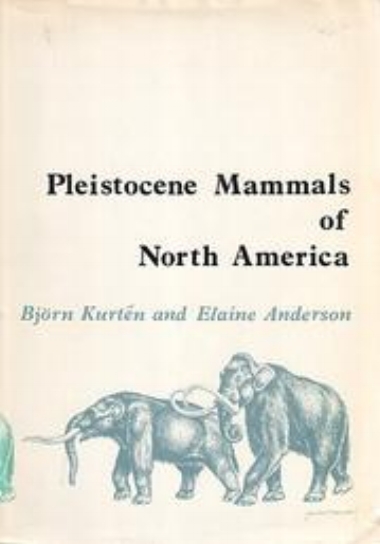
Then I remembered my research. Towers of it. The last book was Pleistocene Mammals of North America by the eminent, late paleontologist Björn Kurtén and his late co-author, born in Leadville, Colorado, osteologist Elaine Anderson, a dear friend who worked an Ice Age field camp with me in the 90s.
Printed in 1980, Pleistocene Mammals remains the hardcover manual on the general distribution, habitat, and fossil specifications for Ice Age animals, or anything else to live on this continent in the last couple million years. The drawings of teeth and jaws, jumping mice and mammoths, are simple, clean, and scientific. The language is often clinical, “the posterior mandibular foramen is larger than the anterior...”
But it’s a book that tells you something, a sort of time machine. You pass through pages showing ranges of sabertooth cats and Ice Age seals, and a world is reborn.
To write, you are not just in your own head, not just reading as a lark. Reading becomes solid work. You have to learn different ways stories can be told. Call it research, or world-building, this is where the good stuff is.