Carol and Brute, a short short story by Janet Clare

Image credit: Dog photo by Jamie Street (made avallable to SquareSpace gallery).
Carol put in her application to adopt Brute.
“Really?” the attendant said. “We thought he might be too much dog for you.”
“In what way?”
“He’s very strong, you know.”
“That’s okay. I could use some strength around here.”
The attendant, a young woman with hair twisted up in a messy mop, gave her a skeptical look. Carol stared her down. She’d made up her mind. Nothing was going to keep her from Brute.
“It’ll be a couple of days for us to process the papers.”
“Fine.” Carol wrote a check to the shelter and went straight to the pet store where she bought more dog food and treats and a few sweaters although L.A. in September was still warm.
“Maybe we can have a playdate with the dogs,” Dan, her ex, said when he called and she made the mistake of telling him about Brute. Dan had rescued a dog named Big Black after their old dog, Dog, had died under his care.
“Playdate,” Carol said. “You’re a riot.”
“You’ve never met Big Black,” he said. “You might like him.”
“Maybe you forgot, it’s you I don’t like.”
“I put your name down as next of kin, if something happens to me you would get Big Black.”
“I’m not your kin. Maybe you also forgot you have a son.”
“Hardly. He’s coming to visit me.”
Carol felt hot. Fucking shit. Their son was flying across the country and she didn’t even know? “Go fuck yourself,” she said, and hung up.
She was afraid the horrible truth was that Dan and their son were more alike than not, and she hated Dan. But she could never hate her son. Unless maybe he turned out to be a Nazi or something. She imagined there were mothers during the war who hated their Nazi sons. Mothers who had to pretend their sons were dead when they were still alive. Don’t be stupid, she thought. Her son wasn’t a Nazi. Still, she had a nightmare of him with an evil smile and wearing that dreaded uniform. She woke up sweating from the ordeal. She took a cold shower, dressed, and went to work.
When she walked in the office Troy was working on an intricate pattern for a glamorous wedding gown. “You look like shit squared, sweetie. No sleep?”
As head designer, Carol was Troy’s boss, but she also adored him and they were friends. Her dream was one day she would wake up and he wouldn’t be gay and he would take her in his much younger, muscled arms and they would sip martinis in the lavender light of Tuscany in spring.
“I thought maybe my son could be a Nazi.”
“Well, that’ll keep you up all night.” He handed her a fresh cup of coffee. “Drink this, honey. Not all assholes are Nazis.”
“Thanks. That’s reassuring.” Troy had met her son once several years ago. “I’m picking Brute up after work today, wanna come by and meet him?”
“Much as I love the whole idea of anyone or anything named Brute, I can’t make it. Date night with Boris.”
Boris was Troy’s boyfriend and Carol liked him so much it was hard to be jealous. They attended the opera and the ballet; Troy favored elegant bow ties with a contrasting pocket square, while Boris was usually in dark pinstripes and white silk accessories. There wasn’t anyone in Los Angeles who came close to their style.
“If you’re not busy, why don’t you bring Brute around on Sunday? I’ll make brunch.” Troy said.
Carol had never been to Troy’s house and she tingled with anticipation. “I just hope Brute won’t be a bother.”
“Sweetheart, dogs adore me. Though too bad you didn’t adopt a female, because you know how I love bitches.” He smiled his big handsome smile. “I know, bad joke. Come at eleven.”
Carol decided she would bake the apple cider cake recipe she’d seen in the New York Times to bring on Sunday. She didn’t subscribe to the NYT, but she’d figured out how to find the recipes. After work she bought the ingredients, then went to pick up Brute at the shelter. She brought his new collar and leash and had the proper belt to strap him safely in the car. He wasn’t thrilled with any of it, but she gave him a treat and told him everything would be all right and he licked her hand. She already loved him to pieces.
When they got home she took Brute for a long walk. The wind picked up, energizing them both. Then she gave him dinner and he took a nap while she baked the cake, which turned out lopsided. She made herself a tuna sandwich on toast and took Brute for another walk before bedtime. Early the next morning, she found a destroyed apple cider cake and Brute vomiting in the kitchen. She checked with the vet and gave him some cooked rice to soothe his stomach. She didn’t scold him. It was a cake. He was a dog. She took him for another walk and bought more ingredients and baked another cake. Lopsided again. They spent Saturday getting to know each other and Carol tried a couple of different sweaters on him; he seemed mystified, but didn’t balk. Sunday morning at 10:45 they left for brunch at Troy’s.
Boris greeted them at the door. “A cake. How wonderful.” Boris wore a tight pink tee shirt and jeans. His skin glowed. She tried not to stare.
“And Brute,” Troy said. “Come in, you old dog, you.”
“He’s really only two,” Carol said. “Still a puppy in a way.” She cautiously took off his leash and he walked through the house like a detective looking for a dead body. When he finished his rounds, she gave him a chew toy and he crawled under the table. It appeared she had adopted a perfect dog.
Troy had on a chintz apron over khaki shorts and a white shirt, the sleeves neatly rolled. The small house was decorated to perfection: modern mixed with traditional and unexpected splashes of color. “Your house is beautiful,” she said. “I’m not surprised.”
“What’s the point of being gay if you don’t have good taste?” Boris said.
They ate quiche and Brute slept under the table like a gentleman. Hot milk sputtered from the shiny Italian coffee machine as they lingered over lopsided apple cider cake. Brute ventured out from under the table and drank some water, then rolled over to have his tummy rubbed. Troy willingly obliged. Carol’s phone beeped. It was her son, sending her a text. At the airport, it read. Can you pick me up?
“What the fuck,” she said. “My son, who never even told me he was coming to visit his crazy-ass father and hadn’t mentioned seeing me, now wants me to pick him up at the airport.”
“LAX on a Sunday, that’s brutal,” Boris said.
“Tell him to take an Uber,” Troy said.
“Do I dare?”
Troy and Boris nodded.
“You dare because your time is valuable, you are valuable,” Boris said.
“You are.” Troy was down on the floor doing bicycle motions with Brutes front paws.
Carol loved Boris and Troy so much she wanted to cry. She texted her son: Tied up, better catch an Uber, thinking she was a horrible mother, but she felt powerful.
Her son responded, no problem. One of those catch-all phrases younger people used ad nauseum. Instead of you’re welcome, they said no problem. Freaking irritating.
On the way home Carol and Brute stopped at the dog park. A first for them. Carol was aware she had become we, they, them; like a couple, it was just her and Brute. She kept him close to her on the leash as dogs and their owners sniffed them out, circling Brute who seemed both interested and aloof. Carol wasn’t sure what was more unsettling, a pack of unleashed dogs or their unleashed owners.
“Who’s this squat fellow?” said a squat man in a red puffer jacket.
“His name is Brute.” She took a few steps back, holding tight on the leash. It felt like it was just her and Brute against an invading horde.
“Aren’t we cute?” A round woman chirped as she bent down, thrusting her face close to Brute, who appeared alarmed. Then he did something Carol had never seen before: he bared his teeth and uttered a low growl, and she knew for certain, if she didn’t already, that he was her dog for all time. Because if she could she would have growled at the woman too.
The dog owners delivered their critique: “big ears,” “short legs,” references to, “our little fur babies.” All of it in child-like, syrupy voices. What was it about dog ownership that made certain people act insane? She remembered an elderly neighbor who carried around a chihuahua wrapped in a blanket like a baby. Carol thought she was nuts, which was later confirmed when the woman, butcher knife in hand, ran down the street after her husband. Now Carol felt like she’d stepped into a netherworld of doggie weirdos and she hurried to extricate herself and Brute.
“Phew, made it out alive,” she said once they were in the car, and she turned to see him smiling in the backseat.
At home, she changed into pink sweatpants and lounged on the sofa with Brute, who had jumped up after she’d spread out a thin blanket which he waded into a pile, then plopped down, staking his territory. “You’re happy here, aren’t you, Brutie-boy?” He looked up at her like he was. When her phone rang, Carol was pretty sure it was her son.
“Dad and I want to take you to dinner,” he said.
She was so surprised she almost couldn’t speak. “What? Why?” Last thing she wanted was to go to dinner, or anywhere else, with Dan. And she’d already assumed seeing her son was not part of his agenda.
“Some things to discuss,” he said.
“What things? Just tell me now.”
“We’d rather not.”
We? When did her son and her ex become we? Was it like the we of her and Brute? “I have a new dog. I can’t leave him alone.”
“Well then we’ll bring over a pizza, how about seven?”
“Seven what?”
“O’clock. We’ll bring a pizza at seven o’clock.” Her son said like it was something that occurred on a regular basis.
Carol looked around her kitchen as if the perfect excuse that would get her out of what sounded increasingly like an ambush might be posted on the refrigerator door. What the fuck did they want from her? The cat clock on the yellow wall read six o’clock and it was already dark.
Then it started to rain, reminding her of the night years ago when her ex-husband showed up at her door asking to come back after his secretary had left him. Carol’s son had returned at the same moment with his then-wife who wore a beret. That’s when Carol ran out of her own house and drove along the Pacific Coast Highway to Duke’s where she sat at the bar and drank multiple martinis. She couldn’t do that now because she couldn’t take Brute into Duke’s. Maybe she should move to Paris where dogs were allowed in restaurants and bars. She’d gone to Paris right after college and before she’d married Dan and it wasn’t the first time she thought she should have stayed there forever. Now, she realized she couldn’t stop her son and Dan and the stupid pizza.
They arrived exactly at seven with a giant box and a giant dog. Dan had saddled up Big Black and brought him along. They stood out of the rain on the porch.
“Are you out of your mind?” she said. “You can’t bring that dog in here.”
“I heard you had a rescue, I thought they should meet.”
“You thought wrong. No way is he coming in my house.”
“Mom, really,” her son said.
He looked shorter than the last time she saw him, though she wasn’t sure when that was. “Stay out of this. My dog has only been here three days; he’s just learning it’s his house. And, he’s fucking not sharing it with Big Black.”
“We can’t leave him outside,” Dan said.
“No, you can take him, yourself, and that frigging pizza home.” She was thrilled that Dan’s idiot move had given her the excuse she needed to keep them out. If she ever wrote an advice column she would tell women to marry a stupid man so later when you divorced him you would have a constant supply of reasons to affirm you’d done the right thing. Why you married him in the first place was another question.
“I can’t believe you won’t let us in.”
“Sure you can, Dan. I don’t like you.”
Dan took a step back off the porch, taking Big Black with him. Her son took a step forward. “Mom? What are you doing?”
“Saving my sanity.” She remained on the threshold with the front door only partially open behind her. “You look good, by the way. Maybe Sally, the mamo tech, was a good move for you. You should probably get back to her.”
“We wanted to talk to you about the property, and, uh, what will happen if….”
“Oh, now I get it. That small investment my parents left to me. You want to know what will happen to it when I die. Of course, you do.”
“Well, everyone needs to make plans, just in case.” Her son’s appearance had changed and he seemed feverish.
“Don’t you worry about a thing,” she said. “Everything is under control.”
Dan, still standing behind her son, with Big Black’s leash in one hand, pizza box in the other. “Everyone should know your plans.”
“Not really, and certainly not you, Dan.” She thought of her will in the freezer. “And, by the way, you’re older than me and no doubt you’ll die first. But I forgot, you don’t have anything anyone wants.”
Big Black, who had probably sniffed Brute inside, was getting unruly and Dan tightened his grip on the leash, though he seemed to have little control over him. Whatever training Dan had done with Big Black had obviously failed.
“It doesn’t really matter, but if you want to know, I’m leaving everything to the Happy Pup Dog Shelter.”
“What?” her son said.
“Are you crazy?” Dan said.
“You can’t, I mean, you shouldn’t.” Her son stammered. “When did you decide to do this?
“Hmm, let me think. About ten minutes ago.” She backed into the house. “Night now.” She slammed the door in their doughy faces. Big Black barked loud and threatening. There was a crack of thunder.
Brute came over and nudged at her hand. She scratched his ear.

Janet Clare is the author of the acclaimed novel TIME IS THE LONGEST DISTANCE (Vine Leaves Press) and she states: When I first started to write a novel I thought it was the hardest thing I could imagine doing, but it was too late. I had fallen in love with making things up, taking the time to research and discover my characters, continually surprised by what they say and do.
Originally from New York, I live in Los Angeles with my husband. I studied at UC Berkeley and UCLA, and I’ve had short fiction and essays published online and anthologized. Time Is The Longest Distance is my first novel.
A poetry "assignment," by Sam Keck Scott

Journal of an Occasional Poet
This particular poem came about when for some bleak, yet important, reason I found myself thinking about mines and mining one day, when I was struck for the first time by the double-meaning of the word mine—both as the concept of ownership, as well as the extraction of minerals and other things from the earth. Suddenly mining became a brand-new verb in my eyes—the action of taking something that is not owned and “mining” it. Transforming it into a possession. Making it mine.
This musing left me with what I recognized right away as the last line of a poem, despite my rarely writing poetry. I graduated from SNHU’s Mountainview MFA Program in Nonfiction this past June, and spent those two years writing a collection of interwoven essays, both personal and ecological, and this was the only poem I wrote during my time there. Unlike much of what I work on, which requires a fair amount of context or unpacking, this idea felt like it needed to be conveyed quickly and efficiently—build an image that everyone is already familiar with, a mine, then make them consider the double meaning of the word with one simple, concluding line.
Here’s the poem:
Mine
Earth turned inside out
Disappeared
Turned to crater, to air
To caverns, to cavity
To spoils
Earth turned to money
An unholy alchemy
The yellow trucks, obedient soldiers
Driving in and out
into the maw
Day and night
of that silent scream
Removing the excess dirt
All that in-our-way earth
To find what’s below, what’s within
these burial grounds of fabulous creatures
Their gorgeous earth bodies plundered—
copper arteries, cobalt jawbone
ruby knuckles, sapphire scales
radioactive cake of fossilized digestive tract
a grin of diamonds
chipped and scattered
across blizzard of time
The dead workers
pulled like clods of fabric
from the collapsed shaft
were also made of stardust
Only in a world with the word
“mine” in it
could any of this
be possible
On a different day, I might have gone down that same train of thought with my essayist’s hat on and began researching the history of mining, comparing the different cosmologies that would allow a Euro-colonial-capitalist worldview to act in ways so perverse and abhorrent to most Indigenous cultures. I may have found examples of particularly destructive mining operations, or deadly mining accidents, and I would have been off to the races, writing a 6,000-word essay.
These are all subjects deserving deep exploration, but I’m glad I chose to write a poem that day, because one of the great gifts of poetry is to convey much using few words (a challenge for a writer like myself who was accused of maximalism in more than one peer review workshop while at SNHU), while trusting your readers to find their own way to meaning using their hearts rather than their heads—a place where an idea is more likely to catch, and germinate. Thank you for reading.
Sam Keck Scott is a freelance writer of both fiction and nonfiction. His work has appeared in Outside, Orion, Terrain.org, Camas, Harpur Palate, The New Guard Literary Review, and is forthcoming from Hakai. Sam has also been an author and photographer for the National Geographic Society, a Writing By Writers Fellow, the co-author of the children’s book, Sip the Straw, and the winner of the John Gardner Memorial Prize in Fiction. In addition to writing, Sam is a wildlife biologist, a conservationist, and an avid adventurer. When not living out of his truck or a hotel room for work—or exploring some far-flung land or sea—he calls Northern California home. Sam earned his MFA in Creative Nonfiction from Southern New Hampshire University, where he was awarded the Lynn Safford Memorial Prize for best nonfiction thesis.
Interview with fantasy author Dana Swift, by Paola Lastick

Most Wednesday nights, unless she’s at a book signing promoting her latest book, you can find Dana Swift at the DFW Writer’s Workshop, honing her craft and helping others do the same. This is where I first met Dana and was struck by her ability to create fantasy worlds that draw you in magically. Dana is an inspiring author who shows us that with dedication, persistence, and keeping the eye on the prize the dream of becoming a published author can be achieved at a young age. Here is my interview with Dana.
PL: In your blog “When Doubt Comes From External Forces” you mention people telling you “you shouldn’t” become a writer. Was there a person in your life who you thought you’d never hear those words from? What was your reaction and how did you block out those thoughts from poisoning your thoughts?
DS: When I heard those words, it was from family members, but at the time I was very young, twelve years old or so. As much as it hurt me, I can now understand all they were thinking about were the odds. Because the fact of the matter is this dream of writing books for a living is difficult.
I actually remember the moment distinctively because it was the moment, I realized I would work on this dream by myself and not voice my aspirations aloud anymore. And all through middle school, high school, and college I didn’t tell many people what I truly wanted to be when I grew up. While those past statements may have given me a lack of confidence to tell people about my dreams it didn’t dull them. And with writing the main ingredient for success is perseverance. So, I persevered.
PL: You often advice aspiring writers to not compare themselves to other writers. Are you speaking from personal experience? Who did you compare yourself to and how did you make the mental shift?
DS: I think it’s a human experience to compare yourself to others so yes, I used to compare my writing, my process, my journey, basically everything to other writers. I was a young writer trying to learn the business and study the craft. It’s natural and in many ways necessary to compare your work to others in order to grow.
Where it gets damaging is when it revolves more around jealousy and negativity and thus stops you from writing or learning. To get out of that negative mentality takes time. But it all comes down to finally believing your writing, your voice, your style, and your ideas are uniquely you and being self-confident enough to embrace that in your craft.
PL: You have said that writing a book is hard. What aspect of writing a book do you find particularly challenging for you?
DS: Writing a book is hard because it takes time. Having one good writing day is great, but it’s just one day. To write an entire book takes months if not years. Plus, when first starting out most authors have to write a book to learn how to write a book. For me, my first drafts take months if not an entire year to write. I love editing and revising, so the first initial draft has always been the most challenging.
PL: How do you go about starting a new book project? There are writers who start with an idea and let their characters reveal themselves as they write and others who outline and plan out their books. What camp do you find yourself in?
DS: I definitely fall into the camp of a pantser where I come up with an idea and the catalyst for the story and then just start writing. Outlines are absolutely wonderful and a great tool, but I love when characters and plot points surprise me. For me the beauty of storytelling comes in those moments of reveal and discovery.
PL: Your first book is YA Fantasy. Have you ever considered writing something outside this genre? Mystery? Horror? Do you worry your fans won’t like a new genre?
DS: I love YA Fantasy. For me it’s a very versatile genre with every world I build a completely different experience. I feel like fantasy could never become boring.
I have considered writing outside of the age category and genre and I’m not that nervous fans won’t like the new genre, but I have too many ideas buzzing in my head for young adult fantasy. Besides, I feel like if I wrote a contemporary or mystery, I’d find a way to add magic anyway. Everything is better with magic.
PL: You mentioned you decided to lay down the first book you wrote to start a new project. When do you know it’s time to lay something down to start something new and not just that you’re just giving up on a project because you haven’t found a way to get a project back on track?
DS: Yes, I wrote a blog post about the process of shelving my first ever written book because it’s so important to know when to persist and when to move on. For me it was the fact of time and options. I had been working on that book for seven years, editing it, fixing it, querying it. And the truth of the matter is one, it wasn’t good enough. Two, the book had been rejected by dozens of qualified and amazing agents.
Most importantly though, I was ready to start something new and take what I had learned to make a better and more concise story. Cast in Firelight was that next completely new book and I wouldn’t have been able to write it without that first story. Also, I want to clarify that the act of moving on to another project is just a different form of persistence. Because shelving a book does not mean you are quitting writing and the beauty of the art is you can come back later and revise it if you wanted.
PL: When you look back on your first book vs your second book, what have you noticed about your growth as a writer?
DS: I joined an amazing writing group, the DFW Writing Workshop and they helped me a lot in realizing some of my flaws as a writer. I didn’t understand the flow and structure of a good plot when I first started out.
The biggest craft element I learned between my first book to my debut novel was how to keep a reader engaged. Those are the qualities of writing that involve pacing, transitions, chapter breaks, tension and conflict. I had mastered how to write a pretty sentence, but I had to learn how write a good story.
PL: What do you think helps a writer grow in their craft writing or revising?
DS: Both! The process of getting a book published involves both the drafting and editing process. Though I would say writing and revising are different beasts to overcome. The first involves formulating ideas and getting yourself to sit down and put those thoughts on paper. Revising is resembling and rewriting those ideas into a more concise and engaging story.
PL: You mentioned wanting to be a writer since you were nine years old. Do you remember how that dream started? And, now that you are a published writer, is it everything you dreamt it would be? What surprised you most?
DS: Stories have always been very important to me. I was about seven when I realized stories could be dramatically different depending on who was telling the story. Then in fourth grade I read a story about a young girl getting her book published and that year for career day I dressed up as an author. Truthfully, the dream of writing settled over so young there were a few touchstone moments like the ones above, but looking back it truly feels like I’ve always wanted to do this.
When I was younger though I thought once you get your book published and it’s on the shelf you were all set –– there would be no more hardships. But in writing and publishing, like any career, you have to keep going, keep writing, learning and striving to craft another better story.
PL: You mention the importance of writing through query and submission. How soon did you begin writing Bound By Firelight once Cast In Firelight was finished?
DS: I was actually writing an entirely different book when Cast in Firelight was being submitted. For series, it’s important to not write the sequel until after you get the book deal, mostly so you aren’t wasting your time on a book that might never sell. Therefore, I only started. Bound by Firelight after I got the two book deal from Penguin Random House.
Dana graduated from the University of Texas at Austin and is an active member of the DFW Writers’ Workshop. She lives in Miami, Florida, with her husband. She is the author of Cast in Firelight and Bound by Firelight. To learn more about Dana and her books visit danaswiftbooks.com or follow @swift_dana on Twitter and Instagram.
Paola Lastick is currently a student at the Mountainview MFA program at Southern New Hampshire University. Her writing has appeared on blogs as well as the newspaper, The Real Chicago. She lives in a suburb of Dallas with her husband, daughter, and three small yappy dogs.
You are Seven, by Rocquel Motta

You are seven. You are sitting on a standalone patio swing, on a concrete patio that doesn’t quite match your yard. Your parents were young when the house was purchased. They couldn’t afford a real deck. So, instead you have a concrete filled square in the middle of the grass. You are looking up at your bedroom window and wondering if your toys are moving around in there while you can’t see them. You have a book in your lap, it’s R.L Stine. The spine has spiderweb cracks of white coming through, and the pages are a worn and tattered yellow brown. It’s a hand-me-down from one of your older cousins, or a cousin of a cousin, or a friend of a cousin, you don’t even know anymore. You are devouring books with such reckless abandon that aunts and uncles bring you collections from their attics in wobbly plastic Tupperware that have “BOOKS,” written in fading black sharpie on the sides. You pick up the book and are swinging absentmindedly, lost in the horror of a book that offsets the summer day.
I want to tell you not to do it, to resist the temptation to bend your legs under the swing to swing harder, faster, higher. But you are not here. You are only a memory. So of course, you do it. You stick your tiny legs and toes under the swing and bring your knees up. One of the swing’s legs lifts off the ground from the force of it, but you don’t tip over. You don’t tip over because your big toe drags against the concrete underneath the swing, effectively halting the momentum, but not so effectively that the unforgiving concrete doesn’t also skin much of your big toe along the way. Your blood drips down staining the endless gray below you. You will have a scar on your big toe for the rest of your life, even still when you are twenty-five.
Mom-mom Shirley runs out of the house to comfort you. She puts a dirty kitchen towel on your toe with a loving amount of pressure. She sings to you and strokes your hair. You cry harder than is probably necessary, watching as the tears make tiny puddles on her pink striped t-shirt. You don’t know it yet, but colon cancer is devouring her from the inside out in this moment, and still she is worried about your toe. When you do learn about the cancer, she continues to babysit you. Dad drops you off in her hospital room before work and you sit there with her all day. You read while she is sleeping, you make snow angels on the dust covered floor while her physical therapist instructs her to make them in bed for mobility. You think if you both work hard enough at it that she will live. She does not. She puts on the Price Is Right and remarks on how much she loves Bob Barker. A nurse sits with you whenever she needs to “go down for a test,” because she has no other options, because you are seven.
And then you are nine, and full of hurt and fear. You read more now as an escape, but books end. You hate that they end. So, you start writing extensions so that they don’t have to. You write so that you can give characters better endings than the ones you’ve gotten so far. Your other grandmother, Mimi, steps up and raises you while your father is too sad, and while your mother would simply rather be doing anything else. She fosters your love of reading and writing. She reads you Stephen King and Danielle Steele because “there’s no such thing as age appropriate when it comes to good books”. She lets you eat pizza for every meal and stay up until four in the morning. You don’t see anything strange about this, because you are nine. You pass your first novel around to Mrs. Berkley’s class. A gory Stephen King-esque continuation of Pet Sematary where a cat comes back from the dead and eats its humans. The book gets confiscated, because everyone else is nine.
When you are eleven, you learn that things are more complicated than you were led to believe. “Mimi is a drug addict, always has been,” they tell you. But that’s impossible because your D.A.R.E teacher tells you drug addicts are found passed out at bus stops, and they go to jail, and they don’t have teeth. But Mimi has teeth. She doesn’t even go to bus stops. She is not in jail. She gets you a library card and takes you to get ice cream. She asks you to hold the steering wheel straight on the way home because she “has a headache,” but really because she is so obliterated on painkillers that she is the only one who can see stars in the middle of the day. But you think nothing of this, because you are eleven.
Suddenly you are twelve, and things have gotten harder, but at least you have writing. You write an essay for that D.A.R.E teacher telling him what you understand about your grandmother. Everyone who reads it cries. You think this is embarrassing because you do not cry. You do not understand why everyone is always crying. You do not realize that your strength as a writer lies in your ability to make people feel hard things. Your parents tell you to give the essay to Mimi. You say no. You think she will be upset and embarrassed, and you feel guilty for writing about that which you do not fully understand. And for making everyone cry. The school asks you to read it at graduation, where she will be, and you agree thinking that somehow this is the better option. They tell you that she will get help and that it will save her life. She does not make it to graduation. She dies 3 days before the event at the age of 59, of a drug overdose. You think this is all your fault, because you are twelve.
You are fourteen, and you are the kid who killed her grandmother. You don’t have any friends because you are 250lbs in the 8th grade. Because without Mimi you learned only to eat what you could microwave when you were twelve. No one will let you sit with them on the bus, so you sit in the aisle on the floor and cry while people step over you. The bus driver says nothing. When you get off, a kid yells out the bus window that you’re so fat that your Ugg boots bend when you walk, so you forget to put them up so that the dog will pee on them, and you will have to throw them away. You ask your dad to buy you Converse which you hope will not bend when you walk. You think this will solve your problems, because you are fourteen.
You are sixteen and you are crying in your bedroom because no one asked you to prom. “Go with friends,” your only friend says. “But not me, I’m going with a date.” You know better than to say you don’t have any friends out loud. “Of course you do!” your only friend will say, but he can’t name any of them except for himself, because there are none to name. You get good grades but sit alone at lunch. You wonder if this is a fair trade. You listen to bands that nobody else listens to, like The Smiths, The Clash, and The Limousines. You have given up on writing because you think it somehow makes you even weirder, and because your lack of faith and embarrassment at your own written words killed the woman who raised you. You think your lack of friendship diminishes your worth. You think that being strange equals being nothing, because you are sixteen.
When you are seventeen, your mom overdoses on heroin on the night of the Oscars. You remember this, because you are watching the Oscars in your bedroom alone when your dad sends you a text from work to go check on her because she sent him cryptic gibberish. It hadn’t even occurred to you to check on her. You rarely speak to one another. She is sweaty and warm, throwing up into an orange Home Depot bucket right in the middle of her bedroom. You’re not sure how or when the bucket got there. You practically carry her out to your car, which is a used 2013 Hyundai Elantra, but is brand new to you. You promised your dad you would take care of it when he gave it to you. She pees all over the front seat. You’re more angry about that than the heroin, because you are seventeen.
At eighteen, you get accepted to your dream college for a professional writing program. You think you can handle writing for businesses and websites. You think you could still be happy. You can’t afford it. Your father doesn’t get approved for the loan. He spent all of his money on your mother’s rehabilitation over the last year. You are broke. You go to community college for Public Relations because your father tells you that you won’t make any money as a writer anyway. He tells you that you don’t want your kids to face the same struggles that you face. You spend hours circling the lot at Camden County for a parking spot, while “LOT FULL,” signs laugh at you. You sometimes park a mile away at a daycare and walk with arms full of textbooks that you had to work overtime to afford. Your advisor tells you to come earlier, or carpool with a friend, but you are tired, and still lacking in the friend department. You were supposed to have a roommate and a dorm room, and instead you have a car, a backpack, and a full-time job. You spend time between classes crying in said car and pinching the skin on your knees to feel something. Your boss convinces you to drop out and work more, so you do. Because you are broke, and because you are eighteen.
When you are nineteen you go on a string of bad Tinder dates. One guy stands you up after you spend 3 hours putting on sweaters in various hues. One guy pushes you up against the wall of a convenience store and tries to kiss you. You wriggle away when he paws at your breasts and run to your car. The next guy asks you if you’d like to see his favorite place in the world, and takes you to a fur coat closet in a Macy’s, where he proceeds to smell the fur coats for 15 minutes. You watch him do this, too uncomfortable to do anything else. The last guy is rude to the wait staff at the Olive Garden and tells you that you actually owe him $13.89 and not just $13.00 when you slide the money across the table to him. While you’re watching Blade Runner 2049, he makes the mistake of trying to put his fingers up your skirt at the movie theatre where you work. You shoot a quick text to the security guard and he comes to your rescue. You’re not sure if this is what dating is supposed to be like. Because you’re fat. But also, because you are nineteen.
When you are twenty you and your father start taking yearly cruises. In one week, you make memories that start to heal the lifetime of hurt that has consumed both of you. You laugh, dance, drink, and play slots together. The salty air surrounds you like a hug while simultaneously making you feel lighter. You are sunburned in all the right places. You see places you never would have seen otherwise. You laugh when people ask how long you’ve been married and look for ways to slip in the fact that this man is your father into conversations with strangers earlier on. You are aware of how strange it looks to cruise with your dad. But he is your best and only friend, and you do not care anymore, because you are twenty.
On the ship you turned twenty-one. On land you joined an online Creative Writing program at a college far away, but somehow it feels closer than any of the ones at home. The promotions have stopped coming in at work, and your yearly reviews are average. You do not mind, because you have some core friendships that you think are going to last a lifetime. You have a lot of laughs and share a lot of love that moves you when you feel stuck. You are awkwardly close to all of your female bosses, looking for a mother in them. You often find one. You are not sure if this helps or hinders you. You meet an incredible man that you are in love with. You kind of think he feels the same, but that professionalism is the problem. When you accept a transfer you don’t want and he starts dating an underwear model, you learn that professionalism is not the problem. You are the problem. And still, you are twenty-one.
At twenty-two you accept a random snapchat request that has been sitting in your request file as a “quick add,” for two years. You don’t typically add people you don’t know, but you are lonely, and you are bored. The man sends you a video of him breaking into his own apartment after a night of drinking, and you laugh. You meet him for the first time a week later, standing in your backyard whispering in hushed tones in the middle of the night, because you don’t want your dad to know you snuck a boy over, even though you are twenty-two.
By twenty-four you take Lamictal every day to get out of bed. You’re not sure that it works, and neither are they. They tell you it’s for seizures, but also probably works for mental illness. They don’t know why. They just tell you that it does. At least you don’t have to worry about seizures, you think. The snapchat man proposes, and you accept, even though he has had an affair less than a year ago. You think that this would have broken you, and in many ways it does, but he is just as broken as you are. He is going to be different, better. You know this because he tells you this. You believe him, because you are forgiving, because you are kind, because you are strong. You switch to Psychology when you only have four months left of college, because you don’t think you are good enough to make it as a writer. But also, because you want to understand what is wrong with you. Everyone is proud. They think you will be successful at helping others. You are not. You are miserable and overwhelmed, and you can’t even help yourself, because you are twenty-four.
At twenty-five you switch back to Creative Writing and apply for an MFA program. You don’t think you’ll get accepted. You do. Your fiancé buys you a balloon and takes you to Outback for dinner. He is kind to the wait staff. He laughs at your dessert induced chocolate mustache. He tells you your eyes are green like freshly mowed grass. The therapy is working. You plan a wedding during a global pandemic on a movie theatre manager’s budget. You walk down the aisle in the ultimate act of forgiveness. You know that you have a long way to go, but sometimes in the quiet grey overcast of a winter morning when he scratches your naked back and asks you if you want to go make pancakes for breakfast, you truly believe that this will work. You will do everything in your power to make it work. You are happy. You are happy in spite of the high school Facebook friends who just had a kid, bought a house, and had another kid. You are happy even though you always feel like you are lacking in some way. You are happy even though your dad, and now your husband, remain your only friends. You are happy even though you are awkward. Even though you are fat. Those same Facebook phonies now send you Linked-In messages asking you to join their gaggle of girl bosses. They didn’t know you when you were fifteen, and they don’t know you when you are twenty-five.
And so, on that summer day long ago, you do it. You kick your little feet under the porch swing and pull your knees up. You do this even though it is the thing that sets all the other things in motion. You do this even though it will hurt. You do this not knowing that you will be kept safe in the memory of a twenty-five your old girl one day, visited often, championed. You do this because you don’t know, because you can’t know, what’s to come, because you are seven.
Rocquel Motta was born and raised in the suburbs of Southern New Jersey surrounded by the Wharton State Forest. She is pursuing a Creative Writing MFA at Southern New Hampshire University. If she could only bring three things to a deserted island with her they would be wild berry Poptarts, iced tea, and a good book. When she is not writing she enjoys playing the ukulele, spending time with her husband and dogs, and wandering the nearest Wawa.
This Hyphenated American Reading Life: February 2022

This month, the series This Hyphenated American Reading Life extends its perspective on short stories relevant to BIPOC and queer readers to look more specifically at a recent novella by the white writer Mary Gaitskill. (An earlier version of this essay appeared in the web edition of Michigan Quarterly Review).
Trigger warning: This novella, by the acclaimed author of Secretary (made into a film with Maggie Gyllenhaal) features scenes of domestic violence and sexual harassment, and accordingly, these scenes are referenced in this essay.
Looming Both Large and Invisible: women of color in Mary Gaitskill’s novella This Is Pleasure
It makes sense that a book centered on a white American woman in her fifties (Margot) and a white British man slightly younger (Quintin) wouldn’t have much to say on people of color. Or does it? In this exquisitely detailed, psychologically gripping account of #MeToo petitions and legal charges filed against the man, it turns out that Quintin’s wife (and daughter) are women of color. But it’s not clear at first if the “tear drop shaped” eyes of the biracial, Korean-Argentinean wife are merely intended as one among many kinds of ornamentation, or if the “anime eyes” of their Eurasian child, taking in the progress of the man’s fall, are meant to raise a larger question, of what impact #MeToo stories are having now on children watching the movement on the news, or a much simpler meaning is all that should be granted to these women of color, mother and daughter. Maybe they don’t signify anything beyond beauty, for Gaitskill, who uses these descriptions unironically, and without nods to the history of women and girls of color being exoticized.
Still, it is an accomplishment of this novella, that we aren’t quite sure how to feel – pity or vindication? about Quintin’s destruction by “that little bitch.” Though Quintin himself doesn’t ever use this phrase for Caitlin, a young white woman he fondled, or spanked, or some combination. He claims she “went along with it”, and even benefited from his mentorship, according to still-loyal Margot, his friend and a kind of “work-wife.” Yet reading this slim, condensed work, I increasingly came to feel that readers’ ambivalence about Quintin’s downfall, rather than straightforward dislike or contempt for this arguably empathic, loving man, rests somewhat on Gaitskill’s use of writers of color to designate her protagonist as “woke.” She emphasizes Quintin’s understanding that writers of color have talent and are well worth publishing. In this as in so much literary fiction peopled primarily by white protagonists, people of color, like the male black author his proud publisher Quintin brags is “marching for justice”, are accoutrements, markers that help Gaitskill quickly (in the short space of a novella) impart moral complexity to her clueless but deplorable harasser character.
Do people of color, including women of color among the victims, count for anything more than “things” viewed from the outside, in Gaitskill’s work? Noticed by a penetrating (white) gaze, to be sure, but all the same invisible. Reading this spry, insightful yet curiously, bizarrely also uninsightful novella – that never even asks once: “What was it like for people of color and queer people to interact with a man who made such enormously intrusive assumptions about what his subordinates wanted?” – I am reminded of Gilbert Ryle, a behaviorist who wrote, compellingly, about the difference between ‘knowing how’ and ‘knowing that.’
Gaitskill masterfully conveys how clearly she, as a novelist writing about #MeToo, knows “that” Quintin’s behavior is “unacceptable.” The character makes us uneasy from the first, his “empathy” unmasked quickly as cloying intrusiveness, his “wokeness” shallow. We are confronted, early on, with the sadism in bizarre acts that he describes in loving terms like hitting a woman with a paddle but then maintaining a close friendship with her, or grabbing her nipple without permission and feeling that the assault created affection between them, or encouraging her to share every salacious detail of a masturbation experience in texts that he’d “feel hurt” not receiving. The book illustrates that such behaviors cannot last, that the changes demanded (and wrought) by the #MeToo movement are irrevocable. Gaitskill makes Quintin all the more human and likeable by having him voice an awareness of inevitable progress, without being forced. Certain speeches seem meant to be impress us with his considerable empathy, like this one:
That this is the end of men like me. That they are angry at what’s happening in the country and in the government. They can’t strike at the king, so they go for the jester. They may not win now, but eventually they will. And who am I to stand in the way? I don’t want to stand in the way.
But Gaitskll’s generality is what makes the book so curiously absent any awareness of intersectional racism; how women of color and queer/ non-binary/ trans women might very well fear for the consequences of saying “no” in some fundamentally different and more daunting way than the white women ‘fear.’ In that way the novella is similar to the #MeToo movement as a whole, in its erasure of the voices of women of color in sparking and defining the movement, in the presumption by white women that they will form a ‘vanguard’ for the ‘eventual’ liberation of their less-enlightened non-white sisters, hashtag #TaranaBurke.
When the invisibility and unacknowledgement of women of color in this novella is carefully considered, it then makes much more sense that numerous white women characters in Gaitskill’s novella are able to carry on intimate, confiding friendships with Quintin even in the aftermath of some heinously inappropriate act directed at them, like after he asks one female work colleague to tell him exactly how and when she likes to orgasm, or persuades another to let her take her shopping for sexy clothes. What Gaitskill fails to grasp, or show, is “how” harassment impacts specific groups of women, like women of color, differently. The casual persistence of his ‘friendships’ with the victims in the novella shows how shared whiteness between victim and perpetrator allows for the problematic, illegal introduction of sexual innuendo and sexual interest in the workplace to co-exist with identification, commiseration, even mutual professional respect. Quintin, with his overly touchy-grabby “empathy,” creates quasi-familial relationships with these white women – making them sisters, daughters, work wives by creating (what he describes as) bonds of affection. It’s not a coincidence, either, that at some level Quintin’s respect for his (white) female colleagues does seem believable. He is not a man who hates or per se looks down on women. No more than he ‘hates’ writers of color. Insofar as these writers of color actually form part of his “brand,” he superficially celebrates difference, like admiring the paintings in the gallery where his Black author’s book launch is being held, where white figures in famous paintings have been replaced “with famous people of color.” Writers of color, queer writers, are all part of his stable of “interestings” and exotics – “clever niche” writers, but with “quality.” People, like the paintings, he can “position” for the limelight.
His biracial wife and child, in this spirit, are “gorgeous.” The implication of Quintin’s “knowing that” (to use Ryle’s term) – knowing about discrimination, justice, even perhaps (from a distance) intersectional racism – is that it’s no surprise, how matter-of-factly he could marry a non-white woman, an heiress perhaps but one who still depends on him being able to generate a stable income, to have health insurance including for their daughter, only age eight when the #MeToo scandal breaks.
The knowledge of “how” diverse women suffer from his behavior is what Quintin lacks, but we don’t feel the emotional weight of this in the novella. Gaitskill never takes a single look at the impossibility of a woman of color even having a way to accept “friendly indignities” in the way a white woman, sharing in white privilege, perhaps (in some settings) possibly could. Many women of color editors in the publishing industry, for example, have spoken out about daily, intense microaggressions and the tokenizing or targeting of their race. If weight already exists – to be compliant, “upbeat”, satisfied rather than angry or demanding – how much more weight is then created when an oblivious and self-serving, harassing white boss asks a female/ non-binary colleague to “take a few paddles, be a good sport”, or (as Quintin actually does) protests when she refuses to “share herself” with him, through physical contact. The crushing weight of this, the very real lack of the same number of opportunities women of color and non-binary women have in publishing (due to the 86% hegemony of white, straight women as the norm) – all reckoned with nowhere in Gaitskills’ narrative. It is worth noting too that other white women writers have been able to imagine their way into the specific marginalization and oppression experienced by women of color at the hands of white men – one novella-length example presented by A.S. Byatt’s “Art Work” in the Matisse Stories, where she deftly captures the marginalization of a black British woman artist by her extremely demeaning, verbally abusive, white British boss. All with a sense of delicious humor and spite that would be right at home in a Gaitskill novella too.
This is Pleasure is brilliant and accomplished, offering multiple craft lessons, on moving smoothly through time, incorporating ‘backstory’ with forward momentum, offering probing, incisive psychological insights into not only Quintin and Margot, but a whole host of other characters. There are moments that need to be read and re-read for their sheer emotional impact – like when Margot discloses her history of childhood sexual abuse, and Quintin, ever-more-disturbingly oblivious, opines that to her abuser, she was “generous,” an “angel,” by “letting” him molest her.
Yet reaching the end of this book, the glaring absences profoundly disturbed me – the invisibility of the wife character of Carolina, despite her standing right in front of our faces. The biracial wife, held so distantly not only in Quintin’s gaze, but in the (presumed) white (likely female) reader’s. In the end, we’re asked to settle for that distant glimpse. Carolina’s erect back, the (generic) shouting episode, where she protests at how she has to prop things up. Her stoicism, strength. Echoes of a Western stereotype of Carolina’s Asian face as “mask-like”; her composure expected. The way she “bears” the burden his behavior has created, navigating all that they have lost, could lose, bearing it all competently (perhaps on “this bridge called our backs?”*) But not a word that tells us either Gaitskill, or Quintin understand, or ever could understand, what it might be like to already be marginalized, and then be treated the way he treats many women. Nothing about how it feels for a man from a former imperialist nation to belittle a woman colleague who is descended from the same people his people (not that long ago) have ruled over. This absence, this omission in effect leaves us with a kind of silence, and silence, as we know before we ever read this book, has never equaled our consent.
*Editorial note: The anthology This Bridge Called My Back is a seminal text in intersectional feminism that it is doubtful either Gaitskill’s character, Quintin, or most of the readership of this novella, This Is Pleasure, have ever read (another disturbing similarity between the harasser and the novella’s intended audience). Here, you can check out This Bridge Called My Back, edited by Cherie Moraga and Toni Cade Bambara, both of them acclaimed writers and poets as well.
White Men, a short story by Da'Shawn Mosley

Trigger Warning: This story, written by a Black author, uses the N-word racial slur, as well as profanities. Using the conventions of recent books such as Give My Love to the Savages, the PEN/ Bingham-finalist story collection by Black author Chris Stuck, and other examples from literary publishing, the slurs and profanities have been published as is (without asterisk or abbreviation). Please note that this practice honors the author’s choice and intention, and for additional consideration of when and whether these words should ever be published, or used, please consider this essay by Black author Ta-Nehisi Coates, “In Defense of a Loaded Word,” which can be accessed here.
It was like being Taylor Swift onstage at the VMAs, a Moonman in your hand but not the microphone, as Kanye West announces to the world that your win is invalid.
Or so Brendan believed. He didn’t say this, though, because he knew Jason—even though Jason also was white—would consider it racist. He just continued to read with Jason, off Jason’s phone, the angry tweets about the store. Meanwhile, in the quiet of their living room, he suppressed an urge to yell.
Almost 24 hours before, a news story about Jason, Brendan, Wyatt, and their cannabis store Rainbow High had aired on the 10 o’clock p.m. broadcast of Denver’s Channel 8 News. Onscreen, Jason and Brendan were dressed in skinny jeans and short-sleeve polos as they told the reporter how Rainbow High began. Wyatt, who was the store’s funder and marijuana grower but had zero interest in being its public face—since he was a straight white guy and recognized that two gay men at the forefront of a marijuana shop was more unique branding—didn’t make an appearance.
“Brendan and I are former actors and love the musical Evita,” said Jason. “One night, we were listening to the song ‘Rainbow High’ and thought about how that would be a hilarious name for a cannabis store. A year later, we were in business.”
When the story appeared on Channel 8 News’ website an hour after it aired, Jason and Brendan posted the video on Rainbow High’s Facebook, Twitter, and Instagram accounts, as well as on their own profiles. They watched as, even at one a.m., their number of likes, shares, retweets, and congratulatory comments quickly increased.
But now it was almost 10 o’clock p.m. again, and their online supporters were outnumbered. Hundreds of black Twitter users thought it was abhorrent that three white men were being praised for their marijuana store when, daily, many black people in the U.S. were receiving decades-long prison sentences for selling weed. “#whiteprivilege,” @BeingMaryPain posted when she retweeted the news story, her post receiving 2,000 likes.
“We need to apologize,” said Jason after he and Brendan read several tweets matching @BeingMaryPain’s sentiment. He exited the Twitter app and dialed Wyatt.
As Jason waited for Wyatt to answer, he remembered his college days—when he and Brendan had yet to move to the Mile-High City, where they would meet Wyatt; when they were theatre students at Sarah Lawrence and the most popular weed dealers on campus. In retrospect, Jason wasn’t proud of this distinction since he knew they probably would have gotten caught and punished by the school if they were black. He recalled the Nigerian guy in their class who was expelled after the director of residence life ordered a search of his room and his resident heads found his stash.
But the staff appeared to never have suspected Jason and Brendan. And the only students who cared about their business were the ones who wanted Saran-wrapped buds in time for the weekend.
“Hey,” said Wyatt when he answered the phone. “What’s up?”
Jason put Wyatt on speakerphone and explained.
*
By noon the following day, the store owners had posted their apology on social media, their statement receiving more than 200 likes and several shares on Facebook.
“Rainbow High is a progressive establishment intent on being an advocate for public good,” the statement read. “We have attended #BlackLivesMatter marches and spoken publicly about the U.S. government’s despicable hunt of African-Americans through the guise of a decades-long ‘war on drugs.’ We apologize that, in the Denver 8 News story about Rainbow High, we spoke of our store’s success without mentioning the hypocrisy that no news stations in Denver have covered the success of local African-American-owned marijuana stores, let alone reported the struggles of African-Americans sentenced for drug crimes. In the future, we will work harder to pursue equal rights for anyone who lacks them. Once again, we apologize for any harm we caused. Signed, Jason Lynch, Brendan Bennett, and Wyatt Henderson.”
“You guys do so much activism and are so aware of your privilege, everyone in Denver knows that,” Kevin Thomas, one of Brendan and Jason’s best friends, commented on Facebook. “It’s a shame you had to write this, but I guess that’s the world we live in.”
“What do you mean ‘the world we live in’?” DeShaun Howard replied three minutes later. His profile picture was a still from Black Panther of M’Baku sitting on his throne.
“Who is DeShaun Howard?!” asked Brendan, tilting his phone in Jason’s direction to show DeShaun’s comment. They were standing behind Rainbow High’s counter, the store empty of customers. “I don’t know,” said Jason. “I’ve never heard of him.
“Goddamnit, Kevin,” said Brendan, “you should have kept your mouth shut!”
Jason looked at Brendan, surprised by his anger.
When Jason’s gaze returned to Brendan’s phone, he and Brendan saw at the same time that DeShaun had posted as an additional reply to Kevin’s comment a link to an article.
“Oh my God,” said Jason, reading the URL. “The New Republic is writing about us?!”
Brendan’s eyes were wide as he tapped the article. When it loaded—with the headline, “For Colored People Who Are Fed Up When the Rainbow Is Not Enuf,” and the readout, “Why the cannabis store Rainbow High is #PeakWhitePrivilege”—he realized he was right to be afraid.
Moses Pittman, the article’s author, was one of Jason and Brendan’s favorite writers, more the James Baldwin of the 21st century than Ta-Nehisi Coates because he was, one, a native son of Harlem, and, two, gay. Moses was the New Republic’s most popular staff writer and a finalist for the 2017 Pulitzer Prize for Commentary: “For his poetic and critical articles on intersectionality in America,” the Pulitzer board’s citation read. He was also a 2017 National Book Award for Poetry finalist for his debut collection, You’re All Gonna Die and Die Like Flies, which Jason and Brendan—already fanboys of his journalism—each had bought a copy of at a reading he gave at the University of Denver. After the reading, they stood in line for almost an hour to get their book signed and babbled to Moses about how much they appreciated his work. Nervous to meet one of his heroes, Brendan mistakenly used the word “enjoy” to describe his appreciation, which made Jason and Moses’s eyebrows rise.
“That’s not what I meant,” said Brendan. “I know the work is dark. Not ‘dark,’ I mean serious. It’s really helped me become aware of my privilege.”
“I’m glad,” said Moses.
He finished signing Brendan’s book, handed it to him, and smiled.
“‘Enjoy’,” he said.
A group of young black people standing behind Jason and Brendan laughed. Brendan stared open-mouthed at Moses, who smirked.
“I’m sorry,” said Brendan. “I didn’t mean it that way.” Beginning to hyperventilate, he rushed away from the signing table.
“Brendan,” Jason called as he followed him.
Brendan sped down a hallway, then another hallway, trying to remember where he and Jason entered the building. When he went around a corner and found a different exit, he pushed the double doors open, sat on the steps, and gulped air.
“Are you okay?” Jason asked when he reached him.
Brendan nodded, waiting for the anxiety attack to end, as Jason kneeled beside him and rubbed his back. A few minutes later, Brendan spoke again.
“Fuck.”
He looked down at the copy of You’re All Gonna Die and Die Like Flies, the paperback curled from him clutching it. The cover was a photo of a strip of flypaper hanging in front of a black backdrop, several flies stuck to the paper. The bold, beige letters of the book’s title matched the paper’s hue.
“It’s okay,” said Jason. “It was a mistake.”
“Why am I like this?” said Brendan, his voice cracking, his eyes watery from more than his inability to breathe a moment before.
More than a year after that night, the article was everything he expected it would be, another knockout Moses could add to his record: “We don’t admit this because public opinion on white homosexual males has shifted in this country and we don’t want to seem as though we’re on the wrong side of things, but it’s true. White gay men embody this country’s two most foundational prejudices: racism and misogyny. Even feminine white gay men smack women’s butts without permission. Even marginalized white gay men say on Grindr and in queer bars, ‘No blacks, no Asians, no Latinos.’ We look away from these acts because these men are our favorites, the beauties who can do no wrong, but it’s time for us to wake up. They are sleeper cells in our social justice-minded communities, perhaps the most dangerous men in America.”
“Jesus Christ,” said Brendan. “We can’t win.”
*
Sitting on the recliner in his living room, logged onto Facebook on his cell phone, Wyatt liked Kevin’s comment. Just because Wyatt wasn’t a public face of Rainbow High didn’t mean he would be silent while people slandered his store.
“You don’t even live in Denver,” Wyatt replied to DeShaun Howard’s latest comment. Wyatt had clicked over to DeShaun’s Facebook page and saw that he was studying Comparative Race and Ethnic Studies at the University of Chicago and that his hometown was Baltimore. “You don’t know what we do for the community.”
“Whoopty fucking doo,” DeShaun responded two minutes later. “Did you do anything before the Women’s March?”
“Is it homework for you to go on Facebook and make an ass of yourself?” commented Wyatt. “The shit you’re doing now is exactly why Donald Trump is in office.”
“No,” posted DeShaun, “Adolf Twitler is in office because you and your fellow white people miss the old days when black people tilled your land and cooked your food.”
“I’m not going to argue with you,” Wyatt wrote, avoiding the trap DeShaun had prepped for him by mentioning slavery. “Go back to class.”
“You’re so fixated on my identity as a student,” said DeShaun. “Are you jealous? Did you have to drop out of school to run your family’s plantation?”
Wyatt was shaking. He hadn’t been this mad at anyone since the months that followed his grandparents’ car wreck, when he sued a highway guardrail manufacturing company over how their product, instead of saving Wyatt’s grandparents’ lives when they crashed into it, leapt from the road, pierced the front windshield of his grandfather’s truck, and fatally impaled them. Wyatt’s anger, persistence, and attorney won him a settlement of $2 million, a large portion of which he was using to fund Rainbow High. Wyatt had completed high school, but it was a sad fact of the Henderson family’s history that his grandparents didn’t make it to ninth grade. Wyatt’s grandfather worked from age 14 onward to help his father keep their family financially stable, and Wyatt’s grandmother took up woman-of-the-house and mother duties when she was 13, caring for her father and sisters after her mother died of pneumonia. Wyatt’s farmhouse, inherited from his grandparents, was a home of productive citizens, people who didn’t have a lot of education but were smart in other ways and knew how to raise animals, grow crops, and take care of each other. Wyatt wasn’t going to let DeShaun get away with insinuating that rural people like him and his grandparents were stupid and racist.
“You’re scum,” posted Wyatt, “nothing but a smart-ass prick.”
“‘Scum?’” replied DeShaun. “You want to say nigger so badly, don’t you?”
“That’s what you want me to say,” Wyatt posted with a winky face emoji. “But I won’t give you that satisfaction.”
His words and emoji, though, gave DeShaun and his Twitter followers all the satisfaction they needed. When DeShaun tweeted screenshots of his and Wyatt’s back-and-forth and captioned them with a reference to Cyndi Lauper’s song “True Colors,” the response was as though Wyatt went to Sears, did a photoshoot while wearing a Ku Klux Klan hood, and made one of the photos his Facebook profile pic.
“True colors, indeed,” tweeted @Janet_the_Bandit.
“Yassssssssssss,” tweeted @bitchgetthefuckoutmyface10. “You went BLACKkKlansman on his ass!!!!!”
But the biggest response came from @AndreThePittman, who retweeted DeShaun’s tweet with the words, “@DeShaunHoward, our work here is done.”
Minutes later, DeShaun replied to Moses’s tweet with 10 crying face emojis in a row. “Mr. Pittman, I am honored to be in your virtual presence,” he posted. “I am not worthy!”
*
“No!” said Jason, staring at his phone. He and Brendan were still standing behind Rainbow High’s counter. His outburst startled Brendan and a customer who was exiting the store. “He used a winky face emoji!” he said. “Why would he do that?!”
Brendan read Wyatt’s comments off Jason’s phone and shook his head. “I’m done,” he said. “I can’t do this.”
Jason’s phone began to vibrate in Jason’s hand. The producer at 8 News who had arranged their interview was calling.
“He must have seen the article,” said Jason. “I’m not going to answer.” He declined the call. Three minutes later, he received a text.
“Hey Jason, this is Luke from 8 News. We’re reporting tonight on the criticism the store has received. I know you, Brendan, and Wyatt released a statement earlier today, but can the three of you provide us a comment? What are your thoughts on the negative responses, especially Moses Pittman’s article?”
Jason stared at the text, wondering whether anything could be done to salvage Rainbow High’s reputation. “Maybe we should say something,” he said, “to pivot from—”
“Wyatt is funder, grower, and co-owner,” said Brendan. “We can’t escape what he said.”
Jason was taken aback by the bite in Brendan’s words, and how resolutely they were spoken, but despite how much he wanted the statements to be false, they were true. There really wasn’t anything that could be done.
He locked his phone and slid it in a front pocket of his jeans.
*
“Two nights ago,” said anchor Meredith Westberg on 8 News’ 10 o’clock p.m. broadcast, “we aired an interview with Brendan Bennett and Jason Lynch, co-owners of the cannabis store Rainbow High. Since then, the interview has gone viral, but not all the feedback has been positive. Criticism is swirling around Bennett, Lynch, and their fellow co-owner Wyatt Henderson concerning their identity as Caucasian men who have been praised for selling marijuana while, yearly, many African Americans nationwide are arrested and sentenced for drug charges. African-American writer Moses Pittman, in an article he wrote about Bennett and Lynch that was published by the New Republic, called all Caucasian gay men ‘sleeper cells in ... social justice-minded communities’ and ‘perhaps the most dangerous men in America,’ statements he is now facing backlash for. Over the past 48 hours, this has become a massive situation. For more on its development, we turn to Taj Reddy. Taj?”

An editor and journalist whose beats include the arts, LGBTQIA issues, race, and U.S. politics, Da’Shawn Mosley is also a fiction writer, poet, essayist, and critic. Da’Shawn earned a B.A. in English Language and Literature from the University of Chicago, studied creative writing at the South Carolina Governor’s School for the Arts and Humanities, and was featured in the PBS documentary Becoming an Artist. His fiction earned him the 2019 A Suite of One’s Own: A Writer’s Residency, awarded by Kiese Laymon, and his nonfiction and poetry have been exhibited in the Smithsonian National Portrait Gallery and published in Sojourners, America magazine, and The Adroit Journal. Da’Shawn lives in Silver Spring, Md., with his husband Jordan and their cat Esme.
Melanie Sumrow, YA author, an interview by Paola Lastick

I first met Melanie when I took a course she taught in The Writer’s Path, a two-year creative writing program at SMU. I became interested in how, as a practicing attorney for 16 years, she was able to fit writing into her life and reinvent herself into the amazing writer she is today.
The following is a conversation with Melanie Sumrow on prioritizing time to write, writing YA, book bans, and how her background in law enhances her writing.
PL: Your first book, “The Prophet Calls” is about a young girl, Gentry, born into a polygamous community and your second book, “The Inside Battle” is about a boy, Rebel, who has to confront issues of racism, what is your process to write from those two points of view (A boy and a girl)? Is it hard?
MS: At its heart, writing from Gentry’s point of view and then Rebel’s was not all that different in the sense they both are kids. I think the divergence in writing the two took place when I considered their varied environments, the world views they were expected to uphold, the disparate societal expectations for girls and boys and the impact that had on both characters.
PL: Your two books, even though subject matters are different, the theme is the same, in my opinion. Both books feature young protagonists who must question and confront adult wisdom, was this by coincidence or did you deliberately plan to have this theme in both your books? Did you question the adults in your life as a young person?
MS: Both Gentry and Rebel are thirteen-years-old—a time when most kids are questioning their parents and other authority figures—so that definitely plays a role in both books. One of the great things about writing a character this age is they are on the precipice, with one foot still in childhood and the other testing the waters of adulthood. Naturally, questioning the values you have been taught as “true” is part of that process. I know it was a part of mine.
PL: In a tweet this past December you wrote about your experience with a boy at a school you visited where he said “I read your book and get what that feels like. I never want to make a girl feel like that.” How does it make you feel to know that your message is being received by your young readers? Does it offer you hope for the future?
MS: Yes, that was amazing! And to clarify, he was talking about the misogyny that is part of the community norms in The Prophet Calls. To know that a reader has connected with my book is the greatest reward I can have as an author. Books provide one of the best ways to teach empathy and offer safe spaces for difficult conversations and to know my book did that left a huge smile on my face. I have had the honor of encountering young readers through book signings, festivals, and school visits, and I always leave those events feeling hopeful for our future.
PL: In that same tweet you also mentioned that you heard school administrators were quietly trying to ban “The Prophet Calls.” Has “The Prophet Calls” or “The Inside Battle” been banned? How do you feel about banning books? Is there ever a case where a book should be banned?
MS: My books have been the victims of “soft banning.” Soft banning involves administrators and school boards preventing teachers or librarians from acquiring books or pulling books they deem “controversial” without any review process. In many ways, these soft bans are more frightening than official bans.
I think banning books is wrong on so many levels. In addition to books that portray “tough” topics, the books now being targeted primarily center around people of color, the LGBT+ community, and Jews—all groups that have been traditionally marginalized in our country. By removing these books, administrators/school boards are telling these children their stories are not worthy. They are removing books in which a child can finally see themselves in a story or another child can learn to empathize with an experience that is not their own.
Those who attempt to ban books will argue that they are “protecting children,” but they are doing more harm than good. The bans are fear-driven. Young readers are hungry for these stories and, given social media and the twenty-four-hour news cycle, kids already know far more about the world than adults want to believe. We all need these books, and I will never think banning a book is okay.
PL: In your past life you were an attorney practicing in civil rights, criminal law, and general practice, what made you decide you wanted to be a writer?
MS: Though I enjoyed the practice of law, I missed having something creative in my life. As luck would have it, a flyer came in the mail advertising creative writing classes as a part of my local university’s continuing education programs. After my first class, I was hooked so I continued practicing law during the day and taking writing classes at night. I knew I wanted my next vocation to be full-time writer.
PL: I assume, like most aspiring writers with day jobs, time to write was challenging. How did you overcome the challenges of a family and a demanding career in law to write your first book “The Prophet Calls?”
MS: Demands will always be there, so you must prioritize your writing time. For me, that has meant getting up at 4:00am to write for a couple hours before family and work obligations take over. Other times, it has meant writing late at night. There is no “right” way to do this, but you must hold your writing time as sacred, whatever that means for you at this stage.
PL: With two books published, you’re now pursuing your MFA. Why do you feel you need an MFA after the success you’ve had with your books?
MS: For me, if I’m not learning something new, I’m not living my best life. Obtaining an MFA had been a bucket list item, and when the pandemic hit, I thought, “It’s time.” In short, I wanted to earn my MFA to deepen my craft and find a community that shares my passion for writing for children and young adults. I have not been disappointed!
PL: Do you miss practicing law?
MS: The short answer is no. Probably the reason I don’t is because I’m still using many of the skills I used as a lawyer. Like in law, I do a lot of research for my books. The tactical skills I utilized when planning for a trial have been modified to plotting a novel. And, of course, brief writing has become writing stories from my heart. I think my first career as a lawyer continues to feed into my second career as a writer.
PL: What is one advice you would give MFA students in their first semester?
MS: Do not be afraid to play and try something new—a new form, a new genre, anything. This is your time to learn, so take advantage of it!

Melanie Sumrow is the author of The Inside Battle, a 2020 New York Public Library Best Book for Kids, and The Prophet Calls, a 2018 Writers' League of Texas Award Finalist. Before becoming an author, she worked as a lawyer for more than 16 years, with many of her cases involving children and teens. Melanie's debut novel helped launch the Yellow Jacket imprint (distributed by Simon & Schuster). She lives in Dallas with her husband and daughter.

Paola Lastick is currently a student at the Mountainview MFA program at Southern New Hampshire University. Her writing has appeared on blogs as well as the newspaper, The Real Chicago. She lives in a suburb of Dallas with her husband, daughter, and three small yappy dogs.
Crickets, a short story by Michele Filgate
We were young, and some of us were rebellious. Alice started out by stealing socks from the clothesline, but she moved on to underwear a week later, and we all got a kick out of seeing her run around the campground with bright pink panties over the top of her head, a makeshift bonnet. The adults didn’t find it amusing. They sent her home for being too outspoken. “We will not tolerate outrageous behavior,” Fennel, the camp director, announced the morning they sent Alice home, as we shoveled pancakes saturated with viscous maple-syrup into our mouths, and Tara snort-laughed and repeated that mantra that evening. “Ladies, we will NOT tolerate outrageous behavior,” she said in an exaggerated firm voice as she dangled her skinny legs over the top bunk and twirled her training bra in the air.
We were young. We coated our lips with Lip Smacker Dr. Pepper gloss, and our mouths shimmered in the summer sunlight. We traded tiny stickers and lined our envelopes and stationery with them: smiley faces and peace signs and sparkly ladybugs. We wrote letters to our best friends back home under our blankets with flashlights, as if we were afraid our cabinmates could hear our private thoughts. We shrieked and giggled and the world was endlessly amusing even when it wasn’t. We all had a crush on Anthony, our drama teacher, because he was charming and reckless. He reminded us of Leonardo DiCaprio in Romeo & Juliet—he had a brooding beauty about him, tragically handsome—and he was a theater major at Emerson College. He could do a killer impression of Jim Carrey’s Ace Ventura: Pet Detective.
Our counselor Laura was the person who comforted us when we were tired or scared or sad. We loved the gap between her front teeth and her positive attitude, even when we didn’t have one. She led yoga three mornings a week and we liked how during the end of class, she’d hover above us like a delicate bird, her fingers transferring energy to our forehead chakras.
***
“We can’t keep living like this,” Tara said two days after Alice was sent home. The mess hall smelled like dirty dishwater and minestrone soup. Our elbows were propped on the sticky table, and Eula dragged a tofu dog through a mound of ketchup and drew hearts on her plate. The dining hall was a swamp. Our shorts clung like saran wrap to the back of our thighs. The dimpled wooden benches were as warm as radiators. Maybe it was the early-August uninterrupted heat, or maybe it was boredom, or maybe it was the collective curiosity of a bunch of 12-year-old girls.
“Like what?” Eula asked. One of her overall straps dangled dangerously close to the ketchup. She scratched underneath the sleeve of her tie-dye t-shirt.
Tara slammed her plastic glass down, and some lemonade splashed on her veggie burger and tray. “You of all people know what I mean.”
Eula had a problem with everything: our strictly enforced bedtime of 10:00pm, the rowdy girls in the cabin next to ours who blasted Mariah Carey first thing in the morning, how muddy the campgrounds were after it rained.
“I hate when you’re so vague,” Eula said.
“We can’t keep spending our summer doing the STUPIDEST things,” Tara half-yelled. “If I have to make another bead necklace or sit through more group meditations, I’ll die of boredom.”
Eula unzipped her backpack and took her Discman out. “I can listen to music, or I can be like Stacy and read a book. What I can’t do is continue to hear you whine.”
Tara pulled her frizzy blonde hair back in a high ponytail and snapped a rubber band around it. “I’m not whining. Whining implies that I’m complaining about something that can’t be fixed. I can fix this.”
We needed a leader, and Tara had assumed that role when she stole a pack of cigarettes from our drama teacher, Anthony, two days before. It was her first summer at Camp Sunshine, but she acted like she owned the place. The previous summer Eula had set the tone for our group, but in the past year she’d grown scabrous and thorny, and we worried we’d catch her bad mood as easily as brushing up against poison ivy.
Tara cleared her throat to get our attention. “I think we should sneak into Fennel’s cabin during dinner,” she said.
We glanced toward the front of the cafeteria, where Fennel sat with the other camp administrators and counselors. The director of Camp Sunshine was older than most of our moms. Her brown hair was streaked with silver streams of gray. It snaked together in a long, loose braid that caressed the middle of her back. She was speaking to Anthony with one hand resting on his arm, and her dreamcatcher earrings bounced every time she moved her head. Her silver and turquoise rings seduced us.
We knew that we’d get sent home if we were caught, but we were girl-women, easily tangled in each other’s bad ideas. We wanted to be seen, but we also wanted to be invisible. We wanted the agency that Fennel seemed to have: the ability to command a boy’s undivided attention, the confidence to place skin to skin, the authority to claim what we wanted.
We wanted.
***
During the first week of camp, we jumped in the lake to prove our swimming abilities, and I tried to make it to the rock with my pathetic attempt at a doggy paddle. I kept going under and swallowing water and screamed for help before Anthony rowed over in his boat (“It’s okay, Stacy. I’ve got you!”) and attempted to pull me into the canoe, but the boat rocked one way and the other and we both fell in. It’s funny now, but it wasn’t funny then. I refused to put even my toes in the water for the rest of the summer. I became a fixture on the dock while the rest of the girls splashed around, my soft stomach rubbing against a scratchy towel while I squinted at the sunlit pages of a R.L. Stine Fear Street novel.
We were young, and some of us didn’t know how to move through the world but pretended to, anyway. Tara was our lodestar. She was tall and scrawny and paraded through her days with a false confidence. Nothing about her was graceful. She wore a bright yellow fanny pack everywhere she went and was always bumping into things: other people, the corners of bunk beds, sharp branches. Her legs were covered in scabs and bruises. But she could command a room just by sheer willpower. I will be seen. I will take up space. We imagined her saying these affirmations in the mirror each morning.
Eula came from a small town in Vermont, “no place you’ve ever heard of” she’d told us the summer before. Her strong opinions and the fact that she was a year older made me seek her approval, despite the fact that she was mean to me. She painted her nails with Wite-Out and wore Doc Martens even in the middle of summer. “I don’t want to be a bitch, Stacy,” she told me one night as we stood in front of the cracked bathroom mirror, brushing our teeth before bed, “but you need to get contact lenses if you want any boys to like you. They stare at you and all they see is a giant nerd.” My floral-patterned glasses took up a large portion of my face.
Madison lived in a doorman building on the Upper East Side with her mother. She didn’t talk about her dad. We all knew he left her mom for her babysitter. Madison was the first girl I met who wore liquid eyeliner. She coated her eyelids in thick purple flourishes. One day she did the same for me, and I touched my face, wondering who it belonged to, not recognizing myself.
And then there was me: a girl who wore glasses since the second grade, a girl who sometimes forgot to comb her hair, a girl who couldn’t even run a mile without taking a few puffs of her inhaler, a girl who preferred to stay indoors (the sun was too hot, the bugs were too numerous) but found myself on a lake in Maine for the second summer in a row.
***
That night, as everyone else in the camp gathered for another mediocre vegetarian meal, we followed Tara’s lead and made our way to Fennel’s cabin. The air felt oppressive, a hand clapped against our mouths. The grass in front of her cabin seemed suppler and greener than anywhere else. We took our shoes off and walked barefoot across it. Fennel’s screen door was unlocked. Tara peeked inside first and then waved us in. It was more luxurious than where we slept. We looked at the queen size bed and the white wicker rocking chair and the bookshelf overflowing with books about Buddhism and Astrology, and a record player. We saw future versions of ourselves sleeping in similar rooms, away from our parents and siblings and friends.
Tara opened her mini-fridge and found a six-pack of beer. The cans opened with a satisfying pop, and we forced the yeasty liquid down our throats.
Madison peeked in the top drawer of Fennel’s oak dresser and screamed.
“You GUYS. She wears Hanes Her Way underwear. I can’t believe it.”
Eula made herself comfortable on Fennel’s bed and dropped her beer on one of the pillows. “Shit!” She held it over the floor and watched as a puddle collected.
Tara opened the screen door and tossed the pillow into the woods. We were young and we were careless. We fixed things by pretending they didn’t exist.
Eula leaned against the headboard. “Ouch!” Something was poking her from between the mattress and the headboard. The pillow had hidden it. She pulled out a photo of Fennel and Anthony, stamped with a date from three weeks ago, during the first session of camp. Fennel had her head on Anthony’s shoulder and he had his arm wrapped around her waist. It was clear that Anthony took the photo himself, because it was crooked. Their eyes were closed and Anthony had a goofy grin on his face. On the back of the picture was a boy’s chicken scratch handwriting.
Because when I’m with you, I don’t need to open my eyes to see your beauty.
I whistled. “I knew Fennel had a secret!”
“Isn’t Anthony half her age?” Tara asked.
“He’s totally my brother’s age,” Eula said. “He’s 20.”
“When I grow up, I want to be Fennel,” I said. “I’m going to wear dreamcatcher earrings and have an affair with a much younger boyfriend.”
“It’s not an affair if you’re single, shithead.” Eula always liked to correct me.
“But it’s a secret romance,” I jumped up and twirled around the room, emboldened by the slight buzz from the beer. “That’s what I want. Something entirely my own that doesn’t belong to the rest of the world.”
We slurped more beer, and everything in the room seemed brighter, brightest.
An alarm beeped on Eula’s watch. “We need to get out of here, guys.”
“Hang on a second,” Tara said. She left the photo in the middle of the bed as proof that someone in the camp knew. A message to Fennel. But before we left, she grabbed a chunky lilac ring from the dresser and slipped it on her pointer finger. We slammed the screen door behind us and threw the crumpled aluminum cans in the same direction as the pillow. The trees towered over us, a threat and a comfort at the same time. We listened to the crickets, a sound we knew as intimately as our own heartbeats. We were dizzy with alcohol and with the thrill of getting away with something.
***
Fennel didn’t make any public announcement about the break-in. But she seemed to have aged overnight. She wore her hair in a tight bun instead of a carefree braid, and she no longer sat next to Anthony. Her mouth was frozen in a frown. Sometimes she paced up and down the mess hall, her arms folded across her chest. A counselor was stationed at the front door during all mealtimes, and they made us sign in.
Tara wore the ring around a chain underneath her t-shirt, because she wanted to know what it was like to hold on to a secret, to conceal something through a thin layer of clothing. She told us her heart would skip a beat whenever Fennel was near her.
We wondered if the ring was a gift from Anthony.
We decided to take turns wearing the necklace. It was a game we played. Maybe the ring would grant us some unspoken power to form secret romances of our own.
But one day the necklace was gone. It was Eula’s turn to watch it. “Someone must have stolen it while I was sleeping,” she said. We didn’t believe her. Without the necklace, we were just girls playing dress up. We no longer owned a part of someone else. We were back to pretending we knew how the world worked.
***
We were young, and we weren’t jaded yet. One night we snuck out to a clearing in the woods, trying but failing not to make noise in our flip-flops, and we sat in a circle and passed a cigarette around like it was something sacred, mimicking our older siblings and some of our parents and grandparents. We felt as though we were getting away with something instead of enacting a ritual.
We were young, and some of us were younger than others. Madison thought a blow job meant what you order at the salon, and we didn’t correct her. We dared her to offer a blow job to Anthony. We told her we’d give her treats from our care packages—even the Reese’s Peanut Butter Cups, the most coveted candy. She shrugged and grabbed a hairdryer from the bathroom. We followed her to Anthony’s cabin and clustered outside of it like magnets that aren’t easily pried apart. That’s what it felt like to be a girl at that age: a force drove you that you couldn’t always control. Anthony answered the door, and Madison smiled at him and waved the hairdryer in front of his face. “Do you want a blow job?” Anthony stared at her with his mouth open, temporarily struck dumb. We laughed and we pulled Madison away, back through the malleable border of our group. She was one of us again, but she never fully forgave us.
We waited for letters to arrive from home and we kept track of who was the most loved. Our counselor, Laura, made a big deal out of handing the mail to us each night, delivering them to our bunks like a manic Santa. My mom sent me a letter every single day for the four weeks we lived there, and I kept them in a pile under my pillow, with a hot pink scrunchie wrapped around them. Tara never received any letters. “Who wants to hear from your dumb parents when you have to deal with them all year?” Tara said one day from the top bunk, a place she treated like a throne, and we looked down or out the window or anywhere where we didn’t have to meet her eyes. Most of us were homesick and didn’t want to admit it.
We read Sweet Valley High and The Baby-Sitters Club Super Specials and we shared a worn copy of The Joy of Sex that Tara stole from her mom’s bookshelf. We read aloud all three volumes of Scary Stories to Tell in the Dark, and the illustrations frightened us more than the actual words. We were terrified by the woman with a burst cheek and spiders crawling all over her face. We couldn’t escape the bugs in Maine: mosquitoes that left red welts on our skin and ants that invaded our stashes of candy.
We wore lanyards made out of neon plastic and mood rings and hair comb headbands and Cucumber Melon spray from Bath & Body Works. Some of us had acne and some of us were flat-chested and some of us didn’t know what it felt like to kiss someone, but we spent a lot of time thinking about it.
We had bodies and we didn’t know what to do with them. Gangly bodies and plump bodies and bodies still cocooned in baby fat. We slipped into our bathing suits and felt the spandex encase our skin. We paraded around our cabin, pretending we were beauty pageant contestants. We used our hairbrushes as microphones and danced to Madonna’s “Like A Prayer.” We wanted to be beautiful. We wanted to be seen.
We were waiting for our lives to begin.
***
A few days after Eula lost the ring, Laura took us up on a hill to watch a meteor shower. There were so many stars in the sky that the moment felt endless, and we wanted to stay in that moment forever, our own kind of snow globe. Tara held our hands and we looked up and kept looking, searching for where we would never go and where we would always want to be. She squeezed our hands hard, trying to tell us something, and she nodded her head in Laura’s direction. Laura was sprawled out in the grass and looking up, up, up; not at us. Because of her position, we could see a necklace nested there. Our lavender ring. Where it was meant to be. It always belonged to her. Fennel wore multiple secrets. Silence had never seemed so loud before.
I thought about her beer-stained pillow, softening in the woods like a slimy mushroom cap. I thought about Anthony and Laura and whoever else had shared it with her, their saliva spreading on the pillowcase like a spiderweb. I thought about my own head on my own pillow, wanting to know what wanting, and then having, felt like.
We were young, and then we were old, or older, the oldest we’ve ever been.

Michele Filgate is a contributing editor at Literary Hub and the editor of a critically acclaimed anthology based on her Longreads essay, What My Mother and I Don’t Talk About, published by Simon & Schuster. Currently, she is an M.F.A. student at NYU, where she is the recipient of the Stein Fellowship.Her work has appeared in The Washington Post, The Los Angeles Times, The Boston Globe, Refinery29, Slice, The Paris Review Daily, Tin House, Gulf Coast, The Rumpus, and many other publications.
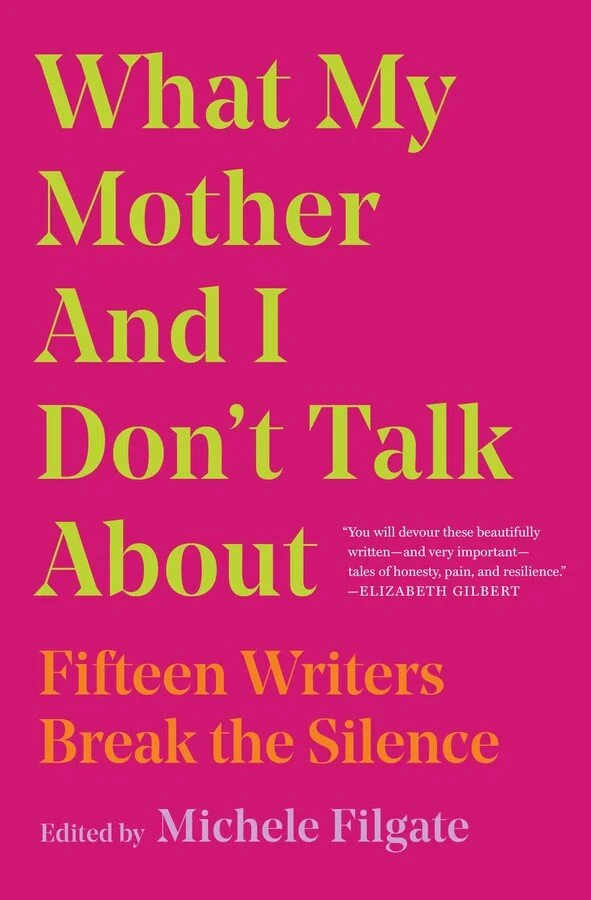
Honeymoon, a short story by David Moloney

It was after I cut Sammy’s hot dog into tiny, non-chokeable pieces, after I’d kicked a pink ball back and forth with Eliza’s sensitive son twice before he scampered off, whose name escapes me now, that I noticed the hosts were playing “Blue (Da Ba Dee)” on the radio. The radio was propped against the kitchen window’s screen, playing from inside the symmetrical home. I searched for you in the yard but couldn’t find you. I guessed you were inside with the clammy grandparents, shading Sammy from the midday August sun when even the leaves turned from it without a breeze, changing his diaper carefully on the living room carpet as deftly as you did on our sectional, leaving no trace a hazardous exchange took place there. You were capable of great parental feats.
So, I’m there at the aboveground pool, checking the water’s temperature with my hand, listening to the insufferable chorus by Eiffel 65. There were half a dozen children on floats and wearing SpongeBob swimmies on their biceps circling the pool in a juvenile attempt to make it whirl. The water’s color wasn’t clear, but opaque; I thought from too much cleaner. I couldn’t see their tiny legs kicking, or the bottom liner’s decorative faux stones. But, in fact, years before you’d enlightened me on why some water clouds, I’d just forgotten it then. It’s funny because I can see it all now the way I want it: clear water instead of milky, the children’s furious strides. Their laughter was contagious, and I laughed with them. The sun was directly above the grassy yard, and as the friends we’d known only after becoming parents ourselves drank sweaty beer bottles and Eliza’s son kept running towards the street, no one had shadows.
The song, I believed, was on repeat. The “da ba dee da ba daa” continued even after you returned with Sammy on your hip, him sucking on a freeze pop. We lived in Lowell then, and that afternoon we were celebrating our neighborhood block party. The Conway’s were hosting that summer and Debbie, the wife, made BLT macaroni salad. I marveled at the complexity of the salad, the layered bowl of cold pasta, romaine lettuce, halved cherry tomatoes, then a crust of maple bacon on top. I watched you ask Debbie for the recipe, and she said frankly, “There’s no recipe, honey. I wung it together!” You popped Sammy up even higher on your hip and nodded. I wanted to know what you wanted to say there. After Sammy there was no telling what you could’ve said and maybe it would’ve been a good thing if you tried.
I went back to the pool to check on the whirlpool and a hairy man chewing a cigar had jumped in and worked his pudgy body against the children’s work, causing a splashing match but the children were outmatched. You handed off Sammy to me and he had dripped red Popsicle juice on his sailor’s romper. I sat in the grass, Sammy on my lap, and I tempered the soft bottoms of his feet on the sharp blades. He winced and cried but I wanted him to know he’d get used to the innocent grass. You ran back over and picked him up without a word to me and I was left alone getting splashed occasionally by the swimmers. You walked across the yard towards the barbeque smoke of the charcoal grill and the incessant pop chorus and the backs of your legs were tanned. I could smell Sammy’s sunblock on my hands and I remembered the same smell from only a few summers ago, before we became parents.
And I remembered saying something about what you’d do for work, or if you’d go back to nursing school, on the beach in St. Thomas, the weekend of our honeymoon. We got drinks: you a Crabbies with a lime, me a mango Island lager. We hadn’t even gone up to our room yet. Our bags sat behind the reception desk in the lobby while we hustled down to the beach, thirsty and wondering how to behave on such a unique occasion. At least, I wondered. I knew how important the weekend was, and was adamant in pretending I was comfortable in leading us through it. The waves were subtle and a man stood ankle deep with his hands on his hips. You didn’t answer me about what your future entailed, or what you thought it should.
A resort worker came to where we were laying out in the sun, racked out flat on orange plastic beach loungers, and told us we needed to pay to rent the chairs. She sounded American, and after I shielded the sun with the t-shirt I’d removed, exposing my northeast mid-winter white skin, I saw she wasn’t indigenous to the island, and was disappointed. You weren’t, and giggled, buzzed, as we left the beach. We double fisted frozen daiquiris and sat along the wall of the wading pool. Iguanas chewed French fries. We held each other and leaned away from their primeval stride. You tightened as one rubbed against your back like a wanton kitten. Then they descended upon a plate of chicken fingers, left alone by a small boy in yellow shorts, and you explained they weren’t indigenous, either. The lizards came as a Belizean delicacy. Your hair was reddish then, for the wedding. I wanted you to say Belizean once more. I’d never heard it before and didn’t think I’d ever again.
Instead, I asked you if you were hiding any more fun facts. You waited a moment and watched a brother and sister on tubes race across the wading pool, dodging a big-breasted woman with curlers in her hair. You told me the water was cloudy from everyone’s sunscreen and pee. You finally ruined the authentic feel of the island: the iguanas, American workers, Cuban daiquiris. Oh, they’re not Cuban! An American invented the drink in Cuba, you explained promptly. You were knowledgeable in ways I wasn’t.
In our room, we laughed about the free hour we got in the chairs, how my shoulders were already burnt, and I rubbed lotion on your naked back, then your breasts and neck. I wasn’t turned on, not because you weren’t sexy, but because I was enacting a clause in my new authority. I was husband first, lover second. Your tender white skin needed cover. But now, whenever I smell coconut lotion, even on a stranger at the beach, or an outdoor swimming pool at a hotel in Austin, I get turned on, and remember your hot skin, the cold sheets, and our unspoiled laughter. I should’ve made love to you over everything else.
That night, empowered by a late afternoon nap, a second round of drinks,we watched a fire dancer stomp cobalt blue glass, twirl pearl batons ablaze. Her thick thighs wiggled during the dance, destroyable tremors of excitement, and her glow-sticked arms wormed through the island darkness. The eventful daytime tiki-huts now turned down, and the indigenous night workers carefree, joined the hotel patrons, watching the flames dance, collected in a mosaic of the here-forevers, and the here-for-nows.
In the midst of the festivity, my side glances at your face, the fire dancer made her way towards me, juggling batons and twirling her long, braided hair.
“You,” she said and though I didn’t dance nor did I get in front of crowds I took her hand like, years later, Sammy would when he got lost in the grocery store and took the dairy manager’s concerned grip as they found me. I felt small and absent, even in the hype, the tipsy crowd cheered as I made my way into the circle. Men on stilts dressed in floral skirts strutted like mantises, towering mantids stalking me like I were a dumb toad. I wanted to kick out their poles and topple them into the pit dance. Instead, I twirled with the fire dancer, and she calmed me by telling me to put my feet on her feet for guidance, and we waltzed as workers doused the coals in water and smoke stung our eyes.
I danced for you. Later, not much later, but after I danced you held me and we sipped salty margaritas. We were sun-burned worse than ever and you rubbed ice cubes on my triceps. I thought about where we would be residing when we returned home, not because I wanted to leave the island, but because the island couldn’t stay with us. We were so new and unprepared, like your mother warned. You were angry I talked about what happened next, but the island couldn’t be it. You weren’t sorry about being naïve.
We awoke to a breakfast buffet and you ate four waffles, link sausage, and six glasses of orange juice. I counted. I counted it all because you ate and drank in hungover silence. Home ownership is dumb, especially in a shit economy. We should rent you said, and I felt then, as I do now, your ambivalence to anything ideal. Your hair looked greasy in the morning sun. We crushed Bloody Marys at the lobby bar. The slunk eyed bartender with a weak mustache told us a storm would pass at noon, so find a covered place to drink. When he moved to the other end of the bar, we agreed to get drenched, to play in the storm.
Tipsy, we stood on the empty beach and watched the storm clouds come for us. You dug your feet into the sand. You pointed, and I saw a snorkeler emerge from the water; he was a large man in a wet suit, goggles, shaking off where he was and where he entered to.
Our last night we went against heeded advice and took a beat up cab to Red Hook, off the all-inclusive resort. We wanted danger. We wanted to escape the comfort, the falsity of constructed waterfalls and blue-eyed staff. The cabby dropped us off in an empty parking lot, and in a French accent told us to wait until dark. We sat on the concrete and looked off in the distance at the orange sun, the pinkish sky, and didn’t talk. There were cruise ships docking near the expensive resorts we couldn’t afford. One ship sounded its horn to the beat of “We Will We Will Rock You.” You grabbed my hand and we kissed like quarrelers, our teeth grinding and clicking.
A crew of t-shirt and jeaned workers backed in pick-up trucks and began unloading long poles and white tarps. They smoked sweet clove cigars and wore dirty ball caps. Rattling tour busses parked at the far end of the lot for the night. More trucks came in and unloaded folding tables and cases of beer, boxes of liquor bottles. More cruise ships sounded their horns in a battle, and you guessed the faintest one was “Hit Me Baby One More time.” You were right, I believed, but I didn’t tell you. Your grasp was tired. Sometimes I could’ve bit you.
We didn’t want to be the first ones at the makeshift bar, so we waited for more cabs to unload. In the island dark, the strung up Christmas lights along the tarp roof glowed brightly. While we walked, you told me to get drunk. Music played and mosquitoes the size of door keys descended on us. Our first drinks were coconut rum and pineapple juice inside a totem pole glass. The faces patterned up the slim, porcelain glass. A sad owl, an angry bird, a cock-eyed man. I rubbed my thumb along the ridges as I sipped. The bartender advised us to rub napkins doused in gin on our skin to ward off the mosquitoes. You didn’t, saying it was a prank. I did, and scratched the welts well after we landed home.
Sometimes, I get sentimental, but only sometimes. When, in an New York city bar, I get a whiff as a waitress walks by with a Tanqueray and tonic. Or, as now, I follow a man leaving a taxi. I feel like I recognize him from somewhere. Years ago, he could have been the one in the wet suit, hustling by us on the beach, as, I remember it, we drank midday rain from the sky, warm drops. If I could have seen behind the goggles I would’ve remembered his eyes. It would’ve been useful now. You seem to be in a place I could never have imagined. A new wave of perception. So far away. A foreign island yourself. But, and I know in times like this one, I once knew you.

David Moloney worked in the Hillsborough County Department of Corrections, New Hampshire, from 2007 to 2011. He received a BA in English and creative writing from the University of Massachusetts Lowell, where he now teaches, as well as at SNHU. He lives north of Boston with his family.
His highly-praised novel, BARKER HOUSE, was written during his low residency Mountain View MFA, where he also received the Assignment print magazine prize. Blurbs for his novel are below. Check out more of his work at https://davidrmoloney.com/.
“At a time when mass incarceration is increasingly a feature of American life, David Moloney’s Barker House isa great and important book. - Tony Tulathimutte, Whiting Award winning author of Private Citizens
“In over thirty years of writing and teaching, I have not witnessed a stronger artistic debut than David Moloney’s; in fact, Barker House does not remotely read like a debut but more as the seasoned work of a writer with enormous gifts.“ - Andre Dubus III, author of House of Sand and Fog
"HERE is a voice to listen to! Moloney's voice is as true as a voice can be. Concise, with the right details rendered perfectly, these sentences come to the reader with marvelous straight forwardness, clean as a bone."--Elizabeth Strout, , Pulitzer Prize-winning author of Olive Kitteridge and My Name is Lucy Barton

Hair, There and Everywhere, an essay by Mary Grace Bertulfo

Outside our bedroom window, the bare crowns of white oaks rock in the wind. Their glossy deeply lined leaves, burnt sienna blended into ambers and fire yellows, had fallen into crunchy piles months ago. Bald, these patient oaks withstand Chicago’s stinging sleet, crystalline ice storms, soot, and diesel particles. I recognize in myself an impulse towards beauty and I am like these naked trees. The trouble is, my hair is falling out. Long wavy black and silver strands lay on our floor, ugly tangles attracting epic dust bunnies. My bare feet pick through a mine-field of the shining, the dull, and the fallen as I tip-toe toward the bathroom.
My spouse, Alan, is down in the basement at his desk, among our dusty bookshelves, near the laundry room that holds eager black and blue luggage and Steampunk cosplay and my parents’ old sweaters which I stole from their closet as keepsakes. We have the privilege of working remotely, though my work has slowed since COVID devastated me with chronic illnesses. I’m upstairs in our bedroom, exhausted by the sight of my own detritus. I try desperately to clean-up before Alan comes upstairs for a break. I want to hide how much hair I’m losing, how much has fallen apart, the physical evidence of my invisible illness. He works so hard, he loves so hard, and I want him to be happy or at least spare him from sadness.
My toes slide in small, quick circles across the smooth floor. They’ve grown prehensile as they do the job of sweeping my hair. The strands, though thin, are strong and unruly and they are tenacious. Months earlier, I’d tried our vacuum. It has a long red extension and so we gave it the jaunty name Ruby Rod after a character in the movie Fifth Element. Through the clear, plastic collection chamber, my fallen hair could be seen wrapping around the core suction part and had threatened to ignite. So, this morning I do the toe-sweep.
When we first got married Alan had teased, “Your hair sneaks into everything!” To a Beatles tune, we sang, “Hair, making its way everywhere.” Sometimes, the lyric changed to, “Making its way…underware?”
Later, when our son was in high school, he’d find my hair tangled in his laundry and among his harp compositions. Alan found wet strands clinging to the drain, rooted in his beard, and knotted in the pockets of his jeans. Black nests of it stuck to the crotch of my fresh, clean sweats. My sneaky, snaky hair meandered into moist, living cracks and crevices. We shall not go into detail.
I remember the years before COVID, when I walked down the sun-filled sidewalks of town, passed mom and pop joints, unassuming cafés, and working art studios. My hair used to weigh on me, like a friend riding piggy-back. I never felt alone. At bedtimes, my hair fell like gentle rain, regular and steady, probably from the heft of it. But now, post-COVID, it falls in gales and blusters. This winter season, I exist in lingering uncertainty. Is this the beginning of the end? Am I catching that moment, the downward slide of my body, my natural disintegration? These questions churn my belly. Alone and my thoughts swirling, I try not to dwell on what I probably can’t change or control. But this biting gray morning, like any small human being who is feeling the edges of her fragility in the universe, I want to know why. Why is this happening to me?
As I squat to pick up the swirls of hair, I can’t help but wonder if what doctors say is true: People can lose hair because of anxiety. Does societal anxiety count? Is my hair falling out from the accumulated toxins of White supremacy? My hair fell when an historic presidential election catalyzed racial hatred and enflamed the nation. In the days and months after the election, BIPOC people in my town were openly spit on, jeered at, cussed out, and stalked by shopping cart. In the forest, I seek solace, solitude, and refuge, and to commune with the senescence of the Trees. Their longevity shows me it’s possible to endure people’s encroachment and violence. I keep half an eye out for White men, men in general, who track my movements and have mean determination in their eyes
Is my hair falling from a lifetime of being belittled and made small by men, those who tell me that my achievements are nothing, those who overlook and interrupt and talk over me and pivot the conversation when I speak about my life? My body desperately wants to forgive the slings and hurts that keep my spirit bleeding.
But what if the reverse is true? Can my hair jump up from the floor and reattach to my follicles from the love of the respectful, kind men in my life? From the courage of my White friends who challenge their families and friends and examine their own complicity? Can I restore my hair through self-love and nourishment? Will the big booming laughter and piercing intelligence of my sisters, cousins, and sister-friends massage care into my scalp? Will their viscous love sink into my pores and penetrate my brain, transform my chemistry, and change my consciousness enough that my hair grows back, a shining cascade, a moonlit waterfall?
The sight of random chaos on the floor snaps me back to this morning and the task at hand. Music clicks on and my toes swirl black and silver strands into some semblance of order. Bouncing baselines and synthesizers, the tsssking of a brass top-hat, and a man’s phlegmy alto fill our bedroom. Lord Nelson, self-proclaimed bald-head Rasta, could no longer grow dreadlocks which are a symbol of Afro-centric resistance to European colonialism in the Caribbean. He sings that his dreads grow on the inside. He carries his resistance with him, even if his dreadlocks don’t show. Lord Nelson’s soca beats make my feet kick up the dust on my floors.
By now, my toes have swept a dozen or so tangles of hair into jumbled circles. Combined, the springy black mass is the size of a tennis ball and piled into my cupped hands. What if all my hair falls out this year? Like Lord Nelson, will my spirit-hair, my hair which resists the forces of hatred and greed in the world, start to grow inward?
As I squish the hairball between my palms, I step passed our bathroom medicine cabinet and avoid looking in the mirror. Inside, plastic amber bottles stay hidden. Medical explanations drift like January’s snowflakes into my mind. My incisive immunologist said, “COVID also makes people’s hair fall out.” People in my online Oral Allergy Syndrome (OAS) group talk about how their hair falls out in clumps due to our severe food allergies. My Xolair injections keep me breathing and enable me to live as an, albeit limited, outdoorswoman. But the prescription warns that this medicine might make my hair fall out, too.
The time comes to finish the task, for me to say goodbye to this harvest of the fallen. The lid to our small metal trashcan opens and I brace myself. The bathroom trash is full and the top two-inch layer is my hair. Words like “ugly” or “aging” blast like memes. I try not to judge myself for the ravages of social inequity, viruses, and life on what was once my crowning glory.
When I toss the new hairball in, the lid won’t shut. The hair-ball props the can open and long black tangles spill over like stray bangs or a wild monster-tongue. In the slant of morning light, it looks like the trashcan has come alive. Like a Muppet, it could grow eyes and start speaking in a grouchy, friendly voice. A delicious giggle shakes my whole body. I can get so serious about my hair and about the world’s entanglements. Outside, the Trees’ bare crowns shiver with the wind.
Inside, I dare to look at my reflection in the bathroom mirror, at a woman in black and white striped pajamas. It’s hard to tell her age but probably somewhere in the middle years. The woman is naked of make-up, her hair pulled back in a loose pony tail that’s hanging down her back the way it did when she was six. She’s never been able to control her hair, it was always escaping flower-shaped clips and tweaking in formal pictures. Her hair liked to play tricks on her vanity. But her liquid eyes are warm and hers is a variety of a Filipina face. She sees her grandmothers, her Lola Racing’s kindness behind her eyes and Lola Mading’s love for community in her bold curves. And I notice, despite being frayed, the woman is still standing, a forest unto herself.
Assessing myself with tenderness, one truth arrives. I don’t know if I’ll ever regain my hair. But maybe I’m learning to surrender to the larger moment. I can picture a single strand of my hair falling, wiggling in slow motion, and pray over it and say thank you for the beauty and warmth it provided during our time together. To stand in a moment like this is to embrace the parts my mind has labeled as “ugly” and, if patient, to notice what has endured. If I stand, quiet and vulnerable as my friends the Oak Trees, I start to recognize a glimmer, a golden molten glow, that wasn’t inside before. Despite, or maybe because of, my suffering and loss, a new sense of confidence is growing. There’s a living inner strength that doesn’t need to shout about my own beauty. To bear witness this way is an exquisite act of self-compassion. My Tree Friends have been good teachers.
Mary Grace lives and writes at the intersection of nature, culture, and spirituality. She has written professionally for television and children’s education in such venues as CBS, Pearson Education Asia, and Schlessinger and for conservation magazines such as Sierra and Chicago Wilderness. Her award-winning fiction has appeared in Growing Up Filipino II, Our Own Voice, and The Oak Parker and her essays have appeared in various anthologies. She is a co-owner of Calypso Moon Studio, a working arts studio, in the Oak Park Arts District. Mary Grace is a member of the international N.V.M. and Narita Gonzalez Writers Group, the Historical Novel Society, New Moon Mondays, and the Acorn novelist workshop. She has served on the board of the Oak Park Arts District and was a local network rep for the Society of Children’s Book Writers and Illustrators. In 2017, she founded Banyan, an Asian American Writers Collective whose mission is to promote the visibility of Asian American Writers in Chicagoland and to uplift community spirit through the arts. She is a recent alumna of the low residency Mountainview MFA, where she was an Orion scholar.
Assignment:
Write about something in life that you/your character learned from more-than-humans, the Animal and Plant kin who share the Earth with us.
Extra credit: Self-compassion—Thank your body for being of benefit to you and the universe.
This Hyphenated American Reading Life: January 2022
This Hyphenated American Reading Life continues a wonderful monthly series where a previous online editor, Aaron Calvin, recommended essays and fiction from around the web. In this rebooted series, Web editor Chaya Bhuvaneswar recommends short stories specifically, and focuses on stories of interest to BIPOC and queer communities.
‘Antarctica’ by Laura van den Berg
This story, not just about a sister searching for her brother’s remains and personal effects after he dies in an accident, but also about the impact of secrets in his life and hers, was my first introduction to Laura van den Berg’s beautiful work. I think a sense of the mysterious is what brings me back to this story – a bona fide sense of the mystery of other people, that is an earned mystery through a distinct level of alertness conveyed by the narration of the story, an alertness that is a characteristic of this writer’s other work also. We are not fully knowable to each other, the story (and many other favorite stories) reminds us.
First published in Glimmer Train 88, Fall 2013, and collected in The Isle of Youth, FSG Originals, 2013
‘All Stories Are True’ by John Edgar Wideman
I think he is one of our greatest living writers and adore the way he has drawn fearlessly on autobiography, including devastating events (incarceration of loved ones, repeated losses) to write his fiction. I learn constantly from his transmutation of reality into fiction, his precise, original, utterly compelling calibration of how much truth to tell. Also, the lyricism of that first paragraph, in particular sentences like: “Footsteps, voices, a skein of life dragged bead by bead through a soft needle’s eye.” There is something in the scope of this first paragraph reminiscent of James Agee and yet completely original and specific to Pittsburgh, the natural world a respite rather than pervasive in this setting.
First published in The Stories of John Edgar Wideman, Pantheon, 1992, which was republished as All Stories Are True, Vintage Contemporaries/Picador, 1993
‘Every Time They Call You [The N-Word]’ by Chris Stuck
I believe strongly that non-Black reviewers should not use the full slur word here because that word is not a part of our earned history and not ours to just use as we please. (As Helen Oyeyemi reminds us in one of my favorite book titles, What Is Not Yours Is Not Yours). I brace myself, however, for the people who talk about this story, and this collection, who take it as an opportunity to use the hateful word. For some people, hatred is titillating. The story, though, opens out into a psychological terrain that is at once familiar, dazzlingly new, and operating wholly on its own terms. There is a real authority to how this story is told that made me love the collection as a whole. In terms of what I gained though, the main point for me was a reminder of what #OwnVoices means. Movements through time, selection of the most significant events, development of the ending and what constitutes an ending, what should be written as a story versus a novel – this story violates almost every implicit rule of the MFA workshop, and in doing so, completely soars.
First published in Meridian, Summer 2019, and collected in Give My Love to the Savages, Amistad, 2021
‘The Price of Eggs in China’ by Don Lee
I tell everyone I teach writing to about this story. It really has everything I love in short fiction – a completely gripping protagonist whose perspective is conveyed in a close, often sly third-person (Dean); a unique and wholly convincing take on race; a send-up of white publishing gatekeepers (who aren’t characters in the story, but figure in the tale indirectly); and (perhaps most importantly) a dissection of the frenemy status of women of color, the tension between sisterhood and competition because of how publishing sets up the “only one story” model of ethnic literature that has so rightfully been criticized by many writers I admire. Also – and this may be the key component – it has the right kind of, very smart happy ending and gets me with the little flavoring of sentiment I love (that I also look for when I read commercial fiction).
Published in Yellow, Norton, 2001
‘Delicate Edible Birds’ by Lauren Groff
I knew I had to include a story by Lauren Groff in this personal anthology because her level of narrative control and respect for her characters as people has stood out to me as I have read stories that influenced my own. But also, at the level of history as it impacts individuals, and for the way it dissects how much patriarchal perspectives survive even in the most extreme circumstances – this is just a great read. Lauren Groff never forgets the reader in how she writes, in terms of creating genuinely suspenseful stories even as her attention to language could not be more diligent or (often) lovely.
First published in Glimmer Train 70, Spring 2009. Collected in Delicate Edible Birds, Hyperion/Windmill Books, 2009
‘The Years of my Birth’ by Louise Erdrich
I first heard this story while driving and forgot to take the correct exit, I was so engrossed. It was read out loud on the New Yorker podcast by Tommy Orange, along with his commentary on the story and its characters, and I found this indelible. The story is about a woman who late in life encounters the family who gave her up for adoption. The rendering of their cruelty to her is vivid; their rejection of her not confined to a single act, but enacted over a protracted period and in evermore, newly cruel ways. The striking twist of the story is that she is white, adopted by a Native American family, and that her physical disability renders her Other to the white family of origin in ways not entirely dissimilar to how they regard Native Americans as Other and as inferior. The sensitively drawn comparisons between these ways of being Other are fascinating in the story, which taught me, as a writer, that no one gets to decide how much is too much for a story about marginalization and resistance. No one gets to cut down multiple identities to just a single one that a hegemonic white audience can somehow more easily deal with.
Published in The New Yorker, January 10 2011, and available for subscribers to read here
‘Hell-Heaven’ by Jhumpa Lahiri
She is such an important short story writer, really very dexterous and able with a few strokes to make a story feel perfectly polished and neat. Yet this was one of the first and few stories in first person, told by a narrator looking back in time, that I think I read of hers (it came out in the New Yorker before being included in the book, and I was immediately moved and affected by it). I love the way Jhumpa Lahiri can convey pain and suffering beneath surface elegance – the woman wearing a lilac raincoat (chic, carefully chosen, belted and fitted of course) while standing in her backyard about to immolate herself. The story also offers such an honest and unsparing look at some of the dynamics of pseudo-family, community as family, immigration as a bond. That felt really new at the time though I think a lot of writers since have taken this in different directions.
First published in The New Yorker, May 24, 2004, and available to subscribers to read here. Collected in Unaccustomed Earth, Knopf/Bloomsbury, 2009
‘Why I Live at the P.O.’ by Eudora Welty
This was the first short story I read in my first ever fiction workshop (as an undergrad, with the head of the creative writing program, who intimidated me at first but was ultimately such a nurturing influence on my work). We were assigned to read this to learn about the concept of the unreliable narrator and I know this is how most of us use this story to teach in workshops as well. And yet there is so much more than unreliability – there is orneriness, petulance, hope, jealousy, even a kind of greed, including greed for the comeuppance of other people. All within the small space of a family, and all started (the story behind the story goes) by Eudora Welty spying a photograph of a woman doing her ironing at a set-up behind a local post office.
First published in A Curtain Of Green, Harvest Books, 1941. Printed as a Penguin 60 in 1995, and currently available in The Collected Stories of Eudora Welty, Houghton Mifflin Harcourt, 2019. You can hear the author read it here
‘The Lazy River’ by Zadie Smith
There is such skill in how the anger and moral outrage is contained, such a careful, precise and measured approach to how and when that anger is expressed – but it is there, I did feel it. Maybe in the lines:
Down below, the Lazy River runs, a neon blue, a crazy blue, a Facebook blue. In it stands a fully clothed man armed with a long mop—he is being held in place by another man, who grips him by the waist, so that the first man may angle his mop and position himself against the strong yet somniferous current and clean whatever scum we have left of ourselves off the sides.
This story teachus us how to keep the reader’s attention to submerged meanings, awareness of ostensibly peripheral experiences, actually right at the forefront – to keep the reader tense and vigilant. I also was more aware of the language of the story, its old-fashioned elocution and elegance, in comparison with a lot of other work I read, and was glad for it.
First published in The New Yorker, Dec 11 2017, and available to subscribers to read here. Collected in Grand Union, Hamish Hamilton, 2019
‘Our Language’ by Yohanca Delgado
I know the author from a writing group, so read this story with pride but was also uniquely moved by it – how I had met the author when she came to my reading in 2018 and then met her again at the writing group and now was reading this gorgeous story to emerge from all the hard work she did in between. Four years on a single story makes complete sense to me. Here is what I wrote to her about this story:
I LEGIT cannot get your story from A Public Space out of my head. It’s so incredibly sweet, deft, haunting, all the elements of mystery, suspense, legend, history, plus that person’s voice (a person, definitely. Not a “creature” except also a creature – the image of “sea grave”, the teeth, etc). Melancholy, loving. The intense magic of the voice that lives in between the strangeness of a creature and the authority (and love) of a grandmother. The self conscious “anthropology.” There is a layer of sophistication belied by the clarity/ simplicity of the language. It. Will. Last. I know it. What brings tears to my eyes is how reading it influenced me to cherish my own work in a different way. : )
first published in A Public Space #29 and available to read here)
‘The Husband Stitch’ by Carmen Maria Machado
I read this online when it appeared in Granta and immediately was charmed by it, though also so intrigued, because nearly all the stories mentioned within this story, as well as the frame story (a woman with a ribbon around her neck, no spoilers here!) were all literally taken from a book called Scary Stories that any parent of an elementary school or middle school child will know. I am so intrigued by that. None of these stories were original. Yet all are re-imagined in a completely original, literary, compelling way – i.e. like writing a story about Law And Order: SVU which this writer has also done. But it is not out of reach, for anyone, to be inspired by material like this. This is a talent that is besotting as well as making it clear that when we use material at hand, memorable and renowned stories can result. But literally. I know little kids for whom the story about the mother replaced by the stranger with a glass eye and wooden leg were unreasonably frightening. So deeply troubling and frightening. There is a way these Scary Stories and the other scary stories (the violent crimes against women portrayed in Law And Order: SVU) become new and unprecedented myths around which to build stories – no less powerful than myths about Circe, Medusa, Daphne, which several of Carmen Maria Machado’s stories also evoke.
First published online in Granta in 2014 and available to read here. Collected in Her Body And Other Parties, Graywolf/Serpent’s Tail, 2019)
New Poems by Maya Williams, the Poet Laureate of Portland, Maine

Put Them in the Back
The board shifts to my brother’s side on the poinsettia designed table cloth covering Reece’s kitchen table. It’s his third turn in Scrabble. For thirteen points, he puts down the wooden letters for D E A T H.
Earlier in the day, St. Peter’s First Parish Church was our destination in my grandmother’s white Impala. A beige brick Episcopalian church made in the 1690s. It’s where Martha Washington married George.
Upon arrival, we’re greeted by a cemetery.
Ugh, this is so depressing, they ought to put them in the back, remarked my brother.
I asked him why it’s so depressing.
My sister came to his defense, It’s just what he thinks. Leave him alone!
When I asked him if visiting PaRich’s grave was depressing, my sister interjected again about the difference between an aesthetic and a feeling.
PaRich has been buried at Second Liberty Baptist Church, a church with a Blacker history than the First First Lady’s, since 2008. Something about one gravesite to visit behind a house of worship amongst others makes it all feel different.
Her Facebook profile photo is a selfie with her and PaRich’s tombstone. I don’t believe my sister is depressed by death.
But I do believe she’s anxious.
Our grandmother becomes smaller and more fragile each time we hug her. PaRich will share his tombstone with her. Although no sunset date is inscribed yet, my sister feels Death inching closer and closer.
My brother says it’s her turn to put a word down and she’s still squirming.
When I Die
after Danez Smith
My family wants me in a casket.
Hair as flat as the eternal wooden bed
for my body.
Lips and cheeks painted.
Hopefully well.
But who doesn’t love a good break from tears
through laughter at the clown you once knew
at a funeral?
**
On Family Feud, Steve Harvey asks
the contestants to name the type of news
that may be happy and sad at the same time.
One of them grinned, smashed the buzzer, and shouted, Death!
**
Long sleeve fitted dress
Embalmed.
Empty.
I want to be bald
before I’m cremated.
I was bald when I was a baby,
the last time I was
my true self.
**
On a writing retreat, a woman and I
find lichen covered stones largely encircling one small bush
in the middle. The woman immediately thinks of a stage.
I immediately think of a memorial.
**
Do I want to die before my family?
Or am I waiting for them to die
so I can finally be my full true self?
As much as my mother warns me to sit
and stand
up straight
it is difficult to disclose to her
how my family
is the cause
of how often my shoulders
sadly slouch.
My therapist once said,
“The mind may tell lies,
But the body always tells the truth.”
I don’t want to wait until I die
for my shoulders to let loose and let go.
My mind says, You should love your family better
My body says, Loving your family hurts.
I Don’t Know If This is Accurate, I Only Know We Won’t be in a Single File Diagonal Line
after Anis Mojgani and Heather Christle
Ain’t no need for social distancing on the way to heaven yet folks are spread out waiting their turn to get inside. When you arrive, you feverishly blink at least ten times as you swivel your head around, bewildered.
The waiting room looks like a blue sky that contains everyone as a prodigious ceiling, floor, and set of walls like an omnipotent cube. Cirrus and cumulus forms pass through in succession. Some people sit on them. Some play with others like swords and shields.
You wonder if they were this playful on Earth.
In this cloudy abyss of a waiting room, you see a few toss around a frisbee.
You interrupt their game. I thought we couldn’t take things with us!
You wonder how that appeared if atmospheric blurs had to be used as furniture.
One of them chuckles. Thought we’d have one more go beforehand!
Fair enough. They might be good company when we’re allowed in.
There is no specific temperature where you are.
Thought it’d be warmer.
There is no tension in your shoulders, no headache, no itchy scalp to prep for a wash day. You lift your right arm up. You don’t care how conspicuous you are. It is a comfort to realize that you don’t have to worry about a shower for all eternity.
You see some folks naked as they’re running, dancing, or reading a book in a corner. You assume that wherever they got that is the same place where that crowd got their frisbee. You and others are clothed; probably because that’s how you all would be the most comfortable.
You overhear a conversation of people seated cross legged in a circle:
Someone asks someone else What got you here?
And they say I don’t need to talk about that.
C’mon, there’s no point in keeping secrets now!
Fine! Anaphylactic shock. You?
Cancer.
Well yours sounds a lot less embarrassing.
What do you have to be embarrassed about?
I don’t know. I didn’t think I’d be here so soon.
It’s not like the people who saw you react will ever see you again!
To change the subject, they turn to someone on their right. How about you?
I was asleep and just woke up here.
You wonder how many times you can blink.
You didn’t just wake up here.
You remind yourself the same.
I didn’t just wake up here.
Like everyone else, I came here on purpose. We don’t have time to specify which purpose anymore.
Then you wonder why you need to blink if you don’t have to worry about hygiene. Then you wonder if you can blink, can you cry. Then you wonder whether you’re here waiting for Jesus to come back or if you’re just waiting to start your afterlife immediately as which reason for you to cry. Then you wonder if you need to cry. Then you wonder if anyone else around you needs to cry. Then you wonder if any one of you wants to cry.
Can I only cry while waiting to get inside?

Since July 2021, Maya (follow on Twitter @emmdubb16) has been Portland, Maine’s seventh
poet laureate. You can register for the current programs available from now until the end of June
2022 here: https://www.portlandlibrary.com/events/poetry-across-maya-williams-myri-u-2022-
01-08/.
63WPM: an essay by Kelsey Francis

The typing test was mandatory. My score: 63 Words Per Minute. The temp coordinator, a tall middle-aged woman with a long face told me the good news—my typing skills were fast enough to work in “serious” office environments. I could make coffee, answer phones, data entry and organize files. On a slip of yellow paper, she wrote the address of my first placement. Chrysler Credit Agency, just north of Baltimore.
“If it goes well, they might keep you for the rest of the summer. You’ll have three weeks to prove yourself.”
It was 1995, I was only 18, the summer after my freshman year of college, and I didn’t own any professional work clothes. Until then, my only summer jobs had been squirting artificial butter on popcorn at a movie theater and chasing screaming kids at a summer camp. But my paychecks from movie theaters and summer camps were so small, I barely had enough money to buy the books necessary for my first year of college.
I grew up in a suburb of Washington, D.C., that had once been little more than a corner store surrounded by farmland. My father’s parents and grandparents had been chicken farmers in this now suburb, but due to economic downturns in the poultry market, they lost more and more of their farm to housing developments and powerlines. For almost my entire childhood, I lived in a small brick townhouse with my single mother one mile from giant single family homes with stone facades built on what had once been my great grandparents 200 acre farm. The main road that cuts through the neighborhood of McMansions still bears my family’s last name.
As a single parent barely making ends meet on a public school teacher’s salary, my mom laughed and laughed when during my senior year of high school I asked her how much I had in my college savings account.
“Your college savings went to feed you and put a roof over your head.”
I hadn’t needed to ask my mother about a college savings account. I knew the answer. But I asked anyway because I needed to hear it. Hearing her say there was no money and I’d be relying on student loans made it an incontrovertible fact. I could stop pretending I was like my friends who came from two parent households and didn’t share a wall with their neighbors.
When I went to freshman orientation at the one state school where I had been accepted, I signed up for my first credit card at a booth set up in the student center. A guy who looked like Jared Leto in My So Called Life helped me fill out the paperwork and told me he liked my silver earrings. He could have taken anything from me and I would have given him even more.
My Jared Leto look alike told me I now had a 5,000 credit limit and handed me a small blue cooler as a free gift. He smiled. “You’ll need this for tailgating.”
By the end of my freshman year, I had lost the beer cooler and racked up 3,000 dollars in credit card debt buying books, gas, and late night pizza. When the college forwarded my mail home at the end of the year, my mom opened the credit card bill.
“What are you going to do about this?” She held out the bill. There was no way my $4.65 an hour popcorn popping and $5.25 an hour kid corralling were going to cut it. I needed a summer job that would get me out of debt and allow me to save for sophomore year.
“Start looking in the newspaper. If you don’t find a better job this summer, you’re digging yourself a hole you’ll never get out of.” The advertisement for the temp agency said the starting rate was $7.25 an hour.
***
To prepare for my first day of serious office work, my mom took me to JC Penny and bought me various shades of beige pencil skirts and an array of navy blue blouses. I wore concert t-shirts and oversized sweaters, not blouses. She called this beige-navy combo an “office uniform.” She also told me that to complete the uniform, I needed to wear pantyhose. From her dresser, she retrieved a pair of Sheer Energy Natural Tan L’eggs in an egg shaped container and plopped the plastic ovum into my hand. “You’ll hate them, but they’re part of the uniform.”
The credit agency office was an air-conditioned fourth floor sea of cubicles in an office park of buildings made of glass. Inside those cubicles were women who all seemed much older than me and with hair so frosted, teased, and sprayed, that when I stood up from my desk, the tops of their heads looked like framed dandelion puffs. We were a Ladies Legion of Car Loan Processing Specialists.
My supervisor, Rob, a red-faced and perpetually angry middle-aged white man, sat in the cubicle behind me and wore an early version of a hands-free phone headset. All day he yelled over that headset about missing or late loan payments and screamed threats about repossession. Every day after lunch, Rob’s voice became hoarse and everyone he spoke to or about became a “piece of shit.”
A typical customer phone call went like this: “You want your wife to keep that Neon, don’t you? Well, you’ve had 90 days. I’m tired of calling you Mr. Winston. I don’t want to send Doug to your house, but if you can’t get your shit together and pay us the money you committed to paying us, he’ll be showing up. Remember, you signed that paperwork.”
While Rob yelled at customers over his headset all day, I entered car loan application details from around the region into a grey desktop computer. I sat next to a giant fax machine spitting out loan applications on glossy paper that curled like vegetable skin from a peeler. I took the facsimile applications and transferred customers’ financial information into my computer. I was efficient and Rob noticed. “You’re a quick one, aren’t you?”
The office was freezing, so by the second week I started wearing a beige cardigan over my navy blue blouses. I also started noticing a trend: lots of people making far less than $25,000 were buying luxury cars that cost well over $50,000. The loan was always approved. The customer was always happy and my supervisor was always angry by noon.
At lunch, in the windowless employee break room, I asked my desk neighbor, Linda, who seemed the youngest of the legion, why the company kept approving loans for people who probably wouldn’t be able to afford the payments in a few months. She laughed as she stabbed a fork into a giant cobb salad.
“Owning a Dodge Charger is a dream come true, hon. You gotta let people have that dream even for a little while,” Linda said.
On the last day of my three week trial run, Rob brought in powdery white gas station doughnuts. He said I would be missed. He told me my quick typing skills meant more people got their loans. Apparently, I was helping people get behind the wheels of their dreams. He told me that if I didn’t want to return to college in the fall, he would give me a full time job in a second. My starting salary would be $18,000 and I’d get the employee discount when I wanted a new car. “I saw that junky Fix Or Repair Daily you drive.” He spelled out the letters, F-O-R-D and laughed at himself.
I said no thank you to the powdery doughnuts and to the full time job.
As I walked toward my car in the parking lot at the end of the day, Linda caught up to me. “I can’t believe you turned down that employee discount! That offer would have been a dream come true when I was your age.” Over our break room lunches, I had learned Linda was 28 and had worked for Chrysler Credit for 10 years. She had been getting a new car every two years thanks to that employee discount.
“I took this temp job to get out of credit card debt from college,” I confessed.
“Oh, I get it. Your parents want you to go to college so you can make more money, right?”
“Yeah, I guess.”
“I thought about doing that too. But I would have needed a bunch of loans. I’d been broke before I even earned my first paycheck!” What I didn’t know is that Linda was right. I was currently broke and would stay broke. Three years later, when I graduated from college in 1998, I had 27,000 dollars in student loan debt and $4,500 in credit card debit.
On my drive home in the rusting 1986 light blue Ford Tempo I had bought off of my grandparents for 500 dollars and that rattled at speeds over 55, I wondered if I had made a mistake. My dreams were absent of wheels and horsepower. Instead, they were filled with words and paper. Maybe I could frost my hair and learn to like my red-faced angry supervisor.
***
At home, I peeled off the borrowed pantyhose and told my mom about the job offer. I was now wondering if I should have accepted it. She was reading a book stretched out on her bed while I rambled on about the salary and my shitty car. What if I just took a year off from college and worked there? I could afford a new car!
“Don’t type so fast in your next placement,” she said. She licked her finger and turned the page of her book without even looking up. She knew the allure of an employee car discount. She knew the burden of my student loans. She knew the dangers of credit card debt. She knew that despite all of these things, I needed to return to college in the fall.
She knew me.
I stopped wearing pantyhose for the rest of that summer and when the temp agency placed me for a two-week stint in a corporate defense attorney’s office, I took my time when typing file labels. I was slow to answer the phone and screwed up a dinner reservation. I returned to college in the fall driving my shitty rattling Ford Tempo and used my 63 words per minute skills for a short story about a very unprepared young woman trapped in an avalanche with nothing but a fork to dig herself out.

Kelsey Francis is a high school English teacher living and writing in the Adirondack Mountains of upstate New York. Her essays have appeared in Adirondack Life Magazine, The Washington Post, the “Modern Love” column of The New York Times, and elsewhere. She was a 2020 Anne LaBastille Memorial Writer in Residence, a North Country Public Radio Howl Story Slam finalist, and a teaching fellow with the 2020-2021 New York Times Teaching Project. She is working on her MFA in creative nonfiction in Southern New Hampshire University's Mountainview Low-Residency program. You can follow her on Twitter @ADK_Kelsey. Credit: Photo by author.
Flower Ball, a photograph by Allison Stalberg
Allison took this photo at the Kobe Herb Garden in Japan, also known as the Nunobiki Herb Garden. The lovely grounds sit on Mount Rokkō and exhibits over 75,000 herbs among its greenhouses, cafe, museums, and exhibits.

The Chicano in You, a short story by Daniel Olivas

The first time Javier Zambrano experienced it, he was four years old. JFK had been assassinated the week before, and the country was still in the throes of mourning, Roman Catholics like Javier’s family suffering this violent loss more than others.
Javier stood still, silently watching a stray calico cat carefully make a path through the succulents that lined the fence in his abuelita’s backyard. The Los Angeles sky was clear save for a few fainthearted clouds, the midday temperature already hitting eighty degrees even with the sun sitting low in the sky, the same sun that warmed the boy’s back through his favorite faded green T-shirt. The calico, suddenly sensing Javier’s presence, stopped its progress, its left forepaw frozen above a level patch of grass, and set its eyes on the boy. Javier smiled, wondering what it would be like to creep through his abuelita’s plants with such perfect control, one paw at a time.
And then it happened.
Javier blinked, the low-hanging sun, now in his line of sight, making the long shadow of a figure jut toward him. Who was that? A boy, like him. Wearing the same faded green T-shirt he wore. Javier blinked again, realizing that he was much closer to the ground than before. He looked down and saw one white and orange paw firmly on the ground, the other lifted before him, frozen in mid-step. Javier looked up and recognized the boy as himself. A wet foam of fear covered him, and he closed his eyes as tightly as he could. When Javier opened them a few moments later, his line of sight had returned to where it had been, sun at his back, and he was watching the calico.
Over the years Javier gradually learned to exert some control over his ability, but that control was far from perfect. First, he learned that he could not enter a person—or animal—he knew too well. Too much connection seemed to block his ability, although he certainly had tried—especially when his father beat him. Second, Javier could use his ability no more than once a year, and even then only if everything fell into place perfectly. Third, while in another person or animal, he retained some measure of control while enjoying the particular skill, knowledge, and experience of his host. And perhaps most important, Javier discovered that he could remain in another being for months at a time while the real Javier went about his life as he would normally.
As the decades passed, Javier grew more cautious with the targets he chose, honing his ability as if in preparation for a great goal, a history-altering finale. For he’d learned while in college that he could use his ability not only on people he met or saw from afar, but also on those he encountered solely through television, radio, magazines. Another lesson Javier learned: never could he aim his ability at a target with intent to cause harm, gain a selfish advantage over others, or fulfill carnal desires. That’s not to say he didn’t try; Javier was no more perfect than you or I. But once he knew the restrictions of his ability, he aimed to stay within those constraints, feeling a bit chastened and quite embarrassed by his failings as a person.
So, over the decades Javier went to college, married and divorced quickly before the age of twenty-five, then twenty years later married Celia Norte, who had sole custody of two teenage boys from a previous marriage. Javier worked several jobs until settling on a comfortable career with the city’s building permit department which, combined with Celia’s salary as a paralegal for a large law firm, allowed them to purchase a lovely 1923 Craftsman house northeast of downtown that kept their commute within the realm of reasonable as the boys attended Loyola High School.
But he kept his ability a secret from his beloved Celia—and everyone else, for that matter. Throughout the years, before and after he had married, Javier had experienced many remarkable things: flying through the Los Angeles skies on feathered wings and in the cockpit of a Cessna Skycatcher; lecturing two class sessions of a course titled “The Oceanic Imaginaries: Postcolonial Literatures” to graduate students at UCLA—despite majoring in economics while in college; conducting Mahler’s Adagio Symphony No. 10 at Walt Disney Concert Hall; fabricating thin sheet metal products that eventually became rain gutters, outdoor signs, and ducts for heating and air-conditioning; delivering three babies in one day.
His wife never suspected that he possessed this special ability—of course, how could she?—but Celia was particularly impressed by Javier’s rather eclectic and precise knowledge of airplanes, music, literature, sheet metal, and medicine, to name a few of the many interesting subjects Javier could opine on. She had married a savant, a kindhearted, sometimes distracted savant.
And Javier grew accustomed to his ability, figuring it would be something he would utilize until his death. But one night he realized his ability had a purpose beyond self- improvement and experiential diversity.
Javier and Celia lay in bed as talking heads on television gesticulated in an almost disoriented manner. When the stunned commentators called Pennsylvania, Celia could watch no longer; she had fallen asleep weeping, her face partially buried in her pillow. Javier still stared at the screen. Celia had predicted that this could happen—she could see the momentum—but until this moment Javier had optimistically believed that America would never, ever reward such a man with its highest prize. After all, this was a man who had based his candidacy on a promise to build a great wall to keep Mexicans—criminals and rapists, to use his words—out of the United
States. People like Javier’s long-dead abuelita, one of the kindest souls he had ever known. No! Not in Javier’s lifetime. Never, ever.
And when the networks called Wisconsin—giving that man enough Electoral College votes to become the forty-fifth president—Javier knew the identity of his next target. This would be the greatest test of his special ability. It would require control, will power, a resigned acceptance that he would be away from his family for four or even eight years. But Javier had to do it. He had no choice. It would be Javier’s one heroic chance to make America great again.
***
From How to Date a Flying Mexican: New and Collected Stories (University of Nevada Press, 2022).
First published in Roanoke Review (2020).
© 2020 by Daniel A. Olivas.
Reprinted by permission of the author.

Daniel A. Olivas is the author of ten books and editor of two anthologies. His books include How to Date a Flying Mexican: New and Collected Stories (University of Nevada Press, 2022), The King of Lighting Fixtures: Stories (University of Arizona Press, 2017), Crossing the Border: Collected Poems (Pact Press, 2017), and Things We Do Not Talk About: Exploring Latino/a Literature through Essays and Interviews (San Diego State University Press, 2014). Daniel's plays have been produced for the stage and readings by Playwrights' Arena, Circle X Theatre Company, and The Road Theatre Company. Widely anthologized, Daniel has written for many publications including the New York Times, The Guardian, El Paso Times, Los Angeles Times, Los Angeles Review of Books, Huffington Post, High Country News, La Bloga, BOMB, and the Jewish Journal.