Author spotlight: Hilary Leichter

Hilary Leichter is the author of the novel Temporary, which was shortlisted for The Center for
Fiction First Novel Prize and was a finalist for the NYPL Young Lions Fiction Award. Her writing
has appeared in n+1, The New Yorker, Harper's, and The New York Times, and she has received
fellowships from the New York Foundation for the Arts, Yaddo, Leipzig University, and the Folger
Shakespeare Library. Hilary teaches at Columbia University and lives in Brooklyn, NY. Her next
Be Vanilla, a personal essay by Derek Allard

Be Vanilla: Recommendations and a Bit of Ra-Ra Advice
for Those Embarking on a Low Residency MFA
by derek allard
When approached by family or friends, who will mean well, but will ask the dreaded question: “Hey, how’s the writing going?” I offer you the following advice: Be vanilla in your answer. I suggest an uninflected “fine,” or, my favorite, the “meh” accompanied by a dismissive head shake. This will send a clear message: not now. You’ll be saved. Don’t ever be so glowing or arrogant as to say “You know, it’s going really well!” This will only bring damnation upon you from the divine muses and you’ll be rewarded with follow ups from Uncle Eno or your friend Jude such as “Ah, that’s great! What are you working on?” Now things get dicey. Now you’re in the weeds. How do you explain that you’re writing about, say, a porn shop turned child education center? How do you explain that you’re writing about, say, Garfield and Odie imprisoned in a basement created by Jim Davis’ mind? Who will understand this? No one. Not Uncle Eno. Not friend Jude. Similarly, do not grow too gloomy or too morose. This will solicit questions about your mental health, which, admittedly, because you have chosen this path, has already declined precipitously. Be vanilla.
But what if they are asking with a genuine interest? What if—No! Let me stop you right there. A genuine interest? My goodness, what could be more horrifying? Your job now is to never tell the truth. Except in your writing. You’ll never be vanilla again. Your highs will be too high. Your lows will be too low. But be vanilla with them. Because if you’re not, these conversations continue. Worse, there will be lulls and you will fill these lulls, trust me, with one or more of the following admissions:
• That you’ve sped to the library, frantic, sweating, but certain osmosis will work.
• That you’ve bought out all the inspirational writing books from your local book store. That you’ve read these books. That you’ve clung to them. When this happens, know that you’re sunk.
• That you’ve come to believe with religious fervor in lucky rooms, lucky chairs, a lucky writing hat that crushes your head, lucky socks.
• That you keep long, and I mean long, psychologically unbalanced long, lists of noteworthy words, and even worse, you read them, over and over convinced they will “affect” your writing. Will they? One can hope!
• That you’ve proudly read one hundred pages a day in a self-deceiving effort to avoid your writing. When this happens, know that you’ve flipped upside down.
• That chores, long abandoned, have become a thing of unequivocal national importance: laundry, washing windows, repairing that busted toaster that’s been in the basement since 2004.
• That you loathe the Times New Roman font with a near demonic fury. That you’ve spent hours, if not months, searching for the “right” font that will make everything better.
• That you proudly tell everyone you keep to an exact writing schedule yet fail to mention your 1.5 hour yogurt breaks. Good Lord!
• That you’ve developed an unhealthy (and you fear undying) love of these goddamned judge shows.
Who wants to admit to such things? Do you? I don’t think so. So remember. Be vanilla. Always be vanilla with them.
So why do we do this? Why do we write? Because life is a story and if you’re not telling a story you’re being told a story and that is not your story and you know, deep down, that your story needs to be told and who better to tell your story than you? Yes there are high highs. Yes there are low lows. But you have peers now and because of them you will never have to live your dead life again. You are not vanilla, we are not vanilla, this work is not vanilla. The truth, cliche though it may be, is that everything you need already lives inside you. (Ra ra!) The trick is getting those words to come out, to put them down on the page so you can look at them, love them, so you can see these words and their wonderful potential and these words can look up at you and say: You’ve arrived. I’m here.
Derek Allard is a current student in the Mountain View MFA program of Southern New Hampshire University.
A Woman Walks Alone, by Shannon McLeod

When a woman walks alone, she is asserting her independence. When a woman walks alone, she is rebelling against fear. When a woman walks alone, she can’t help but think about what happens to women when they’re alone.
Now, winding the path behind my neighborhood, between the river and the backyards, I think about Philip. He used to say hello. Shirtless, drinking from a mug on his porch when I first met him. He was one of the few neighbors who wanted to know my name, who invited me inside. I laughed in the way I do when I don’t know what to say. Then I thought to say, “Thanks. Maybe some other time.”
I like walking alone because I find no cause to laugh unless something is actually funny. I hear the cough of someone’s HVAC unit turning on. The woods are so much thinner without the leaves. Anyone could see me through the nearly-bare limbs. Perhaps from their kitchen windows. I can’t see them, so I don’t think about them until their appliances communicate with me.
When I catch glimpses of people alone in their houses – when the sun is setting but inside the lights are on and it doesn’t seem dark enough yet to draw the curtains – it depresses me. Everyone’s aloneness depresses me because it reflects my own. The wind blows harder. The surface of the water ripples, and I watch one just-fallen leaf blow across it in the opposite direction of the river flow. I could make it into a superficial metaphor.
I keep walking and tell myself not to think about severed limbs.
My hound would have alerted me if he were still alive, walking with me in these woods. Jeb loved discovering disgusting things invisible to the human eye or nose. I was walking him when the police descended. Two SUVs with Forensic Unit painted across their sides. The lights weren’t on, but we could feel the hum of activity. Jeb nosed his way under a nearby walnut tree and found a stray turd to nibble on before I could yank him away. My neighbor walked by with her miniature greyhound. Out of habit I held open my palm for his tiny tongue to lick. I asked if she knew what was going on. “They’re searching Philip’s house. That missing woman – you’ve seen the flyers – she was a friend of his.”
I love the crunch of dried leaves beneath my feet. The late afternoon sun filters through the tangle of branches and skitters across the water. I turn around to feel it on my face, but the wind blows away the warmth before it can land on my cheeks. Behind me I think I hear footsteps. I turn and see no one. It was a squirrel, I’m sure. Their sounds become amplified when I’m alone. Every small animal is bigger, more threatening, without Jeb around. I turn back and focus on what’s ahead. I try to enjoy myself. This free time, this nature. My next step rolls forward on something, and I almost fall. I look down and expect to see a finger. It’s only a twig. She was left in these woods in pieces. She was a friend of his. Perhaps if she’d been walking alone she would have been safer. I’m safe, I say to myself.
Trees have been falling lately. Maybe they always do, and I just notice them more now, walking alone. One great oak stretches across the river; its roots like a loofah at the opposite shore. I suddenly want to hug the tree standing beside me. I think of the people washing dishes at their windows and lean a hand against its bark instead.
Up ahead I notice a bright spot among the brown. As I come closer, I see it’s one white sock. I inspect it to make sure it's empty. It has been turned inside out, the way I leave mine when I’m too tired, flicking my clothes off after work. I can see a round darkened patch where a big toe has made its imprint. It’s one of those low cut socks they started making when exposed sock became unfashionable.
A woman was here. A woman running. Maybe this fell from her pocket, or it was stuck in the leg of her athletic pants, which she’d been wearing a second time before washing. I imagine her with headphones on. She’s a newer resident, unaware of last year’s local news. She has a position at the nearby university. She is self-motivated, the way runners are, the type who does not have time to think about all the ways she can be murdered. And maybe that’s my real problem, I think. I have too much time to think.
Then there’s a real woman coming towards me, and I stop thinking of the imagined one. I recognize her, this neighbor who speaks to her little white dog but never to me, not even when I say hello and try to make eye contact in passing. Again I say hello, and again she says nothing, just pulls her little dog away from the brush off the trail and scolds him by clicking tongue against teeth. Perhaps not speaking to strangers is her way of coping when she is walking alone.

Shannon McLeod is the author of the novella Whimsy (Long Day Press, 2021) and the essay chapbook Pathetic (University of Indianapolis Etchings Press). Her writing has appeared in Tin House Online, Wigleaf, Hobart, Joyland Magazine, Cosmonauts Avenue, and Prairie Schooner, among other publications. Her stories have been nominated for Best Small Fictions, Best of the Net, and featured in Wigleaf Top 50. She teaches high school English in Virginia.
The Serious Moonlight, by Sezin Koehler
The Serious Moonlight
By Sezin Koehler
Shehani Gunaratne tilts her left forearm over the bowl. The incision leaks like a fat red worm emerging from her dark skin. The sting of the cut abates and the fluid tickles as it crawls over her skin, pooling in a thick blob that changes from fire engine to merlot. She waits for the flow to cease and bandages the wound, dousing it first in witch hazel, her eyes pricking at the burn. One slice down, five to go before this portion of her blood spell will be complete.
Slice number two: blood from over the heart. This one will be tricky to catch. She didn’t consider how much her arm would hurt already, and that was her hand to hold the bowl.
Every good witch knows how to improvise. She moves the straight razor to her left hand, the bowl to her right.
It doesn’t have to be perfect, it just has to be real.
Or so her worn copies of Wicca for Dummies and The Future of Magic taught her.
She’s surprised that for such a large cut how little blood fills the receptacle. She makes several more slices, each an inch apart, and each from one side of her forearm to the other, like she’s seen on the goth girls who don’t hide their scars.
Blood gushes from the new wounds, much of it missing the bowl entirely.
This has to be enough, she thinks, her head going cloudy from blood loss.
Hurry hurry hurry, she chants, wrapping up her bloody arm with her least favorite Bowie shirt she wore to the concert where they dropped acid and she missed the whole show because she was huddled in the corner crying. They found out later the acid had been laced and people died. She never touched the stuff again. She also never had the chance to see Bowie perform live again. He was supposed to be immortal. How could he be dead? She still can’t believe it. She refuses to believe it. She is convinced he’s still around. His spirit or his soul, something remains. And she’s going to bring him back.
Still lightheaded, she grabs the blood bowl and gets to her feet, remembering to blow out her circle of candles as her dizziness deepens.
Her vision is through the wrong end of a telescope as she clings to the bannister and makes her way downstairs. She trips over a knot of wood and finds herself free falling down the stairs, hitting her left eye on the ornament adorning the railing end. She passes out.
She awakens in a pool of blood, the left side of her head throbbing worse than that time she had a burst eardrum. The bowl of her blood went flying during her tumble down the stairs and has painted the walls and floor with viscous smears that are halfway to dry. You can still do this, she thinks to herself. Just get outside.
It’s impossible to stand, so she crawls to the sliding doors leading out into their yard, leaving a trail of blood like a dying human slug. She pulls herself across the grass to where she can see the full moon shining down on her. Hannibal Lecter was right. Blood looks black in the serious moonlight.
But she can’t remember the spell. She’s having a hard time keeping her eyes open. Pain in her head screaming. She resorts to the little magic she’s always known:
“Goblin King, Goblin King, wherever you may be. Take this blood of mine and return to me!”
She passes out on the lawn, forgetting that the simplest of spells must begin with an I wish.
She wakes in the hospital, groggy. She missed her mother’s hysterics when they came home and found their staircase abattoir. She missed her father’s frantic calls to the police. She missed the police officer who found her in a pool of her own blood on the lawn, her left eye swollen shut. Another couple hours out there and she would have died from blood loss, or so they tell her.
“Were you trying to kill yourself?” her mother wails, making everything about her as per usual. “We’re sending you to Colombo to stay with your Aunty Kumari! America is no good for you!”
Shehani turns her head and refuses to speak. They wouldn’t understand.
She returns home days later, several dozen stitches on her arms where she cut herself, and five over her left eye where she hit it on the bannister. Her parents have torn up the ruined hallway carpet and hired people to sand down the hardwood underneath. All the pictures on the staircase wall have been taken down to paint over the bloodstains that refuse to budge. Her mother is angry because one of her favorite glamour portraits is ruined beyond saving; she can’t find the negatives anywhere and now refuses to talk to her daughter.
Whatever. As if that’s punishment.
Shehani’s room has been stripped of its screens and speakers, the only things remaining are books. I guess I’m grounded, she snorts. She goes into the bathroom and takes stock of her face. They said there might be a scar over her left eyebrow. Good, she thinks, tempted to run her fingers over the angry stitches. As she stares into the mirror she notices something weird going on with her eyes: Her left pupil is fully dilated while her right isn’t in the harsh fluorescent bathroom light. She looks closer and notices no change in her left eye even when she puts the mirror lights on and her right pupil retracts even further.
She thinks about her beautiful Bowie and his own anisocoria from a childhood schoolyard fight that forever gave the impression he had two different colored eyes. Her eyes widen and the first smile in months breaks across her face.
It worked. He’s here. He’s in me!
Shehani’s smile deepens as she wonders: Who should I bring back next?

Sezin Koehler is a regular contributor to pop-culture site Looper and a film/TV critic for Black Girl Nerds, among many other bylines. She’s the author of indie horror novels American Monsters and Crime Rave, and writes from a small Florida beach town where she also rehabilitates wounded orchids and raises endangered butterflies in her own yard.
Not Everyone Is Special, a short story by Josh Denslow
Last night, Billy Ray discovered he could control birds with his mind. He squeezed his eyes closed, his doughy cheeks rising over his narrow eyes, and Dr. Benta’s parakeet pranced out of its cage and enthusiastically waved at me. Without thinking, I waved back.
I wish I gave it the finger.
I’m smarter than Billy Ray. I work harder. And I’m desperate. Don’t I deserve a break after what I’ve been through the last couple of years? It’s what my oldest daughter would call a non-funny joke that he discovered his Power before me.
I’ve been at the Awakening Institute for two sessions (already saving for a third) and Billy Ray finished in one while barely trying. He lives alone and never launders his shirts. He’s loud and meandering and a geyser of unwanted advice. I used to think he meant well even when he was at his most offensive, but now he just bugs me.
When I finally discover my Power, I hope it blows his away.
For Billy Ray’s last night at the Institute, Dr. Benta brings one of those chocolate chip cookies the size of a manhole cover and a tub of vanilla ice cream that froths over the side the moment he opens it.
“Congratulations, Billy Ray,” Dr. Benta says in his monochromatic voice. His moustache lays over his upper lip like a scarf. He’s probably sad that he won’t get Billy Ray’s five hundred dollars a week anymore. It’s expensive to study with Dr. Benta, but he’s the best in the business. Out of his forty-two online reviews, there’s only one negative. And that was only because the woman didn’t like the Power she discovered. As if Dr. Benta has anything to do with that.
“I feel blessed,” Billy Ray says. “I just know it’s going to happen for Cameron next.” So condescending. Of course I’m going to discover my Power next. I’m the only other one here.
“Cameron can gain strength from you,” Dr. Benta says, and I bet Billy Ray’s heart quivers.
Billy Ray rubs his hands across his sagging stomach. “I feel like I can do anything. Like I’m the most powerful man in the world.” He swivels his bulk toward me. “It’s going to turn your life around, man.” Dr. Benta nods as he carves a huge piece of the cookie with a plastic knife.
If my Power was the ability to choke someone from across the room, it would be happening right now. Instead, Billy Ray rips off a chunk of the cookie with his stubby hands.
I don’t know why he’s so happy. He controls birds. It’s not like he can fly or walk through walls or read minds or has super-human strength. If I find out after all this time (and money) that I have something as ridiculous as Billy Ray’s bird Power, I’m going to use it to kill myself so I can die ironically. Or I’ll pay someone to make me forget so I can return to the 5% minority of the population that hasn’t discovered their Power.
The only problem is then Monica will never take me back.
“Do you still love Mom?” Candace asks on Saturday morning. Camille is still asleep, wrapped in a blue blanket on the couch, her brown hair covering her face.
“Absolutely not.”
Candace shakes her head. At thirteen, she’s smarter than I’ll ever be. She wants me to get over Monica and move on. Like Monica did. She asks the same question every time she and her sister are over for the weekend, waiting for the day when my answer will be true.
The thing with Candace is you can’t lie to her. Using only her olfactory sense, she knows if someone is telling the truth. She says the truth smells like apple pie. Lies smell like egg salad. It’s as simple as that.
Candace is going to be tall like her mother. But unfortunately, she's been saddled with my looks. Which means that her forehead is a little too small, her eyes placed a little too high. Her ears a little too low. She's interesting to look at, but not necessarily beautiful.
“I worry about you, Dad,” she says.
“You’re not old enough to worry about anything,” I say.
She crosses her arms and juts out her chin.
“How’s Camille?” I ask.
Candace glances at her sister on the couch. “She’s fine. She likes to disappear and then sneak up on Frankie. He pees a little on the floor every time. It’s partly funny.” Frankie is our Dalmatian. Monica said he could come with me when I moved out, but my apartment doesn’t allow dogs.
“She understands that being able to disappear is not a joke?”
“Yes, Dad.”
When Camille turns eleven next month, she’ll sign the Goodwill Accord pledging that she will not use her Power to break the law. In fact, she’ll become a role model, expected to do charitable works. Only people with premium Powers have to sign it. (Billy Ray and his birds shouldn’t hold their breath.) If you’re caught breaking the Accord, they have a guy for that. His Power is that he can take yours away forever.
“You don’t tell your mom I still love her, do you?”
“No. I say you’re over her. I even told her you went out on a date.”
“Thanks.”
“I said the lady was really pretty.”
“Don’t get carried away.”
It’s not like Monica will ever know. Her Power is that she can get the wrinkles out of clothes by patting them lightly with her delicate hands.
Monica fell for me because I was the first person who didn’t laugh at her ironing skills or ask if she was a maid. But then again, I know a guy who can turn pepperoni into sausage. He envies my ignorance.
“Your Power doesn’t define who you are,” she said the night we met at the Happy Flamingo, a straw floating on its side in her daiquiri.
“Tell me about it,” I said.
“Yet it seems like it’s all anyone talks about.”
“If you go on a date with me, I won’t bring it up once.”
She smiled at me, and I caught my first glimpse of her front tooth, endearingly twisted at a forty-five-degree angle and revealing a small hint of her perfectly pink tongue.
“Deal,” she said. We were married six weeks later.
My first night alone with Dr. Benta he pulls out the list I made at the beginning of session one. He spreads it on the table but it’s so crumpled I can barely read it. If Monica were here, she could smooth every wrinkle, make it pristine. I wish she’d been able to do that with me.
“I thought you might like to see this again,” Dr. Benta says.
“I don’t know. It’s sort of like a failure list, don’t you think?”
“I think of it as a progress report.”
The girls had helped me create it on one of our weekends. “I need to make a list of Powers I’d like to have,” I said to them and they stared at me with their glistening eyes. “Help me brainstorm.”
“Being invisible,” Camille said, her blue blanket draped over her shoulders as she leaned on the kitchen table. To illustrate, she blinked from sight leaving her blanket floating in mid-air. It was made of rabbit fur; the only material we found that she couldn’t take with her when she disappeared. Monica and I made her keep that blanket around her so we always knew where she was. Once Camille had fallen asleep while she was invisible and we thought she’d been kidnapped. Well, Monica did. She always expected the worst.
“You should pick ones that you want,” Candace said. “Ones that would make you happy.”
With their help, I wrote such gems as: Turning green beans into hundred dollar bills (Candace hates green beans), understanding dogs (Camille wanted to know if Frankie liked her better than Candace), and being able to talk with the two of them telepathically (they both specified that it work over great distances).
After I dropped the girls off with Monica, I added: Going back in time, erasing mistakes, and increasing likability. Then I read through the whole thing again. There was nothing that said what I truly wanted.
So I added one at the very top: Protecting my girls at all times.
Dr. Benta bends over the table, his face hovering above my list. “I remember many of these.” I can’t tell if he’s laughing. “We crossed most of these off in our first session. Though I think we’ve been successful with one of them.”
He lifts his neck up to me, still bent at the waist like a crane about to take flight. “I think you’re much more likable,” he says.
“Is that a compliment?”
“You can check it off the list. It helps to have a goal.” He sinks down in his chair and gestures to me. “Sit, sit.”
I sit on the hard plastic chair and cross my ankles in front of me.
“I’m struck again by how many of these items are traits. Personality issues. It’s important for you to discover your Power, but it’s not going to fill in your rough spots. It won’t make you a better person. Do you understand?”
“Yes.” But I need it to change my life.
Dr. Benta tugs gently on the right side of his moustache. “What would you like to do?” he says.
“It’s all there on the list.”
“I don’t think so.”
Maybe he’s right, but I won’t admit it. “Look again.”
“The one I keep coming back to is right at the top,” he says. “Protecting your daughters. It’s too abstract to be a Power. It would need to be much more specific. But that’s the closest you came.”
“I would do anything for those girls.”
Dr. Benta narrows his eyes. “There’s been research that suggests we subconsciously control our Powers. Essentially, we get what we want. That’s why I have every new student make this list. More than half the time, their Power is on there or in a slight variation.”
I think about my friend with the sausage/pepperoni thing. Monica’s ironing. Dr. Benta’s ability to grow and retract his own hair. This is bullshit. Nobody wants those.
Dr. Benta pulls his moustache again and wraps it around his chin. “Possibly, you weren’t meant to discover your Power. Why not concentrate on what you do know? Your family.”
“Everyone discovers their Power,” I say.
“Take this list home with you and think about.”
I get to my feet and brush the list to the floor. “Are you giving up on me?”
“Of course not.”
“Then do your job.”
--- ---
The last person I want to see at this point is Billy Ray. But he’s standing outside with a bluebird on his shoulder. Like the song. In fact, he’s whistling that damn song.
The bird wags its tiny wing at me and my hand jumps to return the wave. Why do I keep doing that? Billy Ray smiles, his lips wet from whistling.
“We just wanted to check on you.”
“You and the bird are a we now?”
“Me and all birds.” I wish I could make that bird peck him in his smug face.
“I need to get home.”
“There’s only a few more classes left in this session,” he says. “Don’t you want to discover your Power before another group joins you?” The bird leaps from his left shoulder and glides over to his right shoulder. He’s showing off now.
“I don’t need your concern.”
“I can help you.”
“I don’t think so.”
“Let’s get a drink,” he says and the bird nods vigorously.
There’s no way that is happening. That’s how all of this started in the first place.
Billy Ray and four others joined at the beginning of my second session. To celebrate a fresh start after a disappointing first session, I went out for drinks with the group immediately following class.
If I’d known we were going to the Happy Flamingo, I would’ve skipped. I made sure not to sit in the same booth where I met Monica. In fact, I kept my back to it the whole time. For the first few years of our marriage, we would return to that booth on our anniversary, and those were some of my happiest memories.
That might be why I drank four and a half daiquiris with my classmates and then told Billy Ray everything.
Kirk, who discovered he could breathe underwater the second week of class, was the first one to leave the Happy Flamingo. Then Chandra left, who a month into the session was pleased to find she could change her eye color. Rick and Tammy left the bar together and I’m pretty sure they got married not long after Rick began shrinking to the size of the blue mailbox in front of the Institute and Tammy discovered something so embarrassing that she never told any of us. From what I heard of her Power though, Rick was a lucky guy.
Billy Ray and I were the last ones in the booth.
“Tell me everything,” he said.
I experienced every cliché of the inebriated: Walls crumbled, words crashed, barriers were broken.
And I cried.
Candace and Camille stand at the front of the classroom. Dr. Benta has already grown his moustache down to his ankles and then up into a handlebar in an attempt to set them at ease. He’s also put away all the guns, flame throwers and toxic chemicals.
“I know this is a little unorthodox,” Dr. Benta says, “but Shield Powers are the hardest to discover.”
My girls duck their heads shyly.
“Let’s begin.” Dr. Benta crosses to them. “Do you like candy?”
They both nod.
“If you get in my car I have a whole bag of candy.”
They look to me to see if it’s okay. “Just pretend like I’m not here,” I say.
Dr. Benta gently grabs Candace’s arm. “I mean you harm,” he says like the unemotional voice in my car’s navigation system.
Candace plugs her nose.
“This isn’t going to work, Dr. Benta,” I interject. “Candace knows if you’re telling the truth.”
“All that matters is that you pretend it is true, Cameron. Find the emotional place you would go if I was really trying to kidnap your daughters.”
Camille drops her blanket to the floor and disappears.
I smile. He has no idea what he’s gotten himself into with my girls.
Dr. Benta kneels in front of Candace. “Do you like animals?”
“Yes.”
“Which ones are you scared of?”
“Snakes.”
“I can do that.” Dr. Benta exits the room at his clipped pace.
“Camille?” I say.
“I’m still here.” Her voice leaps from the back of the room. “He’s weird.”
Dr. Benta returns and just as I expected, he has an aquarium with a snake in it. What I didn’t expect is that it’s a cobra curled on a small pile of wood chips.
He places the aquarium in front of Candace and unrolls a thread attached to small latch on top. He steps back about ten steps until the thread is taut. Candace looks to me, her eyes swallowing her face.
“Are you going to let that out?” she asks.
Dr. Benta doesn’t answer. Instead, the cobra rears up and spreads its hood, ready to attack.
I get to my feet. “That thing stays in its cage.”
Dr. Benta lightly pulls the thread and the top yawns open and shut like a mouth. I can almost hear it heckling me. Even the aquarium thinks I’m a failure.
“Dad? Is he going to let it out?” Candace presses her shoulder blades against the chalkboard.
I focus on the cobra, my body shaking with effort. I’ve somehow got it in my head that I can make it fall asleep.
“Dad?”
Dr. Benta wraps the thread around his finger and pulls again. The lid opens another inch and then he lets it fall loudly. I force myself to discover the Power that will make this stop.
“Ow!” Dr. Benta yells and grabs his shin. While I’m sitting here doing nothing, Camille has taken action. She kicked Dr. Benta as hard as she could in the shin, and without being able to see her, I know that her nose is wrinkled and her teeth are clenched in concentration. Unfortunately, Dr. Benta forgets about the thread tied around his finger and when he jumps back, the lid flies off of the aquarium and crashes to the floor.
I leap the table and run, my blood pounding in unison with my feet against the floor. I trip on the leg of a chair and I’m suddenly airborne. For one glorious moment I think I may fly, and then I hit the ground like a belly flop into a shallow pool and all of the air rushes from my chest.
My head is inches from the cobra. The snake snaps and hisses, venom sliding down the side of the aquarium. A thick piece of glass runs along the top, trapping it inside.
The lid was a fake.
A large black bird glides from streetlight to streetlight behind us, its eyes boring into me. “You need to stop kicking people in the shins,” I say to Camille.
“I was trying to help Candace.”
“It’s her signature move, Dad,” Candace says.
“Why was he attacking her with the snake?” Camille says and wraps her blanket around her shoulders.
“He wasn’t,” I say.
“I couldn’t smell anything,” Candace says. “I didn’t know.”
“He never answered you. So there was no lie. Dr. Benta is a smart guy.” As we approach the house, I look behind us but the bird is gone. Maybe I’m paranoid.
Monica steps onto the porch and makes that pouty face that she’s been doing lately. As if she turned all of her love into pity. “How’d it go?” she asks.
She is and will always be the most beautiful woman I’ve ever seen. She’s wearing a dark pair of jeans and the t-shirt we got at a burger place when we drove across country together before Candace was born. I wish I could still make her smile.
I should add that to the list.
“Not how we hoped,” I say.
“Candace got attacked by a snake,” Camille says and spins in a circle with her blanket extended above her head.
Monica lowers her eyebrows.
“Not exactly,” I say.
I hug the girls and they run up the four cement stairs to my old one-story home. It looks so warm in there.
“Why don’t we all get dinner tomorrow night?” I say.
“Oh, Cameron.”
“Why did that deserve an ‘Oh, Cameron’?”
The girls slip inside while Frankie barks with glee.
“We have plans tomorrow night,” Monica says.
Either she’s lying or she has a date. Both options suck.
One morning in the middle of my perfect life, Monica told me she’d met someone else.
“He has a Power, doesn’t he?”
“Yes,” she said. “But that has nothing to do with it. You don’t fight for anything.”
“What?”
She sighed as if she’d told me this a million times. “You let someone else get that promotion at work. You didn’t barter for a better price on our car. You didn’t send back your dinner last week when they prepared it incorrectly. You didn’t ask to see the manager when that cashier was rude to me.”
“Wait. You’re leaving me because I’m not a jerk?”
Her eyes blurred with tears. “There’s no way to break this down into simple terms. You’re always trying to do that.”
“What’s his Power?”
“I told you. It doesn’t matter.”
A week later, I was in an apartment and my daughters were on a first name basis with Monica’s boyfriend, who I later found out could walk on water. How could I ever compete with something so biblical?
I told all of this to Billy Ray the night we got drunk at the Happy Flamingo. “I’m doing it for her,” I said. “I moved up at work. I enrolled at the Institute. I bought new clothes. When I discover my Power, I’m going to pursue her like we’re in high school and we’ve never known love before.”
It wasn’t until that night that I realized what a fool I’d been. I hadn’t fought for Monica either.
I see my story on Billy Ray’s face when I walk up to my apartment. He’s sitting on the steps, his gut sagging over his pants. Two pitch black birds the size of roosters stand next to him cooing gently and nuzzling his hands. The three of them look up at the same time which completely unnerves me.
“You’ve been following me,” I say.
“Checking in on you,” Billy Ray says. “I don’t understand why Monica wouldn’t have dinner with you. Doesn’t she see how hard you’re trying?”
“It’s none of your business.”
“You made it my business. I’m emotionally invested.”
“Get uninvested.”
Billy heaves himself to his feet and the two birds flank him, their wings extended defensively. “I’m your friend,” he says.
I pause and take a deep breath. “I know you’re concerned about me. But this is something I have to do on my own. I don’t have time for friends right now.”
He rubs his cheek as if I slapped him. “Sure. I understand. I just feel like we really hit it off that night in the bar.”
“We did, okay. We did. I didn’t mean to say so much, though. I tend to suffer alone.”
“You think it’s hard for you? What about me? I was a fat guy in his forties with no Power and no friends. You had a wife and kids. Something to look forward to.” The birds open their beaks and sway from foot to foot like boxers ready to enter the ring. “That night in the bar. You helped me. You made me feel important. I discovered my Power for you. So I could help you.”
“That’s really nice, man. But I don’t see how you can help me.”
“You haven’t even given me a chance. You probably don’t give anyone a chance.”
“I’ve heard enough.” I brush past him as the birds caw and swipe at my pants.
The birds screech loudly as I open the front door, their wings beating frantically. My neighbors’ lights snap on above me.
I turn to him and the birds fall silent. “You know you’re not doing this for her,” he says. “You never were.”
--- ---
On the last class of my second session, Dr. Benta brings the massive cookie and ice cream, just as he did for everyone who left before me. “I’m proud of the progress we’ve made,” he says. “That’s why I brought the cookie.”
“Do you have stock in this company?”
He laughs and begins cutting a slice with a plastic knife. Even though we are the ones finding ourselves, he always takes the first piece.
“Remember. I don’t want you to try to discover your Power. Find a hobby. Watch a lot of TV. Go to the movies. Anything to distract you.”
“Doctor’s orders?”
“Indeed. And then we’ll start again in two more sessions.”
“And you say you’ve had to do this before?”
“Yes. Some people get obsessed and their Power burrows even deeper. You can’t always be looking for it. Sometimes, you have to let it look for you.”
I shake my head. “Whatever you say.” I’m already enrolled at the Better Self Institute across town.
“Do you not like chocolate chip cookies?” Dr. Benta’s moustache retracts to a small strip above his lip, like Hitler.
“I do.”
“You never have any.” He grins and takes a huge bite of the cookie.
I look around the room at the rickety desks and the empty animal cages and the sheets of metal and the three refrigerators full of food. I was so sure when I started that this would be the place for me.
“Oh, what the hell,” I say. I reach into the box and rip off a chunk of dry cookie. Might as well get something for my time here.
The girls are restless on Saturday. Camille runs through the apartment a few times, her blanket billowing behind her, until my neighbor comes up and asks us to keep it down. Candace keeps opening a book and then sighing and closing it.
My new teacher at the Better Self Institute has asked me to make a list of the Powers of everyone I know. For the last ten minutes, I’ve been trying to decide if I should include Billy Ray. Not that it matters.
“Dad,” Candace says from the couch. “Will you tell Camille to stop sneaking up on me?”
“I’m not!”
Candace pinches her nostrils closed and turns toward me. “She lies because she knows I hate that smell.”
Camille laughs and reappears across the table from me.
“Put your blanket on, honey,” I say.
“It’s really nice outside,” Candace says.
“I’m almost done here and then we’ll go get milkshakes.”
“Yes!” Camille says and jumps onto the couch next to Candace.
I stare at the paper in front of me. This shouldn’t be so hard. I add Billy Ray and his birds. But I put them at the very bottom.
With milkshakes in hand we decide to walk into town. Camille wants to look at the dogs in the pet store, and Candace wants to go to the library.
The air is crisp but I’m sweating by the time we go the ten blocks. A few guys fly overhead and we’re passed by someone who runs so fast we only see a blur of light. A kid jumps to the second story of a bakery so he can do a trick on his skateboard while another kid stretches up from the ground to tell him something. I try to block them all out.
“Thanks, Dad,” Candace says and then something dark and feathery yanks her into the sky. Her milkshake thumps to the ground and oozes from the top.
Before I can even process what’s happening, Camille is whooshed away as well and her blanket slips to the ground beside me.
I look up to find both of my girls suspended from the claws of over a dozen hawks each. Camille disappears but the birds struggle under her weight. The birds raise them higher and higher until they are five or six stories above me.
“Help!” Candace screams.
Adrenaline courses through my body and my hands shake. My left hand goes numb and I realize I’ve crushed my milkshake in my fist and I’m covered with strawberry ice cream. I wipe my sleeve across my eyes.
“Hey. Cameron.”
Billy Ray leans from the building on the corner. “Now what are you going to do?”
“Don’t you hurt them,” I say as lights pop and explode in my peripheral vision.
Billy Ray smiles and the birds rise a little higher. “Bet you wish you went for that drink with me the other night.”
“Are you going to drop them?”
“What do you think?” he asks. Candace convulses above me. She won’t be able to smell anything with that answer.
I quickly scan the street. If I shimmy that drainage pipe I can reach the ledge under the window and pull down the fire escape. I’ll race up two stories and then jump to the streetlight. From there, I can slide along the banner stretched across the street that is advertising the farmer’s market on Wednesdays. That will take me to the clock on the bank and from there I just need to scale two more stories to the window washer’s portable ladder. I will pull it to the roof and extend it out to the birds.
Or I could stand here and try to figure out my Power.
“Daddy. Please help us!”
Billy Ray stares at me expectantly.
I grab the drainage pipe and start climbing.

Josh Denslow is the author of the collection Not Everyone Is Special (7.13 Books) and the novel Super Normal (forthcoming fall 2023 from Stillhouse Press). Recent stories have appeared in Catapult, Lunch Ticket, and Hobart. In addition to constructing elaborate Lego sets with his three boys, he plays the drums in the band Borrisokane. He lives in Austin, Texas.
Interview with Ofelia Montelongo, PEN/ America emerging writer on a writing residency
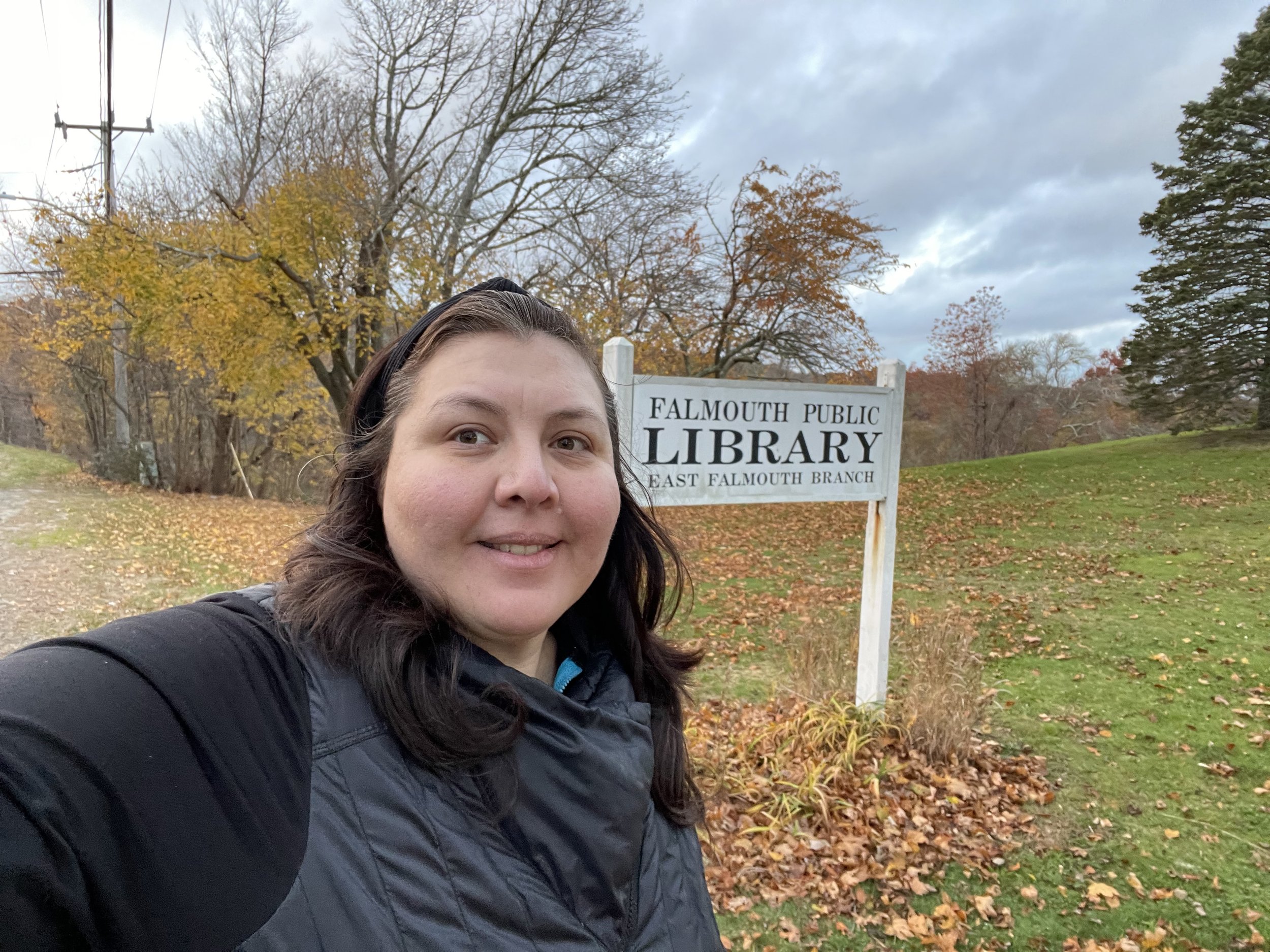
Ofelia was interviewed about her writers residency experience and work. All photos credit: Ofelia Montelongo
1. Tell us about your background as a writer, how you came to this pursuit, and what your current projects are that you felt could be supported by coming to a residency like this.
I think I have been a writer my whole life by heart. In my teenage years, I wrote things, but I didn’t really know what I was doing. It was until a few years ago that I quit my job and went back to school that I actually started feeling like a writer; even if I had spent the last years in creative writing workshops in a community college (before quitting my job). I wrote my first novel without much guidance. And I could call it a little disaster, but it help me out a lot. Now, I’m writing my second novel and working on my collection of essays. This residency helped me to rekindle with my work and to go back to thinking about my characters who I have left behind a little bit because of work commitments.

2. How did you adapt to the fact that for the specific week you were there (Thanksgiving week) you were to be the only resident vs. having a social group with you?
In the beginning, I was super scared because I like talking to people in writing retreats (at the end of the day, at least). But honestly, later on, I got used to it and it was kind of refreshing to be myself for a few days. I talked to my resident host in Zoom almost every day so I didn’t feel that alone.

3. What do you think you gained from the week?
I think I thought a lot. I had been overwhelmed with work the past few months and being there calmed me down. I felt all of this rush inside of me, and just being there centered me back to my creative work. I wasn’t as productive as I wanted to be, because I wasn’t in a mental space where I could write that fast. I needed to spend more time with my characters and come back to them, and that I did.
I also finished reading four books!
4. What are your hopes for this coming year (2022) in terms of your writing?
I really hope I can finish my novel and I can finish my collection of essays proposal. Those are, realistically, my two writing goals (besides trying to publish more essays).
5. What sights or activities around the house in East Falmouth do you highly recommend?
One of my favorites was Martha’s Vineyard. That island is beautiful! Even if it was dark by 5 pm, I had a great time traveling there and just walking around.
I loved the public library as well. I got a lot of writing done there and in the end, I got to play a little chess with strangers.

6. Outside of Cape Cod, what is your favorite place in the world, and favorite place(s) to write?
London. I’m in love with that city! My favorite place to write I think it’s in my local libraries. I have been so lucky to have amazing public libraries around me. They are quiet and peaceful and I love them. And I don’t have to pretend I’m drinking the same coffee for four hours.

Craft Exercise/assignment:
Generation of ideas (Brainstorming) about beginnings and connections with the border:
Directions:
Part 1. Write about beginnings in your life. For example, beginning of work, your arrival in the United States, in another state, maybe when you tried some new food.
Part 2. Think about how your life has become a border and how you cross different borders every day between the cultures you live in. What kind of borders do you cross every day? Maybe the language border or maybe a physical border.
Part 3. Write about a specific moment when you crossed one of those borders. Make sure to add the five senses.
Share with the world!
Ofelia Montelongo is a bilingual writer from Mexico. She has a MA in Latin American Literature. Her work has been published in The Rumpus, Latino Book Review, Los Acentos Review, and elsewhere. She was a 2019 Writer’s Center Fellow. She currently teaches at The George Washington University and was a PEN/Faulkner writer in residence, a 2021 Macondista & a PEN America Emerging Voices Fellow.
ofeliamontelongo.com
Twitter: ofeliamv23
Instagram: ofe23
Review of KNOCKED DOWN, by Aileen Weintraub (Review: Joj)

Review of Knocked Down: A High-risk Memoir by Aileen Weintraub
By joj
Word count: 730
I thought Knocked Down: A High-risk Memoir was about Aileen Weintraub’s doctor-prescribed five months of pregnancy bed rest. The book is arranged by gestational time (weeks of pregnancy) so readers can watch the time tick by oh so slowly. I’ve had several high-risk pregnancies myself which also involved bouts of ordered bed-carceration that were nearly as perilous as the reasons I was told to hunker down. You think you’d love to be commanded to sleep in all day every day until it happens to you. Just the premise of the book was triggering, but I wanted to see how a person who is a self-proclaimed “runner”–someone who takes off for the hills at the first sign of trouble–would survive half a pregnancy in physical and mental limbo.
But Aileen’s story isn’t only a quilt of loneliness, boredom, and physical/marital/financial precarity stitched with humor, candor, and approachability. It took me most of the book to understand that Knocked Down was actually about me and my marriage.
I’ve been trying to leave my partner off and on for twenty years. In early March of 2020, I was away from home finishing up my final year of grad school. He and I had reached a happy truce, a place where we were both committed to trying again. Upon graduation I would get my own apartment. We would date each other, try to find whatever it was that brought us together in the first place, for the sake of our four children. Covid lockdown threw a wrench into this plan, forcing me to move back into our home early, still in the throes of grad school. After a honeymoonesque reunion, the relationship started to crumble again. As usual I wanted to bolt, but local (French) laws forbade me from going farther than 100 kilometers. I felt panicked and trapped, powerless to run.
When Aileen is bedridden, the health and survival of her unborn child trumps all feelings of the kind of panic that usually causes her to quit whatever she’s committed herself to and run to the next exciting thing for a while. She is forced to turn and face something she’s been fleeing for years: processing the death of her father, her childhood hero and accomplice in playfully torturing her mother. The memory of their funny pranks start to fade, contrasted with the realization that his inability to hold down a steady job and his prolonged periods of lethargy might be symptoms of depression. Did she inherit this from him? Is that why she’s always running from boredom, why she uses humor to downplay the seriousness of catastrophes? Is this something she will pass on to her child? Iterative micro-crises in her pregnancy, marriage and finances have her reaching out to her mother for comfort and compel her to reflect on her father-daughter relationship, his now undeniable depression, and the effect their complicity had on her mother. As Aileen’s mom shows up to love her through this passage in the only way she knows how–with suitcases full of meat (Aileen is a vegetarian)--she learns to appreciate her mother’s silent strength, leans on it to inform her own future parenting.
With nowhere to go, lockdown gave me no choice but to reconsider my marriage. I was still justified in some of my complaints, but for once, the possibility of one of us catching (and dying from) covid made me look at the ways in which I had contributed to the woes of our relationship. My partner wasn’t the only villain. My own traumatic past had turned me into a ruthless and unforgiving perfectionist, ready to bolt at any sign of unfulfilled expectations in the name of righteous indignation. In lockdown, I learned to own my part of the responsibility. I opened up to my partner about my willingness to soften, which in turn inspired him to do the same. Things aren’t perfect but I no longer feel like running.
It wasn’t until I finished reading Knocked Down, having watched Aileen slowly, gradually come to the conclusion that she might have not known her father–or herself–as well as she had thought, that I realized lockdown had had the same effect on me. This hilarious book about a terrifying experience made me realize what a gift lockdown had been for me, my marriage and ultimately my children.
From the publisher description of KNOCKED DOWN: A laugh-out-loud memoir about a free-spirited, commitment-phobic Brooklyn girl who, after a whirlwind romance, finds herself living in a rickety farmhouse, pregnant, and faced with five months of doctor-prescribed bed rest because of unusually large fibroids.
Structural Revisions, a personal essay by Keri Bertino
Structural Revisions
March, 2020
On the first day of lockdown, I play a movie for the kids so I can move bedroom furniture: eight-drawer dresser, queen bed, desk, file cabinet, nightstand, lamps. My husband works upstairs, in the apartment of neighbors who have fled upstate.
I rearrange our room so my desk looks out a window. It’s raining. I hang a planter, line the windowsill with a wood pencil holder, a mug filled with pastel highlighters—talismans of a writing life. I’ve always preferred to work on beds and couches; I’m never quite comfortable in a chair. But the symbolism feels important, the claiming and carving of space: This is mine; do you see me, marking it, guarding it?
The previous week, when schools were open, I’d received notes on the novel I’m trying to send into the world. This will take about two weeks, I’d thought then, knowing two maybe meant four, realistically. While I’d waited for notes, an editor had reached out after reading a short piece and asked to see the book; a dream agent I’d written off as a non-response requested a full.
It’s spring break, so I have a week’s respite from course prep. I switch on my brass desk lamp, open my laptop, and re-write the backstory for the novel, then outline a revised Chapter One. A map. I congratulate myself for determination through hardship.
This was when we thought it would be six, eight weeks. Maybe till the end of the school year, if things got really bad.
April
Through the spring I teach a graduate seminar on polyphonic novels. We read and discuss a novel per week, on average—a reading load I’ve cursed us all with. It’s my first time teaching this course, these books, and I’m a slow reader. From waking through the afternoon, I solo-parent both children and supervise their remote learning. My eight-year-old son, who has always loved school, is miserable. He grows increasingly anxious, unable to complete basic assignments without tears. My three-year-old daughter tunes into her Zoom preschool, then wanders away, frustrated and bored. I try to keep her occupied without screens. I try to make sure she uses the bathroom frequently enough so she doesn’t wet herself. I try to make sure that every day, we move our bodies, get outside, make art. Some days, I am successful, and we draw chalk murals on our building’s walkway. Other days I hand my daughter an iPad and clean up pee. My husband works upstairs from 7 or 8 a.m. to 3:30, and I work from the time he gets home till dinner. We eat, put the kids to bed, then go back to work. From 8:30 till midnight or one, I read, respond to student writing, and lesson plan.
One day in class, in late April, I give my students a 10-minute writing exercise. While they write, I write, and once I begin, I cannot stop. I outline my next novel, the idea of which has been floating in my head for over a year. I’m sad when my timer goes off. “That’s the most writing I’ve gotten done in six weeks,” I say aloud to the class, then wonder if I shouldn’t have.
May
My course ends. Instead of the teaching reappointment letter I’ve always received, I get an email from HR saying no such notices are forthcoming at this time; I’ll be told by August 1st if my course is cancelled. My summer educational consultant work is indefinitely postponed due to COVID.
Three years ago, we’d made the decision that I’d leave my full-time writing program administration job to teach and write—the things I love most. If we belt-tightened, we could make it on the money from my teaching plus my husband’s job—mechanical engineering towards clean building energy, saving the world. I have never felt so loved as the night when I outlined my dreams for the future, and my husband said, Why don’t we try it now?
But now, there’s no teaching, and there’s no writing—my work hours shifted back to my husband in an attempt to get us both some sleep; my thoughts a pulsing buzz. There is instead stay-at-home mom, housewife.
We quarantine for 14 days, then head to my mother’s in Vermont. A chance to be outdoors. Another adult. We pack for a two-week visit.
June
We extend our stay. In Vermont, my son struggles through the last month of remote school, exhausted and overwhelmed, and I coach him through the end of second grade with the care of a hostage negotiator. My body is flooded with stress much of the time. I am a person who craves hours a day of solo quiet, and I have none. My children, it seems, do not ever stop talking, banging, thudding as they walk across the flimsily framed floor of my mother’s house, a former camp cabin. There are many times a day where I raise my voice. There are many times, approaching them, I must drop my hands and remind myself I do not wish to hurt my children. I realize: it’s not that I used to be a good parent; it’s that my life was incredibly easy.
My husband works all day from the guest bedroom where we sleep. When I can, I steal into my mom’s bedroom for an hour or two before dinner. Slowly, I cut 15,000 words from my novel. I am relieved to see them go, to feel what the book can be without them—but now nothing fits together.
I’ve taught an independent course called Writing Through Motherhood in the past, and now seems a good time to conjure a community of mother-writers, to create an accountability structure, to teach, to earn money. I delete web copy on the course site which refers to the challenges of early motherhood as “temporary.” I announce a new class half-heartedly on social media. Two sections fill and overflow within days, one cohort of returning students, one of new writers.
Unable to sleep, I read for hours and hours at night, almost all of them books by mothers.
July
School ends, and my son is, immediately, himself again—sunny, sweet, creative and easy-going. I understand, in a way I hadn’t before, how miserable the specific pressure of remote schooling had made him, and feel guilty for not protecting him, for not pulling the plug on this whole thing in April and just letting him read for hours, his natural state.
Usually, the arc of Writing Through Motherhood is a scatterplot bending unmistakably toward a regular writing practice for all participants, but for my new cohort, it feels like there’s little arc. It’s okay, it’s okay, I say, when another woman confesses she didn’t write that week. I mean it; I know it’s true, and that it’s important to say. But I feel useless. I try to turn my assurances back on myself, but can’t quite believe them. My cohort of returning students, on the other hand, writes and shares all summer long, buoyed by community, a sacred flicker Tuesday nights.
I notice: when my husband needs extra time to work, my mother quickly volunteers to watch the kids. When I ask for time to write, there is often a sense that I’m imposing, shirking my responsibilities, even if the kids are just watching screens. But when I claim time to teach, no one begrudges me the time and space.
At some point in July, we come to understand: school will not be coming back this fall. September would have been the first time in eight years I would have had no-cost childcare. It dawns on me, this moment, this break from supervising homeschool? This is as good as it’s going to get, for a long time.
So I write on the porch of my mom's house, while my kids play in the grass. I write at the kitchen table, while they play on the floor next to me. One day, I look up from Scrivener when my daughter brings me the iPad, which won’t show a video of an adult woman playing with Paw Patrol figurines. I fix a setting, and an ad begins: it’s Joyce Carol Oates, riding a wave of urgent arpeggios, peddling a MasterClass. “The great enemy of writing isn't your own lack of talent,” she intones. “It's being interrupted… by other people." Behind my daughter’s head, I throw Joyce the finger.
I write on my laptop, I write on my phone, I write in my notebook, on notepads on my mother’s desk. I write in my mother’s bedroom, in her guest bedroom, my kids’ bedroom. I write at night on the porch, or in bed while my husband sleeps next to me. I write in the morning, before anyone knows I’m awake. I write in the middle nine minutes of the ten-minute stretches I give my students. I dictate writing into my phone as I walk through the woods. I write from the driver’s seat of my mother’s car, in the parking lot of a McDonald’s, facing the train tracks, while she undergoes a routine inpatient procedure. For three glorious sessions, I write in the sunroom of my mom's neighbor's cabin, free for a few days between summer rentals. It is the happiest I have been in a long time.
And yet, I feel like I’m getting nowhere. I shuffle and reshuffle sections, write new scenes, new ligatures. Nothing feels like it makes sense. Nothing feels like it matters.
August
We return to New York, to our two-bedroom apartment in Brooklyn, and we feel the walls. We no longer have the upstairs apartment to use; the neighbors have moved and sublet their place. My husband sets up his dual-monitor system in our bedroom. He sits at my desk, and closes the door. What other choice do we have?
We have a choice for schools in September: a hybrid model, in which students attend in-person two days a week, or fully online. I ask my son what he wants, and am astonished when he asks for full-remote. “I just want to help the coronavirus go away as soon as possible,” he says. I read an open letter from district principals detailing the dangers in their schools, begging the DOE to delay opening. I fill out the form requesting fully-remote learning. It feels like consenting to my own imprisonment.
My fall course is confirmed, and I prep and write when I can. I write at 5:45, when my husband's alarm wakes me and I can’t go back to sleep. I write while half-supervising a park playdate, trusting I’d notice if a child was up to something actually dangerous. I write during screen time, the bounds of which creep earlier and earlier. But I don’t know how to structurally revise a 77,000 word novel in 20-minute increments.
In tears on our anniversary, I tell my husband, I feel like I’m failing at everything. He tells me the things you hope your husband will say to you on your 11th anniversary. We make a new plan for September: an adjusted schedule with shared school supervision responsibilities, an afternoon babysitter.
I have hope for the fall for the first time, yet wonder why we didn’t make this plan before. What beliefs about myself and motherhood, about writing, about work and money, kept me from asking for what I needed?
September
My class begins. It’s a class I love to teach, helping prepare writers to become teachers of writing. It’s all online, and I’m grateful from a health standpoint, but surprised how many additional hours it takes to teach a class online that I’ve taught in-person three times already. I hope that at some point, the balance will turn, that this class prep time will turn into writing time.
We book a babysitter for two-and-a-half hours on weekday afternoons, a little shared pod with neighbors upstairs. On the first day, I sit at my desk and write. Out the window, I see my son pull my daughter in a wagon around the building, then my daughter fall out of the wagon onto concrete. She cries, hard, but it takes a few minutes for the babysitter to come to her. At 5 p.m., when they come back inside, my daughter announces, I hit my head three times! On the second day, she falls off her scooter, and the babysitter mentions a scraped knee, but I noticed there’s something off about the way my daughter holds her wrist. The next day brings us to the pediatrician, then to the pediatric urgent care for X-rays, then to the regular urgent care when the pediatric X-ray technician isn’t there. It’s a fracture. We part ways with the babysitter, and I sink into despair for a few days.
October
It takes two weeks to find a new babysitter, but the new one sings, and teaches new outdoor games, and brings popsicle sticks for crafts. My son is happy and largely independent in remote-schooling—one day, I hear him sigh I love you to his teacher over Zoom. My daughter, now four, is reading, and building elaborate Duplo structures. My fall class is well underway, the students thoughtful and earnest, The Most Sincere Pumpkin Patch. I’m told I have a spring class.
So I write from a new island of stable-as-it-gets. I know it’s temporary; I know better than to waste it. I sit at my desk by the window. I open the novel file, and get to work. Chapter Two.

Keri Bertino’s writing has appeared in Topic, McSweeney’s Internet Tendency, Today’s Parent & elsewhere. She’s written a novel about truck stops, missionaries, marriage, grief and faith. She teaches in Columbia University’s MFA program, and founded Writing Through Motherhood. Find her on Twitter: @kbert
This Hyphenated American Reading Life, April 2022

Looking for a burst of exuberance for your TBR? Here is a reading list of graphic novels celebrating queer and BIPOC women (a piece that first appeared in Electric Literature). Enjoy! and please feel free to add to this list in the comments section.
10 Exuberantly Queer Graphic Novels
Memoirs and fiction that celebrate the lives of queer women in words and pictures
The space of the graphic novel allows a “coming out” process that is uncompromising and by definition “alternative” (like a great underground ‘zine). This glorious, sometimes eerie space is where characters curse, fuck, gesticulate, poop, live. Right in your face, showing you fear, desire, often humor. This diverse list of 10 queer graphic novels features characters who challenge sex roles, gender identities, class hierarchies, capitalism and other systems, corruption and exploitation of various kinds.

Maggie the Mechanic by Jaime Hernandez
Book 1 of the Locas series (part of the indelible comics classic Love & Rockets) was the first time I ever saw brown women, Latinx women of L.A., at the center of a “comic book” (my term for it then!). Maggie (Margarita) and Hopey are friends, rivals, lovers, confidantes, political sisters. They observe the world and each other with major “side eye.” In this start to a still-ongoing series by the graphic novel pioneers Jaime and Gilbert Hernandez, Maggie’s adventures around a crashed spaceship in the jungle intersperse with romantic and lustful letters back home.

Forward by Lisa Maas
Lisa Maas’ debut graphic novel was recently named a Stonewall Honor Book for the Barbara Gittings Literature Award by the American Library Association. The book delves into the specificity of “white lesbian cultures,” specifically in Victoria, Canada (Pacific Northwest), weaving the details of this world (mullets! Indigo Girls! Cats!) with a traditional “rom-com” scenario of a two people who “gave up on love” finding each other with an awkward, authentic excitement.

On a Sunbeam by Tillie Walden
The winner of the 2018 LA Times Book Prize for best graphic novel, this book makes an inevitable appearance on every “queer comics” list for the sheer haunting beauty of its images. Walden, a manga-influenced comic artist who was also a former figure skater (and who has written a graphic memoir, Spinning, about this experience) makes use of a lyrical, understated style to tell a story about rebuilding the world on a new planet. Mia, a crewmember, once fell in love with a girl named Grace, and wants to help the rebuilding crew in part to recover this lost love.

Bingo Love by Tee Franklin
This sweet, sexy graphic novel, by queer black woman artist and disability rights activist Tee Franklin, deserves to be turned into a star-ensemble movie. A decades-long love story between two women who meet as young adolescents at a bingo parlor, fall apart when their families demand “straightness” from them, then come back together in a relationship that lasts, Bingo Love is one of the few graphic novels that offers bold queerness without “youth” as a prerequisite.

SuperMutant Magic Academy by Jillian Tamaki
Ignatz-winning illustrator Tamaki’s episodic story set in a school for superteens can be read as a cross-over YA graphic novel, sort of like an edgier, multicultural, existentially-themed Twilight, or maybe more like the sensibility of Sabrina, the Teenage Witch (2019 extremely gripping, risqué, scary version, not the benign sitcom schtick of Melissa Joan Hart, whose character would’ve been killed off in the forest in the first episode of the all-new Sabrina). At SuperMutant Academy, problems involving witches and monsters are juxtaposed with anguishing but universal problems—like unrequited love.

Kari by Amruta Patil
When I first encountered Kari, by Indian graphic novelist Amruta Patil, I thought it might be too grim for me—the stark black and white images were so unsettling, and echoing some of the most disturbing images in religious comic books I had grown up with. But in the end, the book leaves you breathless, and extremely glad to be alive. Kari explores the aftermath of an attempted double suicide by two women lovers, herself and her lover Ruth, and the titular character’s subsequent survival (and rebirth) in the shadow community of the gutters of Mumbai and against the challenges of the 2008 recession as it affected the city, including during terror attacks in fall of that year.

Wet Moon, by Sophia Campbell
Wet Moon portrays a compelling goth scene, in some ways following the tradition of the Hernandez brothers’ Love & Rockets (which introduced the idea of the punk rock scene as multiracial and as available to Latinx women as it was to white women). Body positivity of very diverse shapes is celebrated in the book. The story starts in the town of Wet Moon, focusing on Cleo Lovedrop and friends Trilby Bernarde, Audrey Richter, and Mara Zuzanny, all art students. There is courage in the portrayal here of sexual violence and its survivorship.

Luisa: Now and Then by Carol Maurel and Mariko Tamaki
Co authored by two American Library Association Stonewall Honorees, Luisa: Now and Then is a particularly delightful and precisely-drawn graphic novel about a 32 year old artist/ photographer being brought in dialogue with her teenage self on the streets of 1990s Paris. What more could you need?

Monstress by Marjorie Liu and Sana Takeda
Starting with the elaborate, gilded cover art: the work is gorgeous and intricate, fashioning a kick-ass marginalized rebel heroine, Maika Halfwolf, who could eat Katniss Everdeen for breakfast (literally). Nudity, fury, revenge—what women are finally able to be like, when free of the confines of “the likeable woman” expectation guiding much of commercial literature.

My Favorite Thing is Monsters, by Emil Ferris
Winner of an 2018 LGBTQ Lambda Literary Award in the Graphic Novel award, this story centers on a 10-year-old queer girl, Karen Reyes, as she investigates the death of her Holocaust-survivor neighbor against a backdrop of the monsters she imagines herself as being, like the drawing she makes of herself as a werewolf chasing a village of women. This book, because of its juxtaposition of a “comic” story arc with reproductions of works from the Art Institute of Chicago and elsewhere in the city, is considered to have elevated the graphic novel genre, but come at a great physical cost to the artist, who labored over the book for years while recovering from hand and arm paralysis from West Nile virus. Ferris is also an inspiration in that she began this debut work only after the age of 40.
Interview with Scott Blackburn, debut crime novelist and Mountain View MFA alum

Interviewed by Philip Lemos.
Q: Talk about when you first decided to write a novel. What motivated you?
The day I officially decided to try my hand at writing a novel I was walking through a bookstore, and I kept thinking how cool it would be to see a book with my name on the spine. As vain as that sounds, it wasn’t lost on me what a rare accomplishment it is to not only complete a novel, but to have it published. Ever since that day, walking by the fiction section of my local bookstore has essentially been my version of Jay Gatsby’s “green light”, serving as a constant motivation to reach my goasl.
Q: How long did it take you to write It Dies With You? What were the biggest challenges in the writing process?
It took me a little over two years to write It Dies with You, and I’d say the biggest challenge for me was keeping the middle of the novel interesting. I knew how I wanted the novel to begin and I had a pretty good idea of how I wanted to end, so making sure things like character growth and interesting subplots would keep things moving forward in that notoriously tough middle ground was quite the challenge.
Q: How did you know the novel was finished? Talk about the revision process and the long, winding road from project to publication.
I’ve heard people say “when you know, you know”, and I wouldn’t disagree with that. Personally, I got to a point where I firmly believed that if I kept writing, I was simply doing so to up my word count. I had considered adding another chapter or two until I realized that all those chapters really accomplished was prolonging the inevitable ending. That being said, the 63,000 word novel I queried my would-be agent with blossomed into a 72,000 word novel by the time it sold.
In terms of revision, I revise meticulously as I go. Many of the successful authors I know will write a really rough draft of a novel in a matter of months, then they’ll spend a year or two revising said novel until it becomes polished. Personally, my brain won’t allow me to work that way. I feel like I can’t close my laptop until I know what I write during each session is at least close to being in its final form. That’s why it takes me a while to write what some would call a first draft. With It Dies with You, it took me weeks, maybe longer, to write what used to be the opening chapter (it’s now the second chapter), but I knew when it was done that I had something I really believed in and a narrator that could carry me the rest of the way.
My road to traditional publication wasn’t easy. It Dies with You was actually the second novel I’d written that an agent tried to sell. My first novel, which I wrote as my master's thesis for Mountainview, landed me my first agent. That agent and I revised that book for months before it was shopped to publishers. In the end, the novel received over thirty rejections, including a very close call with one of the biggest publishers in the world. As soul crushing as that experience was, I didn’t spend much time licking my wounds. I knew I had to get better as a writer. Most importantly, I had to find my voice. Up until that point, I was essentially imitating writers that I loved, which is what a lot of young writers tend to do. With It Dies with You, I knew I’d found a voice that was uniquely my own, and that made all the difference. Within a few months of completing it, I landed my dream agent. After some really focused revisions, It Dies with You went out on submissions, and not long after, I got an offer of publication from Crooked Lane Books.
Q: You’ve said that your wife hasn’t yet read any part of your novel. Now that it’s about to be published, what are your thoughts about her reading it?
I once told Tiffany that she could never read my work until it was good enough for every bookstore in America. The reason why is that she was a pretty avid reader of popular fiction, and I didn’t ever want her to think that what I was pouring my heart and soul into was a cheap imitation of what she was used to, or dare I say it, a hobby. I held true to my word.
When my ARCs came in a few months ago, Tiffany was the only person close to me that got a copy. The week those books arrived, I had been expecting them to show up, but I hadn’t mentioned it to her; I wanted it to be a surprise. So, every day when I got home from work, I checked the porch for a package. As it turned out, I was cleaning up the kitchen one evening when Tiffany brought in a small box from the porch. I heard her yell “Holy shit!”, and when I walked into the living room, she was holding my novel in her hands. So much for a surprise! I guess it was only fitting since I’d tortured her for years, closing my laptop every time she tried to steal a glance at my writing.
Q: After reading It Dies with You, I’m impressed with your ear for dialogue. How did you develop that element of your writing practice?
Dialogue was probably the only thing I had a knack for as a young writer, and I honestly think it was because I was pulling words and phrases from real world conversations. Growing up in the rural South, I’ve been surrounded by smartasses and natural storytellers my entire life, and I grew up in a household where having a quick wit was an absolute must. I think those experiences lend authenticity to my characters’ dialogue.
]Q: You’ve described your planning process to “30 words on a notepad.” Talk about having a more impromptu approach to plotting, writing scenes, etc.
I do very little planning. It Dies with You probably had less than half of a page of notes in all, and most of those were on my iPhone’s notepad app. And it’s not that I endorse being a “pantser” (one who flies by the seat of his pants), but I feel like over-planning kills my creative spirit. I guess I’ve adopted the attitude of “Let’s just do the damn thing.”
With that being said, I don’t go into writing sessions blindly. I write full scenes, including a fair amount of dialogue, in my mind, for hours, sometimes days, before writing a single word on the page.
Q: Who are your influences? What is it that speaks to you about these authors’ styles/process/etc.
Stylistically, fellow North Carolinian Wiley Cash has definitely influenced my writing. In fact, A Land More Kind than Home was the first fiction novel I read, for fun, as an adult. Seeing such wonderful, yet simple prose showed me that a writer doesn’t have to be showy or use big words to be a damn good novelist. A couple of other writers that reiterate this notion are Ron Rash and Michael Farris Smith.
As far as influences on It Dies with You go, there was none bigger than Joe R. Lansdale, who wrote the Hap and Leonard series as well as a fantastic novel called Cold in July. Like Wiley Cash’s early work, Lansdale writes almost exclusively in first person, which has always been my preferred choice as a writer. Lansdale was also the first writer that gave me permission to really have fun on the page. His stuff will rip your heart out at times, but a page later, it can be absolutely hilarious. That’s the balance I’ve tried to replicate in my own work.
Q: How do you balance teaching and writing? Where do your writing and teaching practices intersect? Where do they diverge?
Teaching is mentally exhausting. There are evenings when I sit down to write and my well of creativity is completely dry. However, teaching fiction does allow me to have a greater appreciation for the written word. There are days when I’m reading a passage aloud to a class, and a beautiful line, whether it’s from Fitzgerald or O’Connor, ignites something within me. I’ve even had to step away, mid-lesson, to jot down an idea.
Q: Your novel is coming out right as things are returning to (somewhat) normal again post-COVID. Do you see that as serendipitous, being able to host in-person readings? Or would you have rather sped up the timeline?
I’m beyond grateful that I’ll be doing my readings in person because I value relationships above all else. The notion that writers are introverts just doesn’t apply to me. I love talking about books, my creative process, and I really enjoy motivating young writers.
Q: You train in boxing, Muay-thai and jiu-jitsu. Compare writing a novel to combat sports.
Boxing, like any other combat sport, is something that you learn slowly, step by step. You first begin with learning balance and footwork before you ever even think about throwing a punch. Writing is no different. I think many young writers (including myself) are ready for the final
product and for their shiny new book to be on bookstore shelves, but if they don’t start with the basics, those lofty dreams never come to fruition. I’d say the footwork of writing is doing things like reading really good literature. You really need to understand the beauty of an expertly crafted sentence or the power of a well-written paragraph before you can start doing those things yourself.
Q: Now that It Dies with You is out in the world, you’re once again staring at the blank page. How does that feel? What’s next for you?
The blank page will absolutely humble you. I’m currently writing a new standalone novel, and I don’t feel any more equipped than I did when I sat down to write It Dies with You. I know I have the ability to write a good novel, but for me, that ability has to coincide with a few lightbulb moments to successfully reach the finish line.
Q: What your best advice to other aspiring novelists/writers?
Dream big from the get-go and never give in to doubt. There will be times when your confidence is tested, but if you keep your head down, grit your teeth, and keep swinging with everything you’ve got, you’ll separate yourself from the pack. Persistence is the name of the game. It trumps talent every single time.
Also, surround yourself with likeminded, driven people who will hold you accountable. I would’ve never made it through my MFA, much less a novel, if I hadn’t had people in my corner to lean on when times got tough.

Scott Blackburn is an English instructor and a 2017 graduate of the Mountainview MFA program. He lives in High Point, North Carolina with his wife and two children. His debut novel, IT DIES WITH YOU, will release in June 2022.
Phil Lemos is an Adjunct Professor at Southern New Hampshire University who teaches in the Mountainview MFA program. A Massachusetts native, Phil’s work has been published in, among other places, Charles River Review and Assignment Magazine, and he’s an editor at Spry Literary Journal. He holds MFAs in fiction and creative nonfiction from Fairfield and Southern New Hampshire universities, respectively. Phil teaches Creative Writing at Clark University and English Composition at Franklin Pierce as well, and is working on a novel.
Vacation, a short story by Jane Ratcliffe

@desrecits.
That night Ben came home before the bars closed. Although Gertie was in bed with a pillow over her head, she could hear the key in the lock. The creak of the hinges. The rush of the cats to greet him. The crinkle of his leathers as he lowered himself to their height. His raspy whisper: “Good morning, pickle.” And: “Hello, banana toes.” She could picture his smile, the gap between his front teeth, the way he was now, in this very moment, leaning forward to rub his nose against theirs, remarkably holding his balance despite how drunk she knew he must be.
A few stumbles and his silver coat was shucked, his boots unzipped. Would he use the bathroom or come straight to bed? Gertie’s heart pounded. How she wanted to leap up and shout and point. But they had a therapist now, Joan, and Gertie had learned to breathe into her reactions to see if they changed.
Ben opted for the bathroom. She could hear his piss hit the toilet water; could imagine its tart, ripe smell. He didn’t always flush, not wanting to wake her, which was a kind enough gesture, and yet this bothered her. She had commonsense rules that helped her keep life manageable. But when Ben had told Joan about how he’d folded their bath towels and put them away only to have Gertie refold them, Joan had turned to Gertie and suggested that perhaps her way of folding towels wasn't the only way, and Ben had nodded. This had given Gertie pause. It was clear to her that if Ben could quell his adolescent urge to stay out late drinking (and who knows what else) then he wouldn’t have to leave his Jack-Daniels piss in the toilet until morning. But she was nevertheless doing her best to see the marriage from his perspective, a sometimes enlightening and sometimes infuriating experiment. Gertie inhaled deeply, the way Joan had shown them, and exhaled as if blowing out candles.
Then he was in the room with her, reeking of smoke and booze and his own salty odor. Gertie loved his smell. Not the smell of the bar; his smell. Much of her anger melted away. He tiptoed to his side of the bed, the cats flanking him; back went the sheets and up the cats jumped, purring like overheated radiators. “Shh,” he whispered, gently, of course. And then there he was beside her, his warmth sheathing her before they were even touching.
“You awake?” he slurred, his long blond hair falling over her shoulder.
He knew she was. When he was out late she was incapable of sleep, as if by staying awake she might have some control over when he came home and in what state.
“Gert?” He encircled her from behind. Gertie would have been glad to have sex, but not like this. Not with him drunk—okay, maybe he was only tipsy—and her frustrated. Yes, he had come home early, or earlier than he used to (he too was working on his behavior), but—she glanced at the clock—it was still 1:30 and he’d sworn up and down that he’d be home by midnight. The same thing had happened last week and a few weeks ago as well. Broken promises might as well be lies, and Gertie didn’t like being lied to.
“A little awake,” she said.
“A little awake,” he repeated, snuggling his mouth into her neck.
How familiar he was, this husband of hers. Nine years he had been by her side. She loved this man. The way he made her huevos rancheros on Sunday mornings, the apartment awash in early light, Bach ascending in the background, while she and the cats lingered in bed. His tenderness for people who had made unfortunate life decisions even if Gertie would have judged them far more harshly. That laugh! Like squabbling geese. How he would take her hand when they were walking down the street as if they were still in high school. And now here they were: in their white iron bed, beneath the skylight, negotiating the rhythm of sex as they tried to save their marriage.
When they’d met in the early eighties, both nineteen, Gertie had been able to keep up with Ben swig for swig, line for line, pill for pill. She loved the clubs, the hard drive of the music, the rank smell of the banquette chairs and heavy velvet curtains (god knows what these looked like in daylight), the soggy tang of sandwiches shared in the early hours in the dimly lit back room. The deliverance of it. The glorious vitality of her legs as she stomped across the dance floor. The vibration in her bones.
Back then, Ben ran the video room at a Detroit club and sold Placidyls and Dilaudids he kept tucked in an Army-surplus ammunition belt. Spiky black hair, gobs of eyeliner, clever, funny, with girls trailing him like baby ducks, he was the darling of the club scene. And he wanted her. He asked Gertie out nearly every time she turned up at the club, which was often; he bought her drinks, introduced her to his friends—the Detroit elite, let her know how beautiful she was, what a slamming body she had. And her mind! She was attending the University of Michigan. He was impressed by that. Gertie soaked up the warmth of the unexpected spotlight. Soon, they were rarely apart.
Three years later, after she’d graduated with a BFA in photography, they moved to New York and found a tiny studio in the Village, the traffic so loud and packed so tight they sometimes sat on the fire escape and threw eggs at the honking cars. But what did they care: off they went into that bright Manhattan night—velvet ropes lifting, secret vials appearing, once more the vibrations, the laughter, the sheer luxurious madness of that time.
Ben was playing bass in a fledgling hard rock band and Gertie was shlepping lights around for a series of mildly famous fashion photographers. Together they hustled their way through unimportant jobs, unreliable people, unremarkable apartments until, at last, Ben’s band landed a record deal and Gertie placed her first headshot of an up-and-coming actress in one of the glossy magazines and their lives felt the way she thought they should. So much so they’d married, a small affair at City Hall. Gertie had been so moved by her love for Ben, she’d barely been able to get out her vows through the tears. It was late November of 1989; the Berlin Wall had just come down and earlier that year the Dalai Lama had won the Nobel Peace Prize. Gertie felt these were auspicious events that would bode well for their union.
And for nearly a year, they did. Then one night at Limelight, she did so much coke that it came back down her nose. Vito, a meaty, perspiring forty-something dressed in far too little clothing, leaned forward and used his thick cold tongue to lick it from her upper lip. She felt her stomach twist.
After that, a grayness fell over Gertie’s world. What were they all doing, she wondered. Grown people getting home at five or six in the morning, disoriented and often cranky, trying their best to block out half of what they’d been up to—it was all so depressing. Or maybe she was depressed. She took up with the burgeoning raw foods movement. Joined the gym. Went to bed around midnight. Woke up at nine. Quit the clubs.
But Ben didn’t.
“Come on, baby,” Ben would say. “Come out with me.”
“Let’s stay home tonight,” Gertie would counter, offering him a sip of her smoothie. Her skin was brighter these days, her eyes whiter, her moods more consistent.
“I can’t.” He’d extend his arms to the side to show how much he had to carry now that he was in a signed band. “It’s my job.” And, of course, this was true. Even when he wasn’t gigging, he was now required to hang out at clubs and become a presence—a darling—just the way he had been in Detroit. Who was she to interfere with that?
So off he went, solo.
At first a part of her pined for these old habits; how alone she was in their apartment. But in what felt like very little time she realized she could organize her proof sheets, sketch ideas for the next day’s shooting. Soon she was booking more jobs, making more money, and her life revolved around the sun rather than the moon. She wanted Ben to be a part of this.
But Ben was content with his life as it was.
“You’re the one who changed,” he’d shout, when they fought at three or four in the morning—on the fire escape, in the living room, once even on the street neighbors yelling out the window to shut the fuck up like in the movies. “You used to be fun.”
Sometimes the fights were mild, sometimes they’d escalate into something quite astonishing, though never violent, not physically. After the first one, Ben snuck out while Gertie was asleep and brought her flowers from the deli: dyed-blue carnations. She twined their stems and hung them from one of the exposed pipes that lined the wall in the kitchen. One fight was so bad, Gertie woke to a blanket of bouquets.
“Did you buy out the deli?” Gertie asked, giddily—though deep inside she could feel the steady throb of distress. Ben grinned.
Slowly, the wall filled with flowers in varying states of decay. Visitors found them enchanting. “I want somebody to love me like this,” her friend Maggie pined. But for Gertie the browning, brittle petals were reminders of fragile love could be.
She admonished him when he sauntered home with the dawn, ignored him, cried, lashed out. Once she even packed up the cats and went to the Washington Square Hotel for the night; she wanted him to feel what it was like to be without her. But he didn’t get home until eight in the morning and by that time she was already back, scrambling eggs.
And so it went, these past three years. She was living in one version of their marriage, he in another, until they began to slowly, accidentally, miserably wear each other out.
In January, when their old friend Evan invited them to Costa Rica for a week, Gertie knew it was what they needed. They would stay on an isolated beach, a tropical paradise away from the lures of Manhattan. Evan and his wife, Poppy, had moved there four years ago. Evan had slowed down around the same time Gertie had and Ben trusted him. She hoped he’d be a good influence.
Evan and Poppy met them at the airport in their open Jeep. It was hot, in the mid-nineties, and Gertie stripped off layers of clothing as she squeezed into the back seat beside Poppy and the bags of food. Evan drove erratically, cutting off cars and running what few traffic lights were to be found, but Gertie was too done in by the beauty of the flowers and low mountains to care. Modest highways quickly whittled down into paved streets, then to a dirt road with high banks. Soon they were deep in the jungle. Gertie reached forward and placed her hand on Ben’s shoulder. He laid his hand over hers.
“Fucking spectacular. Right, baby?”
Gertie couldn’t speak.
The trees were monumental, their trunks the size of three maples back home, their canopies so tightly knitted together the sky was barely visible. The air was fragrant and the only sounds were the wind through the leaves, the peculiar calls of unknown creatures, and their tires on the rocks and fallen branches. They didn’t belong here. She could feel it. She wondered if the others could feel it, too.
“Poppy and I haven’t been this far in before,” Evan said.
“And your friends are just letting us use their place while they’re gone?” Ben said.
“That’s what it’s like here,” Poppy said. “What belongs to one person, belongs to everyone.”
She was wearing a floppy hat, halter top, and cutoffs and looked much younger than twenty-eight, though she was the same age as the rest of them. Gertie and Ben hadn’t met her before; they knew Evan from when he’d lived across the hall from them on the street with the cars that honked all night. He’d met and married Poppy, an aspiring clothing stylist and the daughter of a socialite, in Los Angeles and then they’d moved here to start a tamarind exporting business.
“I’m not sure I’d like that,” Gertie said, twisting her wedding band.
“You get used to it,” Poppy said, smiling. “You’ll see.”
Deeper and deeper Evan took them into the jungle, the road so raw in places that it wasn’t clear the Jeep could go on. Finally they turned right and drove up a steep hill to the palapa—a round, open-walled, thatched-roof hut— surrounded by mango, pineapple, and banana trees that would be their home for the next week.
All four tumbled out of the Jeep and gaped at the astounding view of the ridiculously blue ocean.
“This is fucking insane,” Ben said, laughing. He pulled Gertie close and kissed her on the mouth. He hadn’t had a drink on the way down and he tasted clean. “I fucking love this place,” he said, “and I fucking love you!”
Gertie turned and studied the palapa. “There are no walls.”
Poppy laughed; It sounded like tiny glasses being clinked together. “You don’t need them here.”
“Don’t worry, babe, I’ll protect you.” Ben was wearing a Panama hat he’d picked up at the small airport when they’d landed. She thought it was a good look for him; it brought out his cheekbones and, with his thick hair pulled back in a ponytail, gave him an air of light-hearted elegance. He kissed her again then grabbed their gear and practically skipped up to the palapa. Poppy followed behind with a duffel bag over each shoulder. Gertie and Evan reached for the bags of food in the back seat at the same time, both stopping short.
“Good to see you,” Evan said, his voice low and steady. He was always the ground to Ben’s flight.
Gertie smiled, cautiously. “It’s nice to see you, too.”
“I got it,” Evan said, gathering the brightly woven totes into his hands. “You grab the beer.” He nodded toward a case of Imperial next to a bottle of whiskey. The irony of her being the one to carry this up the hill wasn’t lost on Gertie, but it was a modest amount for the four of them and she was grateful for this.
Inside, four faded canvas hammocks hung like cocoons from the tall rafters and four high-backed wooden chairs, each carved with a different medieval-looking symbol, surrounded a heavy table. It smelled of overripe bananas and hot earth.
“Hammocks?” Ben thumped a cigarette out of a pack. “Where’re we supposed to fuck?”
Gertie cringed yet internally echoed his sentiments. This trip was meant to be restorative: where were they supposed to fuck?
Poppy hugged Evan around the waist. “Not to worry, man,” Evan said. “My friend told me there’s a small cabin out back that can be used as needed.” He winked at Ben. Rather than relief, Gertie experienced a strange revulsion as if her pussy were on display—and being bartered for. She glanced at Poppy to see if she had a similar response, but she was grinning, her hand tucked inside Evan’s floral shirt. When had Evan started wearing florals?
That settled, Ben stretched his arms, first one then the other, over his head, then he and Evan fell easily into the chairs. Poppy and Gertie turned their attention toward the kitchen: a narrow stone countertop with a two-burner stove. The two of them strategically fitted the supplies into the limited space.
“I hope we have enough food,” Poppy said, plonking a bag of black beans on the counter.
“If not, we can just pop by the corner bodega,” Gertie said, hoping to sound playful. Then into the silence added: “It was kind of you and Evan to do all the shopping. We owe you money.”
“Don’t even think about it.” Poppy placed a hand on Gertie’s shoulder. “You’re our guests.”
Her skin was hot and Gertie released herself by grabbing a beer. It was warm, of course, but the fifth of whiskey contained twenty-five shots, with a third of a shot leftover. Twenty-five and a third shots was enough to get Ben wasted, even if the others joined in, and left plenty of time to ferret out another bottle of something in some jungle town they didn’t yet know about. Strategically, beer was the safer route.
“Want one?”
Poppy nodded.
Gertie made it a practice to not drink around Ben; doing so, she felt, made it easier for him to do so. And she did not want to make drinking easy for her husband. But now that she and Poppy were both swilling beer she felt she had no choice but to include him.
“Want one, baby?” She held up a bottle. He nodded. And Evan as well.
“Let’s take them to the beach,” Poppy said, but the men were content in their chairs so Poppy and Gertie set off by themselves down the steep path to the shore.
On a narrow strip of sand stretching between the glassy waves and the tall, fat trees, Poppy slipped off her flip-flops and placed them on a fallen branch, the size of an oak tree trunk back home. She motioned to Gertie to do the same; Gertie stepped out of her clogs and placed them on the log, closer to the ocean. The sand was hot and she jumped in place a few times. Then Poppy took her hand and led her down the beach.
They’d barely taken two steps when they were overcome by the most astonishing sound, something prehistoric, yet also portentous like Tibetan Buddhist chanting monks. Chills shot up Gertie’s spine. Poppy pointed to the trees. Through the lush canopy scurried chestnut-brown monkeys, masses of them, their tails lofted, their mouths open in cartoonish pink circles. If they weren’t so high above them, they would have been terrifying.
“Howler monkeys,” Poppy said, dropping Gertie’s hand to point. “It’s how they protect their boundaries.”
The creatures swung from limb to limb, dangled from their tails, huddled in mobs, and studied Gertie with the same curiosity with which she studied them.
They continued strolling along the edge of the water, the beach extending miles in both directions.
“Evan speaks so highly of you,” Poppy said. “And Ben too, of course. But more you, if I’m truthful.”
“We were all three close for a while,” Gertie said, deflecting the accusation inherent in Poppy’s words.
Poppy laughed. “I guess that came out strangely. Like I’m jealous or something. I’m not. Evan and I are happy.” Her perky confidence irked Gertie. Flashes came to her of late-night drinks with Evan at the Great Jones Cafe (“Cheers, big ears,” he’d proclaim clinking her glass with each round) while Ben was out doing whatever Ben did when he wasn’t with her; their legs touching beneath tables, their eyes careful with one another, the effortless conversation about anything, everything! She’d imagined from time to time, how different her life could have been.
“He worries about you, though,” Poppy said.
“Worries?”
“Yes. You know. He worries that Ben doesn’t always treat you the way he should.”
“Well then it’s a good thing Evan didn’t marry Ben,” Gertie said, keeping her voice as calm as she could. She took another slug of her beer. It was nearing five in the afternoon and the tide was coming in.
“Oh, I’ve said it badly. I only meant to let you know that we get it.” Poppy took Gertie’s hand again and squeezed it.
Gertie’s first impulse was to knock Poppy on the head with her beer bottle—this sort of imagined knee-jerk defense was often her response to kindness. But then she found herself moved by this unexpected empathy from a near stranger and fought the urge to cry. She mustered a clipped “Thank you.”
They walked in silence, sweat building between their interwoven fingers. Gertie longed to pull away, but would she seem unkind? Uncool? Uptight? Like a wife who refolded towels? At last they turned, and the reorienting allowed her to slip free. When they reached the log, the tide had swept Gertie’s clogs out to sea.
“That’s a good sign,” Poppy said, brightly. “When the ocean takes, it gives back something even better.”
“It’s just that those were a gift. Ben picked them up in Amsterdam when the band played there.”
“It’s going well? His music?”
Gertie shrugged. “They’re going on tour with Metallica.”
“Fantastic!” Poppy said. And, yes, it was fantastic. This tour could be just the thing to nudge the band from critics’ darlings into a household name. And yet the thought of Ben out on the road with a band notorious for their hard living frightened Gertie. There had to be a way for Ben to achieve his dreams that didn’t involve dangling his weaknesses before him.
Once again, she felt the urge to weep. Maybe it would do her good. Maybe she would tell Poppy everything. But it sounded so silly when she recounted it to herself: So what if Ben liked to stay out late? So what if he came home drunk? Or possibly still did drugs? So what if every once in a blue moon he disappeared for a day or two? Did it really matter if she sometimes had to lie to people she liked, her parents, co-workers, in-laws, friends—to herself? Did it matter if beneath it all there was a murmur of exhaustion? He was going to be a star. Plus, he didn’t drink during the day. There was never alcohol in the apartment. In fact, he could easily bypass drinking for days or weeks. She wasn’t sure if he was technically an alcoholic. She’d thought about leaving Ben more than once, but she loved him, she knew that much was true. And he loved her. Plus, now there was Joan. Joan would help them. This trip would help them. She just had to be patient.
“Hurry up,” Poppy said. It had started to rain and Poppy was already many strides ahead of her.
By the time they reached the palapa the rain was coming down hard. Ben and Evan were seated at the table, deep in conversation, a handful of empty beer bottles between them. Five, Gertie counted; Ben was just cracking open another. How many did that make for Ben, Gertie wondered, slipping into the seat beside Evan. All these years later he still smelled of Old Spice.
“What are you boys up to?” she said with a whiff of sass; the beer had loosened her up a bit.
“Ben’s just filling me in on the upcoming tour. Not bad, not bad.”
Gertie reached across the table and touched Ben’s hand. He winked at her. His eyes were Husky-blue, his lashes deep-blonde and long.
The rains came down harder and a blue-headed parrot flew in and nestled on one of the rafters.
“How extraordinary,” Gertie said. And with its bright green wings and red beak it certainly was.
“That’s just the first of many,” Evan said. “Soon the place’ll be thick with them.”
“It’s true,” Poppy said. “Even in the city they try to get in during storms.”
“And toads,” Evan said. Sure enough, when Gertie looked down toads were already hopping in. She lifted her sandy feet and quietly crossed her legs on the chair.
The wind blew the rain sideways and Evan began lowering the slatted walls like blinds around them. Soon they were in semi-darkness.
“But what you need to watch out for are the scorpions,” Evan said. “Check your shoes before putting them on. And the fer-de-lance. Those suckers will kill you in a bite.”
“What’s a ferderfuck?” Ben asked, lighting a cigarette.
“Poisonous snake,” Evan said. “They’re legendary here. Its name means ‘iron of the lance.’”
“I don’t like the sound of that,” Ben said. He reached for another beer but caught Gertie watching him, smiled, and returned it to the table unopened. Relief washed through her. Everything would be okay. On the dancefloor, in bed, possibly even in a hammock, their bodies always found their way back to one another; they knew how to heal.
“Don’t worry,” Poppy said, lighting a lantern. “They don’t always kill you, sometimes you just go blind. Or get hit up with a bit of organ necrosis.”
Ben laughed one of his hearty laughs—the kind that sounded like squabbling geese. “Anything else we should know about?”
“Ants,” Evan said. “Spiders the size of your fist. Vampire bats.”
“Why’d you bring me to this death trap, baby?” Ben said to Gertie.
She felt suddenly shy, everyone’s attention on her.
“Because I wanted you to die,” she said. They all laughed.
The first night, everyone had been so exhausted and yet also so glad to be reunited they’d talked until the wee hours of the morning then passed out in the hammocks. But Ben and Gertie ended up in the cabin the second night.
“Flip you for it,” Ben had said to Evan, his arm snugged around Gertie’s shoulder.
“Nah,” Evan said. “You two flew all the way here. It’s yours.”
It had been an easy day in the sense that Ben not only hadn’t had anything to drink, he hadn’t seemed to want anything. When Poppy and Evan cracked open a few beers stretched out on a blanket on the beach, Ben declined.
“Keeping it clean,” he’d said, waving his hand at the bottle Evan extended to him.
“All right, man,” Evan said, nodding, his bottom lip thrust slightly forward. “All to the good.”
“Gotta keep the wife happy.” Ben pulled her onto his lap.
That was the part that hadn’t been easy. That way he nimbly pushed his drinking onto her as if her efforts to control it were the issue, not the drinking itself. Embarrassment tightened her jaw as she dodged Evan’s gaze; she didn’t want his pity. But in all likelihood, Ben was refraining from drinking in order to keep her happy. And wasn’t this what she wanted?
Now, in the tiny, wooden cabin, all of that felt long ago, both their bodies still hot with the sun, and Ben’s hair damp with the sea.
Ben backed Gertie toward the bed, his fingers teasingly against her side, her breath heavy. The only light, the moon seeping through the cracks in the wood. When they reached the wooden platform, Gertie paused.
“Poppy said to check for scorpions.”
“Fuck scorpions,” Ben whispered into her ear, as if these were words of seduction. And they kind of were. His voice was clear, his breath alive with papaya and freshly-squeezed orange juice. The two of them suddenly felt so young to her, so pure. Yet she was also aware of all they’d traversed, all they’d lost of themselves and each other.
Together they fell onto the futon. Ben’s lips were chapped from the salt water, and she could feel tiny flakes of skin in her mouth. A merging. Ben wriggled out of his swim trunks, and she saw his cock in that muted light. She wrapped her legs around him and drew him onto her. They reached for the zipper on Gertie’s sundress in the same moment, but it was stuck. They squirmed through the useless joint effort of freeing it and Gertie squealed when Ben, at last, ripped the dress from her body. It was a clean rip, something she could easily repair later, but she didn’t think about this at the time. Instead she thought how wondrous it was to have her husband inside her, sober.
Afterwards, with her head on his chest, Ben started laughing. “Holy fuck,” he said. “Like literally, holy, holy fuck.”
After that the days moved slowly. Breakfasts were fruit plucked from the surrounding trees, a handful of nuts. Nestled two to a hammock, they ate gazing at the bright pink jungle geraniums and sturdy torch gingers and complex bromeliads and myriad other flowers that encircled them. Gertie yawned more than she used to, finger combed her hair. She felt a restlessness, a sweet vibration awakening her legs. Afternoons passed lazily on the beach reading, talking, swimming, telling silly jokes. Evan had learned how to surf and wasted more than a few hours attempting to teach her. How good it felt to be in his company again. How easy. The two of them in the shallows as he demonstrated how to paddle or carefully held the board as she tried to stand.
And yet, Gertie kept waiting for all of it to fall apart.
Ben had certainly gone days before without a drink; he’d gone weeks, even months; she couldn’t yet trust that this stretch of sobriety was anything other than a time-out, a rejuvenation of sorts, the way a plant returns to its dormant state during the winter, so that he could resume the drinking with greater verve.
“Does it help not to trust him?” Poppy asked, when Gertie finally confided in her on one of the beach strolls.
“A little, yes.”
“Denying yourself present-time joy in case there isn’t any joy in the future?”
“That way it won’t hurt so much when it’s gone.”
Poppy draped an arm around Gertie, her wrist shimmery with the jasmine oil she made herself. Gertie’s skin was now a golden brown, her shoulders and nose a pale-petal pink. The heavy ocean air had brought her skin to life—plumped it back up after all those years of hard city air, and her hair was shiny and full.
“So you’ll badger him into submission?”
Gertie conjured a badger’s sweet, stripy face and ferocious teeth. Was this really her?
“Sounds exhausting,” Poppy pressed on.
What it was, this waiting to see if Ben would get fucked up and wreck things, was stressful; stressful letting him know, subtly, or maybe not so subtly, that he was being watched; stressful sending out signals of future disappointment, future hurt, future turbulence and woe if he did slip up. And none of it made a difference, it was all a useless exercise in pseudo-control. Some of Ben’s worst drinking nights had been with her watching.
“It can be,” Gertie said, suddenly not really trusting Poppy either.
“Maybe you’re wanting trust to be something it’s not.”
On the day before they left, they drove to a small cafe in the nearest village, where they ate homemade mango ice cream from hot-pink ceramic bowls. Ben hit it off with the owner, a drummer in a local band, who showed Ben his kit in the backroom while Gertie picked out books at the free exchange for the flight home. He vibed like the sort who liked to party and Gertie braced herself for the moment Ben would reappear fucked up, already the sting of tears in her eyes.
Yet when he reappeared, he was straight. The four of them roamed the dusty streets of what passed for a shopping area: a tiny grocery store inside someone’s home, a barber shop, a pharmacy the size of their kitchen in New York. Two bars. A man dressed in a straw hat and tight-fitting vest stood in the doorway of one smoking a cigar and waving them in. Ben strode toward him. Poppy gave her a sympathetic glance, lips puckered forward, eyebrows raised. Imagining an invisible rope tied around Ben’s waist, Gertie gave it an angry yank. It worked! All Ben had wanted was a light for his cigarette.
Ben drove the Jeep on the way back. It started raining again and in no time the road began to flood.
“Go faster, man,” said Evan. “We don’t want to stall out here.”
“I’m going as fast as I can,” Ben said.
“We do not want to stall out here, man,” Evan repeated. “This is the middle of fucking nowhere.”
Everyone was soaked to the bone as the Jeep had no roof, but the rain felt good to Gertie. The danger felt good as well. What would happen if they stalled out in the middle of fucking nowhere? She had the sensation of being enveloped by the trees and the curious noises and all the poisonous insects and it felt like a relief. Stall, a voice in her head whispered, stall.
Early that evening, after the rains had stopped, Gertie joined Ben on the beach searching for shells. In the trees the howler monkeys raged and sang.
“As if this isn’t the middle of fucking nowhere,” Ben said, his laugh more a cackle. He skimmed one of the shells he’d collected across the water, a skill Gertie had no idea he possessed. Their lives in Manhattan revealed only the parts of themselves that were needed for survival there.
“True,” Gertie said. “But at least here we have the hope of his friends coming back and finding our dead bodies.”
Ben skimmed another shell. “I like it here,” he said. “I like being here with you.” Ah, the brightness of his eyes, even now as the day was fading. “It’s like none of the rest of it exists.”
She wondered if by “it” he meant the bars and clubs and parties, the slowly receding early-morning fights, but didn’t want to ruin the moment by asking.
Ben gave her an odd kiss: part gentle, part furious. Then he began spinning in circles; arms out to the side he twirled round and round and round. The sun lowered and the sky went purple. Darkness came on quickly here. The monkeys howled louder in the changing light and Ben spun. Gertie longed to join him. What freedom! What abandon!
Finally, he stopped and leaned over hands on knees, panting. It was so dark she could barely see him, just hear him breathing.
“Gertie?”
“I’m here.”
After a late dinner Poppy and Gertie stayed at the palapa reading in hammocks, while the men hotfooted it down to the ocean, their flashlights carving a trail. The walls were up, and there was a breeze. Soon enough she heard Poppy’s light snores, and their insouciant drone soothed her. In some baseline way this whole trip had soothed her. The air, the trees, the water, the birds. And Ben not even wanting to go to the bar. She rolled on her side only to discover Evan standing beside one of the supports watching her.
“Shit,” she said, jolting up. “You scared me.”
“Sorry.” He was clad in nothing but low-slung bathing trunks. “Just came up to grab some whiskey.”
Gertie was disappointed, but she remembered Joan’s encouragement to find their marriage’s balance: Ben had been so measured on the trip, perhaps it was her turn to join him. She hopped out of the hammock and strode toward the kitchen.
“I’ll take it to him.”
“I don’t think that’s the best idea,” came Poppy’s muffled voice, her mouth half in the pillow. She didn’t complete the thought but the intent was clear: your husband is an alcoholic.
The blue flare of the lantern momentarily dimmed. Gertie felt equal measure gutted and surprisingly prepared to deny the veracity of Poppy’s implication. She pushed forward. Evan met her at the counter. As they both reached for the bottle, their arms and hipbones touched. His skin radiated warmth and a sprinkling of sand ran up his arm and across his chest. Gertie felt herself flush. She pulled her hand back and turned slightly away.
“Want a shot?” Evan asked.
Gertie shook her head. “I was just going to take it down to the beach.”
But Evan had already filled two glasses. He moved in close. She could smell their history. They’d once known everything about each other. She didn’t want the alcohol, but she wanted what it meant in that moment and this both delighted and frightened her. Gertie accepted the glass.
“Cheers, big ears,” Evan said, clinking his glass against hers. They swallowed in unison.
As Evan refilled the glasses Gertie found herself staring at his stomach muscles. His skin was golden, his chest hairless, his nipples small and dark. She was once more acutely aware of a life that could have been hers. Flustered, she placed the drink on the counter. “No more for me.”
“Come on,” Evan said. “You’re on vacation.”
Then Ben burst into the room, winded.
“That fucking hill,” he said, throwing his chest forward to inhale, dramatically; he dropped his flashlight which illuminated him like footlights. “They shoulda built this fucking thing in a more convenient location.” He grinned. “Doncha think?”
His s’s and t’s were thick and truncated and he moved his jaw back and forth the way he did when he was very fucked up. The familiar tightness in her shoulders and neck shot back.
“I think it’s fantastic just where it is,” Poppy said, sitting up in the hammock.
“Holding out on me,” Ben said. He snatched the whiskey bottle, took a swig. and wiped his mouth with his hand. He smiled at Gertie. Her stomach gripped. His darting eyes. The fast breathing. The way he chewed his lip, the bottom one that Gertie could see now was already raw.
“Where’d you get it?” she said.
“Get what?”
“Whatever it is you’re on?”
For a moment, Ben’s face softened, his shoulders drooped, and it looked as if he was about to confess everything, even ask for forgiveness, but instead, with unfamiliar malice, he said, “Oh, won’t you have stories for Joan.” Then he burst out laughing. “Oh, Joan, we went to Costa Rica and played house with this surfer pussy and his fantastic puppet wife for a week and then Ben got his hands on some pure Central American coke and went out of his motherfucking mind.” Ben’s gestures were wild, choppy, exaggerated. His body jerked around the room. She’d never seen him in such a state. “Oh, poor, suffering Gertrude, here have a tissue and we’ll talk about what an asshole your husband is while he sits there on the couch pretending that he gives a fuck.”
“Ben, man,” Evan said, holding a hand to Ben’s chest.
“Oh, you,” Ben said, the disgust palpable. “You tamarind-selling douchebag, still trying to fuck my wife, I see.”
“It was the guy at the café, right?” Gertie knew this detail didn’t matter—and yet she had to gain control over something.
“Out of my ass,” Ben shouted. “I got it out of my beautiful, golden ass.”
And in a flash he was gone.
Relief flooded through Gertie the way it does when a screaming child finally quiets. Go, she found herself thinking. She imagined him running back down the hill, past the fallen branch, into the water; the ocean sweeping him away, the way it had her shoes.
“Shit! He’s running into the jungle,” Poppy said, pointing out into the darkness.
Gertie jammed on Poppy’s spare flip-flops and whisked up Ben’s flashlight while the other two grabbed one of the lanterns. Soon they were tromping through the thick underbrush. They called and called Ben’s name; the monkeys howled in response. They’d been out ten or fifteen minutes when Gertie realized she’d no idea of how to get home again, but they would deal with that later. Right now, her mind raced with images of Ben bitten by a scorpion or one of those deadly snakes, or swarmed by the howlers (did monkeys swarm?). Or perhaps outlaws lived in the jungle, dangerous people, murderers. Ben, higher than high, might stumble across them, and they would be forced to kill him. And yet it made no sense to think they’d attended all those therapy sessions and worked so hard to be attentive to each other’s needs, let alone that he’d barely touched a drop of alcohol in their seven days here only to have him get fucked up on coke and die.
On they trudged, zigzagging back and forth, their lights unified into one path. The air was heavy with jungle mulch. Branches and leaves and something else (bugs?) crackled beneath their feet; vines shot across her body. She could only see patches of the trees that the light briefly illuminated, but she could feel their presence as strongly if they were breathing on her. Here was her danger. Here she was, at last, in the thick of it. And yet the jungle seemed fond of her: A handful of mosquitoes bit her arms and shoulders, but most flew clear; something large-ish and hard-shelled shot up her leg, but she brushed it away easily enough; the earth vibrated up through her feet the way the dance floor had in her youth. (Was this even possible? Perhaps she was becoming hysterical?)
An hour passed in this manner, two hours, three hours. They were walking in circles, Gertie was certain she recognized trees, rocks, sloths. Morning loomed. Ben is dead, she thought. My husband is no more. She thought she might be sick, but then, once again, a gentle peace eased through her, a peace she was afraid to articulate for how awful it would sound. Instead she said, “Let’s go back.”
They found their way with relative ease: in part, the vibrations guided her; also, in the rush they’d left a few lanterns burning creating a distant glow. They silently climbed into their hammocks. For a moment Gertie lay there, staring off at the sky. So many stars. You never saw stars in Manhattan, she thought. A deep unbidden breath filled her. Then she closed her eyes and slept.
Gertie jolted awake. Her muscles ached, her left calf was throbbing, and her mouth was sticky and dry. The night flooded back to her; she felt sick with shame: how could she possibly have slept when Ben was missing? Get up, she admonished herself. Get into the jungle. Find your husband. But her limbs felt woven into the hammock. Beside her Poppy made stirring sounds, and Evan rolled toward her, his arm falling loosely over the edge of his hammock. Ben’s was empty. She was used to this, Gertie reminded herself, remembering how many mornings in New York she had awoken after a fight to find Ben gone. He always returned. The dead flowers along the wall in their kitchen were a testament to this. Maybe he was collecting flowers this very moment, digging a bromeliad right out of the earth. This was ludicrous, of course, but not impossible. She missed the kitties and wondered how she would get back to them. Jeep rides, planes, taxis all felt far away.
The sun beat down on her shoulders, already so warm though it was early, and Gertie turned her face toward the light.
Then she saw him. His hair loose and wild. Bare chested and barefoot. He looked like Jesus slowly mounting the hill.
She remained still. Felt the way each step closer impacted her body. Even at a distance she could see the ruby scratches on his arms and chest.
“He’s back,” Evan said, wrangling himself from his hammock and into a t-shirt he pulled off the floor. He moved toward Ben the way a father might toward a son he was welcoming home from prison; Poppy followed. Gertie watched this feeling…nothing—a numb wad of blankness where her emotions should be. She forced her legs to move and joined her friends. Together, they encircled Ben like her imagined swarm of howlers, and he fell into her arms.
“Where’s your shirt?” she asked. “Your shoes?”
Such practical questions, so silly.
“I don’t know, baby.” She could feel he wanted to cry. How frail he seemed in this moment, how alone. He clung to her hand as she led him, step by step, up the hill. Poppy and Evan gathered fruit for breakfast while Gertie guided Ben into the cabin and silently bathed his wounds with a washcloth moistened in a bowl.
An image of herself as a teenager came to mind. Clad in her favorite strappy, white nightie with the small red and yellow polka dots, sheets askew, earphones snug to her head. Music was how she’d survived those years. Up late, probably two or three in the morning, she should have been asleep ages ago. But her heart was bright and open; her future—her beautiful future—unfurled before her and that was exhilarating.
After Ben’s body was clean, the water in the bowl crimson with his blood, they walked to the beach, just the two of them.
“I’m scared,” Ben said. There was a lush plummy bruise along his left cheekbone; his swollen lower lip flared like a stubborn child’s; his body reeked of jungle mulch, of decay. “I think I need help.”
How she had waited for these words.
“What happened out there?”
“I don’t know. I don’t remember anything.”
“Nothing?”
He shuddered. “Nothing.”
Now he wept, perched on the very log that had sacrificed her clogs. Was it Ben that the ocean had given her in exchange for them? Gertie sat beside him and he lowered his head onto her lap. The sun was high and hot and they were both sweating. Above them pranced the monkeys.
“I’m here,” she said, tracing a deep scratch along his back. “I’ll help you.”
He curled into her. “You know how to take care of me, Baby,” he said, his breath hot against her belly. She could feel his heart slowing, his muscles unwinding; he was calming down. “What would happen to me without you?”
Gertie imagined picking him up from a twelve-step meeting in the basement of the church on Norfolk, fingers intertwined as they walked to a drink-free dinner and then intertwined again as they strolled home to make love, good love—the sort they’d been making in the cabin. She saw them smiling, laughing, thriving. At last, there was order; at last, all of her patience was paying off. She pictured them shaking hands with Joan, thanking her for her help, but they were okay now, on their own.
“I think there’s a meeting on Monday nights,” Gertie said, careful not to label it, but he knew what she meant.
“We booked studio time for the week we’re back, Baby.” The tears over, his voice now pre-jungle Ben. “The managers want new demos to give to Lars. You know I can’t do anything else when we’re recording; it takes over fucking everything.”
Ben rolled onto his side and sighed. A sigh so childlike, his life so easily fixed, it made her stomach lurch. He could only sigh like that because of her. The weight of his head in her lap began to feel cumbersome. He was cutting off the blood flow in her thighs.
“Baby,” he said, looking up at her, lips curved into the slightest smile; he was going to say something loving, something tenderly mischievous. Something that would make everything okay. She could feel the words already. He slipped his fingers between hers, squeezed them. How familiar they felt, how warm, the tips rough from his bass strings. And yet she felt her heartbeat thump in her ears, behind her eyes. Her throat tightened and she needed a drink of water, but they’d come to the beach empty-handed.
“Baby,” he said again, when she didn’t respond.
They’d been through this before: His soft, sweet regret, her forgiveness. This was their biggest performance to date, but there was nothing unique about it.
“I’m tired,” she said. To Ben? To the log? The ocean?
She thought of the dance floor all those years ago, when their dreams and their life force had been equal.
“Refolding a towel isn’t the same as getting fucked up on coke and disappearing into the jungle.” She was pleased with how even her voice sounded, every bit as back-to-business as his. Then she thought, Fuck Joan. And this thought delighted her.
Ben sat up.
Free of his weight at last, Gertie jumped up, took a step toward the water, and then another. She stretched her arms as wide and firm as a bird’s wings, tilted back her head, another brilliant blue sky. Gertie found herself spinning. Around and around she went, her feet dislodging the sand, replacing the smooth ancient order of grains with a glorious mess. How heavenly this felt. How right. Why had she waited so long?
Jane Ratcliffe’s work has appeared in The Sun Magazine, The New England Review, The Michigan Quarterly, The Chicago Quarterly, O, The Oprah Magazine, and Longreads amongst others. She holds an MFA from Columbia and lives in Ypsilanti MI with a delightfully mischievous kitty and dog.
Border Less: reflections by debut novelist Namrata Poddar

I started writing Border Less in 2004 when I took a sabbatical from my PhD program in French literature, although I didn’t know I was writing the first draft of a novel then. I’d returned to my home in Mumbai from Philadelphia, and wanted to rethink my choices with a world of books. As I scribbled aimlessly in a notebook every night, I wondered if a path of literary criticism that my American education was training me in was truly for me. At the same time, I felt ridiculous rethinking my choices. After all, I’d won a fully funded fellowship at an elite American school and was getting paid to read and absorb great books and teach a foreign language and culture, things I deeply loved.
Why then was I rethinking my path with a world of books? Because, in loving language and storytelling, I couldn’t truly confess to myself that I yearned to pursue creative writing over criticism as a professional path. Although as I say this, I don’t mean an easy binary between creative writing and critical thinking that a North American art world loves. I couldn’t truly admit to myself then that I yearned to belong to a community of “literary” writers I’d read over the years of my schooling—Shakespeare, Wordsworth, D.H. Lawrence, Jane Austen, Zola, Balzac, Céline, Proust, Louise Labé, Marguerite Yourcenar, Tagore, R.K. Narayan, Anita Desai, and more. As is obvious from this list, I understood literature then via an uppercase L, thanks to my colonial education. In other words, literature meant a world of colonial languages and dead white men, and to a lesser degree, a world of white women, or a world of upper-class and upper-caste brown men and women. This doesn’t mean I didn’t grow up immersed in a rich culture of storytelling that reflected my South Asian identity and an ethnic, Marwari one within; I absolutely did, and I import much of it within my fiction. Literature though, for the longer chunk of my schooling, evoked a foreign country, one that did not reflect my community nor the English I knew in my blood and bones, a country I couldn’t foresee offering me citizenship.
With all my love of language and storytelling then, a path in literary criticism via a foreign language as opposed to “my” language, English, often felt like a logical one, a path where I’d encounter lesser resistance from the Anglophone Indian in me. Besides, in the middleclass, non-upper-caste Third World I grew up in, the concept of creative writing as an educational or professional pursuit did not exist. Even today, I see the idea of writing workshops to be a very American phenomenon, one that’s exporting itself across the world—an empire its own.
From the time it was conceived to the time it was completed in a global pandemic, Border Less took 17 years because like many “minority” writers who endure layers of historic marginalization (thanks to patriarchy, caste-ism, European colonialism, capitalism, American imperialism, and more), becoming a fiction writer for me meant going on a long journey of learning, unlearning, and relearning. On a road to decolonizing my mind, I discovered an alternative relationship with language and literature, a rich legacy where Black and Brown writers appropriate the colonizer’s tongue and art forms, and make it their own. This legacy has been the focus of much of my research, writing and teaching for nearly two decades. Border Less, in many ways, is a culmination of the above journey.
To offer a glimpse into the novel, I pass the last word to Dr. Prabhu, a brown reader and literary critic whose work I deeply admire:
“Namrata Poddar's Border Less is a dazzling debut! The promise of each character, who appears through vignettes, is to take you through a Mumbai you only thought you knew. Poddar's characters emerge from crevices in the city and they cross borders of class and convention, driven by ambition, imagination, and necessity. With the ladies' special train commuter, you wonder, "Who plays the central character and who becomes the footnotes in that fragmented city with a hollow center?" But the existential question that is cleverly posed becomes: do you have to see your blood spring from your body and taste it to look beyond the aggrieved resignation in the endless crowds of which you are a part? Pieces of the novel's puzzle gradually come together in the plot, which stretches from India through Mauritius to California. Characters are thrown up in a narrative that mirrors their intractability or tedium: a Nepali maid cooped up in a glass kitchen with the hopes of paying for her father's surgery; Dia who wants to be more Indian in her heart than in her habits; cousins whose separate lives across continents allow no reconciliation except in the rhythm of a childhood dance unforgotten by their bodies; immigrant parents and their American children negotiating family, home, love, and that elusive Dream. With a light hand but profound insight, sympathy, and humor, Poddar explores the new versions of gender and hierarchies that play out for different generations and different versions of "Indians" in the U.S. With this auspicious inception, she experiments with hybrid literary genealogies, giving us a novel of poetic form and sensibility.”
--Dr. Anjali Prabhu, Professor and Director of Comparative Literary Studies, Wellesley College, and Author of Hybridity: Limits, Transformations, Prospects
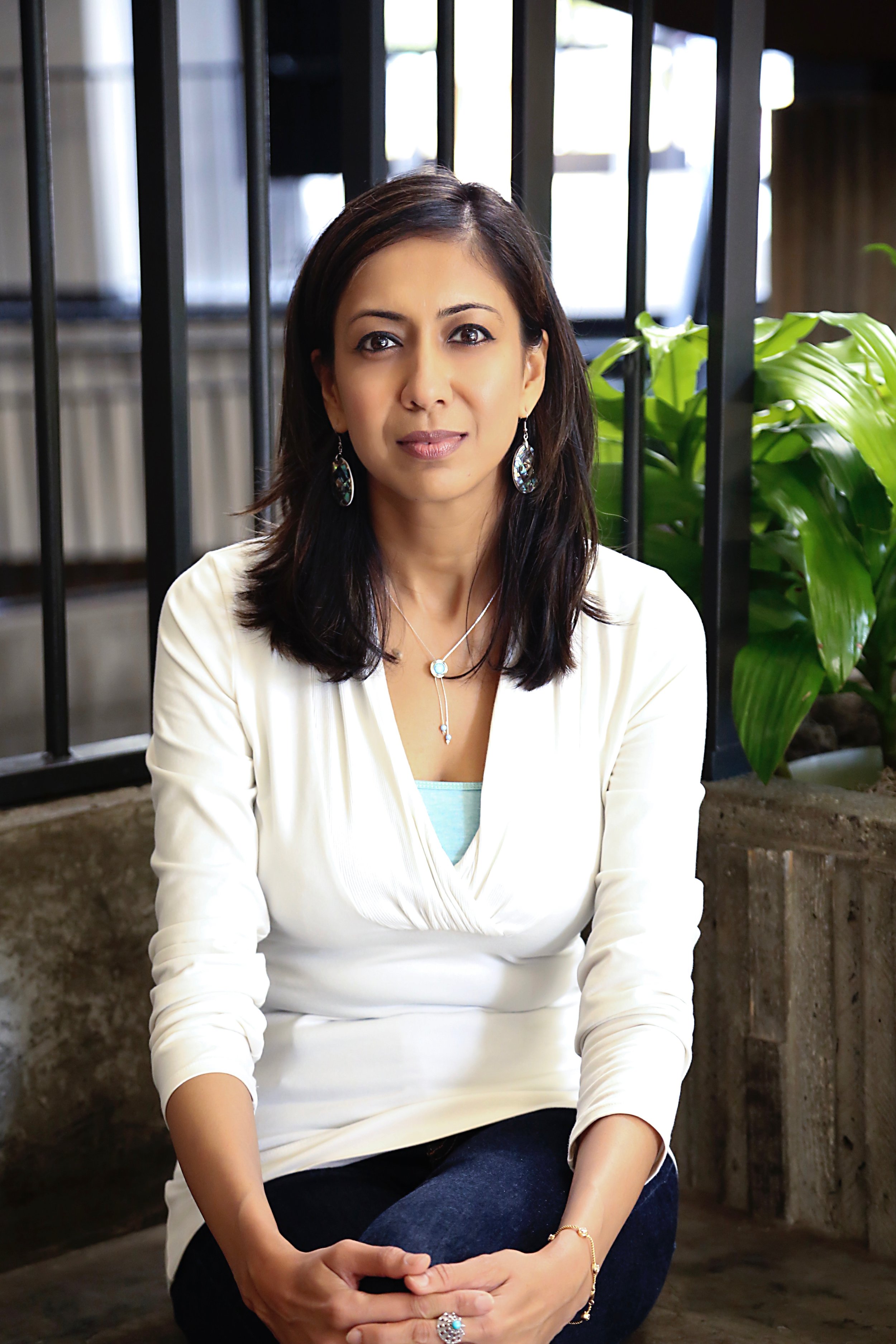
Namrata Poddar writes fiction and nonfiction, serves as Interviews Editor for Kweli where she curates a series on Race, Power and Storytelling, and teaches literature as well as creative writing at UCLA. Her work has appeared in several publications including Poets & Writers, Literary Hub, Longreads, The Kenyon Review, Electric Literature, Catapult, and The Best Asian Short Stories. Her debut novel, Border Less was a finalist for Feminist Press’s Meriwether First Book Award, and featured as “The Millions’s Most Anticipated" books for 2022, Brown Girl Bookshelf's "2022 Books to Read in 2022" and BuzzFeed News’s “16 Upcoming Books from Indie Presses You’ll Love.” The novel releases on March 1, 2022 from 7.13 Books in North America, and later this year from HarperCollins India in South Asia. Poddar holds a PhD in French literature from the University of Pennsylvania, an MFA in Fiction from Bennington College, and a Mellon Postdoctoral Fellowship in Transnational Cultures from UCLA. She lives with her husband and son in Greater Los Angeles. Website: www.namratapoddar.com.
Here, the author reads an excerpt from one of Border Less's chapters, “Chutney,” published in The Best Asian Short Stories 2019 anthology: https://www.youtube.com/watch?v=OLDsXcFHi3A
This Hyphenated American Reading Life: March 2022

For this month’s post, to honor the historic appointment of Justice Ketanji Brown Jackson to the Supreme Court, along with the victims of anti-Asian hate over the past two years of the pandemic, but also more broadly, I am posting my essay on a reading of the book-length poem, CITIZEN, by Claudia Rankine. Thank you for reading! An earlier version first appeared in Michigan Quarterly Review - CB (web editor)
You fear the night is being locked and coded on a cellular level, and want time to function as a power wash.
—Claudia Rankine, Citizen
i.
It’s not that the objective facts stand there, smug and jeering, in isolation.
ii.
On August 11, 2017, under the cover of an official permit granting them the right to assembly by the city of Charlottesville, Virginia (in much the way that robes and hoods once functioned as “cover”), a group of approximately 100 white men began marching to express their objection to the removal of a statue of Confederate army general Robert E. Lee.
They called themselves “protestors,” adopting the mantle of protestors from the civil rights movement, co-opting the language of a more recent movement by saying “White Lives Matter,” but also incorporating Nazi symbols into their show of force, including phrases like “Blut and Boden” and “the Goyim know” to harangue and target anyone not qualifying as Aryan (Jews, LGBTQ individuals, people with disabilities — all of whom were mass murdered by the Nazis during the genocides of World War II, and all of whom were mocked by many vocal Trump supporters during 2016 Republican presidential campaign, which used Pepe the Frog, an image co-opted in Nazi memes, as a symbol, along with historically anti-Semitic images of the Star of David against a backdrop of money. The term “Aryan” itself was a term hatefully co-opted and transformed into a slogan of hate by the Nazis, reading Nietzsche, who in turn read ancient Indian texts that posited light-skinned Aryan invaders as the bringers of civilization to the dark Dravidian hordes.
Over the course of a day in Charlottesville, some of these symbols—including the swastika, a horrifically bastardized Sanskrit word—became weapons. Nazis calling themselves “American” swung fists that had been upraised in a Heil Hitler salute, then threw torches, outright, into the faces and necks and hands and legs of counterprotesters, other human beings of different colors and religious faiths who shouted in agony and pain at the sight of Nazis shouting their threatening messages on American soil.
On August 12, the Nazis’ violence became even more targeted. A 20-year-old Kentucky man rammed his car at high speed into two cars of departing counterprotesters, then drove into a crowd of counterprotestors on the sidewalk (at a moment the police had declared the entire protest and counterprotest disbanded, and people had begun to leave). In doing so he killed a thirty-two year old woman and injured many others.
iii.
A young Latino man stands accused of murdering a Pakistani-American teenager in Virginia, Nabra Hassanen. Wielding a metal baseball bat, the man exited his car in what has been reported as an incident of “road rage” and went after a group of Muslim teenagers walking toward a mosque.
Was it a hate crime? The accused man wasn’t carrying a sign saying, “Clear out the Muslims” — a translation of the Nazi slogan “Jews geraumt.” He hasn’t been accused of writing any of the letters received by mosques across the nation saying that Trump’s victory would mean that the nation under him will “cleanse America and make it shine again. And, he’s going to start with you Muslims. He’s going to do to you Muslims what Hitler did to the Jews.” News stories about the murder of Nabra Hassenen attribute her death to road rage, a spontaneous fury that drove him to attack Nabra and her friends.
At self-proclaimed “anti-Sharia” demonstrations in June 2017, hundreds of members of anti-Muslim hate groups held signs stating, “Islam is not American.” This despite the building of the first American mosque in Ross, North Dakota in 1929, and despite the 1957 visit by President Eisenhower to the opening of a mosque in Washington D.C., whose “graceful arches” he praised, stating:
I should like to assure you, my Islamic friends, that under the American Constitution, under American tradition, and in American hearts, this Center, this place of worship, is just as welcome as could be a similar edifice of any other religion. Indeed, America would fight with her whole strength for your right to have here your own church and worship according to your own conscience. This concept is indeed a part of America, and without that concept we would be something else than what we are.
Was the young man who now stands accused of Nabra’s murder simply demonstrating how well he’d learned to be American? By killing her, was he hoping to track the hate to a group more vulnerable than his own, undocumented immigrants from Latin America, whom Trump derided and targeted for insults during his campaign?
Did that young man not see that he and Nabra (who looks like my sister) glowed from the same skin?
iv.
Before Trump won, I chatted at a child’s birthday party with an Israeli-American woman about how frightened I was of his victory given that I’d grown in the same part of Queens where Donald Trump’s father may have been arrested for participating in a KKK demonstration in 1927, and given that my family is both brown and Muslim. The cultured and lovely woman from Tel Aviv, a classical musician, the mother of a girl my daughter adores, the same woman who’d invited my husband and I to visit her summer house in the Hamptons, said, looking me in the eye, “Oh, but that will be OK, we don’t worry. Trump’s son-in-law is Jewish, after all.”
A dear high school friend, born to a brilliant Muslim academic father and a progressive mother active in New York politics, married to an equally progressive Jewish man from the Midwest whom we both went to undergrad with, asked me in October 2016 to “please stop sending so many emails” after I’d forwarded a particularly scorching take-down some Democratic pundit wrote that criticized the Green Party strategy to teach the country a lesson by letting Trump get elected. (Both she and her husband: voted Green Party.)
v.
Why do different people feel safe?
As a child I studied karate, growing up in Trumpland (working-class Queens) where white boys (and girls) waited for us after school, showing off their fists. Kindergarten classmates said “Look everyone, she can’t wash the brown dirt from her hands.” Those children called me “fucking Hindoo” as soon as they turned nine or ten (like one boy, Lenny, with Kermit the Frog-eyes and a benign comedian’s face, even when he refused to drink at the water fountain immediately after I had drunk from it). In sixth grade, white boys tried touching my bare legs on the school bus. During summers, beautiful white girls (Christians, Jews, along with atheists) kept on insisting they were justified in pushing Indian day-campers to sit away from them “because Indians smell.”
As a young adult living in England for two years, I couldn’t wait to return to the US. I was convinced that certain experiences — being called “cheap Paki slut” while sitting on a train; being asked “Cheap, aren’t they?” by a woman looking over my shoulder at specialty porno magazines of naked South Asian women (i.e. “Asian babes”) — were so specific to the stains of colonialism and indentured servitude, even plantation slavery of Indian millions, that I would never see these experiences in the US, that my American passport meant I was still at least promised a promise.
vi.
They achieve themselves to death trying to dodge the buildup of erasure.
—Claudia Rankine
An American Rhodes scholar (Balliol & CT) wouldn’t feel safe driving from New York to D.C., especially not safe passing through Virginia nowadays, even though Virginia is where the office of the American Association of Rhodes Scholars is based. She is (I am) not the only one who feels this way.
vii.
Navroze Mody, an Indian immigrant, was murdered in 1987 by a hate group in Hoboken, New Jersey who called themselves “Dotbusters” and went on marches.
Their marches were in objection to a lot of things. They objected to signs on American soil in any language but English. They objected to English-speaking, academically-brilliant, technically-skilled non-white immigrant workers existing, period. They themselves were white men with bats in Jersey City and Edison, several of them Italian-American and Catholic, and thus not necessarily accepted by those welcoming “Aryans.”
Christmas is American, I remember thinking, when I first saw the Macy’s Christmas tree. But even Christians have been targeted by American hate.
In the 1920s, the KKK began targeting Catholics and Catholic churches, burning crosses on the lawns of churches, murdering Catholic priests, backing legislation to prohibit Catholic schools.
viii.
This hate. It’s as American as apple pie. (World War II soldiers said they fought against the Nazis for “Mom and for apple pie.”) Unlike Roxane Gay (whose writing I love, whose parents are from Haiti, where racial animosity exists between descendants of Dominican immigrants and other Haitians, where lighter-skinned groups control a greater portion of national wealth), I don’t believe American hate is in any way new. We’ve always been the target (all of us) of “hate that doesn’t hide,” to use Gay’s evocative phrase.
The public nature of the hate is critical to its Americanizing function. Shouting hate slogans, hateful slurs, is our form of communist denunciation and coerced betrayals of loved ones — only, instead of marking Party membership, by offering up traitors to a cause, capitalists, enemies of state — we signal we are part of the majority by verbalizing hate, demonization, exclusion.
Mocking and tittering. Twittering.
ix.
A girl I knew in my childhood, Martha, beautiful and light-skinned and first generation Chinese-American, slender and glamorous as a model, played Barbie Dreamhouse with me over and over until the day she joined a blonde-girl crowd consisting of girls who were scented, exclusive.
Martha publicly chanted “fucking smelly Hindoo” behind me as she walked with them, following me home in the fourth grade.
x.
The day I get an author photo taken is the same day there is a photo of Srinivas Kuchibhotla’s widow on the front page of the Sunday New York Times. She’s wearing jeans, posed no differently than a Latina or any other brown woman. I talk about the photo with my own photographer, wondering out loud if it was deliberate, this posing of an Indian immigrant woman wearing American blue jeans and a T-shirt instead of sarees and silk veils and heavy gold jewelry suggestive of dowries. Kuchibhotla was a young engineer for a multinational corporation who was gunned down by a white former Navy engineer, an air controller — a person who helped make planes fly before, in his degraded state, he couldn’t stop using racial slurs, then came back to the restaurant with guns.
xi.
That’s the bruise the ice in the heart was meant to ice.
—Claudia Rankine
The proudest I’ve been of America that I can recently remember: The night that Khizr Khan, father of a fallen soldier, gave his Democratic National Convention speech, unexpectedly moving various audiences away from hate, just for minutes.
It mattered that he spoke with the same accent I could hear at any time from my male relatives. I tried to dismiss my discomfort that he’d paid for celebrity with blood. It was as if, to earn the right of being listened to, he’d had to sacrifice a beautiful son (one who, like most South Asian men now ascendant in popular culture like Aziz Ansari and Kumail Nanjiani, had mostly dated white women). Watching the convention and crying a little, I remembered how during the Obama campaign the team was careful to move hijab-wearing women to the back of any crowd, safely away from Barack Hussein so that associations of “Obama” and “Osama” could be broken. People who looked like me were ushered away to disavow the implications of the name “Hussein.”
The Indonesian, Kenyan, Kansan, Boston Brahmin, Chicagoan multicultural reality of the name Hussein is, in its essence, American — as least as American as the impulse to hide the mottled, conflicted, contradictory nature of this reality.
The Trick, a short story by Stephanie Jimenez

The Trick
I love Adam. Love the heat of his body. How it chafes and makes my skin peel away into a skein of flesh that hangs over my bottom, like the train of a wedding dress that drags with each step. When we first fell in love, I was young, but not stupid. I knew women were attracted to dresses like mine, borne through my tears and my suffering. I heard their jealous footsteps always behind me, threatening to trample me down.
I was young, but not stupid. In our island town, it never gets cold. When we first fell in love, my limbs were slickened with sweat, my stomach filled with the drinks named to make poor people feel royal: a bit of Chivas Regal, a bit of Corona. Adam was my age, but the way he never seemed to get drunk made him seem so much older.
“What?” he asked, as I sat next to him on the playground. I knew him since our elementary days, when I watched him bite the tips of his pencil erasers, his teeth clamped around the pink flesh. From the fence, Jessica waved the whiskey bottle at me, sweating like another brown arm.
“I like you,” I said. “I’ve liked you since we were kids.”
“Wow,” he said, but he didn’t laugh.
We left the playground to go to his house. Adam kept looking at Jessica—my cousin who always had something witty to say, whose laugh sounded like a windchime. There was a pool behind Adam’s house. Only popular kids had pools. When he called my cousin’s painted toenails sexy, I stripped down to my underwear.
“It’s not treated!” Adam yelled as I lifted the tarp and jumped in.
“Boba!” Jessica shouted.
I was covered in dirt water. But when I looked up at Adam, I saw my plan had worked. My underwear clung, and Adam’s eyes clung, too.
“I’ll stay,” I told Jessica when she asked to take me home.
The bikes in the shed sparkled with rust. I asked if we could ride them to the beach, but Adam said I could become my own ocean right there, on the shed floor. He said what I could do with my body was a superpower, so I became even vaster, a world. We were swimming in liquid, white like saltwater, frothing like seafoam, when I asked him to stop.
“But don’t you like me?” he asked. “You said you liked me.”
We kept going. The water soaked the shed, went everywhere. Finally, Adam rolled over, splashing his knees. I got up and touched my back. A layer of skin dangled from it. Adam told me to close my eyes, and in one strong motion, he pulled it right off. The next day, I went back to the shed, and the day after that, I went again. Each time, more skin hung off my back, until it was scraped raw, and the water ran with blood.
Adam would say all kinds of things, things I never expected. Maybe that’s what compelled me to him—he had such a gift for surprise.
“No one can ever make you feel how I do,” he said.
“I’ll kill anyone who touches you,” he added later.
And sometimes, as the sun fell over the horizon, he pushed back a soaking wet piece of my hair and breathed in my ear: “Te amo, mi reina. You’re all used up, bitch.”
That’s how the summer slipped into the season of suffering, of brimstone and flame. In the interminable heat, Adam appears like a moon. Sometimes his love waxes, sometimes his love wanes. But when you have this much hurt, it’s a rare and precious gift. This hurt doesn’t extinguish. It regenerates. I can share it over and over, and still, I have more hurt to give.
That’s what Adam taught me. What I’ve learned all these years. Adam made me special. He sainted me. He mixed up my love with all of his pain, and I’ve never been able to get them straight since.
*
Jessica is shocked to hear that Adam dumped me again. But how, she cries. A day before your graduation from college? It isn’t right.
Jessica graduated with her bachelor’s degree years ago, and she says celebrating is important. We packed a suitcase full of tight dresses, and now we’re at the beach, lying on our stomachs, as I show her Adam’s face on the screen.
He has a puppy now, Jessica. A pitbull. Princesa. Look how he kisses Princesa on the lips as if she were a woman. Look how he writes in the caption: I love her so much, My Princesa.
“She’s a beautiful dog,” Jessica says, her voice dreamy. “I haven’t seen such a beautiful dog in a very long time.”
The last time I saw Adam, he didn’t have a dog. I begged him to come over. I always beg. When he zipped up his pants and left the same night, I cried and spent the next week crying. Look at Adam kissing Princesa. I would never punch a dog in the face, even if I thought about it.
“I don’t get it,” Jessica says. “You two should be married, no joda.”
I stare at the horizon. There isn’t a cloud in the sky.
“Oh, baby,” says Jessica. “Don’t cry.”
Jessica always humiliates me. It’s like she smashes a pie in my face, like I can lick the whipped cream with my tongue. Even now I have to try to not focus on Jessica’s body, on the way it spills out of her bikini. Jessica, with all the good genes. There are so many boys who’d throw fists and smash teeth over her body. Boys who would marry her. I bet Adam would. The tears roll down my cheeks.
“I thought we ended this shit,” Jessica says. “I thought we fixed this already.”
“Jessica,” I say, my voice a warning.
She pauses, inhales sharply. We agreed we’d never talk about that, not in the open.
“But he dumped you again! Why don’t you move on?”
“Jessica!” The tears are salty. “Because I love him!”
Jessica draws a circle with her toe in the sand. Then she draws it in the other direction.
“We have to do something so that he never dreams of leaving me again, Jessica. Something even more powerful than last time.”
She slides her sunglasses up her nose, tilts her chin toward the sky.
“Jessica?”
“Uh huh, Angela. I heard you.”
The sky is clear, but it’s getting late. The light at this time of day moves quickly. It flies over us like a bird of prey.
“Text him,” she says. “Add the symbol. The one with two hearts dancing in a circle. Let me see? Yeah, that should work.”
*
Early on, I asked Adam to come to a concert with me. First, he said he would. Then he said he wouldn’t, so I ended up going alone. I was nervous because the ticket said 16 and over, and I thought I might get caught. I wasn’t, and then I met you.
Because of Adam, I thought that loving someone meant knowing the most precise way to hurt them. But you weren’t interested in learning my fears.
The concert was held by the beach in an old pool that had fallen into disrepair. Beside us, baby blue paint was peeling, and below us, drains crisscrossed like spiderwebs.
With you holding my hand, I told you I had never sat on the bottom of a pool before. I had never held a white man’s hand, either. On the ground, I kept asking you questions.
I asked: Would you ever call a girl a flat, skinny bitch?
I asked: Do you think girls can get used up like pieces of gum?
I asked: Am I ruined?
You told me that you weren’t from around here, as if I didn’t already know. You said you didn’t believe in my archaic ideas. You said a person couldn’t be ruined by anything, you said. You said, “you’re too sad to be 15,” so I didn’t tell you my age again.
You bought me a beer. That was nice. It’s crazy, but sometimes I still dream of you. In one of them, there’s a seal in my tub. I jump in beside it, and the tub becomes an ocean, and now you’re swimming ahead of me. I keep trying to wave you down, to get your attention. I keep trying to ask, are you really not lying?
The pool by the beach was demolished summers ago, but I wonder if you still go to concerts in your country. I wonder if girls like me lean on your shoulder. I wonder if your hand goes up their blouse, while the other holds a big, foaming beer. You didn’t even flinch when I twisted your wedding ring, over and over, wondering what kind of girl gets married to someone like you, and if she really can’t be ruined.
I post the photo Jessica takes of us on the beach. The caption, drafted by Jessica, reads:
Graduated with my bachelor’s degree, pendejxs! Time to party J
Adam likes it.
“See?” Jessica says. “He’s thinking about you.”
“No,” I say. “He’s just always online.”
But then he sends me a message. From the number of capitalized letters congratulating me, it’s like I’ve won a Nobel Prize. I can feel my heart beating in my ears.
“What if you just told him that he’s been hurting you?” Jessica says. “I studied psychology in college. It’s called radical honesty.”
“You know that’s not enough,” I say, waiting with my palm out until Jessica surrenders the phone. Jessica studied psychology in college, but she works at a travel agency now. It has European flags hanging from the walls and girls in hula skirts gyrating in the window. Sometimes, she takes on odd jobs—selling make-up, headbands, dime bags of weed. She says she wants something called radical honesty, but I know my cousin Jessica. She just wants to feel important.
“Playing these games won’t work,” she says. “I’m telling you, Angela. He needs to know that he hurt you.”
“It worked once,” I say, sending the double-heart emoji. “And it’s going to work again.”
The last time Adam tried to leave me, he bought himself a car. A red pick-up truck with a white race-car stripe. He liked giving people rides. He kept the bed waxed and clean. He blasted the radio and told anyone to hop in. Old men smoked cigars in the bed of his truck. Old women sat huddled with groceries. The same songs played over and over, and nobody argued. Adam only played the classics.
I would cling to Adam’s skin like a summer sweat, but nobody ever noticed me in the center console, my skin hanging off my back. Nobody ever got into the bed of his pick-up truck and asked, y la Angela? Jessica got in the bed one time, and they discussed the stock market, talking nonsense. Then Jessica got up and waved goodbye. Goodbye Adam.
One morning, the center seat in the console smelled like perfume.
“You don’t know what it’s like,” I screamed. “You can have sex with whoever. But my hymen is gone forever!”
Whoever. Forever. I hadn’t meant to rhyme. Even then, I was able to hear myself, and I heard that I sounded ridiculous. I was screaming so loud, I was waking the whole neighborhood up.
“I’ll return it,” Adam said. “There’s a surgery to return it.”
To Adam, my love was a big joke.
But I kept screaming, crying, thinking someone would defend me. La pobre Angela. I thought that’s what they’d say. Instead, they said I shouldn’t try to change a man, and a girl like me shouldn’t try to change the music, either. Adam played the classics. What else could I want? A man like Adam—I couldn’t have him. He was young. In his prime. My love, it meant nothing. They told me I was a fool. That Adam had to be shared.
My hand fell away from the radio dial. They had their eyes trained on me like a blade. But after so many times, they got lazy. They thought I’d be the helpless Angelita forever. And one day, when my hand drew back, they weren’t watching to see where it landed, so I kept it in a fist, dreaming of self-defense.
*
Jessica has commandeered my phone. She’s been writing to Adam for half an hour, convincing him to come. In the sky are big, dark red clouds. Clouds that look like live coals.
“He won’t come to see me, Jessica.”
“Let me work my magic,” she says.
I look over Jessica’s shoulder, glance at the screen.
Make sure to bring Princesa :)
“The pitbull!” I shout. “What for?”
“Calmate, Angela. It’s part of my plan. So that this madness between you can finally end.”
“Jessica,” I say, suddenly afraid. “We can’t hurt that dog.”
“Estas loca! I would never hurt a dog.”
We’re walking back to the hotel. A car cuts us off at the curb, coming so close to our legs, I can feel the hot motor. I can see molten skin in slabs on the pavement, bright orange like slices of mango.
“Asshole!” Jessica turns to me with her fists balled. “I wish I had tomatoes in my pockets all the time. I would’ve pelted that asshole’s car. Do you ever think about that?”
“No.”
“But if I had tomatoes, would you throw them with me? Come on, Angela! You have to!”
When Jessica and I are at bars, she always invites me to the bathroom with her. Come on, she says, grabbing my arm, as if we were still little kids. Jessica’s not a little kid anymore, but she loves in all the old ways. Jessica and I will be cousins forever, and I can’t do anything to change that. No matter where I go or what I wish for, Jessica will always be my older cousin.
“Jessica,” I tell her. “I’ll throw tomatoes with you.”
*
Outside the hotel, palm trees sway in the wind. The clouds have changed from red to black. We run up the iron staircase and throw open the door, hiding from the storm.
“He won’t come,” I say, watching the rain beat the window. “The weather’s too ugly.”
“It’s not the weather you should worry about being ugly, Angela. Put some make-up on.”
My phone rings.
Adam’s downstairs. I tell him to wait in the car. Jessica says she needs time to get things ready, so in the parking lot, I let him run his hands over my body. The new car is tiny, nothing like the truck. It doesn’t smell like perfume; it smells like dog slobber. My bra gets caught on the stick shift. The dog cries, and I shiver. The clouds hang close to the ground like black, wilting flowers. I say we should finish upstairs. He carries Princesa in his arms like a baby.
“You look different,” Adam says, from behind me.
“It’s only been a few months.”
“Still, you look different. Skinny. Too skinny. Ew.”
With his eyes fixed on my ass, my legs start to feel weak. Jessica is right. Why do I try to make him love me? It would be better if Adam were washed from my mind, if all the tarnished brain circuitry that endlessly loops thoughts of him finally ran clear. On the other side of the door, Jessica sits at the center of the mattress, freshly showered and stupidly pretty. Adam stares at Jessica. I stare, too. Every day she has more of a beautiful body. You have him, Jessica, I want to tell her. Please take him. You have him. You do.
“I graduated with a major in Psychology,” she says, as Adam and I walk into the room.
“Jessica,” I say. “Maybe we shouldn’t.”
But it’s as if Jessica doesn’t hear me.
“We are going to have radical honesty! We are going to resolve this once and for all!”
“Jessica,” I say, my voice trembling. If Jessica keeps talking, I fear I might die.
“Come on, Adam,” Jessica says. “Sit.”
Adam doesn’t sit.
“Adam,” she yells. “Sit!”
But he doesn’t sit. He just looks at Jessica, dumbstruck. He looks like he’s lost all his words. Jessica goes up to him until she’s right in his face, her nose against his like she’s going to kiss him. They’ve waited so long. Their lips brush each other’s. Yes, I say, staring up at the ceiling, knowing no one will hear me, knowing no one ever has. Yes, I am ready to die. But then Princesa, who he carries near his chest like a baby, suddenly squeals. She leaps out of his arms, into the doorway. We stare as she bolts into the rain, and finally, Jessica steps away from my Adam.
*
I tell Adam I will staple posters to poles to find her. I tell Adam I will offer a 500-dollar reward. I tell him I didn’t mean for her to get lost forever, that Princesa was really a beautiful dog.
But we search for hours. There’s nowhere left to look. We go back to the room and drink the bottle of vodka, and as we lie on the bed soaked in moonlight, a tear forms in Adam’s eye.
In the morning, when Jessica asks if we want to go to the mall, I think I mishear him when Adam says yes. On the way there, he says he should have never gotten the dog. In line to buy ice cream, he says the dog pissed on the floor. He says having a dog is a pain in the ass.
The next week, he comes over my mom’s house. At the table, he announces that having a dog is worse than having a wife. My mom laughs and winks. Adam winks. They wink at each other. My mom tries to feed me, but I can’t eat. Outside, everyone sees us together.
Angelita! they call. Adam’s girl!
Just yesterday, Adam said one of those things that shocked me so much, I could no longer see the ground. “Marry me,” he said. My legs went limp, so he swept me into his arms. “Angela,” he scolds. “You’ve always been too dramatic.”
I called Jessica.
“What if she’s dead?”
“No,” Jessica said. “They steal dogs to breed them. She’s fine. She’s probably pregnant.”
“But Jessica.” I looked over my shoulder, but Adam was still in the shower. “He asked me to marry him!”
Jessica’s voice was a roar. “You really are stupid, Angela! You’re so used to suffering, you don’t know how to stop! Stupid woman!”
I am stupid—that must be it. So stupid I can’t stop searching for Princesa. At night, I go to the streets. And just as dawn breaks, I find her. She’s behind Adam’s house, under the tarp of the pool, sitting on her haunches.
I lower myself in and pull Princesa’s corpse out. But it’s not Princesa. It’s just a stone lion, bleached and smooth. I drop it back in the water and watch it sink. I’m wet and cold under the fast-waning moon when your shadow appears beside me.
You hold out a big, foaming beer.
“I thought you didn’t live here,” I say. “I thought you lived far away with your wife.”
You smile, hold the beer.
“Listen,” I say. “You’re the only one who can love me. Take me with you! I’ll cook! I’ll clean! I’ll be a better woman than she is!”
You look at my chest, and I look, too. Had I always been shrinking, or did that just happen now? I look the same way when you first met me. Back when you were so nice, and I was only fifteen. You were so nice and so much older than me, I didn’t notice your hand crawling up my blouse.
“I don’t believe in those archaic ideas,” you say, and then you get on a plane to go far away.
I wake up to the sun rising outside the house. I need to get up and go back inside, before everyone in the neighborhood sees me cold and defenseless, with hallucinations of anguish, like someone at the very last stage of their life.
*
My clothes are dripping as I tiptoe next to Adam’s bed. Asleep, Adam looks so vulnerable. I could go to the kitchen and drive a knife through his heart. I could do that, if he wanted me to. I would do anything he wants, my poor, sleeping baby, how he’s suffered so much—too much.
In the kitchen, I pick up the phone.
“What the hell, Angela? It’s early.”
“Jessica,” I cry, slumping to the floor.
“She’s alive, Angela. I told you—the girls don’t fight!”
“You’re lying!”
“Angela.” Jessica’s voice is a warning.
“Admit it,” I shout. “She’s dead because of us!”
There’s silence on the phone. Six months ago, when Jessica came over with the toy pick-up truck, I gasped—the resemblance was so striking. I have to show Adam, Jessica said, but I snatched it out of her hand. There was a bottle of white-out in the kitchen drawer. I kept my hand steady and drew the stripe on. There was a notepad on the dining room table. Emilia, I wrote, because by then I knew her name. I shoved the scrap into the window of the toy car and rammed it against the wall. Over and over, scratch after scratch, until the paint chipped off. Jessica laughed, then she took the paper. With her lighter, she set it aflame. The name blew away in a trail of white smoke, wafting away like perfume, the perfume that I smelled from the truck’s center console.
When Adam’s truck flipped over on highway 52 and the woman by his side was dead on impact, we were at the bar. Jessica led me to the bathroom, where we cried and asked God to forgive us, for we did not know how powerful we could be.
“We killed her, Jessica. And now we killed Princesa, too.”
“You must never seek happiness from another woman’s heartbreak and misery! Any woman who does that deserves to die!”
Jessica’s voice burns like a fire, like brimstone it makes the air foul and acrid. “You have him now, Angela. Don’t call me again.”
In bed, I press my body against Adam’s, trying to keep from shivering. With my mouth in his ear, I whisper. Yes, I say, not sure if anyone will hear me. Yes, mi Adán, I’ll be your wife.
He grunts in approval. He’s on top of me. I start to expand, gasping as if it were my last breath. But he wants even more. He wants me to talk. I open my mouth to say:
“Adam, stop.”
“There’s too much hurt still inside me.”
“Adam? Listen! It’s my fault!”
“Angelita,” he groans. “My damned perfect angel.”
The bed becomes molten. The windows fly open. I’m in hell, murderess, drowning under my sins. In this home borne of suffering, love engulfs me completely. The skin peels off my back, a scorched skein of flesh. Look at it, piling up on the floor, so fragile and beautiful. Any woman would want it. To pin to their wrist like a corsage. To lace over their faces like a fine veil. But they’ll never have it because it belongs to me. I worked hard to earn it, and I’ll work even harder to defend it. La pobre Angelita. This man that I love. Every woman on earth will learn to stay back, or else I’ll devour her, too.
Stephanie Jimenez is is based in Queens, New York. Her fiction and non-fiction have appeared in the Guardian, O! the Oprah Magazine, Joyland Magazine, The New York Times, and more. She is a former Fulbright recipient and a graduate of Scripps College in Claremont, California. Her debut novel, THEY COULD HAVE NAMED HER ANYTHING, was published on August 1, 2019 (Little A). She is working on a second novel. THEY COULD HAVE NAMED HER ANYTHING was one of BookRiot’s Top 50 Books for the Summer; one of Electric Literature’s Books to Read by Women of Color in 2019; one of Hypable’s Books to Read this Summer; and one of Remezcla’s Books to Read in 2019! You can read more of Stephanie’s work here.
What Hate Mail Taught Me, a story by Allison Stalberg

Image provided by Filip Zrnzevic, photographer for Unspool/ Squarespace
I’ve been building walls for months now. It’s made of dark trees from a forest only artists know, and only use when they are hurt. They can run and get lost in it, like Snow White when she escapes from the huntsmen. Others lie on the earth and watch the branches sky, just to remember that they and the monsters they fear are small. In the darkest corners of the wood, I’ve seen nooses and love letters along with footprints that have ended. Some of the artists are like me, collecting branches and weaving them together into a home for their heart to take shelter.
I’ve begun covering my dark walls in stickers to remind myself I’m safe here. I’ve begun to put quotes from other artists on the wall, reminders of to be strong and believe in myself. One sticker points to a hole in my wall and says “hole to another universe.” Others remind me of lovely fairytales, of mushroom princesses and cat-shaped macaroons. I began to stick flowers into the wall. “I’m safe. I’m safe. I’m safe.”
At this point, I’m not entirely sure what is on the other side of my wall. The wall won’t let me see anything outside anymore, I made sure of it. I had to end the life of my curiosity, and it was a difficult animal to kill. It was a rabbit with strong legs, all-seeing eyes, and a cute little pink nose that knew no better but to smell everything. God, it could run, it could run all day. The wall did nothing to stop it, as its clever legs could dig under and rush away. I killed it myself a month ago in a loving hug that was too tight.
There are others like me, I know it. We all know there are others like us, though we cannot find each other. No one can find you, and that’s why we are here. We all made the woods together, with each tree made from our overflowing souls. The artists of old we hear of, those that overflowed so too much that no glass could hold them; they probably are the ones who planted the seeds of this place. It’s safe here.
What made me run to these woods? I think more of us are running into these woods every day. We are in some form of zombie apocalypse. The monsters usually are not alone, and that is part of why they attack with such confidence. It’s not your art they go for, it’s your heart. The art attracts them like a dinner bell, they hate the art, and their drooling mouths sense your soul somewhere beyond what you’ve made, what you’ve expressed, and they rush you. The difference between them and the rest of mankind is that mankind can hate the art and move on with no thoughts over the maker, but the zombies are hungry. I don’t know why they are so hungry. I don’t know why they chose me.
Once you survive their attacks and make it into the safety of the woods, something is transformed in you. It’s more than that little curious rabbit you had to kill yourself. You see others and wonder, “how long until they lash out at me?” You see places and ask yourself, “am I really safe here?” You see the others gather around your art, and you peek over the wall and that’s the great mistake. If you peek over the wall, you’ll find that they are discussing how to tear you apart. They don’t love you, they hate you. Empathy is dead here. They don’t know you, but they still hate you. They love one thing, and that is hating you. They love it like a shared feast, discussing your ignorant heart over red wine, your ugliness over fine cheeses, and their righteousness over sourdough bread.
So what of those who do know us? Do we really feel safe with them? Those who have been attacked too long have the same answer as me. It’s a dark “no,” a back chilling “no.” Our forest echoes with distrust for mankind. Now whenever someone so much as judges us, we just see the zombies, their dead eyes not seeing us, yet coming after us in a nightmarish gallop. You come to the realization that zombies exist in everyone. Even your own friends can see art is a dinner bell. You invite them in and stare in horror as they bring forks and knives, ready to dig into you. And so we run into the dark woods and gouge out our eyes and take out our own tongues, to kill the creatures in our hearts that know no better than to be exposed.
Another artist once told me, “We are saving the world with our hearts.” I added that quote to my dark wall and decorated it with pink and blue tape. It reminded me of when I was a kid, before the woods, before the zombies. I wish the others lost in these woods can see it and draw from its power. Remember who they really are.
Behind my wall, I continue my heart’s work. When the work is done, I slip it under the wall for the wind to carry out of the woods for the hoards and survivors. I live in my little wall, hoping that maybe one day, someone will slip paper under my door and fill it with lovely words. A response that is not blood-soaked, someone that sees me, that loves me. Someone who will listen with kindness, even when they disagree, and no matter what, have my back in this hard world.