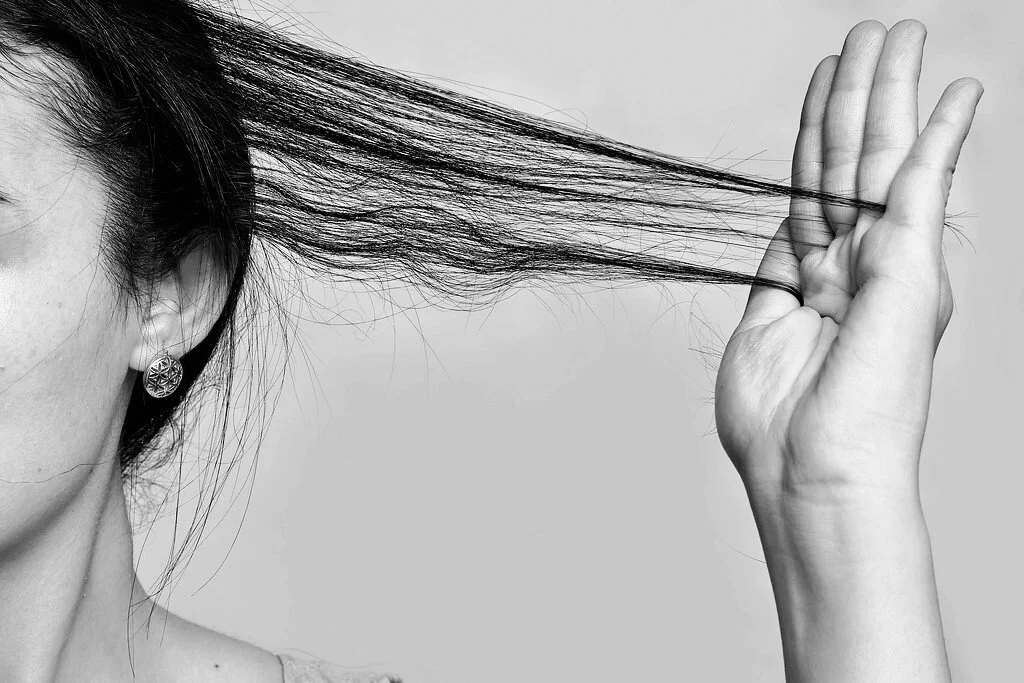
Regrowth
When I was around six months old, my mom put me in a baby beauty pageant.
When I was around six months old, my mom put me in a baby beauty pageant. I got first place. She said it was because I had a full head of thick, black hair—that it gave me an edge.
“Those bald babies just weren't as cute.”
***
Secondary succession is a type of ecological succession that occurs when plants and animals recolonize an area that was significantly damaged after a major disturbance, such as flood, fire, or human activity.
***
I must have been in third grade when I saw that episode of Full House; laying on the greenish-brown couch in my living room on a weekend morning. My dad was probably making waffles, like he did at least once a week. My mom was probably upstairs reading in bed. My brother was probably still asleep (if he was even home at all), and my sister was probably playing with dolls in her room. The Tanners were all in the kitchen, having breakfast and getting ready to go about their respective days. I think it was Aunt Becky who noticed it; a gray strand hidden in Jesse’s famous hair.
He freaked out.
Joey made old man jokes.
Danny said something like, “You know, Jess, getting older isn’t something to be ashamed of.”
Jesse rushed to the mirror to locate it, and then plucked the hair from his head.
“Pulling it out will just make two more grow back in its place,” Aunt Becky laughed.
For some reason, I tucked that knowledge away.
***
Secondary succession can only occur when the disturbance did not eradicate all life and nutrients from the environment.
***
I went to the YMCA after-school program during the year, and did camp there
every day during summer break. It was usually the same group of us.
This one girl, Alyssa, was a couple years older than me. She was tall, pretty, and
wore makeup. She talked about boys, and was mean to the counselors. She was cool. We were in the locker room one day, changing after a trip to the pool. I was trying
to dry my hair with the hand dryers, because it always took forever. One of the counselors, Pam, or maybe Monique, was helping Alyssa put her hair in a ponytail. “It’s too much for me to do on my own,” she explained when she had asked.
“Wow!” the counselor said (maybe it was Sarah?), “Your hair is so thick! I can barely get the ponytail around it twice.”
Other girls gathered to swoon at the thickness of it.
I was always told I had thick hair. I prided myself deeply on it. I could easily wrap a ponytail twice. For the first time in my life, I was truly jealous of another girl’s appearance.
***
The first plants to recolonize the barren environment are known as pioneer species. They’re normally fast growing and hardy.
***
That summer, the one after third grade, my Yiayia came to stay with us for a month. The two of us never really meshed well. She refused to call me “Ally,” insisting on “Alexandra.” She ate pizza and burgers with a fork and knife. She would never let me spend a minute without her and my sister. I was stressed. There was a night where I didn’t fall asleep until the sun came up. I had pulled my first all nighter, because for some reason, I kept hearing one of those horns that clowns like to honk in people’s faces. I still don’t know what that was about. But that night, it scared the shit out of me, so I didn’t sleep.
At one point, I had combed my fingers through my hair, and when they snagged on a knot, a few hairs came with them. I absentmindedly played with a strand, and realized that if I pulled it tightly through my nails, like how I had seen my mom curl ribbons with scissors at Christmas, it would coil like a spring. I pulled another hair to try it again—same result. As I was pulling the sixth or seventh hair, Alyssa’s ponytail came to mind, and my jealousy boiled back up. That’s when I remembered Aunt Becky’s words. I wanted that ponytail. I slowly started pulling hair from the back of my head.
It only went on for a couple of weeks that summer. Yiayia went back home, and I honestly just forgot about the whole thing.
***
Some species actually require these ecological disturbances to grow. The jack pine (Pinus banksiana), common in the northeast US and Canada, has cones that need the heat emitted by wildfires to open, allowing seeds to be spread for new growth.
***
Fall of fifth grade, we started learning about cells for the first time. We went through the different types, plant and animal, and their differing anatomies. I was fascinated. I remember very clearly that my teacher, Mrs. Lindsey, told us about cells that are easy to see.
“Onion’s are good, under a microscope. Those ones are cool. Cheek cells too, if you swab the insides.”
My dad had an old microscope in his closet that I could use, but I didn’t want to wait for that.
“Mrs. Lindsey,” I asked, “are there any cells you can see without a microscope?” She thought for a moment.
“Hair follicles,” she said, finally. “They’re not technically cells, but they’re a good
example of a membrane and a nucleus. Here, everyone, pull out a hair. The white thing on the end is the follicle. The black dot is the root. It’s a membrane and a nucleus.”
I did what she told me. That was the real beginning.
***
The first official stage of secondary succession is marked by the appearance of these pioneer species. I would disagree, though; it’s the second. The destruction is the first stage. You have to burn it down to rebuild.
***
I was obsessed with the follicle. I went home and pressed one between two glass slides, and looked at it closer under my dad’s microscope. That night I sat up in bed and pulled some more from the top back of my head, right where my ponytail would sit. Eventually, I just liked the way it felt. I figured I would forget about it, just like I had the first time.
***
There’s a small-scale form of secondary succession that occurs in densely wooded areas. It’s referred to as “gap dynamics,” which happens when some sort of ecological disturbance causes a gap in a forest canopy, allowing sunlight to reach places it otherwise wouldn't.
***
A few weeks later, it must have been late November or early December, we were
at a play. My mom tried to take me to stuff like that a lot around that time. My dream was to be an actress. We were sitting there, waiting for the show to begin, and my mom started playing with my hair.
“Is this a bald spot?” she asked when her fingers inevitably found it. She looked over, and brushed my hair to the side. “It is!” She gave my father a concerned look. “Ally, where did this come from?”
“I don’t know,” I lied. “That’s where my head touches my headboard when I lean against it while I read. Maybe it’s rubbing?”
To this day I have no clue how I pulled that one out of my ass.
For the next few weeks my parents would pop into my room while I was reading in bed and tell me to lie down so my hair didn’t rub. It was becoming an issue for me.
***
In a 2013 study conducted by the Salk Institute, it was found that dying plant
species will secrete a chemical called karrakins, which signals dormant seeds to begin growing. In the case of areas destroyed by wildfire, it was found the chemical could break through ashes to get to the seed.
***
Over Christmas break I was watching TV in the living room and pulling. My dad came in and told me he made lunch. I pushed off the blanket I was using, and it fell to the floor. I didn’t bother to pick it up, which irritated my dad, so he went to pick it up for me. When he did, all the hair I had just yanked from my head fell out of it and onto the couch. He noticed.
“Ally,” he asked quietly, “are you pulling out your hair on purpose?”
“Don’t tell Mom.”
***
In many indigenous cultures around the world, secondary succession is purposely evoked through the use of slash and burn agriculture. It’s a practice used to deplete the weed, parasite, and pest population in the area, as well as increase nutrients in the soil.
***
He told Mom. Traitor.
***
If any established vegetation survived the ecological disturbance, pioneer species are able to outcompete them easily by maintaining very high juvenile growth rates. For example, there’s a type of balsa tree, known as Ochroma pyramidale, that can grow from a seedling to an adult with a trunk diameter of over 30 centimeters in less than ten years.
***
I was forced to see a therapist.
“Her grandma was just diagnosed with cancer. They’re very close, and I think she’s feeling anxious about that,” my mom told her.
Everyone had said Grandma would be fine. I wasn’t worried.
The therapist for some reason wanted to know about what my parents were like. She kept asking me if they fought a lot. She would make me play weird board games I had never seen before, sometimes just us, sometimes with my mom and dad, and ask questions about them.
She didn’t talk about the hair pulling, which pissed my mom off. All my mom wanted to do was talk about the hair pulling.
She wouldn’t let me forget. So, I didn’t forget.
***
The second stage of secondary succession is the introduction of intermediate species, which are typically fast-growing, short-lived, annual plants. They replace the pioneer species slowly.
***
I became obsessive.
I peeled off the follicles and collected them in a ball. I would pull my hair so hard my head would bleed. Scabs formed, and I would pick at those too. One day, during the spring, Mrs. Lindsey sent me to the nurse because I was picking at my head so often she thought I had lice. The nurse wanted to check it. I was terrified. I didn’t want anyone to see it. I didn’t even know what it looked like. I was scared to look at it in the mirror. I couldn’t keep my hair down anymore. I had to wear it in a horribly awkward ponytail to hide it. I shakily took the hair tie out though, and the nurse combed through it.
“Oh, honey! What happened?”
“I fell,” I lied again. “I, uh, I hit my head on one of those concrete parking bumps in the lot at Walmart and I started bleeding. The doctors shaved it so they could see the cut.”
I would have made such a good actress.
The parking lot lie was the one I stuck with. Why create alternate stories when the one you already have tricked an actual nurse? Obviously, people asked questions, so that’s what I told them. A year later, when I actually told my two best friends what it was, they didn’t believe me.
“No it’s not,” one of them said. “You’re lying. You fell.”
“No, that was the lie,” I tried to explain. “When I get picked up early during science every Tuesday, it’s because my mom takes me to a therapist.”
“So that’s why it still hasn’t grown back,” the other one said.
***
In 1988, a severe drought hit North America which led to an intense and unabated wildfire in Yellowstone National Park. Almost 792,880 acres of land were burned off. There were many attempts made to put out the fire, all of them futile. Nobody expected the forests to survive the disaster. However, in the consecutive years, the combination of ashes, nutrient influx, and heavy precipitation allowed the forests to quickly bounce back into green abundance.
***
Somewhere in that first year, my mom took me to my pediatrician who diagnosed me with depression and anxiety induced OCD. At 10 years old, I was the youngest person the pharmacist had ever filled a Zoloft prescription for—a fact he felt comfortable cheerily telling my mom.
I think I was in seventh grade though, when I learned the word for the first time. Trichotillomania. It had a name. I did some research, and it affects 1 in 100 people. I cried. I wasn’t alone. I told my dad, and he exclaimed, “You’re probably not even the only one at your school who has it!”
***
The third stage of secondary succession is characterized by the introduction of slow-growing, heliophilic trees that help to enrich biomass.
***
I only went to my first therapist for a few months. I hadn’t made any progress, and my mom didn’t like her. The new therapist, Dr. Brill, was cool. She was young, and had a real hippy-ish vibe that I appreciated. She didn’t make me play games for little kids. I drew a lot, and played with small fidget toys and brain teaser games. She spent three sessions teaching me how to solve a Rubix cube. I needed something to keep my hands busy while we talked about the heavy stuff. She tried to teach me healthier coping mechanisms, and would bring in different things for me to try every week to prevent me from pulling—mittens, rubber thimbles, those kinds of things. If they helped at all, I got to keep them. My old therapist would ask to see the bald spot every session. Dr. Brill never asked that. In the two years I saw her, I don’t think she ever saw it. It was a relief. It made it easy to lie.
The year I started seeing Dr. Brill was also the one where I found my dad’s secret cigarettes. My parents were talking in my dad’s office while I waited for my mom to drive me somewhere. I was just opening and closing random drawers on his desk. I didn’t even realize what they were when I held them up. My mom told me to go wait in the car. Later that night my dad came and sat with me in my room.
“I know I told you girls I quit smoking before you were born, but every now and then I’ve had a cigarette. I’m going to quit though, and I want you to quit pulling your hair too. We can do it together.”
He vapes now. My sister and I find it hilarious.
***
The stages of primary succession and secondary succession are actually quite similar. In both cases, pioneer species give way to a community of intermediate species over a number of years, until eventually a climax community can be established.
***
I stopped being embarrassed of it around sophomore year of high school. I really didn’t care who knew. It was just something I lived with. I had perfected my comb-over anyway. You really would never know that anything was wrong with my hair to begin with. It’s honestly kind of funny. Taking down my hair to show people has basically become my party trick.
***
In some cases, unfortunately, the destruction is too catastrophic for the environment—like with a massive volcanic eruption or an advancing glacier. In these events, any surviving seeds are covered with massive amounts of ash, rock, or ice, isolating them from future development. In these cases, the only way to restore the ecosystem would be through primary succession.
***
After I stopped being forced to go, I took a break from therapy for about six years. It was the end of my sophomore year of college when I finally went back. I was dealing with a lot, so my hair pulling wasn’t high up on the list of reasons I was there. Still, I brought it up to my new therapist during our first appointment, if only to give her my history. Over the course of a few months, we worked through processing all of my recent traumas, and I was in an exponentially better place than I was when we started. All of my big issues had been healthily dealt with,and I thought that would be that.I thought wrong, apparently.
“Let’s talk about your hair.”
“I don’t know if we need to. I’m pretty okay with it.”
“You are?”
“I mean, I don’t love having a six inch wide bald spot, but I’ve come to terms with
the fact that this is just something I’m gonna have to live with.”
“This isn’t something you should ‘just have to live with.’”
The spot has waxed and waned over the years. It definitely gets a lot worse
when I’m stressed about something, and it grows back a little more when I just don’t have time in my day to sit down and zone out. I don’t think about it anymore when I’m alone—it happens absentmindedly. I try to stop myself when I realize. I never pull when I’m around people though; I'm self conscious about that.
I want to stop. I truly do. I want to be able to wear my hair down. I want to stop explaining that, “No, it’s not cancer. I’m just mentally ill.”
My biggest fear now is that I’ve pulled it so much it’ll just stop growing. I can already feel the hair thinning and getting finer. I’m trying to stop.
***
Secondary succession can take anywhere from 50 to 200 years to complete.
***
Last week I was driving, and my hand crept up to the top of my head. I yanked one out and looked at it out of habit to see the follicle. I was shocked to see that it was gray. I hope to God that two more grow back in its place.
Ally Kapasakis is a senior at the University of North Carolina Wilmington studying creative writing and publishing. She hopes to pursue a career in book design, but for now she makes a living hanging out with elementary schoolers.
@allywritesshit on Instagram @allyisasleep on Twitter
Garland
Garland lived with his sister, Ginger, in a duplex, crouched down under two or three tall pines,the last of five houses on a one-block dead-end street.
I
Garland lived with his sister, Ginger, in a duplex, crouched down under two or three tall pines,the last of five houses on a one-block dead-end street. Their roadway ran into a busy thoroughfare, intersecting it about two blocks from a rail transit station. A thin copse of trees and bushes separated them from a city park encompassing a ball field and swimming pool; the small dwelling adjacent to theirs lay at the end of a long driveway amongst a few scraggly trees and shrubs. Ginger rented the left-side apartment in a white house with a pale brown roof, which shekept uncluttered and clean. I often walked in on her mopping the floors with antiseptic soap, leaving a medicinal odor throughout the place. Garland slept on a single bed in front of a dresser holding a small TV turned on every time I visited him.
In 1989, I became a hospice volunteer out of a desire to assist persons with AIDS. This sentimentcentered on the view that being with people as they confronted death could teach me something about living. I dithered about signing up, worried I couldn’t handle death, yet if I did not step forward, I brooded I would miss an opportunity for a vital experience. I made the commitment, but the program didn’t have a PWA for me to serve when I began, so I agreed to visit persons with other afflictions. My fourth hospice patient was the first I had with what the experts called “full-blown AIDS.” After witnessing three older men die from cancer, I embarked on a different undertaking with Garland—a young person losing his life to a tortuous disease, whom many in his community and family shunned.
Working for a public health agency, I gained a limited understanding of the disease and its progression. I knew persons with AIDS remained lucid and active in the early stages but lost their mental acuity and strength as the malady advanced. Notwithstanding their inability to affect his prognosis, his doctors referred Garland to hospice late in the illness. The person I met on a clear winter day couldn’t convey his feelings and thinking, and I suspected my presence didn’t register with him. Hospice workers told me this belated referral fit the norm for the hospital’s infectious disease physicians, who kept patients out of palliative care until their last days. They conjectured these doctors saw themselves in heroic terms, not wanting to give up.
Besides Garland, Ginger’s five-year-old daughter, Jamika, lived with her. I don’t recall her mentioning other family members, but the hospice background information divulged theirbrother George “comes routinely to visit…between his [two] jobs & helps financially.”
Ginger gave me a cordial welcome and told me Garland—about five-ten, slender, and per my contact sheet, twenty-nine years old—had worked in a shoe store before getting sick, but she disclosed little else. I commenced coming by on Saturday afternoons for an hour and made fruitless attempts to interact with him. The notes I had indicated Garland communicated by uttering “yes” or “no” or with gestures such as a nod, shake of his head, or occasionally a smile. Yet he seldom responded to my voice except to stare at me. While Ginger would make small-talkwhen I arrived, she went back to her chores—laundry, washing dishes, scrubbing floors—as soon as I settled myself in a chair by his bed.
Garland would scrutinize me in the indirect light, his thin, mahogany face without expression buthis brown eyes alert, his mouth slightly open. The hour slowly passed as we watched a basketball game or an old movie, and sometimes I struggled to stay awake. I inspected pill bottles by his bed, knowing he had a prescription for AZT, a recent medication touted by researchers, though I didn’t see a drug label I could abbreviate to those three letters. Cautious, I was wary of physical contact, and I was curious, but his condition didn’t allow me to engage with him or offer a diversion. I sat by his bed, embarrassed by my uselessness. I didn’t want to shortchange him, but after sixty minutes, I said goodbye and headed for the front door. We stuck to this routine each week except for one.
II
I showed up at the usual hour but had to wait at the entryway longer than usual for Ginger to let me in after knocking. Her eyes wide and brow furrowed, she said, “I’m out of gloves. I used the last pair this morning. I can’t give Garland a sponge bath or change his diaper.” A hospice worker wouldn’t be coming until Monday. She hesitated a moment and then asked in a marginally raised voice, “Could you stay here while I go to Grady to get some more?” I said, “Can’t you get gloves at the drugstore? It’s a lot closer than the hospital.” Her eyelids lowered, her reply softer but more intense, “I don’t have to pay at Grady.”
My gaze moved to the floor, my mind swirling around the possibilities of what could happen if I stayed—diarrhea, vomiting, an onset of delirium. Ginger stepped to the side with her shoulders slumped in an uncharacteristic stance. Her anguish gnawed at me. For an uneasy minute, I considered my chances of finding help at the enormous facility, bothered I’d waste hours on afutile task. Though doubtful of the outcome, I stated I could go to the hospital for her. She thanked me and said since the hospice office was closed, I could get latex gloves at the emergency room.
At Grady, I had to determine which of the two emergency rooms—medical or injury—I should enter. The near emptiness of the waiting area puzzled me, with not more than half a dozen persons on the medical side and no one on the injury side. But glancing out a window, I noticedvehicles come and go in the ambulance bays. After an unsuccessful search to find an employee to aid me, I cautiously crossed the threshold to the medical treatment space. Nurses in pale green scrubs scurried back and forth in the hallway outside a row of exam rooms. Standing there, I felt invisible, and when no one acknowledged me after a minute, I interrupted a woman to ask for assistance. I hastened to identify myself and said I needed gloves for an AIDS patient’s caregiver. I could tell she had to attend to more important matters. She went to a cabinet on the wall and pulled out an opened, almost full box of gloves, and handed it to me. Although holding the box relieved my anxiety, I couldn’t figure out what to do next: Should I sign for them? Should I take all of them or just a few pairs? I peered at her for a second and mumbled, “Can I take the whole thing?” She said, “Sure,” and turned to follow a gurney down the corridor.
III
The hospice contact sheet indicated, “Ginger is frightened but loves her brother.” The social worker wrote she “knows Garland wants to be at home & she would like to support his wish but gets overcome w/ her…helplessness.” Although he had AIDS, in my presence, she would act as if he’ll return to his old job at some indefinite point in the future. And one evening, about a month after I started visiting, she uncovered proof to bolster her belief he would get better.
I made a routine call to Ginger to let her know I’d see them that weekend. In an excited tone, she said, “Garland is talking.” I hesitated, not understanding her point since grunts, single syllables, and visage constituted Garland’s means of expressing himself. Elated and maybe detecting myskepticism, she said she would put him on. “Okay,” I said, doubtful he would utter anything besides “yes” or “no.” However, he astonished me by speaking in complete sentences, though I soon comprehended he was echoing words embodied in Ginger’s questions. She would say, “How are you feeling? Are you feeling better?” He would answer, “I’m feeling better,” in limpid phrasing without pause or mumbling as if engaged in a casual conversation. It was the first I had heard him speak a complete sentence, albeit only two or three words longer than his usual diction. Still, the short, simple vocalizations impressed me. “See, he can talk. He’s getting better,” she said in a burst of joy. I came back to reality after a few moments.
Ginger’s enthusiasm began to concern me as it bordered on frenzy. Because we were on the phone, she remained oblivious to my comedown. “He’s better. He can talk,” she said again, slowing to catch her breath. Not wanting to dampen her mood, I said, “He sounds better,” and reminded her I’d be by Saturday. Forty-two hours after this exchange, I went to their house. Following a short chat with Ginger, I sat by Garland’s bed. Neither of us brought up his budding recovery then or at any other time.
IV
A few weeks later, on a cold March afternoon at the end of a workday, the volunteer coordinatorcalled to let me know Ginger had sent Garland to the hospital. He had become feverish and recalcitrant. Ginger couldn’t make it though I don’t recall why, so the coordinator asked if I could check on him. Unsure about what to expect, I rushed to the ER and spent the next two hours in a waiting room with pale yellow walls and a large window revealing the darkening sky.The resident who had been caring for Garland came out. About Garland’s age, he had a thick neck, short brown hair, and pasty arms with tree-trunk dimensions. He bore the mien of a drill sergeant wearing a surgical shirt two sizes too small. He looked for a family member and, finding no one, settled for me.
In a hurry, he told me they had stabilized Garland. Seated in a chair next to mine, he spokelouder than necessary for someone six inches away. After his report, he asked,” Why doesn’t he have a DNR?” His pallid features frozen in a glower, he waited for my reply. Startled, I didn’t have an immediate response. I glanced down at my hands, clasped together, and avoided his eyes. My face became hot.
Discovering the family hadn’t agreed to a do-not-resuscitate order flustered me. I could do nothing but shrug, saying, “His sister made that decision.” He sighed and jerked his head back, looking at the ceiling. Bewildered at first, I became indignant as I grasped how he judged me: ado-gooder who hadn’t counseled the family on their loved one’s terminal condition. My resentment extended from the doctor in front of me to Ginger for refusing to accept Garland’sfate. Did I have a responsibility to convince her Garland would die, probably in the next few months? Hospice staff tried to do that. Even though, since this episode, Ginger stoppedmaintaining that Garland would recover, she didn’t consent to a DNR or an advanced directive.
V
Distressed from confronting the frustrated bodybuilder, I grew self-conscious, fretting about how Garland’s medical providers saw me. I stewed and regarded myself as more a hindrance than a support. I had known Garland for two months. Getting a box of gloves from the hospital was my sole tangible contribution to easing his plight.
In mid-April, Garland died at home. His funeral took place at a church located in a more affluent neighborhood, paid for by a congressman’s donation. I sat in the rear of the sanctuary, in which a backdrop of cream-colored walls and oak pews induced a calming effect, soothing my nervousness. My attention wandered from the eulogy and hymns as snippets of memory surfaced, including the young doctor’s antagonistic manner, Garland’s brief dialog, and his sister’s excited assertions he will recover. Images from quieter times ensued: Garland’s bleak room with the faint smell of disinfectant and his rare smile. Mulling over these scenes kindled areverie. In this fanciful daydream, I listened to Garland tell his story.

Tom Wade is a retired state government employee. He lives in the Atlanta area and volunteers with the American Civil Liberties Union. His essays have appeared in Canyon Voices, Dr. T. J. Eckleburg Review, Lunch Ticket, Inlandia, Harmony Magazine, Rivanna Review, The Dead Mule School of Southern Literature, 805 Lit+Art, William and Mary Review, Black Fork Review, Bookends Review, and other publications.
Student Feature: Speak Softly
Speak softly.
The birds are singing outside the window. The sun is peeking through the gaps of the curtains, kissing the silky skin of your nude body that I can still feel on my finger tips. The traces of the thunderstorm that had grounded all flights and allowed me to be here with you is being chased away by the warmth of the rising star in the morning sky.
The curve of your hip, where I had gripped tightly with my hand only hours ago, is hugged loosely by the white feather down blanket tangled in your legs. The wool socks you pulled on to protect your feet from the evening chill were never removed. The fire that had provided our only light and cast our silhouettes on the wall, long since spent.
The breeze whispers in, making the curtain dance to the music of your windchime, disturbed only by the scratching of charcoal and fluttering parchment. The frosty air nips at exposed flesh and sends a shiver up your back. I am entranced, pausing in my sketch as I admire the ripples of your muscles under your skin, delicate, yet masculine. It is a rare moment of peace, a reprieve from the chaos of war.
Your eyes blink open and your smile reflects the brightness of the morning sun. You say nothing, but your eyes are drawn to the sparkle of the medals and abhorrent German cross on my uniform jacket draped over a chair across the room.
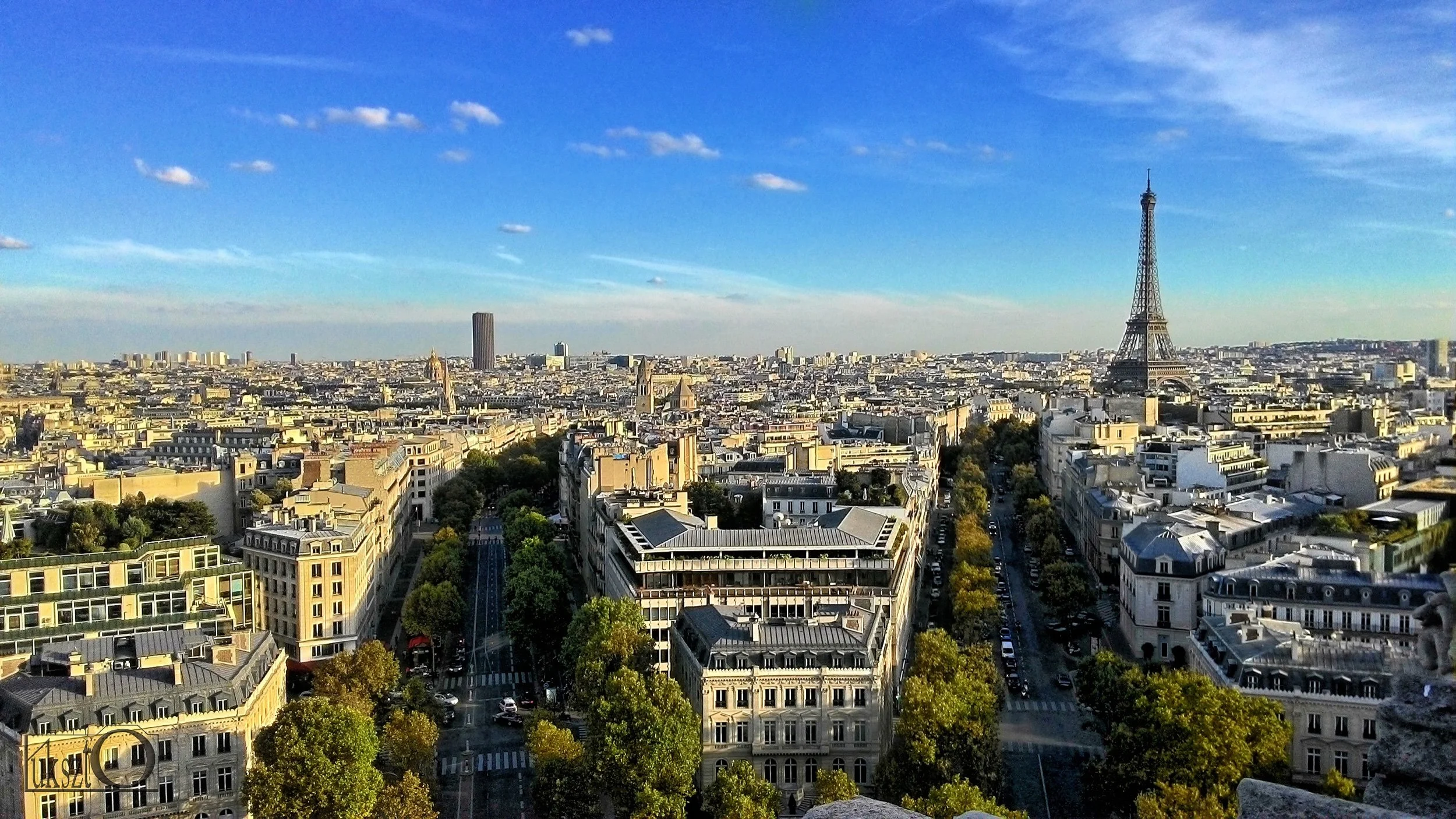
You glance at the glowing window, a shining beacon over Paris that is dimmed by the slight frown that appears on your face, and my heart clenches. Your teeth nibble on a raw lip and mossy eyes look back at me. Inside, I beckon the rain to return. Please, don’t disrupt the beauty of the profound silence with the knowledge that with the sun, I must go.
I rise and watch as your eyes travel over the expanse of my equally undressed body. When our eyes meet again, your face lights up, making the sun pale in comparison. They twinkle and call me forward.
Nothing has ever felt more like home than your presence. Sweet kisses of impossible promises we intend to keep. The gentle taps of lingering droplets on the window are the desperate cries for time to freeze. I can’t fly in the rain.
We don’t dwell on the inevitable. The morning is too fragile, time too short, for words. When you open your mouth, I hold my finger to it. All we need to say can be read within one another’s eyes and touch as we get lost, together, once more.
Speak Softly.

Deimos Shinra currently lives outside Salem, OR with his wife, Erin, and son, Nero. Whenever possible, Deimos and his family enjoy cosplaying or listening to their favorite true crime and paranormal podcast together. As a member of the LGBTQ+ community, Deimos writes stories with characters that capture the diversity within it. He graduated from Willamette University with his BA in English and Creative Writing and is currently enrolled in Southern New Hampshire University's MFA program for Creative Writing.

Purple Disclosure
2 lines of purple –
not the type leaving you
to call mom and dad
2 lines of purple –
not the type leaving you
to call mom and dad
happy crying in your fiat 500,
on a thursday night
after throwing up at your
hot yoga class –
and telling them,
it wasn’t, in fact,
the rainbow bowl.
2 lines of purple,
causing cascades of
of mascara,
and highlighter
called pink climax
running down cheeks,
soaking caramel braids
and freckled dimples.
2 lines of purple,
a “you’re just bloated”
leading to red wine
on white linen –
because you opened the front door.

Lara C. Widmann was born in 1997. She graduated from Ludwig-Maximilians University with a degree in German philology in 2022. In 2021 she spent her year abroad in England, where she studied English and Creative Writing at the university of Exeter. She has recently been published by the Decadent Review. Currently, she attends medical school in Germany.
Hands
Inside the salted blood-fragrance of ocean
with grasps of sea current around me
I floated
(It was that bungalow summer when
You took my hands
I swam to forget)
Inside the salted blood-fragrance of ocean
with grasps of sea current around me
I floated
looking up at white heels of cloud
scudding the sky and wondering how the sky
navigated the tide
and its malignant undertow
I sat in that lung-colored room for days,
waiting to get my hands back. Waves
eroded the sand at night, a desperate sound
like trains whistling through Idaho.
We sat in seaside diners
eating neon and not speaking.
Some days you locked me beneath the wet stair.
Webs hung down. I soaked my arms in the black liquid
that rose from the boards. I knelt there for days,
quiet as a fern.
One morning I work to fire springing from my wrists.
Mushroom-stumps of thumb budded, knobby
As garden bulbs. I kept them blind
Under my sleeves
( you knew I wanted
to leave
and that made me
afraid)
Next day I slid backwards under the door,
Fish-slippery in a tug of sudden blood
I sat blinking in the rushing daylight
And I knew: I did not need you
To give back my hands.
(The thumbs provided enough
of a start)
That night, rain stroked the house,
Leaves pressed wet ooze against the moaning panes
My strange fingers stuttered alive,
Not quite the same, but mine and ten.
On the dawn ferry, I watched water run
Like flames over the bungalow. Inside,
You slept. Salt and blood leaked from my knuckles.
I lifted my hands to the sun,
Trestled my fingers and counted each one.

Anne Spollen lives in New York City and teaches college English. She has published two novels, numerous essays and poems and has twice been nominated for Pushcarts. She is currently working on a collection of poetry and a novel. You can find more of her writing at https://medium.com/@annespollen
Aphantasia
Over dinner, Kyla talks about aphantasia, or the inability to form mental images. Her partner has this—he cannot create images in his head of objects, faces, landscapes.
Over dinner, Kyla talks about aphantasia, or the inability to form mental images. Her partner has this—he cannot create images in his head of objects, faces, landscapes. Kyla herself is a dyslexic. The rain hits the windows as we speak, our voices echoing in the softness of the light, the windows frosty and foggy.
***
Aphantasia—the inability to create a world inside your head. Forced to look outward, does one become more creative? Do you look for outside stimuli, to populate your quiet mind?
***
We are all here to do an artist’s residency, but we are secretive and surreptitious about sharing work. Instead we talk about the purpose of art over glasses of prosecco in the Study Room. Kelly talks about art as a privilege, a luxury, while I compare it to a necessity, something I would do even if I had both hands tied behind my back. But we both spend our days locked in front of a computer screen, or in Kelly’s case, out freezing in the fernery, thinking about gesture and facial expressions. B— texts me in the middle of my night: I miss you. The time difference means we only speak a few minutes a day.
I’m not used to B— being sweet, so when he is, I constantly worry that I’ve done something wrong. True story: for the first year of our relationship, every time he said I love you, I asked: Is everything okay?
I used to be afraid to look directly at the people I loved, for fear I would use it up—as if there was only so much joy in the world, and I had to ration it. This is not rational, but I feel it in my bones—the finite quality of love, the way it could all be gone in a flash.
Aphantasia—I can picture his face, sort of, but when I imagine him speaking to me, it dissolves into nothing. When I try to hear his voice in my head, everything goes blank.
***
The heater in the dining room is positioned so that only one half of my body gets warm, and my right hand is always freezing, no matter what I do. I buy fingerless gloves, but find I can’t type with them on; they’re too bulky. I play my music on low, so as to not disturb the other residents, but can’t help but blast Chance the Rapper at eleven in the morning, dancing around in my seat.
Just be yourself, and stop worrying if they like you, B— texts when I express that I’m worried the other women don’t like me. He’s sensible to a fault, and always gives good advice. We’re moving in together when I get back, and I imagine it—having this incredible resource of sensibility at my disposal all the time, tempering my manic anxiety. Of course, he’s anxious too, in his own way, and I do my fair share of comforting him. In this way, we are a pair.
***
Aphantasia—unable to make mental images, the sufferer turns to the physical world, to the five senses, to find sensory input. Are their sensory lives more sensuous than our own? Do they experience the five senses more vividly than the general population, without the distraction of mental imagery? What happens in their brains? Is it quiet?
***
You make me think about the future, B— says to me over Zoom, a few weeks before I leave for Scotland. This is unusual, because he is very much a right now kind of person, unable to make plans that span more than a day or so in advance. This irks my obsessive scheduling brain to no end. I am a planner, a plotter, a designer, and I need to know where I’ll be at every single minute of every single day, even if it’s just typing away at my laptop. B— doesn’t think this way at all, he’s much more interested in seeing where the day takes him.
But in those moments when I realize he’s given the future some thought, I am touched. Our lives have braided together. We’ve become a unit of measurement, an empty set, a painted symbol that denotes meaning. We’re us.
***
It rains for days and days, and although I don’t particularly want to go outside, I feel strange being cooped up here, too, with nowhere to go. The dining room where I work is dark during the days, the heavy wood paneling absorbing light.
I sit with my leg on the heater, waiting for the smell of burning metal and flesh to alert me that it’s time to move. Aphantasia—does it affect all of us at some point in our lives, the way we are unable to imagine a future that we want so badly, and yet cannot grasp? I want everything to work out, and still I can’t imagine the good, only catastrophize.
***
I don’t want to worry—will we be able to live together? Will we kill and eat each other in a horrible murder suicide the likes of which haven’t been seen since Sid and Nancy? These thoughts, as I talk to the lovely women in this residency, plague me. When I get back, it’ll be a mad dash to the holidays, and then we’ll be looking for apartments.
***
My brain is not quiet. In the Study Room with the other women, I describe the way my mind is always churning, always kicking up the dust. I don’t really relax, I say. I wonder aloud if I have aphantasia, but the murky images that my brain produces prove that I do not. I’ve never been a good visual image producer, however—I tend to think in words, not pictures, which makes sense, given my chosen vocation.
Dyslexia, I learn, can appear in many different forms, and can be mitigated by changing fonts, the color of the letters on the page, or by wearing special glasses. It has something to do with the way signals from the eye move to the brain in many cases, but everyone is unique. I can’t picture myself as a dyslexic—I take so much of reading and writing for granted. I am so used to looking at a block of text and instantly knowing its meaning.
I wish I could look at the future this same way, but it’s blurry, unsure. I can’t read the coffee grinds in the bottom of my cup. I’m not a mystic, and I don’t know how to predict anything. All I can do is hope for the best.
***
It’ll all be alright, he tells me now, soothing me with a text message. In Nashville earlier this year, he told me he couldn’t be the sole source of comfort for my anxiety. It’s too much responsibility, he said, and I kicked the railing of the balcony I was standing on. We were on the phone, although he was only an hour away by car. I can’t be everything to you.
It’s going to work out, he promises. Still, we have a contingency plan—a two bedroom apartment, so we can have space from each other, in case things don't go as expected. I hate being so far from him, in Scotland, but he doesn’t feel distant. In this way, through text messages and phone calls, we are as close as lovers, his voice through the phone line breathless and near.
I need to stop being afraid. But I can’t see it—the future hazy and dim. In the mornings, over toast and coffee, I imagine him next to me at the table. I can’t bring his face to my mind. I can’t picture anything.
***
Hyperphantasia, Kyla tells us, is the opposite condition. I wonder, with such a vivid mental life, would anyone ever leave the house? Want to interact with other people? I get so tired of my own mind, its anxieties, that I seek out other people for a respite. But for those who can conjure vibrant mental images, what’s the point of the outside world? Who would look outwards, when you can see the future before your very eyes?
***
Everything is temporary. Anxiety, when it comes, will not last forever. I tell myself this as I look forward—and look forward to sleeping next to the person I love for the rest of the foreseeable future. The sun sets at four-thirty in Scotland, and I watch the horizon grow deeper and deeper blue, the streaky sky calming me like a cup of warm tea.
B—’s latest message comes when I’m asleep, the six hour time difference separating us as usual:
All I can think about is you waking up to the prettiest orange glow on that castle’s walls and me in that very same second looking out my window at all the stars in the night sky.
And I know that the future, whenever it comes, will be okay. It has to be.

Joanna Acevedo is a writer, educator, and editor from New York City. She was nominated for a Pushcart in 2021 for her poem “self portrait if the girl is on fire” and is the author of four books and chapbooks, including Unsaid Things (Flexible Press, 2021), List of Demands (Bottlecap Press, 2022), and Outtakes (WTAW Press, forthcoming 2023). Her work can be found across the web and in print, including or forthcoming in Litro USA, Hobart, and The Adroit Journal. She is a Guest Editor at Frontier Poetry and The Masters Review and a member of the Review Team at Gasher Journal, in addition to running interviews at Fauxmoir and The Great Lakes Review. As well as being a Goldwater Fellow at NYU, she was a Hospitalfield 2022 Interdisciplinary Resident. She received her MFA in Fiction from New York University in 2021, teaches writing and interviewing skills for both nonprofits and corporations, and is supported by Creatives Rebuild New York: Guaranteed Income For Artists.

Winter’s Turning
Some mornings I want to wake up with nothing more than my imagination intact…
Some mornings I want
to wake up with nothing more than
my imagination intact
and a cup of green tea as deep
as a hole dug in summer, perfectly
steeped and grassy.
It turns out this life is not our own.
Voices frozen, beg.
The cats must be fed.
I avoid the mirror all winter. I promise
I’ll be so much younger next week.
The snow in my hair never melts.
Mark Robinson earned his MFA from Lindenwood University and studied English Literature at the University of Iowa. His poems have appeared in Faultline Journal, River! River!, Exterminating Angel Press, Stillwater Review, Dunes Review, Naugatuck River Review, Levee Magazine and Bending Genres, among others. He was a semi-finalist for Crab Creek Review 2020 poetry contest, and his chapbook Just Last Days was published in January 2020. Mark currently lives in West Des Moines, IA. Twitter: @MarkRobPoet
Reporting to Mars from the Country of University Mascot Christmas Carolers
Every year university mascots audition for roles in the Mascot Carolers’ Yule Tour.
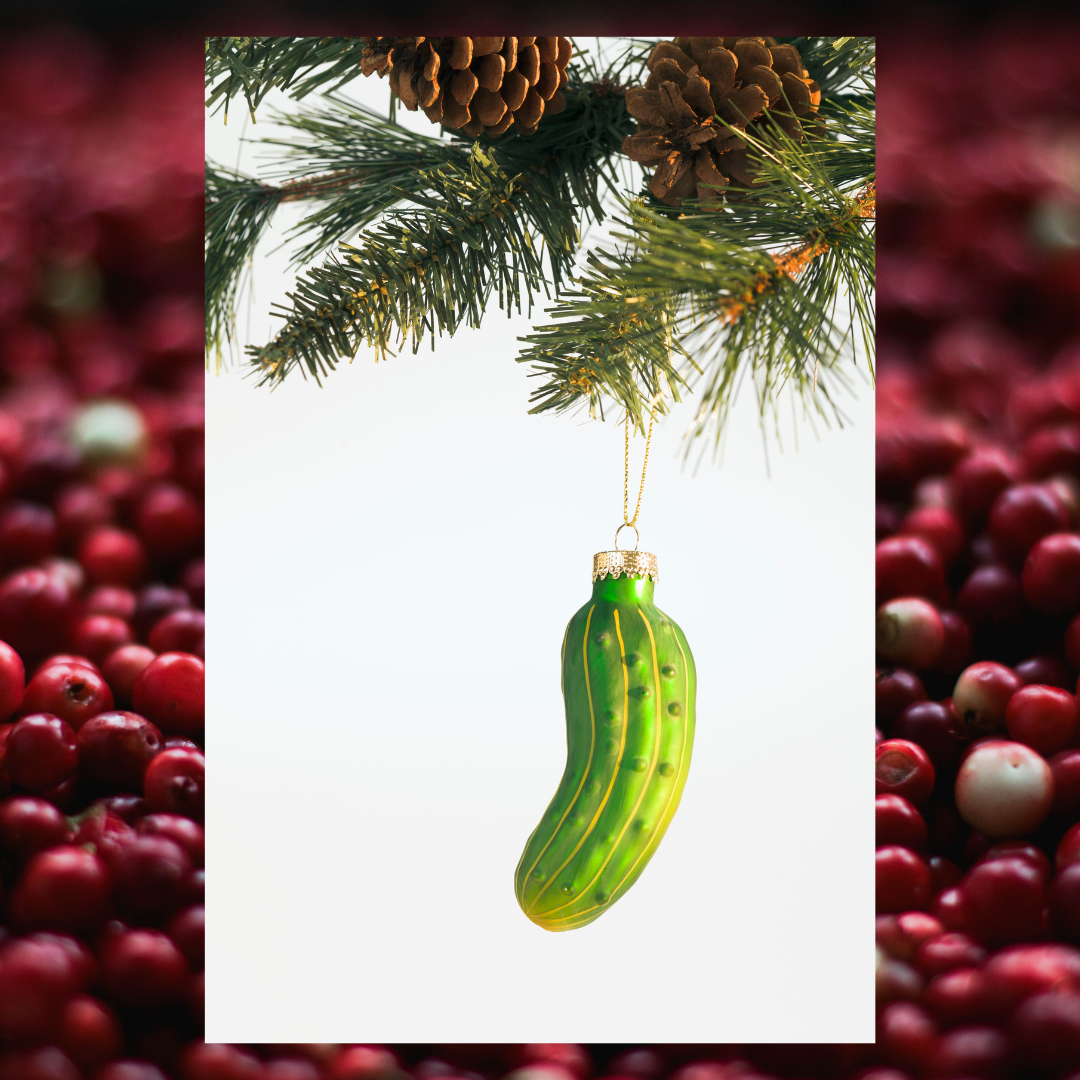
Every year university mascots audition for roles in the Mascot Carolers’ Yule Tour. The most celebrated contender wins the privilege of pushing the buttons on the quartet’s karaoke machine. This year, Sammy the Banana Slug triumphed over the Fighting Pickle, who, along with Boilermaker Pete and Bucky Badger, will mime “Little Drummer Boy” and “Silent Night” to the instrumental accompaniment of the music box. Mascots live by a code, which includes a codicil that forbids speech. When the choir appears before a front door decorated with evergreen wreaths and festive strands of tinsel, the members move their lips in an inaudible rendition of “I Saw Mommy Kissing Santa Claus.” And “Santa Baby.” The Fighting Pickle performs handstands during the “golden rings” verse from “The Twelve Days of Christmas,” and the Badger tosses piñatas in the air for the Boilermaker to swat with his hammer. The naked apes who receive the fête tremble with awe beneath their porch lights, applauding the vocal restraint of the mascots. The aficionados might even dispense rum balls or paper cups filled with spiked egg nog to keep the revelers’ blood warm on frigid December nights. The less fortunate neighbors listen with their ears pressed against picture windows, while their children try to guess the songs based on the mummer’s antics. But mascots can be ornery in their mothballed suits. None of them ever sings the same song together at the same time.
Michael Brockley is a retired school psychologist who lives in Muncie, Indiana where he is looking for a dog to adopt. His poems have appeared in Last Stanza Poetry Journal, Lion and Lilac, The Parliament Literary Journal, and Visiting Bob: Poems Inspired by the Life and Work of Bob Dylan. Poems are forthcoming in Gargoyle, Jasper's Folly Poetry Journal, and Syncopation Literary Journal.

The Cardinal
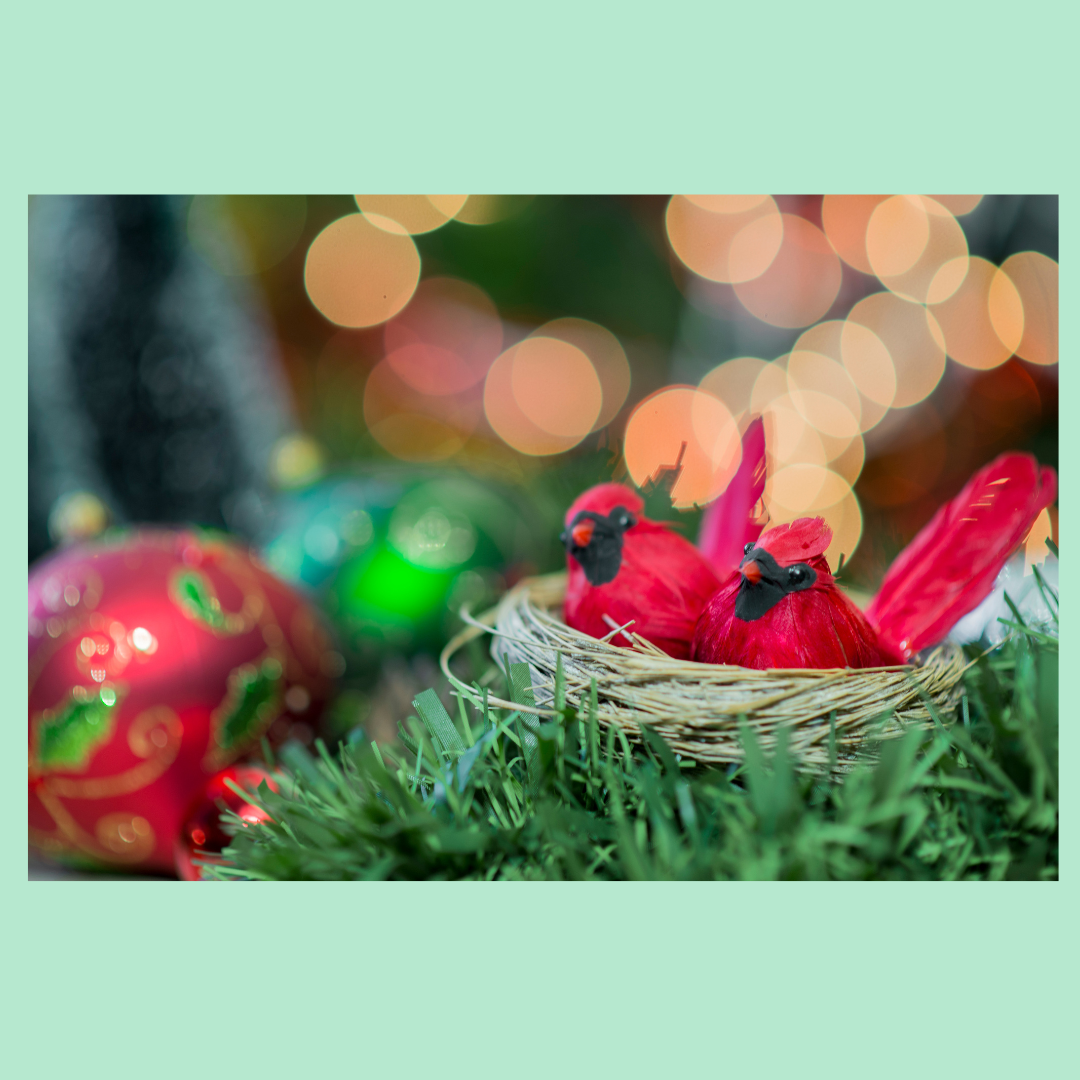
I am in a hotel lobby in Atlanta examining an artificial Christmas tree, its white-powdered pine needles dotted with plastic cardinals.
I am in a hotel lobby in Atlanta examining an artificial Christmas tree, its white-powdered pine needles dotted with plastic cardinals. The one near the top looks to the east, its long scarlet tail-feather pointing the other direction. This one in the middle looks straight at me, wings spread wide like a false poinsettia, asking what do you want from me? The windows darken and the streets are wet with rain. Sixty thousand miles of arteries and veins have not faltered. The red river still flows inside me. The steel muscle of traffic stops and starts, converging at the freeway’s exit.
Mark Robinson earned his MFA from Lindenwood University and studied English Literature at the University of Iowa. His poems have appeared in Faultline Journal, River! River!, Exterminating Angel Press, Stillwater Review, Dunes Review, Naugatuck River Review, Levee Magazine and Bending Genres, among others. He was a semi-finalist for Crab Creek Review 2020 poetry contest, and his chapbook Just Last Days was published in January 2020. Mark currently lives in West Des Moines, IA. Twitter: @MarkRobPoet


A Trio of Poems by Lynn White
Check out a trio of poems from Lynn White, a native of north Wales and Pushcart nominee.
We’re All Doomed
“We’re all doomed”, he said.
Well, so we are!
From the moment of our birth,
no, before then
some don’t make it that far,
expelled by the body
unknown.
As I child
I thought
that living
with such knowledge
should be hellish,
impossible to live with
happily.
If I were god,
it would be
my little joke.
Forget Satan
and his fiery furnace,
the nonsense of an underworld,
the craziness of constant rebirth.
Life is hell.
I explained my theory
at Sunday School
when aged nine
and three-quarters.
It didn’t go down well.
But it still seems to me
that god is the creator
of the first conspiracy theories
and humans still don’t get it.
So he still has the last laugh
after all!
Therapy
I made myself comfortable
to tell my little story.
I sensed she would,
not exactly like it,
but certainly be interested.
“And how did that make you feel”
she said.
I could tell she understood
and I knew exactly how She would feel
at my reply.
I have a sixth sense for these things
and I sensed her alarm,
though she hid it well.
I told her more.
I knew that she understood,
I could feel her anxiety.
I know it well,
I’m a past master
at anxiety.
I wondered what form
her evasive action would take.
She was planning something,
I have a sixth sense for these things
and I should know what form it would take
but so many options were crowding into my head.
“What are you feeling”, she said.
The Dialectic Of Colour
You think you’ve seen it clearly
and that what you saw
was complete
separate,
whole.
But
a clash of difference
creates change,
a mingling
at the edges
bringing forth
something new,
here green,
there purple
or orange,
a creative clash
of rebellious surprise.
Lynn White lives in north Wales. Her work is influenced by issues of social justice and events, places and people she has known or imagined. She is especially interested in exploring the boundaries of dream, fantasy and reality. She was shortlisted in the Theatre Cloud 'War Poetry for Today' competition and has been nominated for a Pushcart Prize, Best of the Net and a Rhysling Award.
Find Lynn at: https://lynnwhitepoetry.blogspot.com and https://www.facebook.com/Lynn-White-Poetry-1603675983213077/
Interview with Leslie Lutz
Leslie Lutz lives in Fort Worth, Texas with her husband and author, Russell Lutz. She is the author of Fractured Tide, a young adult horror novel and winner of the 2018 Frisco First Chapter Contest.
“I didn’t know I wanted to write about haunted water, but it’s a theme I return to every time I write a short story or start a new novel. If it’s got a tentacle, or a water ghost, or a near-drowning, I’m probably going to write about it.” -Leslie Lutz

Leslie Lutz lives in Fort Worth, Texas with her husband and author, Russell Lutz. She is the author of Fractured Tide, a young adult horror novel and winner of the 2018 Frisco First Chapter Contest. Her short fiction and poetry have been published in several journals, including Orca Literary Journal, Kaaterskill Basin Literary Journal, Typishly, The Lyric, and Raintown Review. Leslie is affiliated with several professional writing organizations: International Thriller Writers, Horror Writers Association, Editorial Freelancers Association, and the DFW Writers’ Workshop. When she’s not writing, you can find her watching B-horror movies, scuba diving, or taking care of chickens.
I had the pleasure of interviewing Leslie about her work, her writing process, and publishing. She explains why it is important for YA fiction to appeal to multiple age groups after I confess my fascination with her book. She also divulges how her personal experiences manifest in her fiction and how joining writers’ critique groups has helped improve her work.
Trina Peterson (TP): I had not read a YA horror novel before, and Fractured Tide blew away my expectations. My gray hair would betray me if I tried to feign membership in your target audience, but I couldn't put it down. There are some heavy themes in the book. When you begin a new project, do you have themes in mind, or do they emerge as the story comes together?
Leslie Lutz (LL): I'm glad it resonated with you because I'm writing YA with crossover appeal. Many YA readers today are above the age of 18, so YA authors straddle two audiences. We want the book to be in libraries for teens and for adults to enjoy it too. It’s sometimes tricky to make it scary without having the librarians throw it out of a school library.
Regarding theme, I'm a bit of a pantser. When I started writing Fractured Tide, I had recently moved to Texas from Seattle, and I was missing the water. I wanted to be in the water, even if only in my head. I was also into B-horror movies: beasts in the woods, Jaws, and krakens. I thought a scuba survival story with a monster would be fun, and that's where things started. I was reading David Mitchell’s Cloud Atlas, an epistolary novel, in which the narrator writes letters to his lover, and I was fascinated by the idea that you could write a story in which, for the narrator, there is an audience of only one. I thought about who my protagonist would be writing to and why. She's stranded in the middle of nowhere, so why would she write these letters—essentially messages in bottles—to her dad? I realized she wants to save him in more ways than one: she wants to connect to this person she lost and for him to understand her. It was finding out how you can forgive someone who's broken and who has hurt you. He's not all bad. Part of that premise came from time I spent volunteering at a women's prison. I taught GED classes, and that totally changed my opinion about prisoner stereotypes, about who gets incarcerated and what it means to be so.
TP: In what ways did your ideas about prisoners change?
LL: These women wrote essays for me about a memorable day. Many wrote about their first day of prison, but others wrote about their children and the day they gave birth, about how much love they have for them and how excited they were to get out and see them again. There are basic stereotypes about prisoners in YA: the father or mother in prison who's a terrible parent or the completely innocent parent, wrongfully convicted. It's really binary. We weren't getting those middle stories of a functional relationship between two people who care about each other—the dimension of real humanity. Nobody is all bad or all good. What about the ones who did it, whatever it was, but they just made a mistake like many of the women I met during my teaching experience? They were paying their debt to society, and they were going to get out one day.
TP: Hearing your experience with those women offers a deeper understanding of your approach with the father in Fractured Tide and what made it easier for you to accomplish that so successfully. Your website mentions the scuba ranch in Dallas at which you trained. Is the silo training atmosphere there a common scuba training scenario? That showed up in your book too.
LL: I don't know how common it is, but part of training far from the coast is you do it in lakes. They dug a 60-foot hole in Dallas so they can offer advanced certification. They put a silo structure in the hole, and once you get down 30 feet, the silt layer blocks out the light. By the time I was at the bottom of the silo, I would shine my dive light on my instrument and all I could see was like a soup. I couldn't read the numbers. Sometimes I could see the instructor's light if he was close enough, but it's like being in fog when you turn on the high beams.
TP: That sounds terrifying. What made you decide your protagonist would find her Zen at the bottom of the silo?
LL: For Sia [the protagonist], it’s sort of like an adrenaline addiction. She avoids the pain of her life by blocking it out. In a survival story, there's a fear of death. But she's not that afraid of it; she's almost drawn to it. It's oblivion, and it's forgetting. She would take risks that would be necessary for the story, but the problem was figuring out the stakes of the novel. If she doesn't care whether she lives, then the stakes aren't high enough. That's how she ended up with a little brother. Not only did she want him to live, but she wanted a different life for him—not to be broken like she is. I wanted her to be a daredevil, active in the story. That's a problem I've had before, and it's a problem a lot of new writers have: the main character is an observer rather than the one pushing the action. Sia had to take chances and rush into danger but not for the cliché reason of bravery, rather for this thrill addiction.
TP: Your website hints at haunted water in a desert for your next book. Can you tell me more?
LL: The next book is inspired by Mineral Wells, a famous Texas town known for healing water. It’s about a teenage psychic who lives with his older brother. The protagonist reads tea leaves, and the brother warns him to stop, that he's dipping into a well too deep and will come up with something dangerous. There is a spring on his property, and the mystery around the water's healing powers and how it changes the main character is a huge reveal at the end of the book. Originally, there was going to be scuba diving in the story, but a friend of mine asked if I really wanted to be the scuba diving author [laughs]. She suggested broadening my brand instead of being the person who always does scuba.
TP: You're fortunate to have a friend who will say the tough things like that. How do I get one?
LL: Yes, the DFW [Dallas-Fort Worth] Writer's Workshop members are constructive and helpful. They offer opinions on why something won't sell and suggestions about how to change it. When you give your stuff to a non-writer friend, they don't know what to say other than, "Good job. You're trying so hard." Even if they don't love it, they don't know how to tell you. But another writer can tell you the hard truth.
TP: I am always hesitant to give my work to people I care about and who I know care about me, who aren't writers. That puts a lot of pressure on them. Do you recommend, especially to new writers, joining a workshop?
LL: Yes. I've been in three groups. The first was too small; they were supportive, but there were four of us. We were unstructured and spent way too much time chatting. Nobody was really willing to give the hard advice. The second group required an application, and it was okay, but I needed a broader group of opinions. There are different kinds of groups. For instance, the Writer's League of Texas focuses on bringing in speakers. There's a certain point, though, at which you need to stop listening to all the advice and just do it. Let people read it, critique it, and do it again. Write again and again. The process of writing and critiquing is important. I plateaued before I joined the DFW Writer's Workshop. I’d gotten pretty good but wasn't attracting agents. I collected 120 rejections on three books.
TP: That is not an abnormal number of rejections, correct?
LL: Correct. I wondered how to get from good to great. How do you draw attention when there are so many good writers out there? Everything changed when I joined the critique group because somebody would say, "Hey, I really like your first two pages. Here's where I got bored and here's why." That was helpful. I was focusing on setting, because I love to describe it, and I was shying away from describing emotion. Other writers picked up on that and indicated they had no idea what my character was feeling.
TP: When I read your short story, "Ross Barnett," I noticed your setting was a very heavy hitter. So much emotion is wrapped up in it and projected onto the characters. Did your workshop experience help you accomplish that?
LL: Yes, that was one of the big things I learned to do. I love atmospheric horror, and I didn't want to stop describing these places that are so important to me. The more I examined my favorite writers, especially in YA, I saw how they did a lot in a very small space. Readers have no patience, especially the ones under 18. They want characterization, action, and fast pacing. Instead of describing setting directly, I thought about how I could describe the way a character feels about it. That gave me two bangs for my buck. I struggle with slow pace in the middle of things. During editing, I examine every line and think about how I can make it do two things instead of one. Everything becomes tighter.
TP: I got a strong Huck Finn vibe from "Ross Barnett.” Was that a conscious effort?
LL: I wasn't thinking about Huck Finn, but that was the neighborhood where I grew up. I spent five years as a kid on a little Mississippi reservoir you could get lost on. I spent so much time out there doing Huck Finn things, but my character, Macy, in "Ross Barnett" is based on somebody I knew there who had a rough life. It's those kinds of places where there's this sheen of respectability. Everybody pretends everything's fine, but there is all this stuff happening in the shadows nobody wants to look at or admit. Kids see it; they see the unfairness of it, and they're less willing to put up with it.
TP: Here’s another instance where you drew from your life experience, much like you did in Fractured Tide. Is this a natural reflex for you? As writers, we hear, "Write what you know," all the time. Have you written non-fiction too?
LL: I've written nonfiction for me, for journaling, but I've never tried to publish personal essays. I admire people who do it because you must be brave to put yourself out there. I feel like fiction is a mask we wear. It’s like a masquerade party and we're saying, "No, it's not me! It's someone else!" [laughs]. People who know me well will know it's me in some of those parts. Although, you can't base a character too closely on a living person who will be mad at you. And let's say you're basing a villain on somebody who has harmed you. You can get a blind spot because it's hard for you to think from their point of view. You don't want to justify anything they've done. But you have to be able to understand their point of view, so they sound like a real person. Villains never think they're villains. They think they're the good person, with very few exceptions. Jeffrey Dahmer knew he was bad, but most villains think the ends justify the means. If you're basing your antagonist on a real person, you must do that hard emotional work. If you haven't dealt with the trauma, you're not going to be able to write that character. It's going to be flat. That happened to me, and when I started seeing things from her point of view, it made the book better.
TP: Let's talk publishing. There are several ways to publish these days. What are your thoughts on those options?
LL: There are four basic routes: self-publishing, small press publishing, University press publishing, and going the traditional route with an agent and a big publishing house. They're all very different. It's important to understand yourself and know what you're capable of doing. I have a friend who has done very well with self-publishing. But a lot of people who go that route don't realize how much marketing is involved, and all the time spent marketing is time you're not writing. So, you better love marketing. I knew that running my own business and marketing myself as a brand were not what I was interested in doing. That's why I have no problem paying my agent a cut of everything if that means I get to spend more time writing. Time is just as important to me as money.
TP: What specific benefits do you get from an agent and a traditional publishing house?
LL: In general, you're not going to get your work in front of any big five publishers without an agent. Some of the mid-sized, independent publishers will look at unagented manuscripts, but they preference work from agents. When my publisher, Blink—an imprint of Harper Collins—had a sudden restructuring in the middle of my editing process, my agent navigated all the problems that arose from that. I have a fabulous agent. They're not all great. A good agent isn't just selling your book and stepping away like a real estate agent. He or she is with you through the editing process. It's a partnership. The agent's cut is anywhere between 10-20%, depending on the agent, and honestly, it's money well spent.
TP: You also publish poetry. Which did you write first, poetry or prose?
LL: I wrote prose first, a literary fiction novel in college. I was writing in isolation without getting any feedback, and, after collecting 55 rejections on that manuscript, I put it aside to write something else for a while. I started writing poetry because it's easy to finish. I knew I had a problem putting stuff off and taking forever, so what if I only had to finish a page? I knew I could do that, so I started writing poems and submitting them. I found that it was good, as a prose writer, to tackle poetry because it forced me to be more economical—to really think about the way things sound and work on compression. I wrote form poetry, and the constriction of form was helpful. Having zero rules can be a recipe for chaos, but if you have a form, it forces you to be creative inside the form. Writing an entire book in the form of letters to a single person presented some challenges, like the point when my narrator is supposed to kiss the boy. A girl is never going to describe a kiss to her father, but I wanted people to feel it. So, I had to create a metaphor with which she could relay that moment to her father. Describing the scuba gear also presented a challenge because one diver would not be describing familiar gear to another diver. To explain it to the readers, I had to get creative. For instance, Sia says she inflated the BCD so this guy didn't drop like a stone to the bottom of the ocean. My point was to show the audience these things inflate without breaking from the form of the letters.
TP: You did a great job with that because, as a layman, the scuba information I needed as a reader was there, was accessible, and yet seemed natural within those constraints of the letters to her father. Although, readers always have a Google machine in their hands these days. They can find more information immediately when they are confused. Knowing that, though, doesn’t always eliminate the doubt we have when we’re writing, right?
LL: Yes, especially with emotional subtext and a crossover audience. Sometimes I want to imply something and wonder if the reader will get it, so I write an extra line. Then a beta reader will say, "Cut that line! We got it. You don't need that." Again, that's where a good critique group comes in. It's like a trust fall; you can close your eyes and say, "Catch me," which gives you the freedom to try anything. If it's terrible, they are willing to tell you.

Leslie Lutz: https://lesliekarenlutz.com/
Book: Fractured Tide
Trina Peterson is a Maine native transplanted to Wisconsin where she lives with her husband and two sons. She's a Navy veteran, small business owner, Mountainview MFA student, and—most importantly—a proponent of the Oxford comma.
A Pandemic Parent in Teen Terrain
The day is hot and lazy, and my mind wades around the meandering bend of the river I sat on the bank of with my thirteen-year-old son Quinn just a few days ago.
Drift Creek Wilderness, Oregon
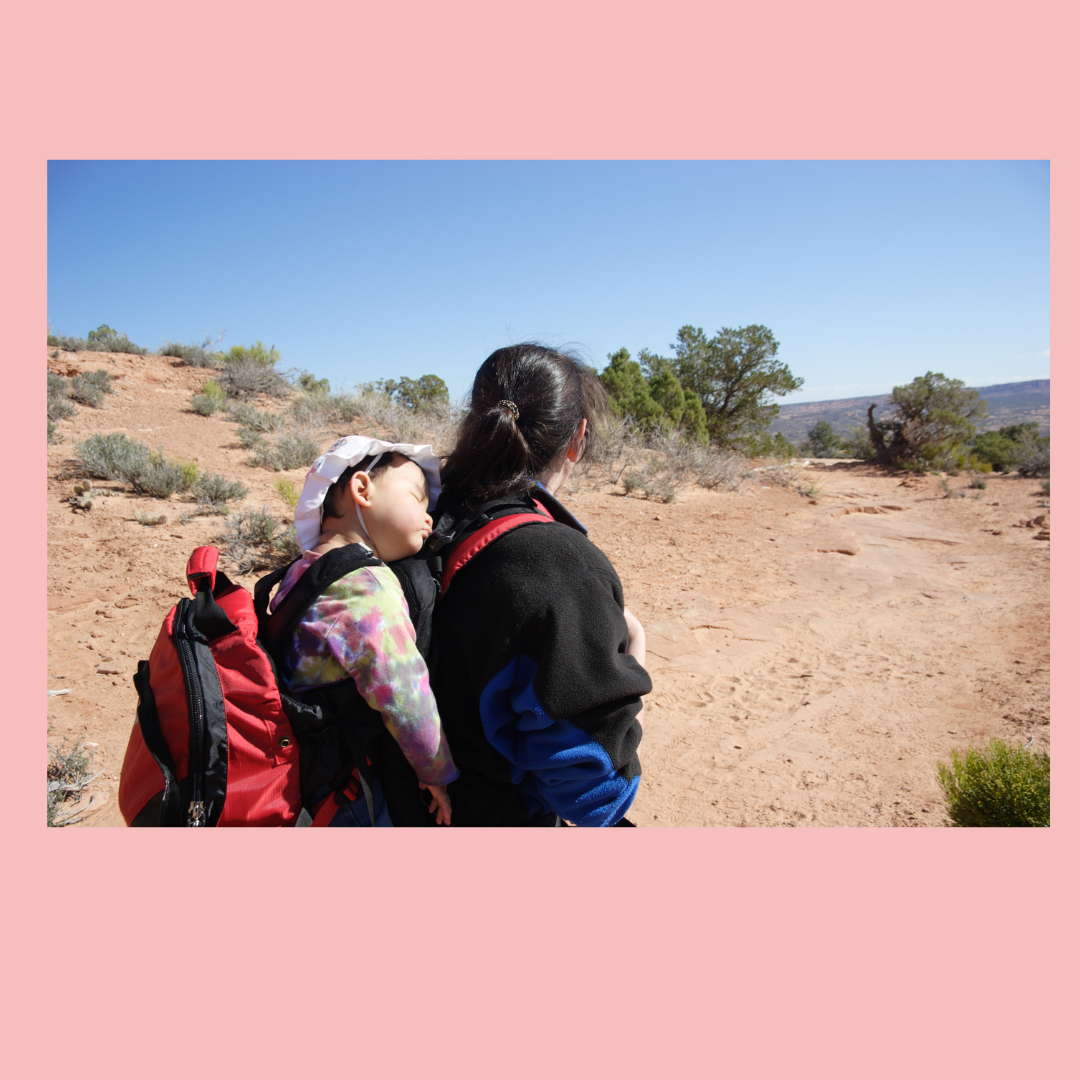
The day is hot and lazy, and my mind wades around the meandering bend of the river I sat on the bank of with my thirteen-year-old son Quinn just a few days ago. I gravitate back to its banks, gazing at the leaf boats of that singular day as they begin to drift towards the horizon of memory. Downstream around a few more bends, more memories swirl around an eddy on the edge of consciousness, and I just catch a glimpse of him with pinchable cheeks, stacking river rocks into “snowmen” to match the snowman pajama pants he wore. The size of him in my backpack on this same riverbank stands back-to-back in contrast with how he has drawn up even in height with his dad.

In March, my son stopped coming home from his dad’s every other week. He could not deal with the anxiety of bringing the virus from one of his parents to the other, and his dad is better at isolation than anyone I’ve ever known. It was just never a good thing before now. It took a lot of convincing to get Quinn to agree to hike this remote wilderness area trail with me today, both of us masked and social distancing. No hugs.
Quinn’s voice the last time we hiked here was a giddy gurgling over the river rocks, while his voice now glugs into a much deeper gully. I can hear this in person in a way I cannot hear it through the screen during the daily video calls of our pandemic parenting paradigm. I’ve been re-reading The Lord of the Rings to him when we run out of things to talk about. Friends don’t think I’m doing the right thing, “letting” him stay away so long, but I remind myself that my first responsibility in parenting a teen male is to model consent. The switchback weeks away have always cut a raw gash in my heart and this cuts even deeper, but I remain stubbornly committed to honoring his bodily autonomy.
We hike all the way down the switchback terrain to the river. Beside a grove of giant Western red cedar trees, we perch on separate rocks, and do not come close enough for me to smell the top of his head, to see if his scalp still carries the scent of a pinch of cinnamon that it has since birth. What does reach me is the zest of the tangerine he is peeling with his large, capable hands, and this scent, too, tethers me to him briefly, remembering how I ate my pregnant body weight in clementines in my third trimester. The memory is only eclipsed by the thought that I should not tell him I can smell his lunch, or he will suggest we sit farther apart.
I am struck by his hands; they have changed so much since he grappled with stacking those stones, when the river had swallowed less rain, on a different lazy summer day over a decade ago.
Wandering in a wilderness area together all day is unlike our video calls in every way, but most acutely in that I am positioned beside the waterfall of his imagination like I have not been in months. The story comes spilling forth of a pod of whimsical dragons hatched out of colorful eggs, each with powerful attributes perfectly complementing those of their teammates. Once we find our first wild rose on the trail, we find many. “You find a glowing turquoise-green egg in that rose bush!” The first dragon egg, of the species Photosynthesim draconis, we name Douglas Fircone. Doug for short. His power is absorbing sunlight and transmitting plant nutrition through his green breath. Once we spot our first crayfish, we find many, and this time a water dragon is hatched. Once we find one dragon egg, we find more, as it is with many wild things for which one isn’t even necessarily looking. All day, the tale flows in between the huge trunks of the trees we pass by, a comfortable third companion on the journey. Unlooked for, it simply appears like a rainbow where the sunlight refracts in the droplets splashing over the rapids, though the sun and the water never touch.
The last time we hiked all the way to this river, Quinn napped on my back most of the way. Before we built rock snowmen, we threw rocks in the water (splash) for a long time (his name for the activity was throw-rocks-in-the-water-splash!). That day he looked up at me and said, “I love the water! I love the water!!!” He was just barely two, but he wove a story through the trees that day, too. “I am going to grow big and tall. And when I get older and big, I'll drive my garbage truck and come and pick up the garbage cans and dump them into the truck!” I told him, “when you are big and drive your garbage truck to come pick up my garbage, I will come out to watch you dump the garbage cans into the truck, and I will clap for you!”
He has grown so big and tall. The wilderness within him is green and lush as ever, also having grown, expanded in all the ways a teen’s mind does.
Our video calls are now routine, comfortably structured around a game and a book. The book helps us remember wild places, but it isn’t the same as walking in one together, with dragons for company. Like the night wakings I didn’t realize I was nostalgic for until a stray one reoccurred after months of unbroken sleep, this reintroduction to the storytelling magic of his mind in unstructured moments after months apart catches me off guard. What is this pang of guilt? I had not been grieving the lack of back stage access to his imagination until I got a fresh taste. I savor its chocolatey sweetness but too soon there is an edge of bitter brevity and longing for it to last.
Back near the trailhead, he finds me a butterfly, and beckons me to pause and take photos. We both know his dad is probably waiting at the trailhead, but we stop anyway, not ready to be done. The black-speckled orange wings flit among buttercups and daisies, our eyes dazzled by its color, adjusting to the bright sunlight out from under the old growth canopy. We smile behind our masks at each other; him at the knowledge that butterflies are one of his mama’s favorites, me at the idea that this could be one of the Oregon Silverspot butterflies I had recently read about, and even just the potential of finding something uncommonly rare and endemic to this place helps me alight on the flower of this moment a bit longer, not fly off just yet to what it will feel like to ache for him again for another unknown length of time.
Mary Oliver said of an old tree, “Who knows when supreme patience took hold, and the wind’s wandering among its leaves was enough of motion, of travel?” A day of lingering among the cedar, fir, and hemlock giants seems a good way to study their supreme patience which I have by no means acquired, even as this wandering quenches the thirst for motion, for travel, for a day set apart from the many days isolating at home with just the wilderness within to wander. I breathe a prayer on the breeze in the branches, the light on the droplets, the eddies on the edges, for a measure of that patience, that this day may be enough for me and for him of what we have been lacking. Enough of a glimpse at something rare, beautiful, endemic to this place.
Mary Beth Rew Hicks is a marine biologist and writer on the Oregon coast. A nonfiction student in the Mountainview MFA, she is working on a memoir about women and whales. Her writing has been published in Selkie.
The Lemon Tree
The cake is perfect, a round shimmer of chocolate that slides easily out of the pan onto the rack.

Laurie Okin.
The cake is perfect, a round shimmer of chocolate that slides easily out of the pan onto the rack. The day is bright and a little breezy and I push open the kitchen window above the sink and set the cake on the sill to cool; the smell of baking will swirl out in eddies on the breeze, finding me in the front yard, reminding me of later, when the sun is gone and the world is close and tucked in. That’s when we will celebrate.
There are still the eighteen candles in the little box in the drawer, at the ready. I tilt them out onto my palm, running my fingers over each one, counting. My chest constricts and the skin all over my body feels too tight, like what is beneath cannot be contained by skin alone. An uncomfortable and unsettling feeling that forces me to put the candles back and lay a hand over my sternum. Breathe, I tell myself. Breathe.
The baking dishes and utensils are scrubbed and dried, the counters wiped down, gleaming in the wash of sunshine from the open window. From the front yard comes a busy tittering of sparrows, the frequent whoosh of cars passing. I go into my bedroom, kicking piles of clothes out of the way of the closet door, and stand in front of the shelf where loose stacks of old jeans and shapeless, stained t-shirts spill onto each other like the forlorn back section of a clearance sale. I reach into the pile and grab one of each; the jeans are mine, the t-shirts all that remain of John’s belongings. These clothes only see the light of day once each year, and are more threadbare than I had thought, used as they are to plundering my garden only in the darkest part of the night, kneeling and groping blindly in soil that against all odds continues to nurture plants. My garden is where I go when the stillness becomes deafening and all the air is squeezed from my bedroom; I drop seeds and I water and I dig and I yank; I sweat into a
vacuum of darkness, expecting nothing. What I don’t do is go out there in daylight, on any day but today. I have found that I need this couple of hours in the garden, each year on this day, to make myself tired enough, loose enough, distracted enough to do what I’m out there to do.
I grab the hand tools from the shed, the trowel and the clippers and a large shovel. The dirt feels like velvet on my bare hands and for a while I sift it between my fingers, clawing smooth soil up from underneath and letting the coolness of untouched earth blanket my palms. I stare at my hands, now covered in a fine layer of dirt, my ragged fingernails trapping half moons of silt. I watch my hands move through the ground as if they are not connected to the rest of me.
I know that people walk by my house and stare; surely they do; anyone would. The paint peels off the siding, and there are bare patches of tar where shingles have fallen from the roof, disappearing into the vegetation below. The front windows are filmed with dust and sap and grime and everything the rain has pushed from the roof over the years. Aside from the patch of garden, unruly in its own right, my entire yard is overgrown with tall clumpy grasses and browning vegetation, completing a picture of uninhabitability, of dereliction and neglect. Mine is not a house for anyone who has earned a place in this world.
I turn to the desperately crowded carrots, tops like a bomb made of bright green lace that exploded and then froze, an instant in the life of shrapnel in motion, delicate and frenzied. As I thread my fingers between the unruly tufts, searching for weeds, I remember how she used to twist off the tops and tie them together for hula skirts for her dolls. I would give her kitchen twine, thick enough for her still-clumsy fingers to work with, and hold the spot with my finger so she could make the knots good and tight. She would spend whole afternoons creating a dozen or more skirts, and John and I would be recruited as audience for the dolls’ dance performances.
As I keep working, digging and pulling and turning over the soil around the plants, sweat starts to bead and then roll, and it feels good, the late-afternoon sun feels good on the back of my neck, and I work hard for a long time before I sit back on my heels and catch my
breath. There is a calm that I know is temporary and so I waste no time now, I stand right up and wipe my hands on my jeans and I go to the shed and get the bucket at last. Eighteen.
Lemons peek through the overgrowth like a million tiny suns. The tree, nearly hidden by brush, is swollen with them, growing in clusters or alone, poking out everywhere they can find space. The branches scratch my arms and the sagging yellow lemons are like baseballs thudding against my face. I pick, the way I taught her: twist first, then pull gently. Most, just past ripeness and full of bittersweet juice, surrender easily. I lean in and inhale the bright tang of them. I pick a dozen, two dozen, slowly filling the big bucket.
She always went right for the trunk, wriggling and turning her small body to slip right between the heavy branches to where the biggest lemons hid. She would climb, one foot on each limb, twisting and pulling until I told her the bucket couldn’t take any more.
“Why can’t we do the stand today?” she would ask, as we stood in the kitchen leaning over the juicer, taking turns pressing the soft wet flesh against the reamer and watching the container fill up over and over again.
“Because it’s January, and nobody wants to buy lemonade in the winter time.” She marked the kitchen wall calendar with big X’s for every day of February and March, thick black ink crossing through all our appointments and plans. Periodically, she would check on the frozen juice, lined up in ziploc bags, waiting for April.
When the bucket is full, I duck out from the branches with my haul and place it over the fence onto the sidewalk. The “Take one” sign faces out, for passersby. This is my birthday gift to her.
She was haunted by the idea of rotting lemons. Everywhere we went during the fruiting months, a knapsack full came with us. She brought lemons to her teachers and to play dates, even to the park, where she would hand them out to strangers. She festooned the world with lemons, she found it so incredible that we had our own tree and nothing pained her more than wasted fruit.
“Mama, look!” I hear suddenly, from just up the sidewalk. The word pierces. There is a little boy, maybe four or five, pointing. I know without following his gaze that he is pointing at our cart in the corner of the yard, barely visible through the weeds, like a lion stalking prey. My stomach lurches, the back of my throat filling with bile. I turn away. The paint is faded and the nails have rusted, the wood a tangle of splinters. She painted large, lopsided flowers all over it, and lemons, of course, but I haven’t had the strength to see if they still exist, if twelve years of rain and wind have destroyed her handiwork. I haven’t been able to investigate the softened wood, the fissures and chipped corners. Least of all the one implausibly small nick, barely noticeable, the tiny gaping mouth that swallows up all the other stories the cart has to tell, that forever replays the deafening scream of tires on pavement. “Cute,” the boy’s mother says, as if she doesn’t notice the dilapidated state of the cart, doesn’t see the weeds crawling all up the legs. Maybe she’s thinking of other things. Maybe she knows how to keep her boy close and think of other things at the same time. “Can we buy some?”
The mother laughs. “We’ll have to come back when they’re selling.”
She says this while smiling at me, and I only now realize that I’ve been standing still, staring at them, my hand frozen on the fence.
Her eyes want to share with me an idea of children and motherhood. I begin to shake all over and I clap a hand over my mouth, suddenly afraid I’m going to be sick. “Hey!” the little boy says. “We can make our own!”
He has reached into the bucket and begun stacking lemons in his arms, against his small chest. The mother flicks a glance at me again but now her smile has faded, her eyes like two nervous hummingbirds, darting away. Trembling uncontrollably, I start back toward the house. “Take as many as you want,” I manage to throw over my shoulder, in what I hope is a neutral voice. If only they had passed by five minutes later, I would have been gone already.
I stand for a long time in the hallway, leaning against the front door. I hold my breath until I feel dizzy and there are black spots and then I release, suck in another breath and hold
again, and there, right in the middle of the intolerable bursting feeling in my lungs, are all the friendships I’ve killed off; the colorful shaky-lettered cards from the entire kindergarten class that I swept into a pile and burned in the driveway; the library, and the coffee shop, and even
the grocery store I stopped going to; the scales of a life, shed one by one, the molted skin that is me, that is my fate.
I need to frost the cake.
I weave unsteadily into the kitchen and get a small bowl from the cupboard, mix together butter and cocoa powder, confectioner’s sugar and vanilla, a drizzle of milk. When the cake is frosted, I put it down in the middle of the table and get the candles. The daylight has shifted and grayed, now slanting thinly through the window, more shadow than light. Soon, it will be dark.
“You’re officially a grown-up now,” I tell her. I think about the number, eighteen, and all that it means, ought to mean, the child gone, the adult emerging, what is lost and what is gained by that simple number, but for her there is only what is lost, always what is lost.
I listen with all my concentration so I won’t miss hearing her, just in case, every year hoping. I know she’s there each time, in the shadows. I understand why she doesn’t speak, but I ache for her voice, and the ache is devastating and sweet, the resonance of her somehow within it. There is love within the silence of her, reaching for me. I wrap that ache tight around my heart. I hope she still likes chocolate.
I am startled by the ringing of the phone. Although I have no use for a cell phone anymore, I still have the land line at John’s insistence, and an answering machine filled with the automated voices of telemarketer calls. I know I have to answer this time. I owe him that much. “Hey,” he says.
“Hey,” I say back. “You’re just in time for cake.”
I hear him exhale, in that measured way he does when he’s being patient, and I am instantly annoyed.
“How long are you going to keep doing this?” he says.
“You know, you don’t have to call.”
For almost a full minute, he says nothing. I’m sure he’s holding his palm over his eyes, asking the God he still believes in for the strength not to say something cruel. He still doesn’t understand what a relief that would be. Or maybe he does understand, but is unwilling to abandon decency, to let me take that from him, too.
In the space his silence creates, I can hear the tripping cadence of his son’s voice somewhere in the background, high and emphatic like all toddlers’ voices. I can hear something like machinery, rhythmic and sloshing; his wife is washing clothes or dishes or maybe the boy himself, in their whirlpool tub. I can even almost hear the thick Oregon night through the screen door off their back porch, the whisper of trees and the rooting of deer in undergrowth.
I hear the sounds of moving on.
After all, he’s the one who could.
I listen. He breathes into the phone and I listen for reverberations of her in his breath. I close my eyes and I see her there between us, passed back and forth with each inhale, each exhale.
“I’m tired,” he says, and his voice cracks. “Aren’t you tired?”
But now I’m thinking about the fullness of her laugh when he used to tickle her, the delicate feel of her between us after a nightmare, the sight of her on his shoulders, sun in her hair, at the 4th of July parades.
“One thing,” I say, softly.
He sighs, but I can hear him thinking. “One thing,” he murmurs, after a moment. “Purple horse pajamas.”
“You said that last year.”
The wife is trying to coax the boy into something. I hear her promise that Daddy will come in and say goodnight when he’s off the phone.
“All right,” he says, but he’s not annoyed or patient now, just thinking. “That… toothbrush with the two-minute song timer.”
I smile. I’d forgotten about that toothbrush.
“One thing,” he says back.
“Chasing seagulls at the beach.”
I hear the snuffle of his brief laugh. “I always wondered what she’d do if she caught one,” he says.
A few seconds go by and I am certain he’s counting, waiting the appropriate amount of seconds before ending the call. I say goodbye first. His son is waiting.
I lay the receiver in the silverware drawer, and go back to the table. The room has grown dark, and I fumble with the matches until I get one lit. Such a big blaze, so many candles. I sing to her, I sing my love for her, and then I blow out the candles and I’m sitting in darkness.
I sit down on the edge of her bed, as carefully as if her legs were there, stretching out behind me. I lean over and run my fingers along the “good citizen” certificate from kindergarten, taped to the wall behind her headboard, and the T-ball award, from when her team won the championship. I look at, but don’t touch, her paintings from art class, the penguin and the whales, the Valentine’s Day hearts. The coarse water color paper has curdled at the edges. The little loops of Scotch tape still bear the ridges of her fingerprints.
The room is as still as a photograph, and with the curtains drawn it could be any time, any day, any year.
Except for the emptiness. She is not down the hall in the bathroom. She is not hiding under her bed, like she used to do. She is not at a friend’s sleepover. She is nowhere, which means she is everywhere, which means I have to find her. I have to keep trying to find her.
“Bedtime,” I say, ignoring the quiver in my voice, and I cover myself with her comforter. Winnie the Pooh stares blankly up at me and I tuck him in, too, same as always. Her room is
just as she left it; I come in here every day, I stand or sit on the floor, to be near her; I don’t touch her things, and I only sleep in her bed on her birthdays, I don’t dare disturb the imprint of her. She liked me to sleep with her on her birthdays.
I reach over and switch off the fairy lamp on her bedside table. Instantly her room feels all wrong, and scary, and alien, plunged into a total darkness. I bolt up, horrified. I grope for the switch and turn the lamp back on and scramble off the bed, pull the night light from the wall; the little bulb is dusty, the filament inside trembling uselessly in my hand.
I go to the kitchen and dig around in the drawer, but there are no more bulbs. My chest squeezes to the size of a fist. I have managed to fail her again. Acid and bile and chocolate cake rise into my throat. I run to the bathroom, barely making it in time, and suddenly my body is not my own as it clenches and writhes and pushes itself inside out. I desperately clutch the toilet seat and I can’t feel my legs and I am holding on for dear life because I am disappearing headfirst down the dark tunnel, nothing left of me but disembodied urgency like lightning with nowhere to touch down, a screaming swirling need for release becoming too much to bear in spite of this violent expulsion, and next thing I am howling, “I’m sorry” a flood of tears and the haunted sound of the words, over and over again. I’m sorry, I’m sorry, I’m sorry, I sob, gasping for breath.
I don’t know how long the flood goes on, but eventually it ends. Eventually I am exhausted, evacuated. In the delirium of the aftermath, an unfamiliar feeling takes hold and I realize it is relief.
I pull myself to my feet. I brush my teeth, splash water on my face and head back into her room, holding the night light.
“It’s ok,” I tell her, clicking off the bedside light once again. “I know it’s too dark, but it’s going to be ok.”
In the pitch black, I hum her favorite Beatles song. “Who knows how long I’ve loved you,” I sing, quietly. “You know I love you still…”
After, there is only quiet, except for the rhythm of my own breath against the pillow. I don’t realize I’ve fallen asleep until I am awakened by something coming to me through the fog, a sound that I can’t place, a feeling of joy and of love, and all at once I understand the sound and I understand that it is what I’ve been listening for all these years, finally come to me.
I get out of bed and pull on my socks and boots. I take big strides through the house, unhurried but invigorated, grabbing the flashlight from the front hall closet. Her voice still swims in my ears, and I am giddy.
With the flashlight, I go to the shed and grab the tools. I navigate my way over to the lemon tree, set the flashlight against the trunk, and start hacking away at the tangled mass of weeds, which are nearly as tall as I am and don’t give easily. But, I am patient, persistent. Soon I have cleared a patch, then widened that to a larger clearing, and at last the tree stands free, at least on one side. I have cleared the side facing the house so that from now on, I can see the lemons from the kitchen window, where I will no longer draw the curtains except at night.
“I’ll finish up the other side tomorrow,” I pant, laying down the scythe and retrieving the flashlight from the base of the tree.
I make myself look toward the sidewalk, shining the light on the spot where I know the concrete will always be a different color and texture, even after twelve years, because a thing that gets fixed later on never quite looks the same, especially something as dense and unforgiving as pavement.
Then I walk over to the cart. The flashlight is too heavy in my hand and I keep it aimed at the ground, away from what is in front of me, the tiny cone of light a pinprick in the darkness. I remember the way my hand covered hers, gripping the brush, the bright blue paint dripping onto the grass as we made the letters together. I remember carrying it out to the sidewalk, her little fingers clamped around, inside of where my hands held onto the wood. John on the other side, lifting. The way I had to walk behind her, leaning forward, so she could feel like she was helping. I remember how the last time, she was strong enough to carry her end
without me. I stand there and I stare at the dark shape in front of me, tears now streaming down my face, dripping into the weeds at my feet.
I was only gone for a minute.
The first sound was the blown tire, sharp and explosive. The second sound, metal on concrete, and the sound of the world ending.
Somebody, one of the police officers probably, discretely brought the thing back into the yard. Nothing has been moved, except for the weeds that have grown all around and the grasses that have pushed up against the bottom and sides. The last thing John did before he left was suggest destroying the stand and I screamed at him to leave it alone and that’s the night he finally packed his things.
I’ve been out here so many times in the blindest part of the night, I’ve sat in the middle of the overgrown garden beds, compelled to stay this close, enshrouded by everything I can’t see.
I lift the beam of light then, and I look. I look and look, and I kneel in front of it and brush aside the weeds so I can better see the tiny fairytale flowers, where her hand was bold and confident and the colors still hold their thickness.
“My baby,” I breathe, placing my palm against the wood. “My Willa.”
I look at the yellow paint of the lemons and I remember now that she drew faces on them and seeing them makes me laugh. There is one with long brown hair like me and one with glasses like her dad and s smaller one in between, smiling a thin black paint smile. I sit down in the dirt and keep the beam on the cart, for I don’t know how long but the light at some point starts to dim, wavering in and out under the strain of weak batteries.
Finally, I stand up. The world is already materializing, gray shadows heralding the approaching day. Soon the sky will be washed with dawn. But I’ll be asleep. I feel like I could sleep forever, but I know I won’t. I know that at some point, I’ll get up, have some coffee, and finish clearing the weeds.
Laurie Okin is a native of Rockport, Massachusetts, and currently lives with her family in Los Angeles, where she has lived for the past several decades. During that time, she has been a professional actor, splitting her focus between her career and raising her two wonderful kids, daughter Rose and stepson Jack, and spending time with her husband Tom. After the pandemic that brought everything to a screeching halt whispered in her ear, "You know, now would be a GREAT time to start writing again," she decided to return to her lifelong passion for short stories and poetry. She's been thoroughly enjoying her return to writing, in the margins between family life, career, and, most recently, a job as a dog walker, which she loves. "The Lemon Tree" is her first published story (so far!), and she is very grateful for the opportunity.
Postpartum Mother, Strong to Save
I think about the way the body drowns in denial of air, the way the body’s buoyancy overcomes—displaces—just long enough…
I think about the way the body
drowns in denial of air,
the way the body’s buoyancy overcomes
—displaces—just long enough,
long enough to sink and rise and sink
and rise,
then sink into ‘chaos, dark and rude’,
into a canyon of salt and water, or maybe
milk (solids, if weaned) and loneliness.
I think about the way the body insists on verticality,
as if it could grow legs however long enough
to hold its mouth above the surface.
I think about how silent it is,
that mouth, that body,
drowning,
the mother
drowning,
when a self-assured scream (for help) would do,
or perhaps a meditation, “remain calm” and then maybe
the body would just turn horizontal like a corpse, or something less morbid,
a fish, let’s say, though not a shark
compelled to wander in mundane agitation,
mouth agape,
a kind of drowning in motion.
I think about the way your Body survives;
how it's given peace for ‘wild confusion’:
The sweat on the sleeping baby’s brow;
his delighted, percussive palms;
a familiar sound renaming you;
a bright squeal–the brightest—
a little body treading air, finding his legs,
a breathing, babbling buoy, reminding you how to float.
And if you can not remember,
then there are the guards who watch, ready
the moment you forget how to swim.
Erikka Durdle is a writer and editor. She is a graduate of Southern New Hampshire University’s Mountainview MFA and was the recipient of the program’s Safford Book Prize for best fiction thesis and the Lynn Safford Memorial Prize. She lives in Maryland.
The Dragon and the Carnival
I was riding the Ferris wheel at the local carnival. It was the end of summer and the new semester was on the horizon.

Jose Hernandez Diaz is a 2017 NEA Poetry Fellow. He is the author of The Fire Eater (Texas Review Press, 2020) and Bad Mexican, Bad American (Acre Books, 2024). His work appears in The American Poetry Review, Bennington Review, Conduit, Crazyhorse, Georgia Review, Huizache, Iowa Review, The Journal, Los Angeles Review, The Missouri Review, The Moth (Ireland), Northwest Review, Poetry, Southeast Review, Red Ogre Review (UK), The Southern Review, Witness Magazine, The Yale Review, and in The Best American Nonrequired Reading Anthology 2011. He teaches creative writing online and edits for Frontier Poetry.
I was riding the Ferris wheel at the local carnival. It was the end of summer and the new semester was on the horizon. I had learned a lot since I first started teaching medieval sword fighting to college students in the suburbs of Los Angeles. It was an inspiring experience. A rebirth one could say. After about the fourth spin around on the Ferris wheel, I began to doze off.It felt like a deep sleep, but it was just a few minutes.
Anyway, when I woke up, a large forest-green dragon approached the small carnival. It was a medieval dragon from another century. I quickly exited the Ferris wheel. I pulled out my sword and mounted my nearby horse. I charged the dragon. I had no other option. Besides, I was a skilled swordsman. All my students knew it. The dragon was a worthy opponent, though. I dodged its flames from its nostrils like a swan darting around a summer lake. Finally, I dug my sword into the dragon’s obtrusive skull, and I stood on its beating chest. The dragon puffed a final breath. Eventually, the midnight moon rose above the suburbs of Southeast Los Angeles.