5 lists of 10
by Daniel Johnson
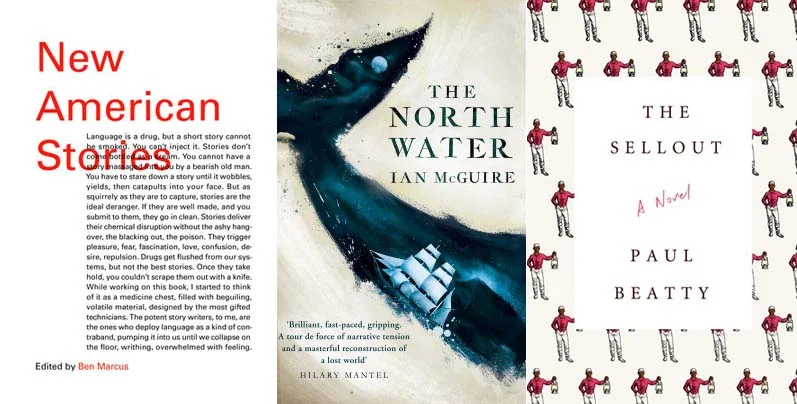
Offered without explanation: some recommendations from Assignment’s Managing Editor, just in time for holiday shopping season.
My ten favorite books I’ve read this year, in no particular order:
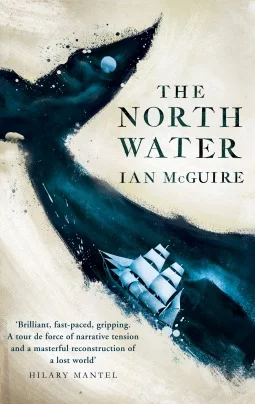
1. The North Water by Ian McGuire
2. The Portable Veblen by Elizabeth McKenzie
3. Her Body and Other Parties by Carmen Maria Machado
4. Twenty Grand and Other Tales of Love and Money by Rebecca Curtis
5. The Dark Dark by Samantha Hunt
6. Stephen Florida by Gabe Habash
7. I Am the Brother of XX by Fleur Jaeggy
8. Turtles All the Way Down by John Green
9. History of Wolves by Emily Fridlund
10. Autumn by Ali Smith
Ten anthologies/collected works I always find myself recommending to non-writer friends, or new writing students:
1. New American Stories ed. Ben Marcus
2. Best of Young American Novelists 3 by Granta
3. A Manual for Cleaning Women by Lucia Berlin
4. A Grace Paley Reader: Stories, Essays, and Poetry ed. Kevin Bowen and Nora Paley
5. Object Lessons: The Paris Review Presents the Art of the Short Story ed. Lorin Stein
6. 40 Short Stories: A Portable Anthology ed. Beverly Lawn
7. The Complete Stories of Leonora Carrington
8. Park City: New and Selected Stories by Ann Beattie
9. The Collected Stories of Lydia Davis
10. The Complete Stories of Flannery O’Connor (if only for that wonderful cover art by Charlotte Strick)
Ten articles by writers or about writing I’ve recently printed out and filed away so I can read them even after the machines take over:
1. “My Holy Land Vacation: Touring Israel with 450 Zionists” by Tom Bissell; Harper’s
2. “My Writing Education: A Timeline” by George Saunders; The New Yorker
3. “The Kekulé Problem: Where Did Language Come From?” by Cormac McCarthy; Nautilus
4. “The Black Journalist and the Racial Mountain” by Ta Nehisi Coates; The Atlantic
5. “The Seventy-Four Best Lines in The Devil’s Dictionary” by Anthony Madrid; The Paris Review Daily
6. “They Could Be Heroes: Today’s Biggest Novelists Are Throwbacks to a Simpler Time” by Sam Sacks; New Republic
7. “Contest of Words” by Ben Lerner; Harper’s
8. “Let’s Take Down the Patriarchy With Storytelling” by Lauren Duca; Teen Vogue
9. “The Complete Sentence” by Jeff Dolven; The Paris Review Daily
10. “John Ashbery’s Whisper Out of Time” by Ben Lerner; The New Yorker
Ten literary(ish) Twitter feeds well worth your follow—some for industry news & insight, most for laughs:
1. @MobyDickatSea – quotes from Moby Dick that always seem quite poignant as responses to the political dumpster fire of the day
2. @Mcsweeneys – Official McSweeney’s Twitter Account
3. @rgay – Roxane Gay
4. @laurenduca – Lauren Duca
5. @NYTMinusContext – “All Tweets Verbatim From New York Times content,” posted without context.
6. @nyercartoons – “Daily Cartoons from The New Yorker”
7. @NicholsonBaker8 – Nicholson Baker
8. @jamiattenberg – Jami Attenberg
9. @pronounced_ing – Celeste Ng
10. @JoyceCarolOates – Joyce Carol Oates (when she’s not trolling the internet with news of Cormac McCarthy’s fake death)
Ten books on my shelf that I intend to read before year’s end, in no particular order:
1. The Sellout by Paul Beatty
2. The Changeling by Victor LaValle
3. Things to Do When You’re Goth in the Country & Other Stories by Chavisa Woods
4. Little Fires Everywhere by Celeste Ng
5. A Life of Adventure and Delight by Akhil Sharma
6. Compass by Mathias Enard
7. Problems by Jade Sharma
8. How to Behave in a Crowd by Camille Bordas
9. Fresh Complaint by Jeffrey Eugenides
10. Sour Heart by Jenny Zhang
Daniel Johnson is a graduate of The Mountainview MFA in Fiction and Nonfiction. He is currently an Editorial Assistant at Bedford/St. Martin's Press.
Kingdom Hearts: Revisited
by Daniel Johnson

As is the case in most video games, I am the chosen one. I alone possess the inherent ability to wield a weapon that not only forever banishes the darkness or opens the door to the light, but also spectacularly bashes skulls and brains them into oblivion. In the case of Kingdom Hearts, the cult-classic Square Enix/Disney roleplaying collaboration, which just celebrated its fifteenth anniversary last month, the storytellers went literal: my weapon is a giant, magical key. My character’s name is Sora (a boy in search of his friends); I am accompanied by Donald Duck (a mage) and Goofy (a jankily-armored knight). We three are responsible from saving the Disney and Final Fantasy universes from eternal night by locking the door to Kingdom Hearts, an ambiguous realm of unknown populace, the unleashing of which would cause some kind of apocalyptic consequence.
In the fifteen years since its release, I’m on my umpteenth replay, and I’ve arrived at the moment I consider to be both the most supremely jarring and exhilarating of any in the game. Donald, Goofy, and I have landed at Hollow Bastion—a decimated crystal canyon on the outskirts of Maleficent’s stronghold. We beam down into a ravine, and a on the floating platform beside ours stands a haggard and bloodied Beast (from Beauty and the Beast), somehow still on his feet. He’s flailing himself at Maleficent, demanding she release Belle—one of the Seven Princesses of Heart—from captivity.

Some background: Maleficent is the nefarious general in command of all your favorite Disney villains—Hades, Jafar, Ursula, the Queen of Hearts, etc. Together, with Death Star-like effectiveness, they’ve been consuming and destroying worlds. In this franchise, “worlds” are equivalent to the individual universes of Final Fantasy gameworlds, as well as the individual universes of classic Disney animated films. In destroying them, Maleficent gets ever closer to unlocking Kingdom Hearts and drowning us all in rapture. Our quest, then, is twofold: play through the narratives of Disney movies and “lock” those worlds from Maleficent’s grasp, and save the Seven Princesses of Heart, whom Maleficent has kidnapped in hopes of transforming their cardiovascular purity into a lockpick of sorts that will open the great Kingdom doors. Somewhere within Hollow Bastion, presumably in a damp cellar dungeon, Belle and the other six Princesses sleep.
Now, according to the game logic I’d come to understand, most movie-specific Disney characters reside only within the Kingdom Hearts representation of their filmic universes, save for Maleficent, who is fairly omnipresent. They can’t leave their realms. And yet, here I am, in a landscape unique to the Kingdom Hearts gameworld, standing beside Beast, to whose world I’ve never traveled nor heard mention, and of whose existence in the Kingdom Hearts universe before this moment I was totally unaware.
So just how, I still wonder, did Beast make it to this crystal ravine before we did? I’d spent real-world days, game-world years saving the timelines of other Disney movies, upgrading weapons, hunting scattered Dalmations, flying my ship through the cosmos, all to arrive here, where the three universes—Final Fantasy, Disney, and Kingdom Hearts—collapse. So then what of Beast? Where was his spaceship? Where’s his keyblade? Where are his comrades, sent by King Mickey, who aided him along his journey?
When I was thirteen, it was precisely the unanswerability of these questions that made his appearance such a galvanizing narrative moment: Surely, I am to believe that Beast’s love for Belle was as potent as any preordained, messianic quality bestowed unto Sora. It allowed him to bellow and claw his way out of a reality in which he would be forever without Belle, shred through the previously unshreddable curtains of quantum physics, and materialize, like us, in this moment, prepared to give his life for an outside shot at her safety. It’s as disorienting and heroic a moment as I’ve yet countered in any game since.
Fifteen years removed from my first play-through, however, I wonder if the unanswerability of Beast’s arrival suggests a far more damning conclusion about narrative as it functions within the Kingdom Hearts universe: it might really just be a bloated clusterfuck of content. We’ve seen the previously closed-loop narratives of at least seven animated Disney films disrupted and rewritten; we’ve seen Final Fantasy characters reappropriated from their universes into Disney’s (how and why exactly are Cloud and Sephiroth hanging out at Hercules’s Olympus Coliseum—civilly!—and why aren’t they trying to either kill each other, or band together to restore their world?). Perhaps most egregiously: when Sora, Donald, and Goofy are trying to save a Disney gameworld, the narrative dilemmas are almost exclusively the conflicts from the corresponding films. How is it possible that we celebrated this concept and its story as sophisticated and original, when so much of it is blatantly recycled?
If we’re being forgiving, one of the allures of Kingdom Hearts is this fascinating narrative puzzle. But unfortunately, the answer to all these larger questions—down to the granular, nagging question of Beast’s arrival at Hollow Bastion—likely don’t reside in any analysis of the storytelling and can be resolved only when we consider Kingdom Hearts not as story, but as product: combine the fiercely devoted, global fandom of one of the most iconic video game franchises to ever hit the shelves with the nearly worldwide Disney audience, and it’ll yield enough gold coins to buckle the substructure of Scrooge McDuck’s money tower, even if the story is some cobbled-together franken-narrative that makes little sense under thoughtful scrutiny.
Despite my story-driven-gamer impulses, measuring Kingdom Hearts’s value as a video game solely through an assessment of narrative quality is profoundly reductive. The quality of a video game, like the quality of most works of art, can only be measured in sum. A narrative analysis speaks little to Kingdom Hearts’s fluid battle system, its somewhat radical (for 2002), if slightly cheesy, interpretation of gender and friendship (as wonderfully outlined in the indie press Boss Fight Books’s Kingdom Hearts II volume, written by video game critic Alexa Ray Correia), or its innovations in video game voice-acting. These aspects of the franchise hold up, especially when you consider the game as a technological artifact.
Beast never really explains how he got there, likely because Maleficent beats him down with a disturbing laziness before she retreats to her castle. He just says, “I simply believed. Nothing more to it … So here I am.” He then uses what breath he has left by asking us to help him onward, and we do. How could we not? This magnificent and terrifying creature has broken every rule in the game’s logic. We could ask him questions, but we know why he’s here. Perhaps the how—when it comes to a game founded on a culture of charging players to believe strictly by suspending disbelief—is ultimately irrelevant.
And yet, acknowledging the narrative gap of Beast’s journey to Hollow Bastion remains a thrill simply because I get to bridge it, and reintroducing myself to the texture of my thirteen-year-old imagination capable of doing so is, sometimes, almost necessary. I see him throttling through game-space like a rogue meteor; I see him stalking Maleficent and pouncing into her intergalactic portals at the last second; I see him aboard The Jolly Roger with the lapels of Captain Hook's naval jacket bunched in his claws as he demands answers with fanged desperation; I see him cross-legged by a small fire in the clearing where he fought all those wolves in the original film, one of Belle's hair ribbons clutched in his paw, gazing into the flames and begging—believing—the twilight above would take him either to Belle or to his death.
It’s like Tom Bissell says about the eccentricities of game developers in his essay “The Grammar of Fun” (Extra Lives: Why Video Games Matter): “these are boyish affectations, certainly, but boyishness is the realm in which these men seek inspiration, not a code by which they live.”
Daniel Johnson is a graduate of The Mountainview MFA in Fiction and Nonfiction. He is currently an Editorial Assistant at Bedford/St. Martin's Press.
Paperboy Summers
by Daniel Johnson

I worked as a Norfolk County paperboy for the middle two of my four undergraduate summers. Seven nights a week, I reported to a warehouse our private courier service had leased from a scrapyard that stripped decommissioned Desert Storm tanks for their metal. There, I and about fifty other paperfolks waited for the box trucks to unload pallets of Milford Daily News bundles, reported to our allotted bagging stations, where we folded, rubber-banded, and stuffed. Women often brought their children, who’d sit on the powered-down tanks along the fenceline, take selfies, and pretend to blow each other to smithereens. They used their hands to play-act chunks of themselves exploding from their stomachs, raining all over the parking lot.
I delivered to cul de sacs, apartment complexes, trailer parks, neighborhoods of one-story ranchers, neighborhoods of mansions, a strip mall with a yoga studio. I smoked weed, drank Gatorade, and hallucinated—or didn’t—small hordes of skunks on suburban lawns while I drove and frisbeed Milfords onto driveways. At least some of the skunks were real. In the blue-blanched moonlight of summer, their white stripes shone a magnificent silver.
I was often the only one on those roads that time of night. For a while, I listened to the audiobook of Moneyball in the car. When I got home just after sunrise, I continued to read the hard copy until I fell asleep.
The man whose bagging station was across from mine always wore a dirty, gravy-stained Philadelphia Phillies shirt and listened to late-night Phillies talk radio on a portable AM/FM. I referred to this man as Philly Joe. His was a team that, according to pundits, wasn’t exploiting the market of undervalued players. They didn’t care for patient hitters. They wanted spark-plug, scrappy guys who swung at everything. They were the anti-Moneyball.
My goal in reading and rereading the book was to gripe with Philly Joe about how terribly his team handled the trade deadlines those years. But my working memory was so shot from fatigue that, when called upon, my ability to use Moneyball as framework for conversation short-circuited.
Philly Joe was a life-longer. I remain certain of this. He was a faster bagger than I. He was first in line for his bundles, first out the warehouse door. He worked three routes. He brought a shopping cart to transport all his papers, and placed his radio in the child seat as he rolled on out to his car. He was huge, and he was a wizard.
I didn’t see many friends. I was asleep when my family ate dinner. I spoke very little. Of anyone, I remember Philly Joe most from those two summers—the best of my life.
I miss so terribly those nights among the skunks. There’s something comforting to living in total circadian discord with the rest of your social circle, with justifiable reason enough to bail anytime you were overambitious enough to promise plans. You let yourself feel the high of cancelling without the comedown guilt. You’re tired, after all. You’re fucking nocturnal. You stalk around your county all gangly and mantid-like while everyone sleeps, lobbing newspapers onto doorsteps and car roofs. Then you zonk until long after sundown. What could anyone possibly want from you?
That part was the most exhilarating of it all: being so deliberately and somewhat manically lonesome during the late-adolescent peacetime of a summer break. I was itinerant. What did I want from me? Not much. Maybe: A Sunday off; a date with the girl who showed up to fold Milfords in her magenta pajamas (I guess I remember her too); better coffee with the early bird special at King Street (my dinner); to remember and regurgitate just a few sentences of Moneyball; to be left alone by the light of the cinderblock window in my basement, where I slept on an air mattress because there was too much daylight in my bedroom; for Philly Joe to ask me this very question—What is it you want, son?—just so I could tell him: I’m good. Instead, we’d just listen to his radio and shake our heads at the bewildering refusal of his team’s front office to grow up, move into the new age. It had been the patient hitter’s game for a while, after all.
Daniel Johnson is a graduate of The Mountainview MFA in Fiction and Nonfiction. He is currently an Editorial Assistant at Bedford/St. Martin's Press.
The Euphoria of Slime
by Daniel Johnson

Last week, my girlfriend sent me a link to a string of tweets from a third-grade math teacher at a Brooklyn elementary school detailing the events of a sting operation that went down in one of the girls’ bathrooms earlier that day. The bathroom, administrators had learned, was a local haunt for proprietors and customers of neither drugs nor cigarettes nor Pokémon cards nor Trolli gummi worms, as in my day, but homemade specialty slime: butter slime, fluffy slime, cloud slime, slushie slime, smoothie slime, glossy slime (standard slime), floam, icee slime, fishbowl slime; slime that smelled like bubblegum, chocolate, Swedish fish; slime stuffed with regular beads, styrofoam beads, and glitter. The foiled slimelord, according to the tweets, was named Griselda, and she not only “had the game on smash,” but also “had mad flavors too.”
The idea of slime as a “game”—rife with hallway territory wars, slime-slinging middlemen, customers who drool over the newest, dankest flavors—is just plain delicious, and far more malfeasant than my original association with the phenomenon. I first learned of it months ago, also via my girlfriend, who, as a way to relax and often before bed, watches videos in which disembodied hands create and play with all sorts of these specialty slimes. She has her favorite “slimers,” and has purchased small quantities of their products, which arrive in clear plastic tubes or Tupperware containers, sometimes accompanied by a piece of candy. Some she keeps in her desk at work, some at home. For her, slime isn’t far from hand-occupational therapy. It both calms and thrills her.
We’ve watched some videos together. Their allure is both hypnotic and meditative; watch enough, and you’ll notice the distinct and mindless rhythm to the mixing, folding, and swirling. It’s a sensory experience unto itself, separate from the tactile rapture of actually playing with the stuff. I find the suction squelch of slimer fingers depressing into and releasing from a dollop of floam to be downright euphoric. My girlfriend explains her affinity for the videos, in part, as “an ASMR (autonomous sensory meridian response) thing.” Which is to say, the effect is not unlike auditory-tactile synesthesia, whereby certain sounds induce the sensation of touching or, perhaps more importantly, being touched.
Consider, too, the strangely pleasing language and verbiage surrounding slime and all you can do with it: glob, blob, jiggle, squeeze, ooze, gum, flub, goo, smush. The almost universal absence of hard Anglo-Saxon consonants echoes the smooth, quieting effect ten minutes with a handful of butter slime might have on a disquieted mind.
Like so many other video crazes—unboxing, pimple-popping, etc.—there's a vast subculture dedicated to the slime frenzy on Instagram. From what I understand, the community can get hostile and petty. Many slimers are simply entrepreneurial teenagers (often younger, like Griselda) who are quick to accuse people of stealing their ideas, poaching followers, using cheap materials. And I get it. For some of us, theirs may be a therapeutic—albeit a Nickelodeon-nostalgic and super funky—product, but that’s reductive; for slimers, slime is both an amorphous art form and an increasingly lucrative economy. How can anyone be taken seriously as an artisan slimesmith in such a competitive landscape if she can so easily be ripped off by the latest Elmer’s Glue-and-glitter-using copycat? Not long ago, a twenty-three-year-old slimer made enough money off her product to retire and purchase a six-bedroom home. Marketwise, there’s no ceiling here.
And yet, as with fidget-spinners and booger-balls, specialty slime is just the latest glorious novelty added to the treasure trove of infuriating shit teachers have to confiscate and feel too old to understand. The string of tweets has since been deleted, but the third-grade teacher reported that none of the students were disciplined, despite the significant haul seized in the sting. I like to think Griselda—what a wonderfully villainous name for the folk symbol she’s become!—is battening down the hatches, returning to her basement laboratory, and scheming up a superslime that’ll bring the school administrators to their knees, make all the other slimes look like garden-variety flubber, smash the game anew, and hit the online markets before Christmas. I’ll buy that one myself.
Daniel Johnson is a graduate of Southern New Hampshire University's MFA in Fiction and Nonfiction. He is currently an Editorial Assistant at Bedford/St. Martin's Press.
My New Barbershop
by Daniel Johnson

I got my hair cut by the same woman, a family friend—we’ll call her Allison—for twenty-one years, mostly at an in-home salon her husband built for her as a gift. Allison charged us cheap and came to understand the contours of my misshapen skull. She always led off a cut by spinning the chair around so my back was to the sink, gently tipping my head under the faucet’s stream of warm water, shampooing me, and using her wondrously long nails to scratch my head until the product was thoroughly distributed. From this—the scratching—she knew I got a boyish, puppy-dog pleasure. It was something, I know for a fact, she didn’t do for anyone else in my family.
I’ve asked every woman with whom I’ve been romantically involved to, at some point, scratch my head, scratch harder, use your nails. Reliably, most have fallen short of Allison. It is at my insistence that the specter of Allison’s hands stalk the landscapes of both simple haircare maintenance and—what?—foreplay, post-coital murmurings. I believe pleasure spectrums articulate themselves over time. Somewhere along that process of individual definition, the gestures involved in a routine, pre-cut wash warped into sensations I register as deeply ecstatic; for the vast majority of my hairdressed life, I must have looked forward to Allison’s cuts because I found them to be strangely and thrillingly intimate.
Now that I live in New York, I go to a barbershop packed away in a corner on the first floor of a high-rise near Battery Park. Its name: Barbershop. Intimacy-wise, it’s got the charm of a roadside motel truckers hit for some suspect crank and a quick midmorning fuck, cash up front. It’s the size of a rather large storage closet, with dirty white tile covered in unswept clippings, lit by overhead bulbs in frosted, flypaper-yellow plastic encasements. It’s manned always by the same four Israeli guys who talk less to and more over one another in their native language, and never to me. I find this both melodic and merciful; I’m terrible at any conversation when I’m in a leather chair being examined, reshaped.
I go there on my lunch breaks. I’ve been five times; they still don’t know my name. My first visit, I told the guy what Allison texted me to say when they ask what we’re doing: one on the sides, three on top, long enough so that I can style it, low fade in the back. At that, all four men switched their buzzers off and, almost in unison, told me with great urgency not to say this ever again. That, next time, if I said it, they’d actually do it, and I’d be a “crooked, unhandsome man.”
“Next time, you say, same style but shorter. That’s it.”
Once I had left and the lingering social terror had abated, something almost likeable revealed itself about the jaggedness to that experience. Living in New York City, there’s an inherent pressure to establish yourself as the prototypical Regular at the places you frequent: You walk into a café, you’re third in line, and by the time you get to the counter to order, the barista has already brewed your usual. I often feel myself crave for my transactions to be an acute combination of personal, neighborly, intimate. I’d very much like to experience the bodega equivalent of being the only one in my neighborhood to get a warm wash and a head scratch before I buy an egg and cheese on a roll. And so too often, I think, are strictly transactional experiences interpreted—distorted—as rude.
There’s a concrete ceiling on my relationship with Barbershop. It falls stories short of any familiarity appropriate to walk in and say, “Just the usual today.” I don’t find it cold. I find it absolute. Same style but shorter. It’s easy.
Admittedly, my hairstyle looks different each time I leave. The only consistency is in their method: the guys there tug my head around, press the corner of the buzzer blade behind my ear, come just short of drawing blood. They either forget about or ignore the bald spot where my crown meets the back of my skull, and fail to compensate for the receding hairline on the right side of my forehead. But I’m out of there in twenty minutes tops. They always ask me to come back—about as friendly as they get. They say it to everyone.
Daniel Johnson is a graduate of Southern New Hampshire University's MFA in Fiction and Nonfiction. He is currently an Editorial Assistant at Bedford/St. Martin's Press.
On Loving Contemporary Horror Movies
And so what’s the final temple? What’s our last defense from horrible death? After we have left our homes, all that we’ve got are our bodies. Which is why, so often, possession films are the most terrifying of all: The Exorcist, The Exorcism of Emily Rose, The Shining (sort of), The Conjuring. The reason we’ve seen such an oversaturation of these stories in recent years is because the horror industry has exhausted all its precedent anxieties. We’ve reached the end of a cycle in which the horror movies have systematically broken our sanctuaries down, violated them, reminded us we aren’t ever safe.
by Daniel Johnson

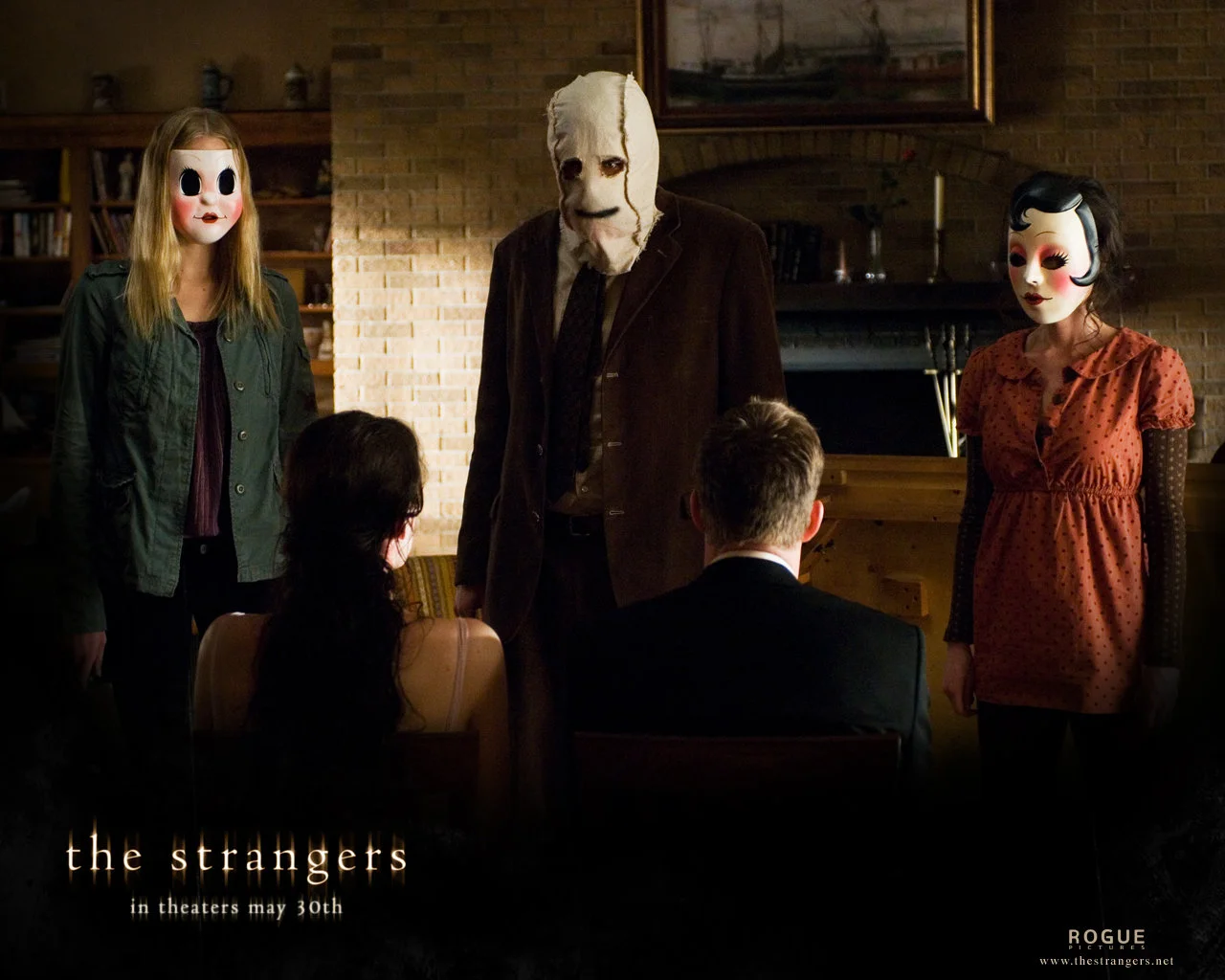
The Strangers (2008)
The most common response I get when I tell people that I studied horror films for my undergraduate degree is, simply: “No you didn’t.”
It’s true and it’s not. My Horror Films Studies course was only one three-credit elective toward the completion of my Film minor. Sometimes I deliver that line as if my degree thesis was, say, an analysis of how the graphic reportage of the Vietnam War contributed to the terror surrounding The Texas Chainsaw Massacre. I do this, in part, because I’ll take any chance I can get to seem eccentric; it’s a fast-paced world out there, after all, full of people far more interesting than I am.
A fraction of the truth is that I’m particularly smitten by the genre because I associate the fear it elicits with the thrill of being young and dumb and in love. When I was in high school, such was the move: invite a girl to your place, share a blanket, and watch a scary flick on the couch in the basement, under the exposed guts of your house, pipes that would writhe and groan in uncanny rhythm with the silences in the movie. Lights off, obviously. Just she and I and the electric blue of the PG-13 hellscape on the old tube TV, a couple of Diet Cokes. This was my introduction into the realm of filmic terror.
It was also how I started seeing my first long-term girlfriend. Our initial dates were viewings of Disturbia and Cloverfield—two of those hedged, quasi-horror, quasi-thriller films that served to ease us into the genre before going full-on Rosemary’s Baby. We took it slow.
Those nights, beneath the blanket, we’d rub socked feet, lean into each other as cameras panned down dark hallways, excruciating and unhurried. If I was lucky, her shirt would have slid up during a jump-scare so that, when I put my hand back where it had been before we both reacted, it would be resting against the soft skin of her lower back. Some of my first exposure to intense, blue-balling sexual tension went just like that: my arousal, as well as the possibility of embracing its source, intensified at the same rate as manufactured fear.
With the same girlfriend, whenever we were at her place—a ranch home full of Catholic, conservative, God-fearing Italians—we’d have to play board games or watch rom-coms on the couch with her mother, who often chose the movie, and who could only handle leaving us alone for the duration of a bathroom break. We could hold hands. No blankets. She left the lamp on.
About halfway through Hitch or Just Friends, she’d feed us homemade, ultra-breaded marinara dishes made brick-heavy by all the cheese. My girlfriend and I would reluctantly eat on separate couch cushions while we watched the rest of the movie. We did this out of respect. My lap would grow warm from the heat of the food on the plate; I’d sweat in places I really didn’t want to be sweating.
I’m still convinced her mother was some sort of overprotective super villain. It was brilliant: she only made food that she knew would give us the meat/lactose sweats, so that whatever immediate attraction we felt for each other would be absolutely bludgeoned to death. The sexiest thing about those nights was the shit I would take when I got home that mercifully rid my body of maybe half the dairy I’d consumed for dinner.
To be clear, I wasn’t (and am not now) opposed to some good old fashioned family fun. I wasn’t (and am not now) a dog. But in that specific environment, under the shadow of my girlfriend’s mother, in the glow of a movie which likely had some ideologically rigid and self-righteous portrayal of love, trapped in home-cooked sweat, it all felt constricting. It felt like something that hadn’t yet taken shape was being viciously and unfairly molded by someone who had, all her life, suffered her various terrors. All her daughter and I wanted to do with each other was embrace terrors of our very own, twist ourselves in them. We wanted to use them to get weird with our unexplored, pubescent bodies.
Horror films were crucial to this sort of young, suburban passion. They were a superficial, straight-to-DVD rabbit-hole into the warped kingdom of my sexuality. At my house, what ended up happening beneath the blanket was always in stark contrast to the banality of the Diet Cokes, the buffalo-plaid couch, the artisanal, colonial décor of my suburban New England home. It was a netherworld made accessible by even the cheapest jump-scares.
She and I eventually moved on from the Cloverfields to more realist contemporary horror. Our staple was The Strangers: Scott Speedman and Liv Tyler alone together in house that wasn’t theirs, fucking on the table after Liv turned down Scott’s proposal for marriage. Three masked strangers with knives dog them through the night, mechanically breaking them down with horrifying foreplay: knocks on the window, record players mysteriously turned off in the other room, the front door left wide open. All of which led up to the slowest, gentlest, most terrifying stabbing sequence I’ve ever seen.
*
The ‘suburban’ modifier to that passion is perhaps its most important quality. In the short length of a year following the September 11 attacks on the World Trade Centers, vacancy rates in Lower Manhattan more than doubled. Families fled to places like my hometown: good public school systems, vast green commons, neighborhoods labeled as "Estates." I remember the influx of people, the municipal scramble to develop more cul-de-sacs, more condos, all the DPW trucks with their hazard lights flashing, fleets of them parked on top of berms outside vacant lots.
Over the course of the next decade, the horror industry exploited the safety America projected onto the suburbs. For those of us who were already there, like myself, the walls had closed in on our world a little bit. We understood then that we might be in the suburbs for the rest of our lives. At the time, after the attacks, we didn’t know how long those, our lives, would even last. We had less of a possible escape than we did before, and there seemed to be a doomsday clock on our American existence.
An example of how the horror/terror genre was always a step ahead of us: a film like Cloverfield exacerbated our fear of faceless, monumental terrors sacking our metropolises and burning them to the ground. The logical escape from that is an exodus to the suburbs. That’s where films like Disturbia, The Strangers and It Follows come into play; there are serial killer neighbors hiding in plain sight, and whatever it is that’s chasing us won’t stop just because we moved to a cul-de-sac. So okay, we’ll stay inside. But then our houses are haunted in films like Insidious, Paranormal Activity, and (my favorite campy-slogan example of this) When a Stranger Calls: “The call is coming from inside the house!”
And so what’s the final temple? What’s our last defense from horrible death? After we have left our homes, all that we’ve got are our bodies. Which is why, so often, possession films are the most terrifying of all: The Exorcist, The Exorcism of Emily Rose, The Conjuring. The reason we’ve seen such an oversaturation of these stories in recent years is because, within the last decade, the horror industry has exhausted all its precedent anxieties. We’ve reached the end of a cycle in which movies have systematically broken our sanctuaries down, violated them, reminded us we aren’t ever safe, the way masked sociopaths do to beautiful, nearly-married couples on vacation.
Perhaps that’s why it always felt like the awareness and discovery my ex-girlfriend and I experienced with regards to our bodies was a profound sort of transcendence. In beating the genre’s most unbeatable gambit, we came to appreciate it. I went on to study it.
This cycle is starting over. Earlier this month, Robert Eggers released his critically acclaimed directorial debut, The Witch. It calls itself a “New England Folktale,” in which a Puritan family is exiled from a settlement in 1630, only to move out to the banks of a forest, where they’re under siege from woodland witches. They struggle with their own fears of a fundamentalist God. We’re returning to the origins of American horror, to the forms it took when it secured its foothold in our country’s earliest people: when sexuality meant witchcraft, and believing in God meant believing that we were the devil.
*
Another response I tend to get when I tell people I studied horror films for my undergrad degree: something to the effect of, “Why?”
Fair question. A lot of them are unadulterated garbage. As a genre, though, and as a complete corpus of filmic art, they’re not deserving of such a reductive dismissal. Sometimes the psychology behind them is painfully on-the-nose, but at least they offer an accessible window into some complex ideas. They start conversations. They deserve their place in academia. A lot of them are kind of hot.
And yet, over time, my visceral lust for the genre has leveled off. There’s still all that hormones-on-parade history that textures those films with a certain nostalgic ecstasy. But as I've grown up, I've carved spaces for horror in tamer traditions.
Every Halloween, now, I get together in my basement with most of my fantasy football league—some years as few as three of us, others as many as twelve men and women. After I shut the porch light off at 9:00, we bring whiskey and beer and the remaining trick-or-treat candy to the basement and watch three horror movies on Netflix that we’ve never seen before. Lights out, obviously. Sometimes blankets, a better TV than before. We revel in the tradition, in the terribly-delivered lines that become part of our shared vernacular. Occasionally, we’re all genuinely scared. Even when we're not, there’s always a palpable energy in the room, something alive and slightly dangerous.
It’s no surprise to me that the folks with whom I watch sports are exactly those who appreciate the subtle nuances of sharing a horror film together. In his short essay for The Paris Review Daily, “Nauseating, Violent, and Ours,” Chris Bachelder (The Throwback Special) writes this about sports as a shared experience:
“I’ve spent some time wondering why I still watch and care about sports, particularly football, and I grasp at the idea that an avid interest in sports might be connected to a desire to belong. We could debate whether this is a justifiable and edifying expression of this desire, but the desire itself seems vital and real. In caring about sports, we join others in caring deeply about something over which we have essentially no control, our lucky socks notwithstanding. The stakes are not genuinely high, but they feel high, and worthy of our passions. Our powerlessness as passive viewers is mitigated by our sense of belonging, as it is by the comfortingly orderly rites and rituals of seasons and spectatorship. We experience occasional joy and wonder, frequent disappointment, and, in some cases, anguish and horror. All of this we experience communally, even when we watch alone.”
Why horror films? Five years ago, I would’ve told you it’s because they make for great dates. I still believe they do. But these days, it’s all about exactly what Bachelder posits: like sports, being terrified is a shared experience. Emotions are wrenched out of us by the spectacular. And it doesn’t really matter what in particular we feel. It doesn't to me, at least. What matters is the experience of feeling something, together.
Daniel Johnson is a graduate of Southern New Hampshire University's MFA in Fiction and Nonfiction. He currently works at The Paris Review.
So Go the Ghosts
I think the common misconception with Schrödinger’s experiment is that its findings can encourage indecision. But choosing to make no decision, to take no measurement, to send no text, are still in themselves active resolutions. I’ve consciously left the ghosts of those affairs in the box, cryogenically frozen, petrified in amber. They’re still there. In having done so within the Schrödinger framework, I elected for their life. Rather, I chose life and death and everything else; I elected for their infinity.
by Daniel Johnson

Last spring, I reacquainted myself with Schrödinger’s paradox, the early 20th century thought experiment in which scientists--namely, the Austrian physicist Erwin Schrödinger--sealed both a housecat and a vial of radioactive material inside a metal box to illustrate and examine the effects of quantum indeterminacy. Attached to the interior of the box was a small hammer rigged with a random timer; should the device trigger, it would shatter the vial, releasing nuclear fumes into the vacuum and suffocating the cat. Because the box was metal, and because the death-device was random, it was impossible for observers to know the outcome unless they opened it. And so Schrödinger suggested that, while the box remained closed, the cat existed in two states: dead and alive. His theory was that whoever opened the box and found the cat dead had been the one who, in a sense, killed it.
I was, at the time, spending the majority of my time tending to my family cat. Her name was Bonnie, and she was dying. For the better part of a decade, she had slept in the crook of my arm. She had trouble staying warm. The shelter we adopted her from thought she might have had a chromosome defect that resulted in abnormally thin, soft skin. She was the runt of the litter.
At the end, Bonnie had a bum leg that kept degenerating until she couldn't walk the stairs. Bonnie was my friend. I had shared almost half of my life with her: gray-fogged mornings before the bus ride to high school, afternoon naps when I was too hungover to pet her, evenings of reading marathons, of her chewing the corners of dust jackets and nudging me for attention. During those last days of her life, I worked from home, and when I held her, walked her upstairs, placed her at the foot of my bed and watched her fall asleep just to make sure that's as far as she'd fall, I grieved like she was already dead.
And so, Schrödinger. I pre-mourned my cat's death by spending midnight hours at the kitchen table, reading discussions about quantum mechanics on strange forums at the back ends of the Internet. I followed most the users who dedicated so much time trying to calculate the odds that Schrödinger's cat would be alive when the box opened. Bonnie would be asleep at the foot of the chair, tail wrapped around a wooden leg, belly rising in harsh New England moonlight that shone through the window over the dripping sink.
My fascination with the experiment, though, peaked with the Spring 2015 issue of The Paris Review, in which a character in Mark Leyner’s “Gone with the Mind” (now available in book form) alludes to the experiment in one of my favorite closing lines to a piece of short fiction (emphasis mine):
“Life’s harrowing fucking slog—we’re driven by irrational, atavistic impulses into an unfathomable void of quantum indeterminacy—but, still…it’s nice to have a friend, a comrade, a ‘paracosm,’ whatever, to share things with.”
And so, Bonnie.
*
I was in the room at Franklin Vet Clinic when Dr. Parker squeezed the euthanasia into the rubber tube feeding Bonnie's bloodstream. My hand was on her rib-cage. She breathed deeply, arrhythmically on a threadbare blue towel that was monstrously frayed at the edges. Everything was uncomfortably exposed in swipes of colorless morning light from a window over the examination table. I felt her tiny pulse halt as the final sleep coursed through her body after the doctor and her aide asked one too many goddamn times if I was sure, if I had considered the alternatives carefully enough to be certain this was the right choice. They made it sound like the alternatives were infinite.
I don't think I'm ever more conscious of how uncertain I am than when I try to feign the opposite. And so not only did an uncomfortable awareness of the pathology to the whole procedure rake fire through my throat—the small gasp of the needle, the stainless steel slab that smelled like cleaning products and served as my beloved companion's deathbed—but it also made me feel like I was assuming more and more agency in its execution. As is the case with many people who elect to put their pets down, I was convinced for a while that I had done the killing.
The idea of exchanging my decision for one in which I preserved Bonnie inside a sealed box is psychotic and sad. But I’m not beyond believing that, in my grief, I found some solace in the simple theoretical absolution of a cat that was both dead and still alive—still, somehow, with me—at the same time. I’d invoke Schrödinger whenever I hallucinated her ghost: black blurs of matted fur in my bedroom doorway, the phantom pat of paws on my carpet.
*
Lesser such heartbreaks followed in the summer. I was, around that time, on-and-off dating a string of women who were all committed to other men. With each of them, I absconded to hotel rooms in the New England country. If any of them were house-sitting for a relative, I made love, fucked, whatever, in beds that explicitly belonged to someone else.
It wasn’t always intense. There were smaller days. On the weekends we could get away, we went for riverside walks, read Ben Lerner’s poetry out loud to each other, made bets on who could better sear a blackened salmon for supper, picnicked in mountain valleys, fell asleep listening to evening rainstorms. Mostly, though, our relationships existed in the text messages and emails we back-and-forthed every day for the better part of a year. I shared things with them, told them about Bonnie. I fell in love.
After a while, as these things go, the nights when I felt good about the affairs became vastly outnumbered by the ones when I felt less so. I would eventually pressure each of them to leave their partners. They stopped responding altogether, which a friend recently told me is a modern love phenomenon called "ghosting." They all disappeared.
I never once messaged them asking why exactly they had gone away. And even if I did, I knew any attempt to find out would have ensnared me in the observer’s paradox: by trying to measure the outcome, I might affect its absolution—a mini Schrödinger on my shoulder, offering admonitions. A text might have ushered our relationship to a definitive, punctuated end. Whether they had reconciled with their men, or found someone else, I didn’t want to know. I wasn't ready for that. In a way, I disappeared too.
Schrödinger’s logic is abstract, but it holds. When you reduce the jargon of it all, you get a tautology and a platitude: we won’t know for sure until we know for sure, and sometimes not knowing is the safer state. Ignorance is bliss, etc. I once spent a whole night searching for any online evidence that Schrödinger had been heartbroken prior to conducting his experiment. Jury's out.
I had never been ghosted before. Handling such a sudden loneliness left me wayward. I took off to the Midwest, where I lived for a while in a friend’s study. I walked her dogs through dairy fields, gardened for her, bird-watched for sandhill cranes in soybean farms. I lived at the margins of other people's lives because it was clear I was a self-destructive time-bomb when I existed at center of mine. Sometimes my friend would let me talk to her about Schrödinger, about how I so obsessively believed the essence of his experiment was inseparably linked with all my most recent ghosts. For the most part, I tried to forget about him, move on from all of it.
I live in New York City now. People here ask me why I’m not dating, why I haven’t downloaded Tinder, why I stay after hours at the office, why I bring work to the bar. Mostly I don’t answer. I’m content, and it’s hard to talk about ghosts. There's no lighthearted way to articulate that I’m still learning how to gracefully repopulate—navigate, even—a world affected by all this absence.
*
So much of it had been well off my mind until a few weeks ago, when I heard news about the cosmic superstorm, and the gravitational ripple that all but confirmed Einstein’s theory of general relativity. I’ve been trying, as we all should, to understand the incredible magnitude of what this means.
All of it may suggest that the probability of plural realities and multiverses is more likely than ever. And so perhaps most fascinating about the impact of those two black holes coming together is the way its scientific implications echo religious sentiment. A hopeful reading of the multiverse theory offers a comfort not so unlike the idea of the afterlife, should you believe in it: whatever dissatisfaction we have with the current reality can be mitigated and even justified by the idea of salvation in that “Something After.” Now, it’s coupled with what one might call a “Something Adjacent,” a single reality—or billions of them—moving parallel to ours onto which we can superpose our most desired personal storylines. Theoretical places where the ghosts we carry just might be alive yet.
And so—again—Shrödinger. Of the infinite possible outcomes, our world is merely one of them. We’re just a random, mildly grizzly scene—“a harrowing fucking slog,”—that the universe came upon after it peeked inside its own box.
After the news, I thought first of Bonnie. After she died, my family received in the mail a glossed postcard from Dr. Parker, along with a handwritten note of condolence and a transcription of the prose-poem “The Rainbow Bridge,” one of the more famous consolatory pieces of writing regarding the death of a pet. In the poem, Rainbow Bridge is a destination for the departed—both a literal bridge and the place beyond it, two realities no longer gapped—described as an other-worldly meadow where “those who were hurt or maimed are made whole and strong again, just as we remember them in our dreams of days and times gone by.” There was a fairytale drawing in the corner of the postcard: a wooden bridge, some fluffy trees, a vast green country, blue skies. A reality where our ghosts are both dead and alive, where Bonnie tumbles between states, between that reality and the ones in my dreams.
I thought then of my affairs. In the throes of my Schrödinger fascination, I had spoken to each woman about different worlds where they weren’t with other men, where we were, in some actuality, together and uninhibitedly so. Ours were connections that transcended singular worlds, I said. Plainly, the most insufferable pillow-talk. But this was how I had justified their decision to leave me in boxes, locked in the dark metal chamber of other-manhood. It’s how I rationalized my decision to stay there. I told myself it was possible that I existed as a haven for them in their complicated and otherwise unhappy relationships. My very presence in their lives suggested a multitude of other worlds. That might have given them some sort of hope. It definitely gave them attention.
Most days, in the midsummer thick of grief, and of virtual and occasionally physical passion, it seemed like reason enough to stick around. In the days since the discovery, I’ve found myself wondering again whether I was right, replaying the memories, enduring weeping fits when I think of the way Bonnie looked at me from my lap as we drove her to the vet that spring morning, as if that wave of gravity bent me back through time.
*
I think the common misconception with Schrödinger’s experiment is that its findings can encourage indecision. But choosing to make no decision, to take no measurement, to send no text, are still in themselves active resolutions. I’ve consciously left the ghosts of those affairs in the box, cryogenically frozen, petrified in time. They’re still there. In having done so within the Schrödinger framework, I elected for their life. Rather, I chose life and death and everything else; I elected for their infinity.
This, however theoretically, stripped from those relationships a lot of the ugliness inherent in affairs. Over time, whatever love I felt for each woman has returned to its unspoiled, uncarved state, like the glimmer of poetic possibility before the pen touches the page. It exists now in its purest, quantum form: boxed away, stuffed in some corner attic of the heart, left to crust over until I haul it to a landfill, or reopen it to find something still breathing.
There are moments when I feel like this is as close to acceptance, closure, forgiveness, any of it, as I can get. There are others when I wonder if it’s more like desperation, or the unwillingness to let go, let die. But anyways, you can’t keep a ghost with a stranglehold, or with any conscious grip at all. You just let it be. It’ll stick around until it won’t. You’ll know it’s gone when you feel it pass through the walls of your room, your apartment, the twilit cityscape, the atmosphere—cardboard thin, all of it.
Ghosts go quietly, graciously. They’re like fireworks that don’t combust until the uncatalogued reaches of the universe, where black holes collide and gravity is a tidal thing, eroding us in waves.
Daniel Johnson is a graduate of Southern New Hampshire University's Low Residency MFA in Fiction and Nonfiction. He's currently interning at The Paris Review.
Staff Pick at The Paris Review: Justin Taylor's "So You're Just What, Gone?"
"So You're Just What, Gone?" in The New Yorker. 2015.
My preparation for the Q&A with Justin Taylor that will feature in our Warzone issue has involved a substantial amount of research. I've read and reread his two story collections (Everything Here is the Best Thing Ever and Flings) and his novel (The Gospel of Anarchy). I've also dedicated many a midnight Internet rabbit-hole to devouring his digital archives, which I'm both proud and terrified to report I've nearly exhausted. They're quite extensive.
My favorite piece of Taylor's is his most recent short story, "So You're Just What, Gone?", which appeared in the May 18, 2015 issue of The New Yorker. You can read some of my thoughts on it here, at The Paris Review Daily. I'll be interning (and staff-picking) at the Review for most of the winter/spring.

In Which I Finally Find Out What a Bodega is
by Daniel Johnson

I contracted food poisoning once before, around this time of year in 2014. I had just gotten back from an alumni weekend at my alma mater with my then-girlfriend, who had insisted (she was insistent) we dine at a less-than-reputable sushi garden before the evening’s dockside bar crawl. I know: the poisoned-by-sushi thing is so exhausted a narrative that, most times, I’ll explain the virus entered me via the White Russians I drank at the little Mexican food joint where myself and all the other alums played song trivia. Because who dares to drink White Russians from a taco truck, or at all, really. I’ll say it was around that time when I remember the margarita-colored strands of lights strung along the marina started to twinkle in a nauseating way, when it was high tide hot saliva-wise.
My mother took care of me then. I was still living at home and she was (still is) a practicing nurse. She brought me ginger ale and applesauce and key lime Jell-O with plastic flatware while I shit the bed in my sleep and vomited napalm into the toilet whenever I managed to crawl—literally crawl—to the bathroom. It was a horrorscape, but she navigated it with grace and tenderness.
At night, she replaced dampened cold washcloths on my forehead while I endured some of the most terrible fever dreams I’ve yet had. In one of them, I set my garage on fire and beat my cat nearly to death, after which I held her crooked paw and wept both in dream and reality. My mother told me they were just the combination of dehydration, fatigue and medicine. She said, as all mothers do, that they were just dreams.
I didn’t believe her. A little over a month before I got sick, I had started working with a dream analyst who also doubled as my writing mentor. I made this decision so as to, perhaps, gain access to some spiritual cavity of my subconscious that might be beneficial to my creative process. We corresponded via email and she had noted the re-occurrence of feline imagery in my nightmares. She told me I should most likely interpret the cat as the Jungian archetype of The Dark Mother, who is particularly present in men’s dreams and damaging to their independence. She said, more or less, that The Dark Mother grows increasingly dangerous as young men get older: she represents the part of the son that will forever carry and be hindered by the burdens of his mother, i.e. (at the risk of sounding overly oedipal) the part of me that, in 2014, was hesitant to move out of my childhood home because I was unsure as to how happy and fulfilled my mother was in her marriage to my father. I asked my mentor what she thought of the cat-beating and the arson. She told me it was her strong suspicion that I might be blaming my mother for my homebound, postgrad waywardness.
It’s true that I found it hard not to fiercely resent her while she took care of me during those miserably ill days. The psychology behind her bedside supervision, within the context of my dreams, felt manipulative and transactional. I was partially convinced my mother had fostered my dependency on her during my recovery so as to further keep me under her roof. Her role as compassionate mother was totally contingent upon my participation as her ailing son; maybe, I thought, she preferred buttressing that identity over facing her possibly blurry one as a wife. It seemed to me some sort of infantile regression: I was incontinent and eating foods for the toothless. I began to deny her care. I asked her to let me rest alone, so she did. I got better.
Today, I have food poisoning again. I’m home from work—from a new job in Manhattan that I adore—convalescing alone in my Brooklyn apartment. I’m watching sitcoms on my Macbook and using pillows to block out the natural light from my windows. When I look at the birch trees stenciled on my wall, I get dizzy and turn over. I drink water in sips.
The likely cause: in a late-night attempt to discern what the goddamn hell ‘bodega’ means and what’s so special about them, I stopped by a corner deli and ordered a grilled chicken sandwich that tasted neither like it was grilled nor chicken. I’m new in town (I moved here last week) and don’t yet know the places to frequent or to avoid. Safe to say, I’ll be more selective when purchasing a hot meal from establishments where I can also stock up on, among other miscellany, fabric softener, sleeveless undershirts and Midol.
I don’t at all mind recovering alone. I’ve been told this is a distinctly feline eccentricity: when they’re sick, cats disappear, curl up on the corner shelf in the storm cellar and lick each wound until they’re ready to come upstairs. Perhaps this urge to be alone was what I was really raging against two years ago, in that fever dream in which I attacked my cat. In retrospect, I’d like to think I wanted and failed to be gracious about simply letting my mom be a mom by doing what she’s good at and nursing her kid back to health.
Dream jargon can be tricky like that. It’s often poignant, but in a really conspiratorial and over-prideful way. I like key lime Jell-O, after all, and my parents’ marriage is just fine: when I called today to let them know I had food poisoning again, they had to cut the conversation short. They were headed up to Maine, where they’ll shop for antiques in novelty stores and watch reruns of Wings by the light of a gas fireplace.
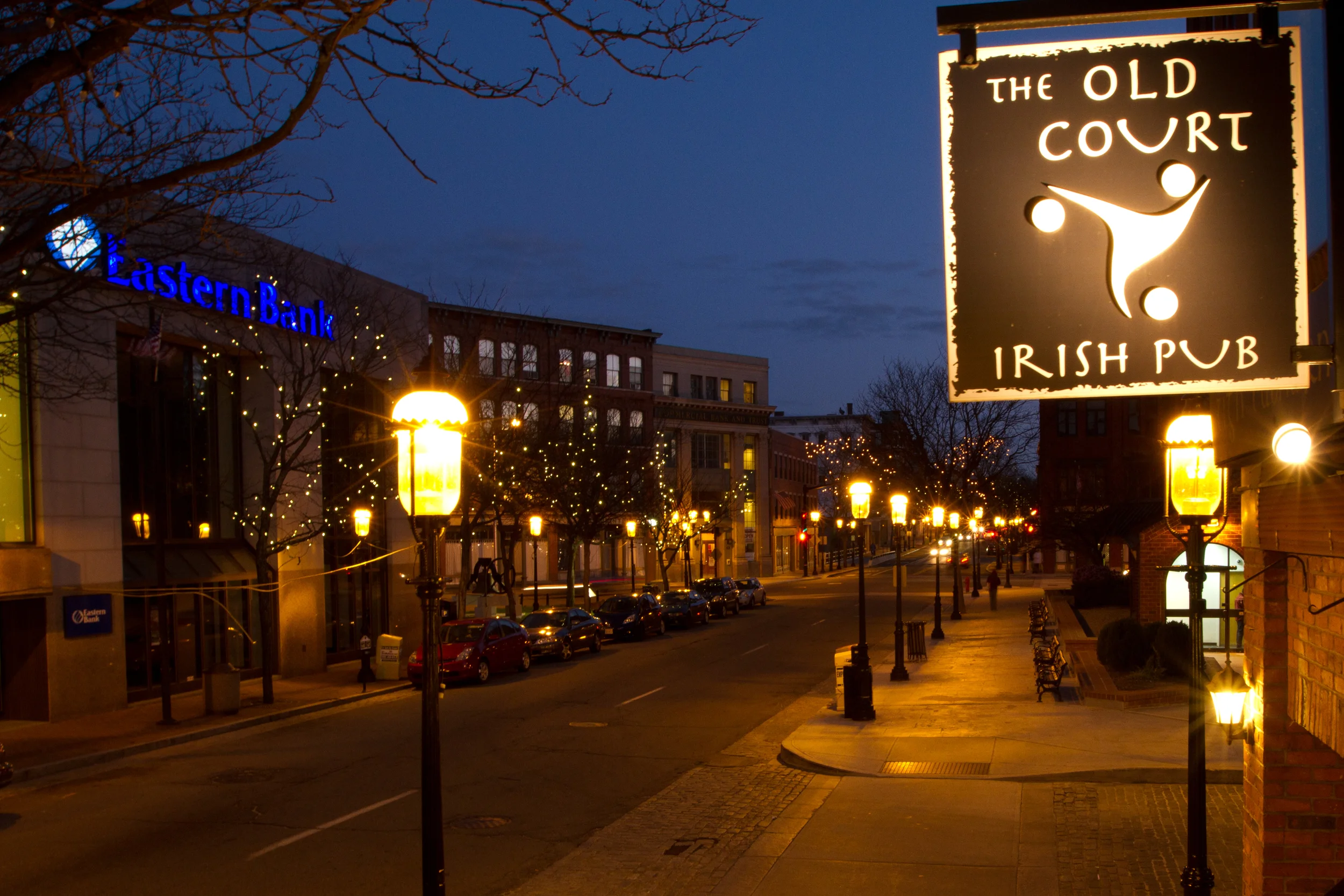
Letter from the (Web) Editor: Assignment's Winter Reading at The Old Court

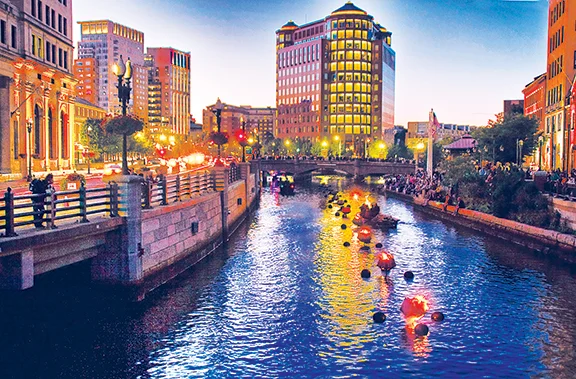
During the past year, what I've noticed most in the writing submitted (accepted or not) to Assignment is the haunting presence of place-as-character in nearly every piece. We're still a small, local publication with traffic mostly in northeastern New England. Our contributors are primarily based out of the Massachusetts-New Hampshire area. We've had contributions written about the backyards of Manchester NH, the marinas of Newport RI, the barcrawled thoroughfares of the Merrimack Valley in central MA. In each piece, there's this overwhelming sense that the story's keystone character is not the narrator's consciousness, but the setting through which it travels. This is true for our first print issue as well: post-9/11 Manhattan (more specifically, a Portugese restaurant), the slums and suburbs of Pittsburgh, and the changing neighborhoods of Brooklyn dominate their respective stories.
Because of this, we had the idea to unite Assignment's Bay Area (Boston's Metrowest) writers for a small reading at someplace local. There, we'd celebrate some of the mag's Massachusetts-infused writing. I'm thrilled to report that myself, Online Only contributor David Moloney and good friend of the magazine Ted Flanagan will each read from some of our work on December 30, 2015 at 7:00PM at The Old Court (upstairs) in downtown Lowell, MA. The three of us are, also, either a current student or graduate of Southern New Hampshire University's MFA in Fiction and Nonfiction, which most notably saw two of its faculty members nominated for 2015 National Book Awards. Assignment's editor and SNHU MFA's director, Benjamin Nugent, will moderate the event. Admission is free, but we'd love it if you'd buy a beverage from the bar to support the venue.
Whenever I'm at a reading, I'm reminded of the last lines of Ben Lerner's 2011 novel, Leaving the Atocha Station. It is my favorite paragraph in all of American literature (it's also my favorite novel). The story chronicles the various relationships and artistic misgivings of its protagonist, Adam Gordon, an American poet, during his time abroad in Madrid on a prestigious research fellowship. In the final scene, Adam is preparing to read some of his recently published poems to a large audience in a skylit art gallery owned by one of his peers. Earlier in the story, he read at this same gallery, but did so while battling a crippling episode of panic.
Much of the novel's conflict is anchored in Adam's anxiety, as well as his warped perception of himself and how others in turn perceive him. Each of these internal tensions is at times exacerbated and mitigated by the language barrier between he and his Spanish friends. He often leans on his inability to translate English thought into Spanish speech as a conversational exit strategy when things get awkward. It also functions as the excuse he uses to rationalize why he can neither communicate with nor understand the depths of the several Spanish-speaking lovers he takes during his tenure abroad. The concepts of both concrete and abstract translation--literal and figurative--thus factor heavily into Adam's character arc: he struggles to translate the inner workings of his soul into his physical self, into the physical moment, into his relationships with others, into thought, into speech, into English, Spanish etc.
One of Adam's friends/lovers, Teresa, spends a great deal of the novel translating the poetic contents of his notebook into a cohesive Spanish chapbook. She eventually uses the press at the art gallery to publish the finished product. It is, arguably, the grace with which Teresa shuttles between her Spanish and Adam's English--her world and his previously inaccessible internal one--that has ushered the novel to this conclusion. Teresa is at Adam's side in Atocha's final scene, as the two of them prepare to read to the audience at the release party for the chapbook. The last paragraph is only two lines:
'Teresa would read the originals and I would read the translations and the translations would become the originals as we read. Then I planned to live forever in a skylit room surrounded by my friends.'
In those penultimate moments before the reading begins, the barriers that once separated Adam from Teresa and his other Spanish-speaking peers shatter with absolute finality. Perhaps, too, this helps bridge the gap that disassociated Adam from himself. In that gallery, he experiences some form of self- and communal love, and so the novel ends.
Whenever I attend readings I am, without fail, transported to Adam's skylit room described here. It is (and readings are), above all, a place of profound and unfiltered community. And so at the end of Assignment's setting-heavy year, there's no other environment where I'd rather celebrate our publication and its supporters than at this reading, in that figurative skylit and eternal place.
We at Assignment hope to see you at The Old Court on Dec. 30. We'll be upstairs, in a barlit room, surrounded by our friends.
- Daniel Johnson
We would like to thank The Old Court for hosting us. If you’re attending, please be sure to buy a beer and tip the bartender.
Please contact Daniel Johnson, Assignment's Web Editor, with any questions. For more details, refer to the event's Facebook page here.

The Forge and the 5:07
by Daniel Johnson
The thing about Franklin is that it’s really a railroad town. Back in the nineteenth century, when Horace Mann was first elected to state office, he stretched a corridor of commuter rail thirty miles southwest of Boston, all the way to a station at the border of his (and my) hometown. The Forge Park platform is the first on the outbound Franklin/Purple Line, so named because each silver train car is laterally halved by a strip of regal violet paint. It sits at the base of a cratered parking lot, the platform does, adjacent the Garelick Farms factory with its dairy-white smokestacks and warehouses and steam that billows milky above Franklin's signature jagged pine. Locals call the station The Forge.
Growing up here, I didn’t think much of the Purple Line, or use it at all until my adolescence, when my friends and I occasionally rode it to Sox games so that none of us had to drive and we could pound booze from wadded paper bags. Sometimes it seemed like the town didn’t think much of it, either. No one moved to Franklin for commuting convenience, and most of the people in my neighborhood who worked in the city carpooled together along the Pike. There weren’t even any of the typical trackside shenanigans you’d expect to hear about: no kids who played chicken and lost feet, no fight clubs in the abandoned mill buildings. It was always just sort of there, and in those earlier years I’d more or less forget about it until I had to wait for a train to pass at the Union Street crossing before I could continue on my way to wherever I was going, which was never far. My curfew was unique from those of my friends in that mine placed boundaries on both time and space. I was my parents’ first child.
Some nights, before I had to employ the dull roar of a box fan for sleep-aid in high school, I’d wake up from my early bedtime to the sad, high-pitched bellow of the 11:30pm—the last train home. It called out somewhere past the acres of sleepy homesteads and orange streetlights beyond my bedroom window. It would occasionally invade the strangest of my dreams, the horn would, and disguise itself as other things. I remember one nightmare where it doubled as the song of some predatory and prehistorically large bird that circled above me at the end of my driveway, while I was for some reason on all fours and vomiting in the storm drain there.
It wasn’t until I moved back from college that I started to really notice the rail’s distinct omnipresence. There were always these brown trails of dry earth that kicked up along the downtown tracks and hung squat in the breezeless New England humidity, long after whatever train had gone by. It was only then that I registered the echoes of locomotive churning audible from most central parts of town as a sort of heartbeat that dwarfed the suburban din of little league tournaments, the distorted chimes of ice cream truck jingles, the groans of faraway landscape machinery. I hadn’t before then acknowledged Franklin as the crossroads it really was. The idea of growing up in a place where there was a means of escape—like, a very reliable and regimented means of escape—meant that I wasn’t the prisoner I liked to imagine myself to be.
I worked as a county paperboy for a while after I moved home. I would spend the midnight hours driving around the bones of the town, smoking bowls and drinking RedBull and listening to live Guster albums at inappropriate volumes. I sped a lot, chucked poorly folded County Gazettes onto the dew-laden baronial grasses of all the residential exurbs. It was the type of lonely, purgatorial job I hoped I’d have been beyond by then, but there was a small part of me that enjoyed haunting Franklin's recesses every night. I tended to finish my route anywhere between 4:45-5:15am, and sometimes I’d grab an iced coffee and banana from the Dunkin on 140 and head down to The Forge to watch the 5:07 leave.
Always, a very particular type of older man with elbow patches on his blazer waited in the predawn twilight for that first train out along the yellow platform. Several of them stood beneath the initial chugs of the Garelick Farms steam, which sort of hovered still along the cratered lot’s rim, like smog. I would watch these men keep to themselves, rock on their toes, look to the paling sky, pull out their phones. The blue light from their screens bled into the icy beams from the station awning’s overheads. Their faces were swollen and droopy from having just woken up and I remember it all looked very cold to me, even in the summer.
There were nights, though, when I’d finish my route late and miss the 5:07’s departure out of The Forge. In these cases I’d often catch it en route to Boston at the Union Street crossing on my way home. The railroad bells would knell empty through the yawning thoroughfare of darkened storefronts and townhouses, the warning lights would blink a tired red. Beyond my headlights, the silver and purple streak of that first train would blur on by.
Sometimes I’d be so sleep-deprived or high or some pleasant mixture of both that I’d imagine I could see my reflection in the moving metal, or that I was on that train, dressed all professorially and important like the men at Forge Park, looking to everyone like I had a place to get to and a purpose when I got there. It was like I was in two places at once, in those moments: headed smoothly towards the diamond haze of the city skyline, but still stuck in the driver’s seat of my old Jeep, watching myself go.
We Burned Out
by Daniel Johnson
Whenever Helen and I spent our nights drinking fifths of rum at the marina down the street from campus, I called her Helen of Troy. She was Greek, and there were all those ships, and in that naked moonlight her olive body looked as if some hunchbacked old Athenian sculptor had spent his lifetime casting its mold. Sailboats rocked against the pier and the warped wood of the docks would cry out. I told her they were made restless by her beauty, the boats. She knew it was just the ocean and that I was drunk. She would tell me to stop it, but in that way that meant she wasn’t really sure whether or not she wanted me to.
Helen wore nautical outfits a lot: anchor belt-buckles, lighthouse earrings, navy and white striped blouses. Her family was rich and we went to school on an island. She carried a miniature ceramic Tragic mask on her car keys that dangled out the back pocket of her brass-buttoned sailor shorts. When I was with her, I usually wore an undershirt and an unwashed pair of Levis with one of those mini pockets-within-a-pocket, where I stored two Ativan in case I had an episode during the day.
Most of those nights, we finished our fifths and tossed the empties into the Atlantic. They’d bob there and reflect coins of moonlight on the waves and sails and sometimes on our faces until they sank to the shallows. We would walk back up the hill towards campus and I’d rest one hand against the almost unnoticeable impression of the pills in the denim. I made it look like I was being smooth: just a thumb hooked in a beltloop. In my other hand, I’d hold Helen’s. The streetlights above us were orange and globular, like old diver’s helmets atop stakes of black iron.
She always did this thing where she would walk slightly in front of me and not look back. I didn’t mind. I’d watch the backs of her legs and think about how all I wanted was to feel them against my body every night, the way I could feel the pills. About halfway up the hill, I would know I needed to take them because the walk was steep and the rum made my heart roll.
Part of me thought the reason Helen never came home with me after the marina was because, by the time we reached campus and I asked her to come to bed, my breath smelled rotten and synthetic from the Ativan. Sometimes they scraped against the roof of my mouth for the rest of the walk home before they’d swallow down. I imagined they left trails of residue, like long white cuts, along the back of my throat.
It was always the absence of something that triggered my anxiety. It was the silence that came when my roommate would go home for the weekend and leave me alone in our fluorescent dorm room without the box fan he used for white noise. It was the nights when I wasn’t surrounded by bar lights that blinked arrythmically, or by crowds of people in rave outfits with drinks the color of glow-sticks. It was whenever I wasn’t with Helen, or knew I wasn’t going to be with Helen, which was quite a lot. Helen didn’t like to stay the night.
We almost only saw each other after dark and, other than the nights at the marina, strictly behind the closed doors of my bedroom, which I found sort of sad. In daylight, the single-hung windows of my dorm would catch the sun from all its angles. The few times we spent afternoons together, Helen would wear her thinnest, whitest dresses and dance in the swaths of sunshine about my floor. She would stand over my knee as I sat on the edge of my bed and lift the hems up and hold them with her teeth. She’d have me touch her. Often, she reminded me that her name, in Greek, meant bright light, or flash, or something.
Otherwise, she’d come over after her evening classes and we’d watch Baz Luhrmann films and make love on my twin bed in the underwater lighting, the swimming blue shadows from the tube TV on my hutch. After we were done, I’d roll over into the crook of the wall and listen to my heart palpitate while she checked her phone. I’d fear that I had just voided some essential part of myself. Sometimes I’d be okay. There were others when I’d trip into a regiment of deep breathing exercises I’d learned from a Youtube video of a poorly animated blue butterfly that fluttered its wings in time with my deep breaths against a backdrop of green hills and silvery rays from an invisible sun.
When that happened, Helen would do this other thing where she’d hover her open mouth over mine. It looked like she was trying to kiss me really hard, or swallow me whole and hide me inside her belly. But she always left a space between our lips where the hot air would flatten out and cool. I’d hear these soft clicks against her teeth, like there were little crystals in my breath that sparked cold along the faces of her molars, which were perfectly aligned because she kept them in her retainers whenever she was alone. The breathing exercises only worked, really, when she did that other thing.
Each night, before she got dressed and went home, we’d watch the rusted reflections of the city below us shimmer on the ocean from the concrete slab of my windowsill.
“We could be good together,” I’d tell her.
The sill was cold against our bare thighs, so most times Helen would climb atop my lap and lounge into me. She’d let the back of her hand fall against the glass. It would leave blurred knuckleprints there, streaked along the pane. I’d wipe them clean whenever she didn’t text me back.
“It looks like it’s on fire,” she’d say. “The water—isn’t it something?”
On Improving the Cinque Terre Coastline
by Daniel Johnson
Cinque Terre is a cluster of five Italian seaside villages along the Ligurian Sea, where the air is a spray of salt and citrus. There are lemon orchards and small castles and hillside villages of clay and terracotta and cobblestone. Cacti cling to the sides of cliffs and purple flowers shaped like long bells line the rugged inland trails through each town’s foothills. Each morning, my two traveling companions and I hiked these trails to work off the previous night’s seafood dinner.
The days were dry. We often rested and watered at the summit of the first foothill, where my friend would gulp mineral seltzer and snap pictures of the coastline with her iPhone. It was always hot and the sky was bold and the sun burned everything, even the distant haze of the farthest beaches, to a certain degree of enchanted brightness that seemed worth capturing.
improved
At lunch, in the cool shade of alleyway cafés that smelled of white wine and shellfish, I would watch as she forgot about her food and filtered the shit out of her photos on Instagram. She would spend her entire primo piatto turning the blues of the horizon the color of Rob Lowe’s eyes. She took the lush greens of the hillside and lit them like lights on an Xbox. She grilled the clay of the terracotta roofing to a salmon pastel and blotted out the black specks of osprey because whatever. Her thumbs swiped the color wheel on her screen in mantid twitches between WhatsApp messages to her boyfriend in Boston.
The photos of the village are simultaneously reminiscent of 1970s Miami and modern candy counters. An orange film oversaturates the dwellings, as if they were drenched in Aperol spritzers and are perpetually sticky.
I’m not sure the Cinque Terre I’ll remember is the one that exists. It will be difficult, at least, to recall the skyline as a particular shade of blue. I imagine I'll remember it as all gradations of all colors in infinite pixelated flux.
**
One afternoon, the three of us took a boat southward to the harbor town of Porto Venere. We docked, and I broke off to explore on my own. I walked along the ramparts of an old stone watchtower at the western cliffs and bought a small model ship, made of cork and walnuts and newspaper, from an elderly Italian woman who crafted and sold them there. We exchanged some basic pleasantries and she said, or at least I think she said, I should go check out the statue of Mother Nature at the tower’s base.
This interpretation of Mother Nature cast her as rather homely, and whatever metal in which she was originally molded has faded to a sea-green patina. She sits somewhat hunched, with her hands crossed between her legs on the corner of a stone wall at the edge of the cliff. Her face is directed to the horizon beyond the sea. She’s turned her back on the provincial empire of Porto Venere, with all its trade and tourism, all the fishing boats along the docks and the cranes that still loom above the rooftops.
One gets the sense that it’s something terribly grave that burdens her. She slouches in what looks like defeat. It’s almost impossible, as a passerby, to meet her gaze without climbing over the cliff-side railing and risking the long fall to the jagged rocks below. But, if I had to guess, there’s abandon in those oxidized eyes, and probably some sadness, too.
"I Actually Knew Nothing About These People I Supposedly Hated:" An Interview with Adam Wilson

"Mixing Station" - Catherine Elizabeth
Assignment Issue #1 features the first published excerpt, titled "The Parentheses," from Adam Wilson's novel-in-progress. He is the author of the novel Flatscreen (2012) and the short story collection What's Important is Feeling (2014), the title story of which was featured in the 2012 volume of The Best American Short Stories. A recipient of The Paris Review's Terry Southern Prize, and a National Jewish Book Award finalist, Adam was recently named to Brooklyn Magazine's list of 50 Funniest People in Brooklyn. In this interview, we discussed his method for writing comedy and his use of 9/11 and the Wall Street crash as narrative backdrops.
To read an excerpt from "The Parentheses," click here.
- Daniel Johnson
In your story “Things I Had” from What's Important is Feeling, the protagonist, Sam, says of the two new friends he meets, Squirrel and Deep, that they "had words for things I’d wanted to name.” Has anyone told you that about your writing?
Adam Wilson: Maybe this is a roundabout answer, but I tend to think of writing—and all art really—as a form of communication, an (ultimately futile) attempt to represent and articulate, through narrative and the manipulation of language, things that can’t otherwise be reduced or articulated or summed up. I often think of Raymond Carver’s story “Why Don’t You Dance,” about a couple who have a strange experience, and then find themselves unable to recapture that experience when they try to explain it to others. The story ends with the lines, “She kept talking. She told everyone. There was more to it, and she was trying to get it talked out. After a time, she quit trying.” In a sense, I feel like those sentences aptly describe all of my characters, who are trying to find language to explain themselves and their worlds, and in so doing hope to begin to understand those things themselves. I’m not sure any of them ever succeed, but I think for a character like Sam in “Things I Had,” there is something really thrilling in meeting new people who open him up to a whole new language, a whole new way of cataloguing the world.
In Flatscreen, Eli describes himself and a bewintered New England as “ice-fucked.” All those hyphenated descriptions are poignant in the way they capture a generational vernacular.
AW: I got really into the hyphen thing for a while when I was writing Flatscreen and some of the earlier stories, like “Milligrams”, which I wrote while I was working on Flatscreen. The idea was that these characters didn’t have the language to say what they were trying to say, so they had to try to make a new one. But yeah, my hope was that it would somehow represent the way certain kinds of media have altered the way we speak—in Flatscreen I was thinking particularly of television and film, but the Internet is certainly a huge part of it as well.
What do you find is the most effective (and what’s your favorite) vehicle for comedy writing?
For the most part I try not to think too much about it during the writing process. Comic writing comes very naturally to me—I tend to cover some pretty dark material, and my instinct is always to offset the pathos with humor--and the only time I really sit down and think about the jokes themselves is during the editing process, when I ruthlessly vet them for anything that’s not working or simply could be better, funnier. Mostly though, my editing process involves trying to make sure the story’s comedy doesn’t detract or overcompensate for the more serious stuff going on below the surface. I think my drafts tend to be much more joke heavy, and then I’ll have to go back and say, “Well that’s a sort of funny line, but what’s it doing in the story? Does it need to be there?”
Each of the stories in What's Important is Feeling has its own hierarchy wheeling onward in the background, but the protagonists tend to reside outside it. Do you tend to favor writing marginalized characters?
AW: Yes, I tend to be interested in characters who, in whatever local hierarchy they’re part of, they’re somewhere near the bottom. In part, I think it’s because it’s easier to root for an underdog; no one wants to root for the cool guy who’s having great sex all day and is happy with his job and his life. Where’s the conflict? It’s much more fun to root for the loser who means well.
Some of your supporting characters, like Kahn in Flatscreen and Felix from "What's Important is Feeling," tend to be vocal about their views on the hierarchies that marginalized them. How fun was it to write characters like this?
AW: Really fun. It involved a lot of reading aloud to myself.
Stories like “The Long In-Between,” “December Boys” and “Sluts” have real-world tension looming in the background of the narratives. How did you find that deepen the world, the characters?
AW: I think, in all those cases, it came about pretty organically in the sense that they covered topical ground that interested me personally. “The Long In-Between” is set during the 2006 conflict between Israel and Lebanon, but I wrote it during some of the more recent, ongoing drama regarding the IDF and Israel’s foreign policy. I think, more than anything, I wrote the story to try to assemble some of my own feelings about Israel, and my narrator’s mixed feelings on the subject really echo my own. I think I made the character female to differentiate her from me, but of all the characters in the collection I feel like she is, in some way, the most similar to my actual self. I think it’s a very confusing thing right now to be a left-wing American Jew, and my hope was that, rather than push any political agenda, or come to any definitive conclusions about Israel, I could simply capture some of that confusion, and some of the frustration with the situation as a whole. “December Boys” actually came out of the novel I’m currently working on (excerpted here in “The Parentheses”), but then kind of grew into its own thing. I knew I wanted to write about the 2008 Wall Street crash from a number of different perspectives, and I thought it might be fun to try to figure out how a couple of young, laid off bankers might behave. In some ways, the major impetus for the whole project came from attending Occupy protests and proclaiming my hatred of bankers, and then realizing I actually knew nothing about these people I supposedly hated. I imagined what it would be like to be some twenty-three year old, straight out of college, majored in econ, got a job at Lehmann Brothers or wherever, and then suddenly find yourself unemployed and truly despised. What would that feel like? As for “Sluts at Heart,” I’d always wanted to write something about the Elvis stamp. The fact that there was a vote for whether we’d choose good looking, young Elvis, or sad, druggie, fat, old Elvis to be on the stamp seemed so absurd to me, so deeply American.
What was the single most important element that made What's Important is Feeling a cohesive collection?
AW: For a while I was really annoyed with people calling it a collection of "coming of age" stories, but after a while I realized it was true. They are all coming-of-age stories in the sense that, even in the stories that involve adult characters, they’re all stories about someone’s life changing after coming into close proximity with death.
For your excerpt in Assignment, "The Parentheses," the backdrop is New York just after 9/11. The event provides Wendy and Michael, on a second date at a Portuguese restaurant, with fodder for conversation. Do you think that happened for a lot of people, with their interactions with strangers, after the attacks?
AW: 9/11 allowed people, particularly strangers, to become intimate in ways they may not have otherwise. There was a sense of people feeling bound together by the experience, and a very fleeting feeling that there was no longer room for the bullshit of small talk. At the same time, however, I feel like the characters in the story, Michael and Wendy, are kind of nervous to bring it up as well, nervous that they’ll somehow say the wrong thing, or that things will get too heavy for a second date. The fact that they ultimately seem to open up to each other, I think, is a testament to some kind of actual connection.
What was the inspiration for the scene?
AW: The scene with the music in the Portuguese place was partly based on an experience I had much later on, sometime around 2007. I was on a date in a Portuguese restaurant with the woman who is now my long-term partner, but who, at the time, was someone I had only begun seeing. Suddenly, without us noticing, the restaurant closed, and we were the only customers left, and there was sort of a private party/jam session going on that we’d somehow ended up in. We got corralled into dancing and got very drunk.
The whole experience felt at once surreal and familiar; surreal because it was unexpected and dreamlike, yet familiar because it seemed like the kind of thing one heard about in romantic anecdotes about New York, particularly in certain kinds of movies, the kinds of stories that sound fake or unrealistic until they actually happen. And the experience sort of bonded us as a couple, it made us feel like things like that happened because we were together, that the combination of the two of us created some kind of spark that inspired these kinds of adventures. I think that was what I was trying to capture, and also this feeling, after 9/11, when people sort of just let go of formality a little bit. I wasn’t living in New York in 2001, but I remember coming to visit shortly after, and going to a bar downtown, and just getting into such intense and unguarded conversations with strangers I never would have talked to in a million years otherwise.
Can you tell us a little about Michael?
AW: Well, this section is a flashback, but in the present tense of the novel, he and Wendy are married and he’s a Wall St. banker who’s been skipping work to try to write a non-fiction book about Eminem. He’s an anxious, eccentric guy who I think really means well, but who makes a lot of bad decisions.
And Wendy?
AW: Wendy is also a really anxious person, and an over-thinker. These are qualities that she and Michael share and relate to in each other. But they deal with them in different ways, Wendy, by trying to control everything in her life, and Michael by trying to shuck responsibility. In a way this makes them both a good match and a problematic one. In many ways, Wendy is the novel’s anchor. A lot of the story centers around her job as a social media manager for brands.
I like the seamlessness with which you shuttle between Michael and Wendy’s points of view. Can you speak a little bit about writing the scene that way?
AW: My first book, Flatscreen, is told entirely in the first person from the perspective of a character with a very limited worldview, and so I knew that I wanted the next long project I worked on to be less claustrophobically contained to one character’s head. Michael and Wendy are the two main POVs here, but there are many others that pop up as well. It’s been really fun to write this way, a relief.
The Novel is Headed to Boca: An Interview with Joshua Cohen

"A Gym Window" - Catherine Elizabeth
Issue #1 of Assignment features a new short story by Joshua Cohen, “The Gymnics.” Cohen is the author of several books, including the short story collection Four New Messages, which was named one of the Best Books of 2012 by The New Yorker, and the forthcoming novel Book of Numbers, which will be available this June from Random House. He is a New Books critic for Harper’s. In this interview, he talks about the literature that influenced “The Gymnics,” as well as some of the research methods he employed for his new novel.
To read an excerpt from "The Gymnics" click here.
- Daniel Johnson
What does the title, “The Gymnics,” refer to?
Joshua Cohen: Style-and-themewise I was thinking of the Stoics, of course - of Aurelius’ Meditations, Epictetus’ Discourses. But the title comes from poetry, from Virgil in translation: The Georgics, The Eclogues (also called The Bucolics).
Are there any particular Aurelius maxims you like?
JC: The ones I like best I altered, or adapted, for use. Here’s one, though, that didn’t make the cut: “Men exist for the sake of one another. Teach them then or bear with them.”
"The Gymnics" is a story about a student who valorizes a writer and educator before acknowledging his humanity. Has this ever happened to you with an author or educator you've admired?
JC: Dickens's affair with Ellen Ternan broke my heart.
What are your thoughts on a reader separating a body of work or art from the body who created it?
JC: I cleave to the New Criticism, which isn't new anymore: author and authored are separate. "Phallacies" grow big and hard between them...
Did you research Silicon Valley for your new novel, Book of Numbers? If so, what were your research methods?
JC: I read, taught myself to code a bit. Lied to people who worked in tech, took them to dinner, went to their parties, and just generally haunted their lives.
A character in David Foster Wallace's unfinished novel The Pale King says that “dullness proves to be such a powerful impediment to attention,” and that the increasingly LED-screened world exploits this notion: “I can’t think anyone really believes that today’s so-called ‘information society’ is just about information. Everyone knows it’s about something else, way down.” Given that the Internet is the primary marketplace in the global information society today, what do you, way down, think it’s about?
JC: $$$$. And succedanea for same.
Where do you think the novel, as an art form, is headed?
JC: To Boca.
What are you currently reading?
JC: Jeff Nunokawa’s Note Book. Yoel Hoffmann’s Moods, translated by Peter Cole.